ByteNext (BNU) Airdrop Details: How to Claim and Realistic Value in 2026
Free tokens sound too good to be true, especially when the project behind them has been quiet for months. You’ve probably seen the buzz around the ByteNext (BNU) community airdrop program offering 25,000 tokens, but before you start clicking links or connecting your wallet, you need the cold hard facts. The reality of the BNU token in mid-2026 is complex. It’s not just about getting free coins; it’s about understanding if those coins actually have value, where they live on the blockchain, and whether the platform behind them is still alive.
This guide cuts through the noise. We’ll look at exactly what the ByteNext airdrop is, how the AvatarArt NFT marketplace built on Binance Smart Chain ecosystem works, and most importantly, what happens to your tokens once you claim them. If you’re looking for a quick profit, this might not be it. But if you want to understand the mechanics of this specific drop and the risks involved, you’re in the right place.
What Is the ByteNext (BNU) Token?
ByteNext isn’t just a random meme coin dropped into the void. It was designed with a specific purpose: to power the AvatarArt digital art marketplace and exhibition platform. Think of BNU as the fuel for this engine. Without the token, the platform’s features don’t work. The total supply is fixed at 200 million tokens, which means no new BNU can be minted out of thin air. This scarcity model is common in crypto, but utility drives the actual demand.
The token operates on the BNB Smart Chain blockchain network formerly known as Binance Smart Chain. This is crucial because it determines which wallets you can use and how much gas you’ll pay for transactions. Unlike Ethereum, which can get expensive during high traffic, BSC usually keeps fees low, making it attractive for micro-transactions like buying small NFTs or voting on governance proposals.
Here is how the BNU token is supposed to function within the ecosystem:
- Payments: Buying NFTs or paying transaction fees on AvatarArt.
- Advertising: Artists can spend BNU to boost their work in 3D virtual exhibitions.
- Royalties: Creators get compensated in BNU when their work is resold.
- Staking: Users can lock up LP tokens to earn more BNU rewards.
- Governance: Holders vote on platform changes and future directions.
On paper, this looks like a solid utility model. However, utility only matters if people are actually using the platform. That brings us to the current state of affairs, which is where things get tricky.
The 25,000 BNU Community Airdrop: The Details
The headline here is the "ByteNext 25,000 $BNU tokens Community Airdrop Program." This isn’t a massive whale distribution; it’s a community-focused drop. The goal is likely to re-engage users who lost interest during the market downturn or to attract new artists to the AvatarArt platform.
While official documentation on the exact eligibility criteria is sparse, typical airdrops in this sector follow a few standard patterns. You usually need to:
- Hold an existing NFT: Many platforms reward early adopters who bought art on their site before the crash.
- Join Social Channels: Following Twitter, joining Discord, or liking Facebook posts is often a requirement to prove you’re a real person.
- Connect a Wallet: You’ll need a BSC-compatible wallet like Trust Wallet or MetaMask to receive the tokens.
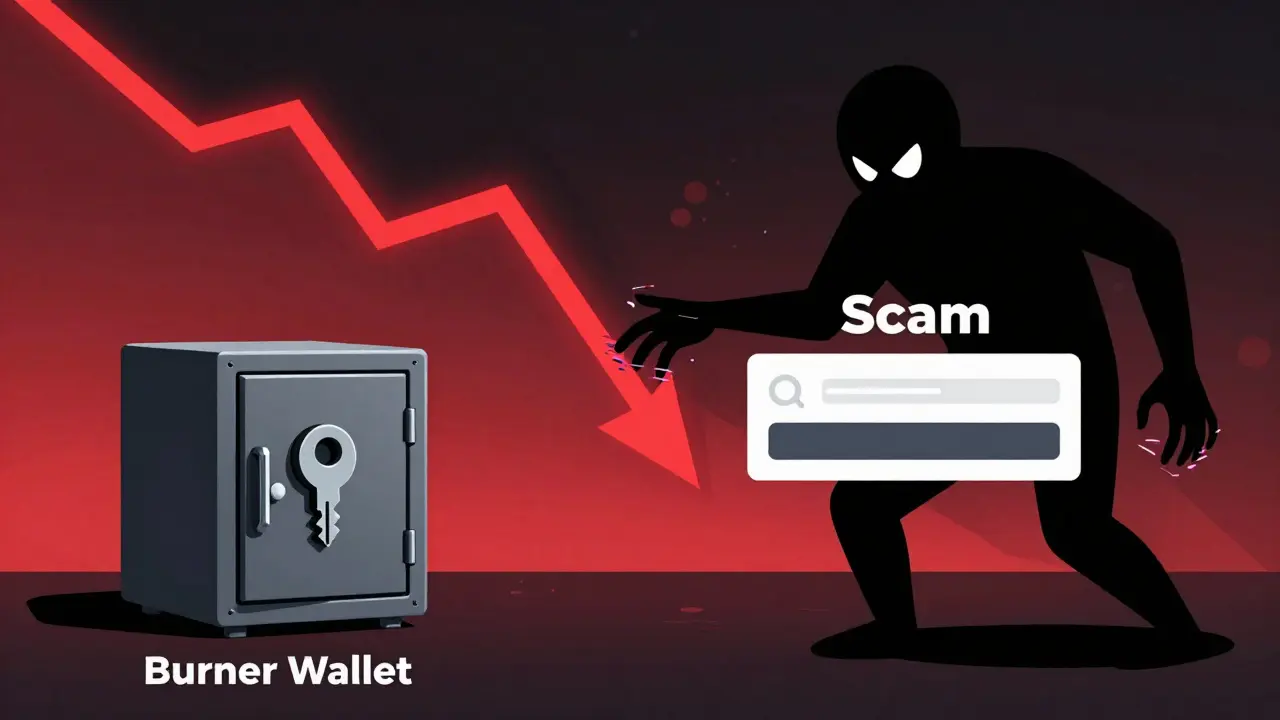
If you are eligible, the process is generally straightforward. You connect your wallet to the official bytenext.io portal, verify your identity or holdings, and claim the tokens. There is no cost to claim, but you should always double-check the URL. Scammers love to set up fake airdrop pages that look identical to the real thing, waiting for you to connect your wallet so they can drain it. Never enter your seed phrase anywhere.
Market Reality: Can You Sell Your BNU Tokens?
This is the part most guides skip. Getting the tokens is easy; turning them into cash is another story. As of July 2026, the market data for ByteNext paints a concerning picture. Let’s look at the numbers from major tracking platforms.
| Metric | Data Point | Implication |
|---|---|---|
| Price (Coinbase) | $0.000603 | Extremely low value per token |
| Market Cap | $120,584 | Micro-cap status, high volatility risk |
| 24h Volume | $6.36 - $4.84 | Near-zero liquidity; hard to sell large amounts |
| All-Time High Drop | -99.90% | Massive loss of investor confidence |
| Exchange Listings | Delisted from major trackers | Trading halted on CoinGecko-listed exchanges |
Notice the trading volume. Less than $7 in 24 hours? That means there are almost no buyers. If you claim 25,000 BNU tokens, your theoretical value is roughly $15 ($0.000603 x 25,000). But can you actually sell them? With such low volume, trying to sell even a small amount could crash the price further due to slippage. Worse yet, many major exchanges have stopped listing the pair entirely. You might find yourself holding tokens that you can’t easily move off-chain.
CoinMarketCap and Binance currently show the price as $0. This doesn’t mean the token is worthless in every sense, but it does mean there is no active public market for it on these platforms. You would likely need to use a decentralized exchange (DEX) like PancakeSwap, provided the liquidity pool still exists and hasn’t been drained.
Is AvatarArt Still Active?
Tokens are only as valuable as the product they support. So, is the AvatarArt platform NFT marketplace for digital art exhibitions still running? The signs are mixed.
On one hand, the GitHub repository for ByteNext still exists. Developers haven’t wiped the code. On social media, the accounts on Twitter and Facebook are present. However, presence isn’t activity. There have been no major news updates, no big artist partnerships announced, and no significant marketing campaigns in recent months. The lack of fresh content suggests the team may have scaled back operations significantly.
The NFT market itself has shifted dramatically since 2021. The hype around digital art has cooled, and users have moved toward platforms with stronger communities and better user experiences. AvatarArt’s focus on 3D virtual exhibitions was innovative, but without constant curation and new artists, these virtual spaces become empty galleries. An empty gallery doesn’t generate transaction fees, which means less demand for BNU.
How to Safely Participate in the Airdrop
If you decide the potential upside outweighs the near-zero current value, here is how to proceed safely. Treat this as a speculative experiment, not an investment.
- Use a Burner Wallet: Do not use your main wallet where you keep your life savings. Create a new MetaMask or Trust Wallet instance specifically for interacting with ByteNext. Fund it with a tiny amount of BNB for gas fees only.
- Verify the Contract Address: Before claiming, check the token contract address against the one listed on reliable sources like CoinMarketCap. The official BNU contract starts with
0x4954.... If the website asks you to approve a different contract, walk away. - Check the Liquidity Pool: Go to PancakeSwap and search for the BNU/BNB pair. Look at the liquidity. If it’s under $1,000, you won’t be able to sell your tokens without losing most of their value to slippage.
- Monitor Gas Fees: Since this is on BSC, fees should be low (cents). If a transaction prompts you to pay dollars in gas, something is wrong.
Risks You Must Understand
Let’s be blunt. The primary risk here is opportunity cost and security.
Opportunity Cost: Time spent chasing a dead or dying token is time not spent on healthier projects. The 99.9% drop from all-time highs indicates that early investors lost almost everything. Recovering from that kind of drawdown is statistically rare. Even if the project revives, it will take years to regain trust.
Security Risk: Abandoned projects are magnets for hackers. If the development team stops updating security patches, vulnerabilities in the smart contracts can be exploited. If you hold BNU in a vulnerable contract, your tokens could be drained. Always keep a close eye on the project’s GitHub for any suspicious commits.
Regulatory Uncertainty: While NFTs and utility tokens operate in a gray area, regulatory pressure is increasing globally. Projects with unclear legal structures or dormant teams are the first to face scrutiny. If regulators step in, access to your funds could be frozen or restricted.
Conclusion: Is It Worth It?
The ByteNext airdrop offers free exposure to the AvatarArt ecosystem, but "free" comes with hidden costs. In 2026, the crypto landscape is maturing. Users are demanding transparency, active development, and real liquidity. ByteNext currently lacks all three.
If you are an artist who believes in the long-term vision of 3D virtual art exhibitions and wants to support the platform regardless of short-term metrics, then claiming the airdrop makes sense. You get governance rights and a stake in the community. But if you are looking for financial gain, the data suggests otherwise. With near-zero trading volume and delistings from major exchanges, the path to profit is blocked.
Do your own research. Check the latest tweets from @bytenextio. Look at the GitHub commit history. Don’t trust headlines alone. In crypto, silence is often the loudest signal of all.
How do I claim the ByteNext (BNU) airdrop?
To claim the airdrop, you typically need to visit the official bytenext.io website, connect a BNB Smart Chain compatible wallet (like MetaMask or Trust Wallet), and verify your eligibility based on past holdings or social media engagement. Always ensure you are on the legitimate site to avoid scams.
What is the current value of 25,000 BNU tokens?
Based on mid-2026 data from Coinbase, the price is approximately $0.000603 per token. This would make 25,000 BNU worth roughly $15. However, due to extremely low trading volume (under $7/day), selling this amount may be difficult or impossible without significant slippage.
Can I trade BNU on Binance or Coinbase?
Currently, trading activity on major centralized exchanges like Binance and Coinbase is effectively zero or non-existent. CoinGecko reported that trading stopped on listed exchanges recently. You may need to use decentralized exchanges like PancakeSwap, but liquidity is very low.
Is the AvatarArt platform still active?
The platform appears to be in a dormant state. While social media accounts and GitHub repositories exist, there is little evidence of active development, new artist onboarding, or significant marketing efforts as of mid-2026. The lack of recent updates suggests reduced operational capacity.
What blockchain does ByteNext use?
ByteNext (BNU) operates on the BNB Smart Chain (formerly Binance Smart Chain). This means you need a wallet that supports BEP-20 tokens and you will need BNB to pay for transaction gas fees.