What is NEXT GEN PEPE (PEPE) on Solana? Tokenomics, Price & Risks

Ever wondered if a meme coin can actually pay you to hold it? That’s the pitch behind NEXT GEN PEPE, a speculative cryptocurrency token on the Solana blockchain that promises weekly SOL rewards and supply burns. It sounds too good to be true, doesn’t it? And in the world of crypto, when something sounds that good, you should probably look closer.
NEXT GEN PEPE (ticker: PEPE) isn’t just another frog face slapped onto a blockchain. It’s trying to carve out a niche as a "yield-bearing" meme coin. But before you rush to buy, you need to understand what you’re getting into. This isn’t Bitcoin. It isn’t even the original Ethereum-based PEPE. It’s a micro-cap asset with massive volatility, tiny liquidity, and a lot of hype.
The Core Concept: Meme Coin Meets Yield
Most meme coins rely purely on community hype and viral marketing. Their value goes up because people believe others will buy them later. NEXT GEN PEPE tries to add a layer of utility-or at least financial incentive-to that model.
The project claims to be "more than just a memecoin." Its stated mission is to "give and innovate" by redefining how communities engage with tokens. How? Through two main mechanisms:
- Weekly SOL Rewards: If you hold the token for at least seven days, you supposedly receive automatic deposits of SOL (Solana’s native currency) into your wallet.
- Supply Burns: The project aims to reduce the total number of tokens over time by buying and burning them, theoretically increasing scarcity.
This combination attempts to make holding the token less painful during market dips. Instead of just watching your balance drop, you get paid in SOL. However, these rewards are funded from where? That’s the million-dollar question (literally). The project states a goal to burn $1,000,000 worth of its own tokens, but without a transparent treasury or audited smart contract details, this remains a promise rather than a guaranteed mechanism.
Tokenomics: Supply, Burn, and Revoked Minting
Understanding the numbers is crucial. Here is the breakdown of NEXT GEN PEPE’s token structure based on current data from aggregators like CoinMarketCap and CoinGecko.
| Metric | Value / Detail |
|---|---|
| Ticker Symbol | PEPE |
| Blockchain | Solana (SPL Token Standard) |
| Total Supply | ~971.46 Million (varies by source) |
| Circulating Supply | ~981.7 Million (CoinStats data) |
| Minting Status | Revoked (No new tokens can be created) |
| All-Time High (ATH) | $0.01382 (June 12, 2024) |
A key feature here is that minting has been revoked. This means no one can print more tokens, which is a basic safety measure against infinite inflation. However, there’s a discrepancy in the data. Some sources mention an initial phase of 100 million tokens, while current listings show nearly a billion. This suggests either a supply expansion or inconsistent reporting. Always check the live contract on-chain if you’re serious about investing.
Price Action and Market Reality
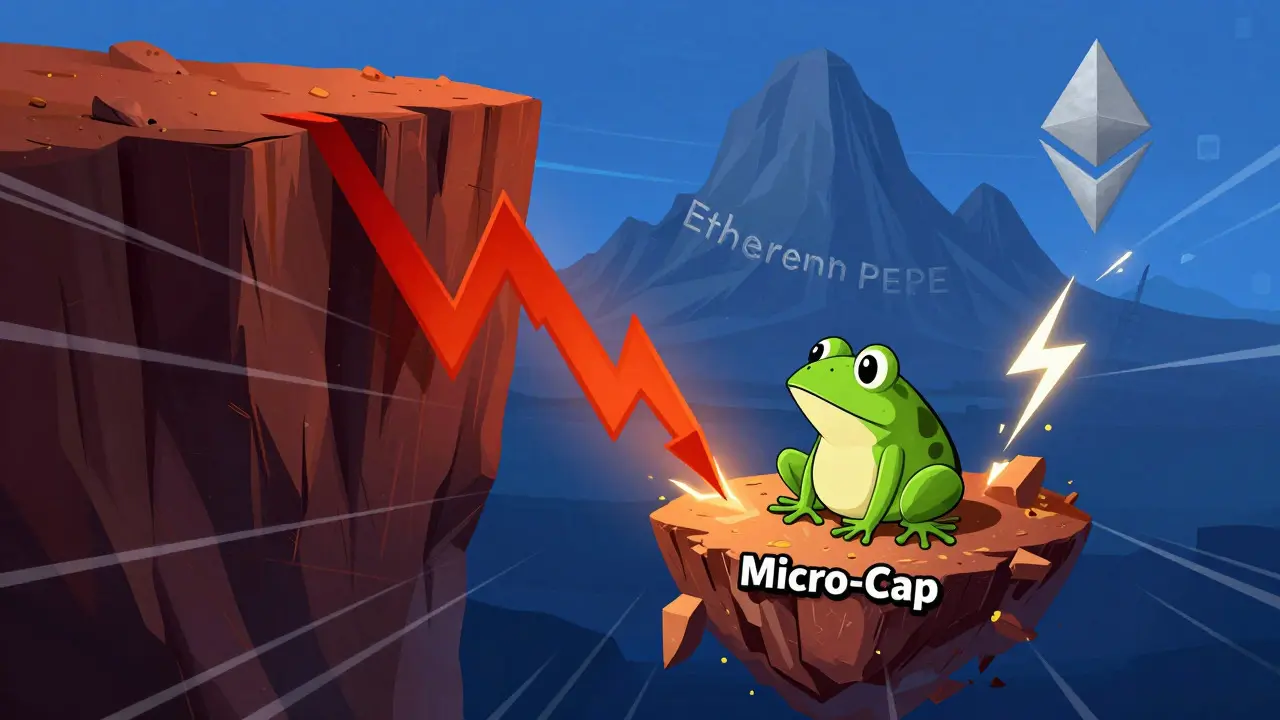
Let’s talk money. Or rather, the lack of it. NEXT GEN PEPE is a micro-cap asset. As of recent snapshots, its market capitalization hovers between $11,000 and $15,000. To put that in perspective, the original PEPE coin on Ethereum has a market cap in the billions.
The price volatility is extreme. In June 2024, the token hit an all-time high of $0.01382. Today, it trades for fractions of a cent-around $0.00001 to $0.00002. That’s a drawdown of roughly 99.89%. Yes, you read that right. Nearly 99% of its value has evaporated since its peak.
Why does this matter? Because low liquidity means small trades can move the price wildly. A single large sell order could crash the price further. Conversely, a small amount of buying pressure could spike it temporarily. This makes it incredibly risky for anyone looking for stable growth.
How to Buy NEXT GEN PEPE (PEPE)
If you’ve decided the risk is worth the potential reward, here is how you actually get your hands on these tokens. You have two main paths: decentralized exchanges (DEXs) or centralized exchanges (CEXs).
- Decentralized Route (Raydium):
- Set up a Solana-compatible wallet like Phantom or Solflare.
- Fund your wallet with SOL (you’ll need some for transaction fees).
- Connect your wallet to Raydium, a major DEX on Solana.
- Search for the PEPE/SOL trading pair. Be careful to verify the contract address to avoid scams.
- Swap your SOL for PEPE.
- Centralized Route (LCX or Bitget):
- Create an account on an exchange that lists NEXT GEN PEPE, such as LCX or Bitget.
- Complete KYC (Know Your Customer) verification.
- Deposit fiat currency or other crypto.
- Buy PEPE directly from the spot market.
Note: If you buy on a centralized exchange, you might not receive the weekly SOL rewards automatically. Those rewards are typically distributed on-chain to wallets holding the token. Check the specific exchange’s policy before relying on passive income.
Risks and Red Flags
No discussion of crypto is complete without talking about risks. NEXT GEN PEPE sits in the highest risk category possible. Here’s why you should tread carefully:
- Extreme Volatility: A 99% drop from ATH is not uncommon for meme coins, but it wipes out most investors.
- Low Liquidity: With daily volumes often under $10,000, selling large amounts can be difficult without slippage.
- Lack of Transparency: There is no public whitepaper, no named founding team, and no formal audits mentioned in major aggregator listings.
- Confusing Naming: Don’t confuse NEXT GEN PEPE (on Solana) with Pepe Next Generation (PEPEGEN) or the original Ethereum PEPE. They are completely different assets.
The project’s claim to be "innovative" is subjective. While the reward mechanism is interesting, it hasn’t proven sustainable yet. Without a clear roadmap or partnerships, the token relies entirely on community sentiment.

Comparison: NEXT GEN PEPE vs. Original PEPE
To understand where NEXT GEN PEPE stands, compare it to the original Pepe coin. This highlights the difference between a mainstream meme coin and a niche experimental one.
| Feature | NEXT GEN PEPE (Solana) | Original PEPE (Ethereum) |
|---|---|---|
| Market Cap | ~$14,000 (Micro-cap) | ~$1.2 Billion (Large-cap) |
| Supply | ~971 Million | 420.68 Trillion |
| Utility | Weekly SOL rewards, burns | Pure meme, no inherent utility |
| Liquidity | Very Low | High ($167M+ daily volume) |
| Risk Level | Extremely High | High (but lower relative to micro-caps) |
The original PEPE became a cultural phenomenon with massive adoption. NEXT GEN PEPE is still searching for its identity. It’s smaller, faster (thanks to Solana), and offers incentives, but it lacks the brand recognition and liquidity of its Ethereum counterpart.
Is NEXT GEN PEPE Worth It?
That depends on your goals. If you’re looking for a safe investment, look elsewhere. If you’re a degenerate gambler who loves high-risk, high-reward scenarios, this might tickle your fancy. The potential for 10x or 100x gains exists in theory, but so does the chance of losing everything.
Remember, the weekly SOL rewards are a nice perk, but they don’t guarantee profit. If the token price drops faster than the rewards accumulate, you’re still down. Always do your own research (DYOR) and never invest more than you can afford to lose.
Is NEXT GEN PEPE the same as the original PEPE coin?
No, they are completely different. The original PEPE is an ERC-20 token on the Ethereum blockchain with a trillion-token supply. NEXT GEN PEPE is an SPL token on the Solana blockchain with a supply in the hundreds of millions. They have different prices, market caps, and utilities.
How do I earn weekly SOL rewards with NEXT GEN PEPE?
According to project descriptions, you must hold the PEPE tokens in a compatible Solana wallet for at least seven days. After this period, SOL rewards are automatically deposited into your wallet. Ensure you are holding the token on-chain, not on a centralized exchange, to qualify.
Where can I buy NEXT GEN PEPE?
You can trade NEXT GEN PEPE on decentralized exchanges like Raydium using the PEPE/SOL pair. It is also listed on some centralized exchanges such as LCX and Bitget, allowing you to buy it with fiat or other cryptocurrencies.
Is NEXT GEN PEPE a scam?
There is no definitive proof of a scam, but there are significant red flags. The lack of a known development team, absence of a whitepaper, and extreme price volatility make it highly speculative. Treat it as a high-risk gamble rather than a secure investment.
What is the maximum supply of NEXT GEN PEPE?
The total supply is approximately 971.46 million tokens. Minting has been revoked, meaning no new tokens can be created. However, the circulating supply may vary slightly depending on data sources and ongoing burn events.
Why did NEXT GEN PEPE drop 99% from its all-time high?
Meme coins are notoriously volatile. After reaching an ATH of $0.01382 in June 2024, likely driven by short-term hype, the token experienced a classic pump-and-dump cycle. Without strong fundamentals or sustained demand, the price corrected sharply to its current micro-cap levels.


Ryan Robinson
honestly just sounds like another rug pull waiting to happen lol
Aryan MISHRA
The tokenomics are fundamentally flawed. The liquidity pool is negligible. Volatility is extreme. Expect total loss.
Earl Kott65
Wait, so you get paid in SOL just for holding? 🤔 That actually sounds kinda cool if it's legit. I might dip my toe in with like $10 just to see what happens. Why not right?! 😂🐸
Carl Michaud
You naive fools fall for the same narrative every cycle. It is a classic Ponzi structure disguised as 'innovation'. The dev team is anonymous because they are criminals. The burn mechanism is a lie designed to keep you holding while they dump on your heads. Wake up. The entire Solana ecosystem is rigged by insiders who front-run retail buys using MEV bots. You are not an investor; you are liquidity for their exit strategy. Check the on-chain data yourself if you have the technical literacy to understand what you are looking at. Most of you don't.
Ethan Yuwono
i mean if minting is revoked thats something at least but yeah high risk for sure
Marcia Albert
I’ve seen this pattern before. Shiny new wrapper on an old tired meme. It’s like putting a fresh coat of paint on a crumbling house. Eventually, the roof caves in. I’m just watching from the sidelines with my popcorn. 🍿
Jack Delasquez
bro i bought some last week and havent seen any sol rewards yet?? am i doing somthing wrong or is it broken?
Harman Singh
why does everyone always scam us?? its never fair why do we lose money every time we try to make something good out of crypto life is so hard :(
Matt Kay
trash
Namrata Mapgaonkar
in india we have seen many such coins come and go very fast :/ better be careful guys dont put all eggs in one basket hehe
Paul Smith
Hey folks! 👋 Just wanted to say that DYOR is key here. If you're interested, make sure you check the contract address twice. Scams are everywhere on Solana DEXs. Stay safe out there! 🙌✨
Rodmun Tarnowski
It is important to note that the market capitalization is extremely low. This indicates significant potential for volatility. However, it also suggests a lack of institutional interest. One must approach such assets with caution. The historical performance of similar tokens has been poor. Therefore, skepticism is warranted.
Matthew Smith
the morality of gambling with people's savings is questionable but if they want to lose it then let them
Prudence Flemming
yield bearing memes are a paradox really because yield requires sustainable cash flow which memes inherently lack due to reliance on hype cycles alone
Dave Kjendal
its just another pump and dump scheme nothing new about it devs will run away with the money eventually
Kat Bennett
I think it's interesting how they are trying to add utility to a meme coin, even if it seems a bit forced. Usually, these things fail because the community doesn't stick around long enough for the rewards to matter, but maybe this time it will be different since Solana is so popular right now and everyone wants passive income options that are easy to access without complex staking procedures.
Candice Cornett
everyone says its risky but actually the original pepe was risky too and look where it is now so maybe this will moon instead of crashing who knows
Lance Jantz
Oh, darling, you truly believe this? 😂 It is absolutely hilarious to watch the masses chase after digital confetti. The concept of 'weekly rewards' is merely a carrot dangled before a donkey. They are harvesting your attention and your liquidity. It is a masterclass in psychological manipulation, wrapped in a cute frog aesthetic. Truly, we live in a golden age of financial illiteracy. Do enjoy your inevitable losses, though. 💅
Emma Smith
the existential dread of holding a token with no intrinsic value is palpable isn't it we are essentially betting on collective delusion which is fascinating from a sociological perspective
Rita Dutta
i knew someone who lost everything on a similar coin last year so be careful ok dont trust anyone online especially when they promise free money its always a trap 😡
SUBHAM CHOUDHURY
just keep faith and hold tight maybe it will go up soon stay positive everyone can win if they believe in themselves right let's go team pepe 🚀
Qolbina Islami
THIS IS A SCAM!!! AMERICA NEEDS TO BAN THESE FOREIGN COINS!! THEY ARE STEALING OUR MONEY!! BUY GOLD AND BURN THE BITCOIN!! PATRIOTS RISE UP!!!