Are Crypto Payments Allowed in Iran? Current Regulations and Risks
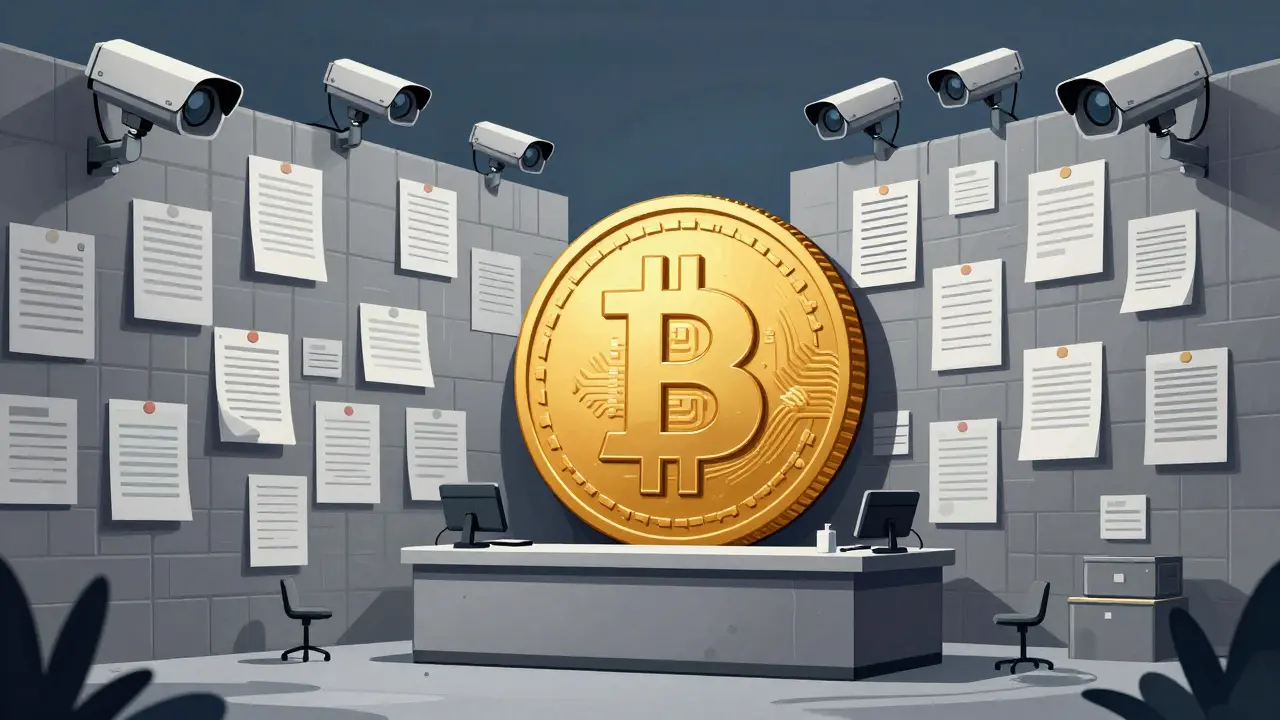
If you're wondering whether you can use Bitcoin or other digital assets to pay for a coffee or a car in Iran, the answer is a complicated "not really." While the government hasn't slapped a total ban on owning digital coins, they've built a massive wall of surveillance and restrictions around how those coins are actually spent. In short, the Iranian government likes the idea of mining crypto to make money, but they hate the idea of people using it to bypass their control over the local economy.
The Current Legal Reality of Crypto Payments
Right now, cryptocurrency payments in Iran exist in a stressful gray area. If you try to use crypto as a direct payment method for goods and services, you're stepping into a zone where the law is intentionally vague but the enforcement is strict. While you won't necessarily be arrested just for holding a wallet, the Central Bank of Iran (CBI) has made it incredibly difficult to actually spend those assets within the country.
The government's strategy is basically "controlled permission." They've moved away from total prohibition and toward a system of total surveillance. If you want to trade crypto for the local currency, you have to do it through government-approved channels. This means the authorities know exactly who you are, how much you have, and where the money is going. Direct peer-to-peer (P2P) payments for business transactions are effectively prohibited because the state wants to prevent the rial from losing even more value to decentralized alternatives.
How the Government Controls Your Transactions
The shift in how Iran handles crypto became very clear between late 2024 and early 2025. For a while, the CBI blocked almost all rial-to-crypto payments on the web. Then, they flipped the switch and allowed them again-but with a huge catch. To operate, exchanges must use the government's own API system. This gives the state a direct window into every single transaction record.
If you use a licensed exchange like Nobitex, you're operating within the law, but you're also being watched. The government has mandated that all brokers conduct rial transactions transparently through approved accounts. They've even gone as far as banning all cryptocurrency advertising across the country. Whether it's a billboard in Tehran or a social media ad, promoting crypto is now illegal. This is a clear signal that they want to keep the general public from getting too excited about digital assets.
| Activity | Legal Status | Primary Requirement |
|---|---|---|
| Mining | Legal | License from Ministry of Industry, Mine and Trade |
| Trading (Fiat-to-Crypto) | Controlled | Must use CBI-approved API and licensed exchanges |
| Direct Payments for Goods | Effectively Banned | No legal framework for merchant acceptance |
| Crypto Advertising | Illegal | Total nationwide ban on all platforms |
The Paradox of Legal Mining
One of the weirdest things about Iran's approach is that while they restrict payments, they actually encourage cryptocurrency mining. Since 2019, the government has seen mining as a way to turn their cheap electricity into hard currency to help evade international sanctions. It's a massive operation; Iran accounts for about 4.5% of the entire global mining hash rate.
But this "legal" status comes with heavy strings attached. Miners must get licenses, follow strict electricity tariffs, and-most importantly-sell their mined assets directly to the Central Bank. For many, this has made the business unsustainable. Many mining farms have gone "underground," operating illegally to avoid the high energy costs and government take. This has led to a cat-and-mouse game where the government shuts down illegal farms to prevent rolling power outages, only for new ones to pop up elsewhere.
The Rise of the Digital Rial
If you're wondering why the government is so restrictive with Bitcoin, it's because they're building their own version. The Digital Rial (or Rial Currency) is a Central Bank Digital Currency (CBDC). Unlike Bitcoin, this isn't decentralized. The CBI controls the supply, the issuance, and the ledger.
The goal here is to combine the efficiency of digital payments with the control of a traditional central bank. They've already piloted this on Kish Island. By pushing people toward a digital rial, the government can eliminate the need for the US dollar in local trade while keeping a perfect record of every transaction. It's not about a love for blockchain technology; it's about maintaining monetary sovereignty in the face of economic collapse.
International Risks and Sanctions Evasion
Using crypto in Iran isn't just a domestic legal risk; it's an international one. Because Iran uses digital assets to bypass sanctions, international entities are constantly hunting for Iranian-linked wallets. A prime example happened in July 2025, when Tether froze 42 addresses linked to Iranian entities, including many associated with Nobitex. This was one of the largest freezes in the company's history.
If you are a foreigner or a business operating in Iran, this is the biggest danger. Your funds could be frozen not by the Iranian government, but by the company issuing the stablecoin or the exchange you're using. The involvement of the Islamic Revolutionary Guard Corps (IRGC) in crypto activities has put Iranian wallets on a high-alert list for global compliance officers. One wrong move or one link to a sanctioned entity can lead to your assets being locked permanently.
Practical Tips for Navigating the Landscape
If you find yourself needing to handle digital assets in Iran, you need to be aware of the pitfalls. Most people use VPNs to access international exchanges, trying to stay off the CBI's radar. However, once you try to move that money into rials, you're back in the government's web.
Here are a few rules of thumb for the current environment:
- Avoid P2P for Business: Don't try to set up a shop that accepts Bitcoin. You'll likely attract the attention of the CBI or the Ministry of Finance.
- Check Exchange Licenses: If you must trade locally, ensure the platform is licensed, but remember that "licensed" means "monitored."
- Watch for "Freezes": Be extremely cautious with stablecoins. Since Tether and other issuers are aggressive about sanctions, using non-custodial wallets is a common way people try to protect their privacy.
- Electricity Warning: If you're thinking about mining, be aware that the government regularly raids unauthorized farms and cuts power to suspected miners.
Is it illegal to own Bitcoin in Iran?
No, owning Bitcoin is not illegal. The Iranian government doesn't ban the possession of digital assets. However, the act of using them for payments or trading them for rials is heavily regulated and monitored by the Central Bank of Iran.
Can I pay for a hotel or restaurant in Iran with crypto?
Legally, no. Direct cryptocurrency-to-merchant payments are effectively prohibited. While a private business owner might technically agree to it, it's a legal risk for both the merchant and the customer, as there is no legal framework supporting such transactions.
Is crypto mining legal in Iran?
Yes, but it's strictly regulated. You need a license from the Ministry of Industry, Mine and Trade, and you must follow government electricity tariffs. Mining without a license is illegal and can lead to equipment seizure and legal action.
What is the Digital Rial?
The Digital Rial is a Central Bank Digital Currency (CBDC) being developed by the Central Bank of Iran. Unlike Bitcoin, it is centralized, not mineable, and designed to give the government total visibility and control over digital payments.
Why are so many Iranian crypto accounts being frozen?
International sanctions against Iran mean that companies like Tether and various global exchanges must block accounts linked to sanctioned entities or the Iranian government to avoid penalties from the US and other international regulators.

Robert Smith
Wild stuff 🤯
Felix Eduardo Velasquez
The focus on the Digital Rial highlights a broader global trend where sovereign states attempt to co-opt blockchain technology to enhance financial surveillance. By removing the decentralized nature of the asset, they maintain the ledger's efficiency while ensuring every transaction is traceable. It is essentially a digital panopticon for the economy. This is not an evolution of currency but a refinement of state control mechanisms. In such environments, the inherent value of cryptocurrency shifts from being a medium of exchange to a tool for wealth preservation outside the reach of the state, provided the exit ramps are managed carefully. The risk of stablecoin freezes is the primary bottleneck here, as the issuance of assets like USDT remains centralized in the US, creating a conflict between the user's desire for privacy and the issuer's need for regulatory compliance.
Emily A
It is quite simplistic to assume that VPNs offer any meaningful protection against the Central Bank of Iran. The government is far more sophisticated in its tracking methods than most users realize. If you are attempting to off-ramp funds into rials, you are effectively handing your identity to the state on a silver platter regardless of your IP address. People need to understand that the infrastructure of the local banking system is the primary surveillance tool, not the web browser.
Aaron Zeiler
most people just use p2p telegram groups to avoid the exchanges actually. its way more common than using licensed platforms if you dont want the government knowing your balance
Arti Jain
Typical state failure. Pathetic.
VIVEK SINGH
Oh look, another government pretending that a CBDC is for the 'people' while they just want a better way to track who is buying what. How absolutely revolutionary. I'm sure the Digital Rial will be just as stable as the actual rial, which is to say, it'll be a great way to watch your life savings evaporate in real-time while the state watches you do it. Truly a masterpiece of economic planning.
Alex Mazonowicz
This is so interesting!!! I love how people always find a way to innovate even under pressure!!! Keep it up everyone!!!
Harvey Alford
Do you actually live there? I need to know your personal experience with this.
Lloyd I
I think it's great that we're discussing this. We can all learn a lot about how different regions handle tech. Maybe there's a way to help those trying to maintain their financial independence!
its me
It's just sad that we live in a world where money has to be hidden like a crime. We should all be questioning why the system is this broken in the first place. But hey, that's just my deep take on the misery of existence.
Lynne Teperman
totally wild landscape out there. just a kaleidoscope of risks and weird laws
Carli Bates
imagine thinking a government approved api is a safe way to trade crypto... the irony is just delicious
Rachel S
The Tether freeze mentioned is absolutely catastrophic for the average user! 😱 It is simply harrowing to think that your entire portfolio could vanish because of a geopolitical decision made thousands of miles away. This is the inherent danger of centralized stablecoins!
Tracy McBurney
The author fails to mention that the 'underground' mining farms are often subsidized by the same elites who write these laws. It's a blatant hypocrisy. The government raids the small players to maintain a facade of law and order while the big players continue to bleed the power grid dry.
Rushell Perry
honestly just use a hardware wallet and avoid the local exchanges if you can. keep it simple and keep it safe
Ipsita Seal
too long didnt read but sounds stressful
Kathleen Warren
I feel for the people there. It must be so hard to just try and save money for the future when the rules keep changing every month. Hope everyone stays safe.
Barbara Jones
just be carefull with the vpn stuff. some of them are honeypots lol
Gabrielle Danis
The distinction between owning the asset and using it as a medium of exchange is a critical legal nuance. In many jurisdictions, the act of payment is what triggers the regulation of a currency, not the possession of the asset itself.
Abhishek Verma
Oh, look at all these experts pretending they know how to navigate a sanctioned economy. Maybe if you guys spent less time on Reddit you'd actually know how a P2P market works.
Brendan Thraxton
dont let the risks scare you too much just do your research and use non custodial wallets to keep your coins safe
Janis Naglis
The volatility of the rial is just an incredible headwind!!! We need to focus on the liquidity provision and the architectural shifts in their fiscal policy!!! So exciting!!!
Gabby Puche
This is a great breakdown! 🌟 Really helps make sense of a confusing situation. Stay safe everyone! 🚀
Jan Conrad
I'm curious about the impact of the Digital Rial on the black market exchange rates. If the state can track every transaction, the premium on the 'free market' dollar might actually increase.
Veronica Bago
Seems like a total headache, honestly. Just glad I'm not dealing with that lol.