Benefits of Immutable Blockchain Records: Security, Trust & Compliance
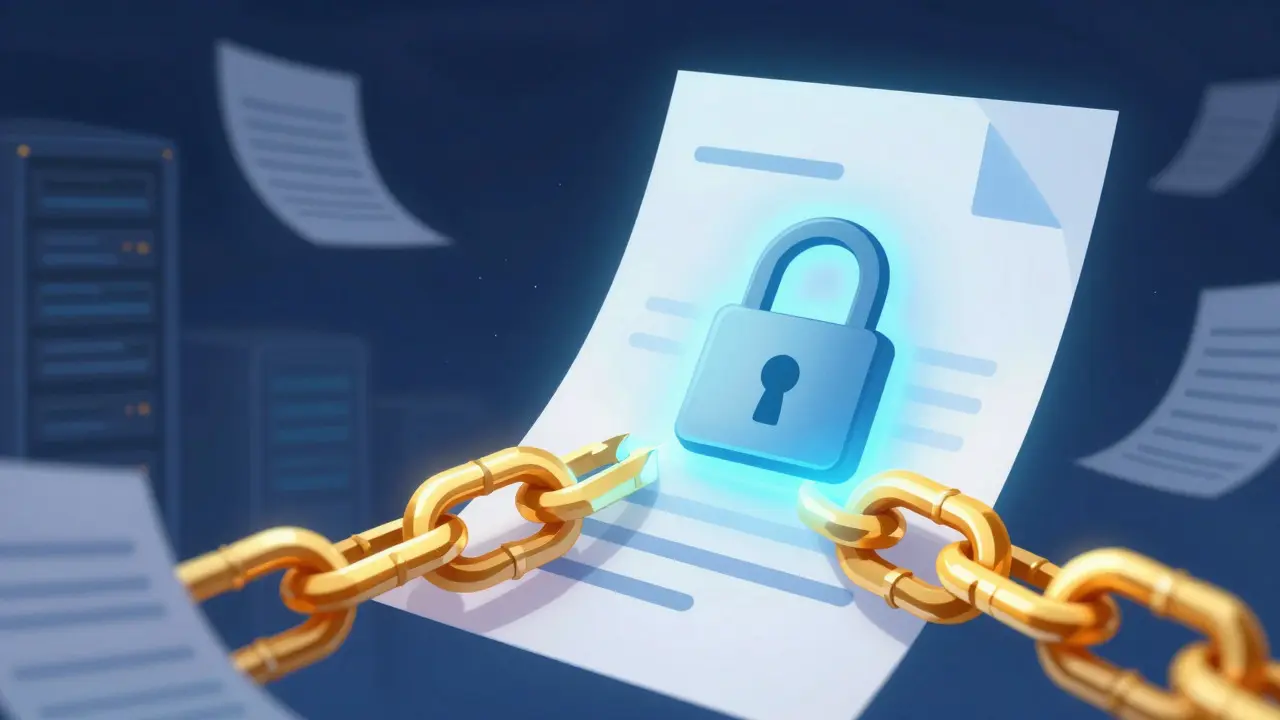
Imagine a scenario where you need to prove that a specific document hasn't been altered since 2015. In the traditional world, this is a nightmare of paper trails, witness affidavits, and server logs that can be quietly edited by an admin with root access. But on a blockchain is a decentralized digital ledger that records transactions across multiple computers so that no single entity controls the data. Its defining feature is immutability: once data is written, it is practically impossible to change without leaving a visible trace. This isn't just marketing fluff; it's a mathematical reality driven by cryptographic hashing and consensus mechanisms. For businesses dealing with high-stakes data, this permanence transforms how we handle trust, security, and compliance.
How Immutability Actually Works
To understand why these records are so secure, you have to look under the hood at the machinery. It all starts with SHA-256 is a standard cryptographic hash function that produces a fixed-size output of 256 bits. When you input any piece of data-whether it's a simple text file or a complex financial transaction-SHA-256 converts it into a unique string of characters known as a hash. If you change even a single pixel in an image or a single digit in a number, the resulting hash changes completely. This property acts like a digital fingerprint. If someone tries to sneakily edit a record, the fingerprint won't match the original, instantly flagging the tampering.
But the hash alone isn't enough. That's where the Merkle Tree is a data structure used in blockchains to efficiently summarize and verify large amounts of data comes in. Think of it as a hierarchical tree where each leaf node is a hash of a data block, and each parent node is a hash of its children. This structure allows for rapid verification of data integrity across massive datasets. If one record deep in the tree is altered, the hashes up the entire branch change, making the discrepancy obvious to anyone checking the root hash.
Finally, there is the network layer. Unlike a central database sitting in one server room, blockchain data is replicated across thousands of nodes globally. To alter a past record, a hacker would need to control more than 50% of the network's computing power (in Proof of Work systems) or stake (in Proof of Stake systems) to rewrite history before the rest of the network catches up. This is not just difficult; for major networks like Bitcoin or Ethereum, it is economically prohibitive.
Data Integrity and Fraud Prevention
The most immediate benefit of immutable records is bulletproof data integrity. In industries like finance and healthcare, a single corrupted or manipulated record can lead to millions in losses or patient harm. Traditional databases are vulnerable to internal threats-a disgruntled employee with admin rights can delete logs or adjust figures. On a blockchain, because the ledger is distributed and cryptographically linked, there is no single point of failure for data manipulation. The system itself enforces consistency.
This creates a powerful deterrent against fraud. Consider supply chain management. A luxury brand wants to ensure its handbags aren't being counterfeited. By recording every step of production and shipment on an immutable ledger, they create a verifiable history. If a bag appears at a discount store, the retailer can scan the QR code and check the ledger. If the hash doesn't match the official origin record, the product is fake. No middleman is needed to vouch for authenticity; the math does the talking.
Building Trust Through Transparency
Trust is usually built over time through reputation. Blockchain offers a different path: trustless transparency. Because the ledger is often public (or permissioned but shared among stakeholders), every participant sees the same version of the truth. There is no "his word against hers." This is particularly valuable in cross-border trade or partnerships between competitors who don't fully trust each other but need to collaborate.
For example, in insurance claims processing, disputes often arise over what actually happened at the scene. If IoT sensors record weather conditions or vehicle speed onto an immutable ledger, both the insurer and the policyholder have access to the same unalterable data. This reduces the need for lengthy investigations and legal battles, speeding up payouts and improving customer satisfaction. The transparency isn't about exposing private secrets; it's about verifying facts without relying on a potentially biased third party.
Simplifying Auditing and Regulatory Compliance
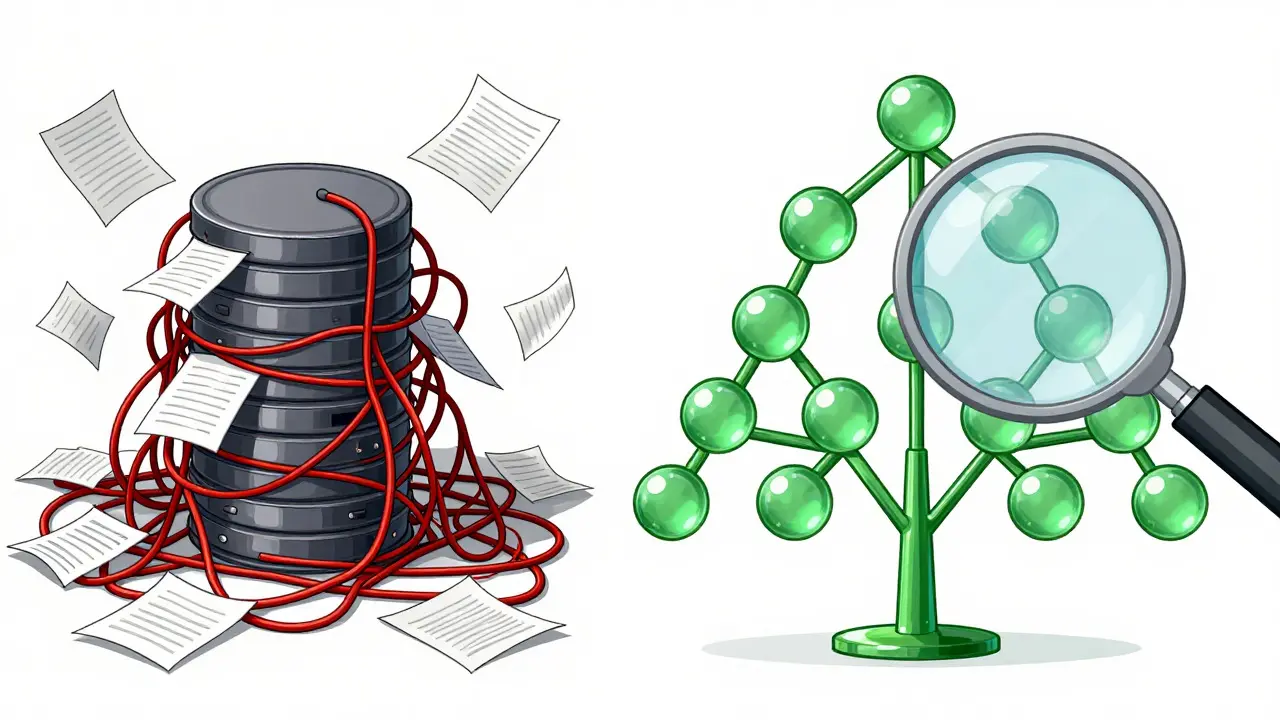
Auditors spend years chasing down inconsistencies. With immutable blockchain records, the audit trail is built-in. Every transaction is timestamped, signed, and linked to the previous one. An auditor doesn't need to trust the company's internal reporting software; they can independently verify the data against the public ledger. This shifts the focus from "detecting errors" to "verifying logic," which is far more efficient.
Regulatory compliance also becomes smoother. Bodies like the SEC or GDPR regulators require proof of data handling practices. Instead of producing messy spreadsheets and server logs that could be questioned, companies can present a cryptographic proof of their operations. This doesn't mean blockchain solves all privacy issues (that requires additional layers like zero-knowledge proofs), but it does solve the problem of data authenticity. You can prove that a record existed at a certain time without revealing the content if necessary.
| Feature | Centralized Database | Immutable Blockchain |
|---|---|---|
| Data Control | Single administrator has full write/delete access | Distributed consensus required for new entries; no single delete button |
| Tamper Resistance | Low; depends on access controls and logging | High; cryptographic hashing and network redundancy prevent silent edits |
| Audit Trail | Can be altered or deleted by admins | Permanent and verifiable by any node |
| Trust Model | Trust in the institution managing the server | Trust in the mathematics and network protocol |
Industry Applications: Where It Matters Most
While blockchain gets hype in crypto circles, its real value lies in boring, critical infrastructure. In healthcare, immutable records ensure that patient histories are accurate. If a doctor prescribes medication based on an allergy note, that note must be reliable. Blockchain prevents unauthorized changes to medical records, protecting patient safety. In legal services, contract integrity is paramount. Smart contracts stored on-chain execute automatically when conditions are met, but even static documents hashed onto the chain provide proof of existence and non-tampering. This is huge for intellectual property rights and evidence preservation. Financial services use it for settlement finality. When two banks settle a trade, the blockchain record provides a definitive 'final' state that eliminates the risk of one side reversing the transaction later. This reduces counterparty risk and speeds up clearing times from days to seconds.

Navigating the Challenges
Let’s be realistic: immutability isn't magic. It comes with trade-offs. The biggest headache is correction. What if you accidentally record a wrong address? You can't just hit 'backspace.' Instead, you add a new transaction that corrects the error, creating a permanent record of the mistake and the fix. This requires careful design patterns to avoid cluttering the ledger with noise. Scalability is another hurdle. As the chain grows, so does the storage requirement for every node. While Layer 2 solutions and sharding are improving this, large-scale enterprise adoption still faces performance bottlenecks compared to optimized SQL databases. Additionally, energy consumption remains a consideration for Proof of Work chains, though the industry is shifting toward more efficient Proof of Stake models. Finally, governance is tricky. If the protocol needs updating, getting consensus from thousands of independent nodes is slow and political. This rigidity protects the data but can hinder innovation. Organizations need to choose their blockchain platform carefully, balancing the level of decentralization they need with the flexibility they require.
The Future of Permanent Records
We are moving toward a world where digital identity, asset ownership, and contractual obligations are anchored in immutable ledgers. As Internet of Things devices proliferate, the volume of machine-generated data will explode. Storing this on centralized servers is risky; storing it on distributed, immutable networks ensures that sensor data from a factory floor or a car dashboard is trusted by default. Combined with AI, these records allow for automated compliance monitoring where algorithms scan the ledger in real-time for anomalies. The benefits of immutable blockchain records go beyond just keeping data safe. They fundamentally change the social contract of digital interaction. We move from trusting institutions to trusting verified facts. For anyone building systems where data integrity is non-negotiable, this shift is not just useful-it's essential.
Can blockchain records ever be changed?
Technically, yes, but only if you control more than 50% of the network's consensus power. For major public blockchains, this is economically impossible. For private blockchains, it depends on the number of nodes and the consensus mechanism used. Generally, you add new correcting transactions rather than editing old ones.
Is blockchain better than a regular database for all uses?
No. If you need fast read/write speeds and don't need to share data with untrusted parties, a traditional SQL database is faster and cheaper. Blockchain shines when you need shared, tamper-proof records between multiple parties who don't fully trust each other.
What happens if I make a mistake in a blockchain record?
You cannot delete it. You must create a new transaction that references the old one and marks it as void or corrected. This creates a transparent history of the error and the fix, which is often preferred in auditing scenarios.
Does immutability guarantee data privacy?
Not necessarily. Public blockchains show all transaction data to everyone. To maintain privacy, you need additional technologies like encryption, zero-knowledge proofs, or using permissioned blockchains where access is restricted to authorized participants.
Why do auditors prefer blockchain records?
Because the audit trail is self-verifying. Auditors don't need to trust the company's internal IT team to have kept honest logs. They can independently verify the data against the cryptographic hashes on the distributed ledger, reducing the risk of undetected fraud.