Bitcoin in El Salvador: The Shift from Legal Tender to Voluntary Use

Imagine waking up to find that the digital currency in your phone is now as valid as the cash in your pocket. In September 2021, that became a reality for millions in El Salvador. It was a bold, world-first move that grabbed every headline in finance. But as we look at the situation today, in April 2026, the story has shifted from a government-mandated revolution to a cautionary tale about forcing technology on a population. While the dream of a "Bitcoin city" still lingers, the legal reality has changed drastically.
| Phase | Status | Core Impact |
|---|---|---|
| 2021-2024 | Mandatory Legal Tender | High wallet downloads, low actual transaction use. |
| Jan 2025 | Policy Reversal | Bitcoin no longer a mandatory currency for businesses. |
| 2025-2026 | Strategic Reserve | Focus shifted to long-term state investment (HODLing). |
The High-Stakes Experiment of 2021
On September 7, 2021, President Nayib Bukele did what no other world leader had dared: he made Bitcoin is a decentralized digital currency that operates without a central regulatory authority official legal tender. The goal was ambitious. The government wanted to stop expensive remittance fees and give the "unbanked" population-those without traditional bank accounts-a way to participate in the global economy.
To make this happen, the state launched the Chivo wallet, a digital app designed to make spending Bitcoin as easy as sending a text. To grease the wheels, the government gave every citizen $30 in seed money. On paper, it looked like a masterstroke. In reality, the first day was a mess. The servers crashed under the weight of millions of users, and the market price of Bitcoin dipped, causing an immediate $3 million paper loss for the state.
Despite the rocky start, the numbers looked promising at first. Within a month, 3 million people had downloaded the wallet. That's roughly 46% of the population. Compare that to the 29% of Salvadorans who had a traditional bank account back in 2017, and you can see why the government felt they were winning. But there was a huge gap between owning an app and actually using it to buy coffee or pay rent.
The Reality Check: Why Mandatory Adoption Failed
Here is the hard truth: most people prefer stability over speculation. For a street vendor in San Salvador, the US Dollar-which El Salvador uses as its primary currency-is a safe bet. Bitcoin, however, can swing 10% in value in a single afternoon. Why would a small business owner risk their daily profit on a volatile asset?
The data eventually caught up with the hype. By 2024, reports showed that 92% of Salvadorans weren't using Bitcoin for their daily transactions. Even the government's own services didn't see much traction; only 5% of citizens paid their taxes with the crypto. The Bitcoin Law had forced the infrastructure into place, but it couldn't force trust into the people.
Technical issues didn't help either. The Chivo wallet suffered from hacking incidents and glitches that eroded the very trust the government was trying to build. It became clear that a government mandate cannot replace organic societal adoption. You can't just legislate a new financial behavior into existence.

The Great Pivot: The IMF and the 2025 Reversal
The turning point came not from the streets of San Salvador, but from the offices of the International Monetary Fund (IMF). The IMF had been vocal in its opposition to the Bitcoin experiment, citing risks to financial stability. Eventually, the pressure peaked when El Salvador sought a $1.4 billion loan agreement.
The IMF made its conditions clear: the Bitcoin law had to go. In January 2025, the Legislative Assembly voted 55-2 to modify the law. By May 1, 2025, the word "currency" was stripped from Bitcoin's legal status. While it technically remains legal tender, the crucial change is that businesses are no longer obligated to accept it.
This move shifted Bitcoin from a mandatory requirement to a voluntary choice. Economist Rafael Lemus pointed out that Bitcoin lost its "strength of legal tender," which was a necessary correction because the forced implementation simply hadn't worked. Even President Bukele admitted that the Bitcoin push was one of his government's most unpopular moves.
From Payment Tool to State Reserve
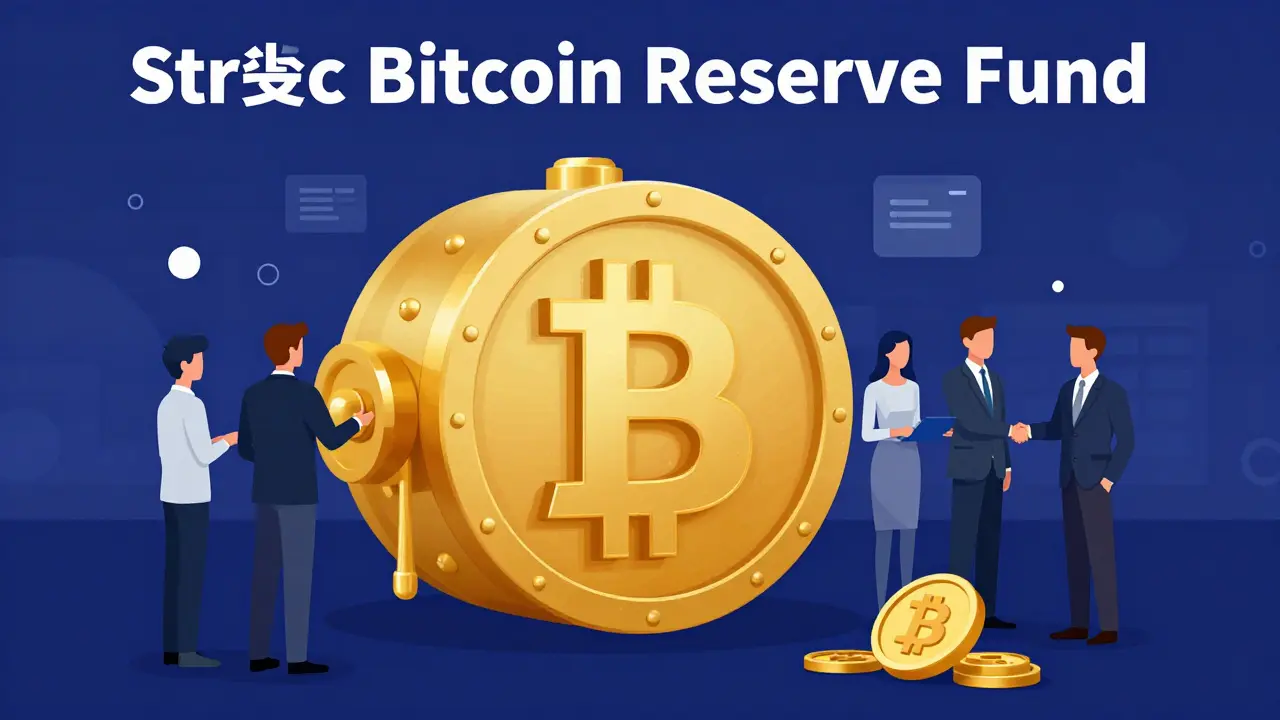
Does this mean El Salvador has given up on crypto? Not at all. They just changed their strategy. Instead of trying to make Bitcoin a medium of exchange for the public, they've turned it into a strategic hedge for the state. This is where the Strategic Bitcoin Reserve Fund comes in.
The government has continued to accumulate coins. By early 2025, they held 688 Bitcoin worth about $574 million, reflecting a profit of $287 million. They didn't stop there. In March 2025, they bought more, bringing their total holdings to 6,102 coins valued at roughly $500 million. They are no longer trying to force a vendor to take a Satoshi for a pupusa; they are betting on the long-term value of the asset as a national reserve.
El Salvador is also trying to pivot its image. By hosting events like the PLANB Forum 2025, the country is positioning itself as a logistical and technological hub for the crypto industry. They want to be the place where the private sector innovates, even if the public sector has stopped mandating the currency.
Lessons for the Rest of the World
The Salvadoran experiment is a goldmine of data for any other country considering a similar path. The most glaring lesson? Legal mandates are not a substitute for digital literacy and trust. You can give everyone a wallet and $30, but if they don't understand how to secure their keys or fear the price will drop tomorrow, they will stick to the dollar.
It also highlights the immense power of global financial institutions. The IMF's ability to sway national monetary policy through loan conditions shows that no country is truly an island in the global financial system. For now, the transition to a voluntary framework is a more sustainable approach. It allows market forces to determine who uses the technology and for what purpose, rather than a top-down decree.
Is Bitcoin still legal in El Salvador?
Yes, Bitcoin is still legal to own and use. However, as of May 2025, it is no longer a mandatory currency. Businesses are no longer required by law to accept Bitcoin as payment, making its use voluntary rather than compulsory.
What happened to the Chivo wallet?
The Chivo wallet remains available, but the government's aggressive promotion and mandatory integration have wound down. Much of the initial hype faded as the state shifted its focus toward the Strategic Bitcoin Reserve Fund and away from direct public usage mandates.
Why did the government change the law?
The primary driver was pressure from the International Monetary Fund (IMF). The IMF required the policy reversal as a condition for a $1.4 billion financial assistance program, citing concerns over economic stability and the risks associated with cryptocurrency volatility.
Does the government still hold Bitcoin?
Yes. Despite removing the legal tender mandate, El Salvador maintains a Strategic Bitcoin Reserve Fund. As of March 2025, the government held approximately 6,102 Bitcoin, viewing it as a long-term store of value rather than a daily payment tool.
Did the Bitcoin experiment actually help the poor?
The results were mixed. While it increased digital wallet accessibility (reaching 46% of the population), actual usage for financial inclusion remained low. Most analysts conclude that the project failed to significantly boost the economy or replace traditional banking for the majority of the population.
Next Steps for Travelers and Investors
If you're heading to El Salvador today, don't expect every street vendor to take Bitcoin. While high-end hotels and some tech-forward shops in San Salvador or El Zonte still embrace it, you'll definitely need US dollars for the majority of your needs. Treat Bitcoin as a "bonus" payment option rather than your primary source of funds.
For investors, the signal is clear: the Salvadoran government is betting on Bitcoin as an asset (HODLing) rather than a currency (spending). This distinction is critical. The country is no longer a laboratory for a "crypto-economy," but it is becoming a hub for those who believe in Bitcoin's long-term value as digital gold.


Omotola Balogun
Everyone acting surprised but this was obviouse from the start. You cannot simply impose a decentralized asset via central decree without creating a paradox that kills the very utility you're trying to promote. The lack of digital literacy in rural sectors makes the Chivo wallet a fancy toy rather than a financial tool. Most people just don't get how volatility affects the purchasing power of a single meal. It is basic economics that the IMF pointed out and the gov just ignored until the money ran out. Honestly it's a textbook case of hubris in monetary policy management.
jennelle williams
trust is a slow build
Rob Mitchell
Exactly. Adoption must be organic.
Rebecca Violette
this is just so sad honestly... imagine being told your money might be worth half tomorrow and just havng to deal with it. i feel like the ppl there were just used as a giant social experiment and then just tossed aside when the imf got mad. it's like they didnt even care about the actual humans just the headlines and the hype. totaly heartless way to run a country if u ask me.
Lane Montgomery
Who cares? Failed bet.
EDOZIEM MICHAEL
money is but a ghost in the machine chasing a dream of stability while the wind blows it away
Tracie and Matthew Hartley
lol imagine thinkin the imf actually cares about stability. they just want everyone under their thumb and using their approved systems. the whole thing was probably a plot to make sure no one actualy’s a free from the global bank system. bitcoin was too risky for the suits so they just bullied a small country into submission. classic.
Jonathan Chamma
It is quite a colorful journey, isn't it? I think we can all agree that learning from these mistakes is the real victory here. It takes a lot of courage to try something new, even if the landing was a bit bumpy. Let's just hope the next attempt focuses more on the people and less on the optics. Everyone deserves a fair shot at financial freedom in a way that feels safe and welcoming for them.
Samson Selleck
The systemic failure here is a direct result of an asymptotic disregard for the volatility indices and a complete lack of hedging strategies within the domestic retail sector. To suggest that a rudimentary digital interface could mitigate the structural deficiencies of a developing economy is an exercise in pure delusion. We are seeing a classic case of cognitive dissonance where the state attempted to synthesize a monetary revolution without the requisite liquidity infrastructure. The pivot to a strategic reserve is merely a face-saving maneuver to avoid total capital depletion. It is laughable that anyone viewed the Chivo wallet as a viable instrument of macroeconomic stability when the underlying asset remains a speculative vehicle for the global elite. The IMF's intervention was not a 'pressure' but a necessary correction of an untenable fiscal hallucination. The resulting delta between expected adoption and actual utility is a staggering monument to bureaucratic incompetence. One must analyze the correlation between government mandates and the inherent resistance of rational economic actors. The sheer audacity of the initial rollout ignored every basic tenet of behavioral economics. This entire episode serves as a poignant reminder that prestige-driven policy is rarely compatible with pragmatic governance. The shift to 'voluntary' use is a euphemism for 'it didn't work.' Truly a pathetic attempt at financial alchemy.
Scott Fenton
I must disagree with the tone of the previous assessment. While the implementation was flawed, the move toward a strategic reserve is a prudent fiscal pivot.
Alan Seiden
What a joke. Some idiot in a suit thinks he can play with money like it's a video game. Pathetic. Britain would never allow such absolute chaos in our financial systems. Absolute rubbish.
logan bates
US dollars are the only currency that matters anyway. The rest is just noise.
Chidinma Sandra okafor
Oh sure, because the IMF is just so famous for helping poor countries without strings attached. How generous of them to let a country decide its own future as long as they follow the rules. Truly inspiring stuff.
Akshay Gorad
It is interesting to see how different nations handle this technology.
Lauren Abrams
The shift to a reserve seems more sustainable.
william manes
Stay poor then! 📉 Only winners HODL! 🚀