Bitcoin Legal Status Worldwide in 2026: A Complete Country Guide
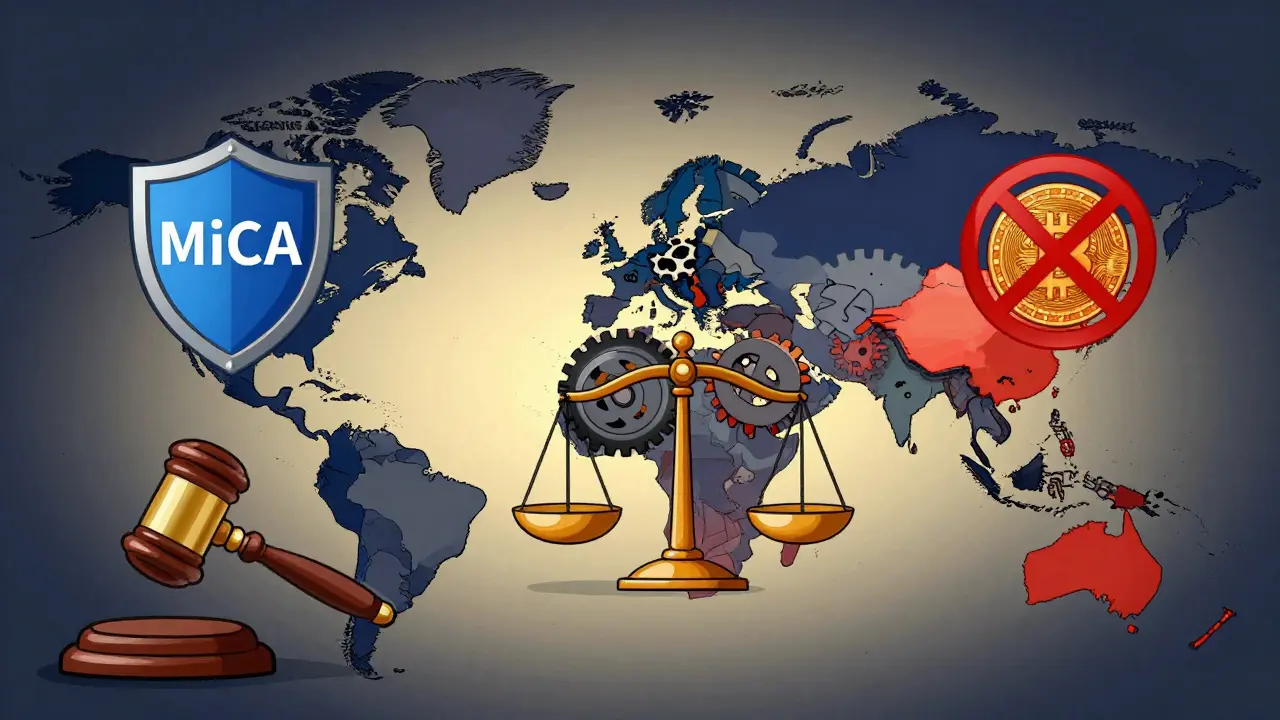
Is it actually illegal to hold Bitcoin where you live? For years, the answer was a confusing mix of "yes," "no," and "we're still figuring it out." But as we settle into mid-2026, the fog is lifting. The wild west days of unregulated crypto are officially over in most major economies. Today, the legal landscape isn't just about whether you can own a coin; it's about how your government taxes it, who can trade it, and what rules apply if you try to use it for coffee.
If you are holding digital assets or planning to start trading, understanding these shifts is no longer optional-it’s essential for staying compliant. This guide breaks down exactly where Bitcoin stands legally across the globe right now, moving beyond vague generalizations to specific laws that affect your wallet.
The New Global Standard: From Wild West to Regulated Asset
The biggest story in cryptocurrency regulation this year isn't a ban; it's convergence. Major economies have stopped treating digital assets like an alien threat and started treating them like financial products. This means stricter rules, but also clearer protections.
In Europe, the game-changer was the Markets in Crypto-Assets (MiCA) framework. Adopted in 2023 and fully active since mid-2024, MiCA gave the European Union the world's first unified rulebook for digital assets. Before this, traders faced a patchwork of national laws. Now, there is a single standard. If a company issues crypto in Germany, it follows the same core rules as one in France. This has made Europe a hub for compliant crypto businesses while pushing shady operations elsewhere.
The European Central Bank continues to classify Bitcoin as a convertible decentralized virtual currency, not money. However, the Court of Justice of the European Union ruled back in 2015 that exchanging fiat for Bitcoin is exempt from Value Added Tax (VAT). You don’t pay VAT when you buy Bitcoin, but you do pay income tax on any profits when you sell it or spend it on goods. This distinction remains critical for accounting purposes across the EU.
United States: Federal Clarity After Years of Chaos
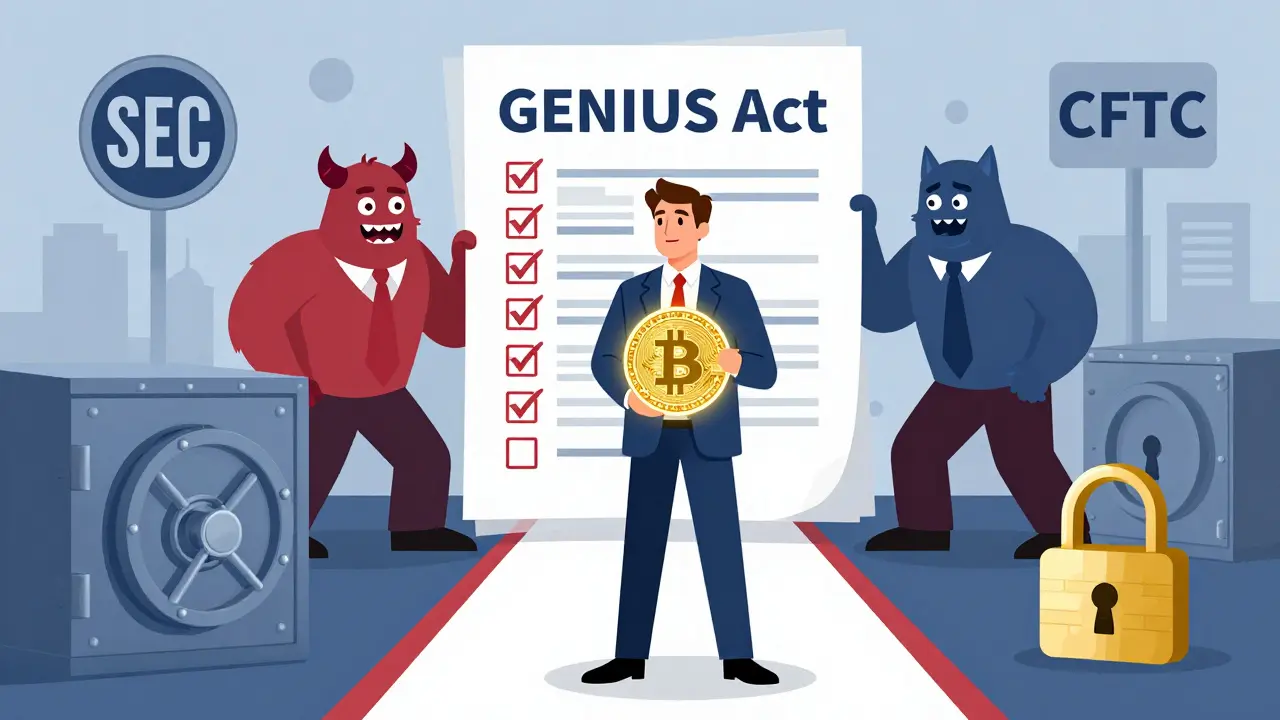
For Americans, 2025 and 2026 marked a historic shift. For nearly a decade, US crypto policy was defined by agency overlap-the SEC claiming everything was a security, the CFTC claiming commodities, and states creating their own licensing nightmares. That ended with the passage of the Guiding and Establishing National Innovation for US Stablecoins (GENIUS) Act in July 2025.
While the GENIUS Act primarily targets stablecoins, its impact on Bitcoin is profound. It established a clear federal taxonomy for digital assets. By defining which assets are payment instruments and removing them from SEC jurisdiction, it indirectly clarified the space for non-stablecoin assets like Bitcoin. In 2026, agency leaders are finalizing the remaining details for Bitcoin classification, but the trend is clear: Bitcoin is being treated as a distinct asset class, separate from securities.
This doesn't mean zero regulation. The Office of the Comptroller of the Currency (OCC) now oversees licensed issuers, and anti-money laundering (AML) rules are stricter than ever. If you run a business involving Bitcoin in the US, you need bank-grade compliance systems. But for the average holder, the fear of sudden federal bans has largely evaporated, replaced by a structured, albeit strict, legal environment.
Asia-Pacific: Divergent Paths and Local Nuances
Asia remains the most fragmented region for Bitcoin legality. There is no single "Asian" law; instead, each country takes a drastically different approach based on its economic goals and capital control needs.
Japan continues to lead in regulatory sophistication. Having amended its Payment Services Act in 2022, Japan formally recognized digital money-type stablecoins and integrated them into its financial system. Bitcoin exchanges must register with the Financial Services Agency, and user funds are protected by segregation requirements. It is one of the safest places in the world to trade Bitcoin legally.
In contrast, China tightened its stance significantly. On February 6, 2026, Chinese authorities declared that all activities related to virtual currencies constitute illegal financial activities. This isn't just a recommendation; it’s a ban on trading, mining, and exchange services within mainland China. Residents attempting to access offshore exchanges risk severe penalties. This highlights a key risk: even if Bitcoin is legal globally, your local internet infrastructure may block access.
Australia offers a middle ground. The Reserve Bank of Australia has long stated that nothing stops people from transacting in Bitcoin if they choose. Since April 2018, Australian exchanges must register with the Australian Transaction Reports and Analysis Centre (AUSTRAC) and implement strict Know Your Customer (KYC) policies. You can own Bitcoin, trade it, and even use it for payments, provided your exchange is compliant. The Australian Taxation Office treats Bitcoin as property, meaning capital gains tax applies when you dispose of it.
Africa and Oceania: Experimentation and Caution
Some regions are using Bitcoin to solve real-world problems, particularly where traditional banking is inaccessible or currencies are unstable.
In Tanzania, Bitcoin is technically legal to hold, but the Bank of Tanzania strongly advises against its use, emphasizing that the Tanzanian shilling is the only legal tender. This creates a gray area: you won't be arrested for owning it, but banks may refuse to process transactions linked to crypto accounts.
South Africa has taken a pragmatic approach. The South African Revenue Service (SARS) classifies Bitcoin as an intangible asset. This means it is taxable, but it is not considered legal tender. The Financial Intelligence Centre requires crypto service providers to register, bringing transparency to the market without banning usage.
In the Pacific Islands, attitudes vary wildly. Vanuatu legalized cryptocurrency in 2021 to attract tech investment. Meanwhile, Samoa permits cryptocurrencies but the Central Bank discourages their use due to volatility risks. These smaller nations often move faster than large economies because they have less bureaucratic inertia, but they also carry higher counterparty risk if the local regulator collapses.
| Jurisdiction | Legal Status | Tax Treatment | Key Regulation |
|---|---|---|---|
| European Union | Legal (Virtual Currency) | Income Tax on Gains; No VAT on Exchange | MiCA Framework |
| United States | Legal (Digital Asset) | Capital Gains Tax | GENIUS Act / OCC Oversight |
| Japan | Legal (Registered Exchange Asset) | Income Tax (Progressive Rates) | Payment Services Act |
| China | Illegal | N/A (Banned) | Financial Activity Ban (Feb 2026) |
| Australia | Legal (Property) | Capital Gains Tax | AUSTRAC Registration |
| Tanzania | Legal but Discouraged | Unclear / Case-by-Case | Bank of Tanzania Advisory |
Taxation: The Universal Cost of Ownership
Regardless of whether your country loves Bitcoin or hates it, the tax man almost always wants a cut. The biggest misconception among new holders is that Bitcoin is tax-free because it’s anonymous. It isn’t.
In most developed nations, including the US, UK, EU, and Australia, Bitcoin is treated as property or an intangible asset. This triggers two main tax events:
- Disposal Events: Selling Bitcoin for fiat, trading Bitcoin for another crypto, or spending Bitcoin on goods/services. Each of these is a taxable event where you calculate Capital Gains Tax (CGT).
- Income Events: Earning Bitcoin through mining, staking rewards, or salary payments. This is taxed as ordinary income at your marginal rate.
The complexity arises in tracking. With thousands of micro-transactions, calculating cost basis manually is impossible. Most serious investors now use specialized tax software that connects to their wallets via API to generate audit-ready reports. Failing to report crypto gains is becoming increasingly risky as governments share data more openly under frameworks like the Common Reporting Standard (CRS).

Practical Risks Beyond Legality
Just because Bitcoin is legal doesn't mean it's safe. Regulatory clarity helps, but operational risks remain high. Here are three pitfalls to avoid in 2026:
- Exchange Insolvency: Even regulated exchanges can fail. Never leave large amounts of Bitcoin on a centralized exchange. Use hardware wallets for long-term storage.
- Travel Rule Compliance: Under MiCA and other global standards, transfers above certain thresholds (often $1,000 or €1,000) require sender and receiver information. Anonymous large transfers are increasingly difficult and may trigger account freezes.
- Cross-Border Conflicts: If you live in a country with restrictive laws but use an exchange based in a friendly jurisdiction, you may face banking issues. Your local bank might close your account if it detects crypto-related flows, even if the transaction itself was legal.
What Comes Next?
The trajectory for Bitcoin is clear: integration. We are moving away from binary questions of "legal vs. illegal" toward nuanced frameworks of "compliant vs. non-compliant." As stablecoin regulations mature under acts like GENIUS and MiCA, Bitcoin will likely see similar standardized treatment for custody and trading.
For users, this means easier access through traditional banks and brokers, but also less privacy. The era of total anonymity is ending. If you value privacy, you will need to rely on self-custody solutions and understand the legal boundaries of your specific jurisdiction. Always consult a local tax professional before making significant moves, as laws can change overnight.
Is Bitcoin legal in my country?
In most developed nations, including the US, EU, UK, Japan, and Australia, Bitcoin is legal to own and trade. However, countries like China, Vietnam, and Bangladesh have banned or heavily restricted its use. Always check your local financial authority's latest guidelines, as regulations change frequently.
Do I have to pay taxes on Bitcoin?
Yes, in most jurisdictions. Bitcoin is typically treated as property or an asset. You owe capital gains tax when you sell, trade, or spend it for a profit. Income earned from mining or salaries paid in Bitcoin is taxed as regular income. Consult a tax advisor for specific rates in your country.
What is the MiCA framework?
MiCA (Markets in Crypto-Assets) is the European Union's comprehensive regulatory framework for cryptocurrencies. It became fully effective in mid-2024, providing a single set of rules for issuing and trading crypto assets across all EU member states, enhancing consumer protection and market integrity.
How does the GENIUS Act affect Bitcoin?
The GENIUS Act, passed in the US in 2025, primarily regulates stablecoins. However, it establishes a clear federal taxonomy for digital assets, reducing regulatory ambiguity for Bitcoin by distinguishing it from securities and commodities, thus clarifying oversight roles for agencies like the OCC and SEC.
Can I use Bitcoin as legal tender?
Generally, no. Most countries, including the US and EU members, do not recognize Bitcoin as legal tender. Only a few nations, like El Salvador, have adopted it as such. In most places, it is treated as a commodity or property, and merchants can accept it voluntarily, but debts must be payable in national currency.

Miss Masquer
It is truly fascinating to observe how the global financial landscape has shifted so dramatically in such a short period, transforming from a chaotic frontier into a structured ecosystem that demands rigorous compliance and understanding from every participant involved in this digital revolution.
I have been following the developments in Europe closely, particularly the implementation of the MiCA framework, which seems to offer a level of clarity and protection that many other regions are still struggling to achieve through fragmented national laws and conflicting regulatory bodies.
The way the European Union has managed to create a unified rulebook for digital assets while maintaining strict oversight on consumer protection is something that should perhaps serve as a model for other continents that are currently grappling with similar challenges in their own jurisdictions.
It makes me wonder if we will see more international cooperation in the coming years, or if each region will continue to develop its own unique approach based on local economic priorities and cultural attitudes towards decentralized finance technologies.
Joshua Alcover
The fundamental premise of this entire discourse is flawed because it assumes that foreign regulatory frameworks hold any relevance to American sovereignty or the superior structure of our domestic financial institutions which have historically operated with greater efficiency and innovation than those bureaucratic nightmares across the Atlantic.
We must recognize that the GENIUS Act represents a triumph of American legislative ingenuity, establishing a taxonomy that protects our citizens from the predatory practices often seen in less developed markets while ensuring that our technological leadership remains unchallenged by inferior systems designed by committees who do not understand the nuances of free-market dynamics.
To suggest that we need to look elsewhere for guidance is an insult to the intelligence of the American electorate and a disregard for the robust legal protections already afforded to investors under the new federal guidelines that prioritize security without stifling the entrepreneurial spirit that defines our nation's economic identity.
Diana Morris
stop overthinking the regulations just buy the dip and hold tight because the long term trend is always up regardless of what some bureaucrat says today
people worry too much about tax forms when they should be focusing on building wealth and securing their future against inflation which is eating away at your savings faster than any crypto crash ever could
Dianne Wright
i mean honestly everyone knows that the government is just trying to track every single penny you have left and calling it regulation is just a fancy way of saying they want control over your life
why bother reading all this legal jargon when you can just ignore it and hope they dont notice you holding coins under your mattress like everyone else who actually understands how money works
trisya hazriyana
the irony is palpable here
we have created a system so complex that only lawyers and accountants can navigate it while pretending this serves the democratization of finance
clearly the goal was never accessibility but rather creating a new class of gatekeepers who profit from our confusion
Debbie Lewis
I've been keeping my eye on the situation in Australia since the AUSTRAC registration requirements came into effect, and it seems to have stabilized the market quite a bit for local traders.
Knowing exactly where I stand with the tax office gives me peace of mind, even if the capital gains calculations are a bit tedious.
It's good to see that having clear rules doesn't necessarily mean banning the technology, just bringing it into the light where it can be properly managed.
Eric Grosso
so does this mean i can finally use my bitcoin to buy coffee without worrying about the feds knocking down my door lol
just kidding but seriously the part about travel rule compliance sounds like a nightmare for anyone who values privacy at all
Edith Mair
The distinction between legal tender and property status is crucial here, yet it seems many casual observers still conflate the two concepts.
Understanding that Bitcoin is treated as property in most jurisdictions means that every transaction is a potential taxable event, which fundamentally changes how one must approach portfolio management and liquidity strategies.
This is not a minor detail; it is the cornerstone of compliant ownership in 2026.
Sam Dashti
It feels like we are watching the birth of a new financial language, one where terms like 'taxonomy' and 'custody' take on meanings far heavier than their dictionary definitions.
The shift from the wild west to a regulated asset class is akin to watching a river dammed and channeled into irrigation systems; the water is still there, but its flow is now directed, measured, and taxed.
One wonders if the spirit of decentralization survives this institutional embrace, or if it merely becomes another flavor of traditional banking with a shinier interface.
Rosie Morris
i feel so overwhelmed by all these acronyms and acts but i guess its better than nothing right?
at least now i know im not going to jail for holding bitcoin in the us which is something i think
lorna erni
Let’s get real here! The whole point of Bitcoin was to escape the very systems this article glorifies.
Now we have MiCA and GENIUS acting as digital leashes, turning a revolutionary tool into a compliant pet for banks.
But hey, if you want to play nice with the IRS and SEC, go ahead and register your wallet. Just don’t pretend you’re still part of the rebellion.
True freedom isn’t found in a KYC-compliant exchange!
stalin brian
its kinda crazy how fast things changed isnt it
remember when we thought btc was just for hackers and drug dealers on the dark web? now its basically mainstream and regulated like stocks
i guess thats progress even if it feels a bit sterile compared to the early days
kamal ifrani
Typical western propaganda painting regulation as a benevolent gift rather than what it truly is: a mechanism of control and extraction.
The author conveniently ignores the fact that these 'protections' primarily shield large institutional players while crushing small retail investors with compliance costs.
In India, we see similar attempts to stifle innovation under the guise of stability, and it’s disgusting how people cheer for their own financial enslavement.
Wake up sheeple, your privacy is dead and you thanked them for killing it.
saradee dee
Oh my goodness, reading this made my head spin a little bit!
But I think it is really important that we understand the rules so we don't make mistakes.
I am glad that Japan seems to have such a safe environment for trading, it gives me hope that maybe other countries will follow suit soon.
We just need to be careful and stay informed, right?
Craig Swanson
Listen up folks, if you are ignoring the tax implications outlined here, you are playing with fire.
I have seen too many people lose their shirts because they thought 'anonymous' meant 'invisible to the IRS'.
Get your records straight, use proper software, and consult a professional.
Don't let laziness cost you your freedom or your finances.
Compliance is not optional if you want to keep your gains.
Bill Gunn
Great summary of the current state of affairs! 🚀
One thing I’d add is that while the regulations are tightening, the technology for self-custody is also improving rapidly.
Hardware wallets are becoming more user-friendly, and multi-signature setups are easier to manage than ever before.
So while you might need to report your taxes, you can still maintain significant control over your private keys. 🔑
Stay safe out there!
Dana Rapoport
The philosophical implication of treating Bitcoin as property rather than currency is profound.
It suggests that society views it not as a medium of exchange for daily life, but as a store of value or speculative asset.
This classification shapes our relationship with the technology, framing it within existing capitalist structures rather than allowing it to challenge them.
Perhaps we should reflect on whether this integration is the ultimate victory of Bitcoin or its assimilation into the very system it sought to disrupt.
Hadleigh Edwards
Despite all the red tape and bureaucratic hurdles that seem to multiply overnight, I remain incredibly optimistic about the future of digital assets because the underlying technology continues to prove its resilience and utility in ways that traditional finance simply cannot match.
The fact that major economies are engaging with Bitcoin rather than banning it outright indicates a recognition of its inevitable role in the global economy, and this gradual acceptance paves the way for broader adoption and innovation that will benefit consumers worldwide in the long run.
We are witnessing the maturation of an industry that started with a handful of enthusiasts and has grown into a multi-trillion dollar sector that demands respect and serious consideration from policymakers and investors alike.
mark valmart
honestly i just wish the tax reporting was simpler
every time i trade i feel like i need a degree in accounting to figure out if i owe anything
maybe one day the software will just talk directly to the irs and save us all the headache
Crystal Davis
The article fails to adequately address the systemic risks introduced by the centralization of custody solutions mandated by these new regulations.
By forcing users onto licensed exchanges, regulators are effectively recreating the points of failure that led to the collapse of previous iterations of the industry.
This is not protection; it is a controlled demolition of privacy and autonomy disguised as consumer safety.
The data shows that regulated entities are no more secure than their unregulated counterparts, yet they enjoy the privilege of state-backed enforcement mechanisms that criminalize alternative behaviors.
Christina Pearce
I found the section on Asia-Pacific particularly insightful, given the stark differences between Japan and China.
It raises an interesting question about how geopolitical tensions might influence crypto adoption in neighboring countries.
If China maintains its ban, will we see increased usage of peer-to-peer networks among residents seeking alternatives?
It would be valuable to explore the human impact of these policies beyond the legal text.
Barclay Chantel
A rather pedestrian overview of what amounts to a sophisticated exercise in financial surveillance.
The pretension of calling this 'clarity' is amusing when one considers that the primary beneficiaries are those with the resources to navigate the compliance maze.
The rest of us are left with the illusion of choice while our financial lives are meticulously catalogued by algorithms designed to maximize revenue for the state.
How quaint.
Joe Clements
I really appreciate the effort put into breaking down these complex topics.
It’s easy to get lost in the details, but seeing the comparison table helps clarify the big picture.
Thanks for sharing this information, it’s definitely helpful for anyone trying to stay compliant while navigating the crypto world.
Keep up the good work!