Bitcoin Transaction Finality Time: How Long Until It's Safe?
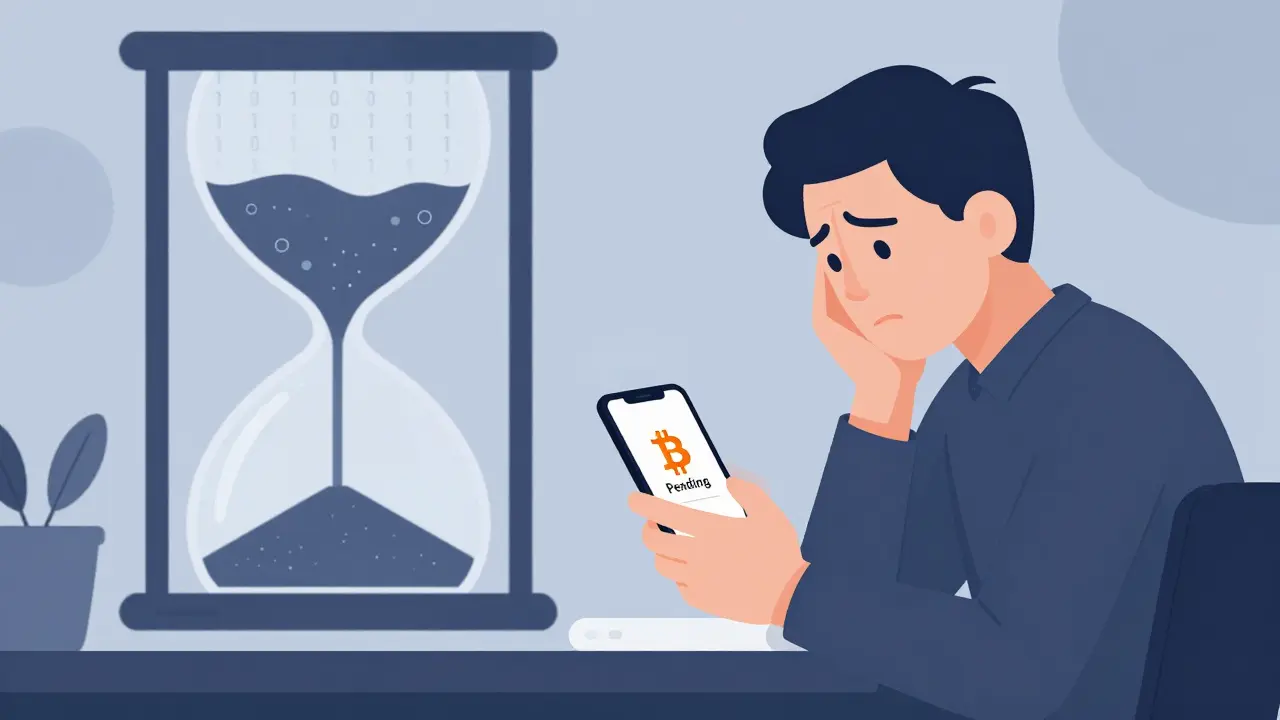
You send Bitcoin is the world's first decentralized cryptocurrency that uses proof-of-work consensus to secure transactions and maintain a public ledger.. You see the transaction ID. You check your wallet, and it says "pending." Then you wait. And wait. Meanwhile, the recipient asks, "Is the money there yet?" This moment of uncertainty is exactly what Bitcoin transaction finality time is the duration required for a Bitcoin transaction to become irreversible and secure against double-spending attacks through network confirmations. addresses.
Unlike credit card payments that settle in seconds or even traditional bank transfers that often clear within hours, Bitcoin operates on a different clock. It doesn't offer instant certainty. Instead, it offers growing probability. Understanding this distinction isn't just academic-it’s crucial if you want to avoid losing money to scams, failed trades, or impatient mistakes. Let’s break down how long you actually need to wait, why the network is designed this way, and what you can do about it.
The Myth of Instant Bitcoin Payments
Many people assume that once they hit "send," the money is gone from their wallet and available to the receiver. That’s not how Bitcoin works. When you broadcast a transaction, it enters a waiting room called the mempool. Miners pick transactions from this pool based on fees, not order. Your transaction sits there until a miner includes it in a new block.
This process takes time because Bitcoin’s core design prioritizes security over speed. The network produces one block approximately every 10 minutes. This slow pace is intentional. It allows nodes across the globe to sync, verify, and agree on the state of the ledger. If blocks came out every second, the network would fragment, leading to frequent forks and instability. By keeping the interval steady at 10 minutes, Bitcoin ensures that the majority of honest participants can keep up.
So, when does a transaction become "final"? Technically, never. Practically, after enough confirmations. Here’s where things get interesting.
What Are Confirmations and Why Do They Matter?
A confirmation happens when a miner adds your transaction to a block. One confirmation means your transaction is in one block. But that block could still be orphaned-discarded-if another chain grows faster. Each subsequent block built on top of yours makes reversal exponentially harder.
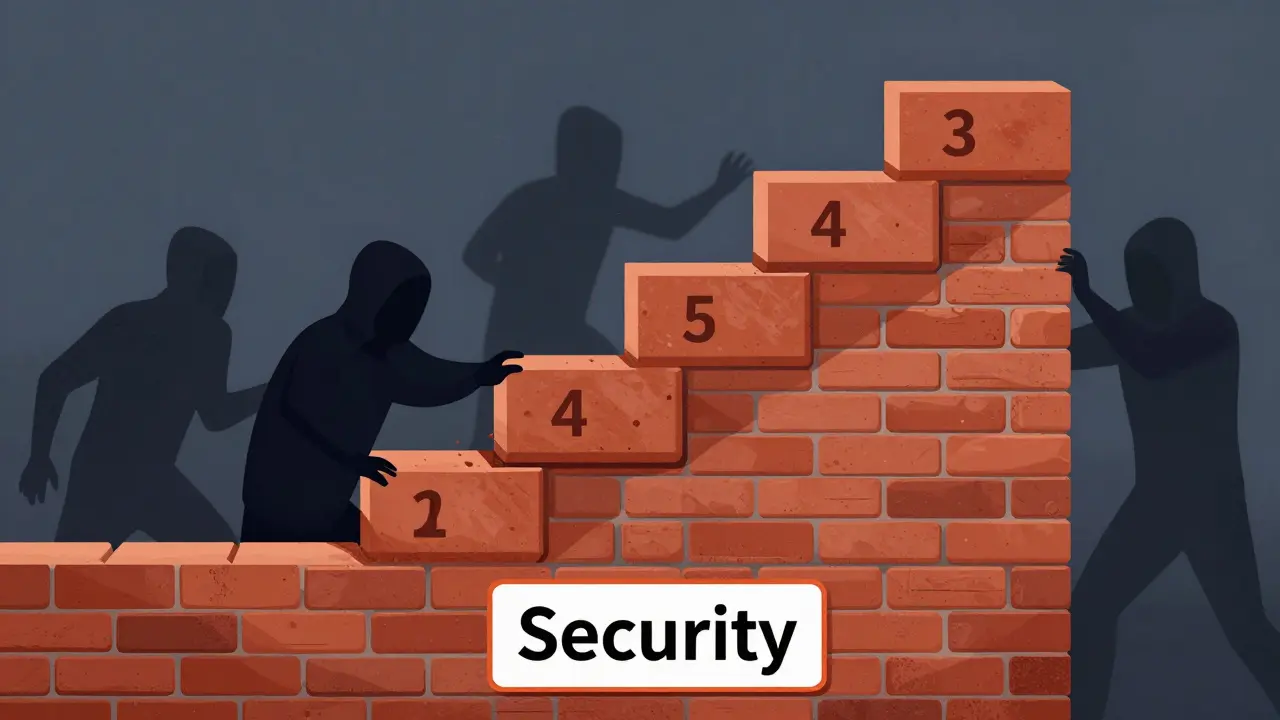
To understand why, imagine trying to rewrite history. To reverse a transaction with one confirmation, an attacker must redo the work for that single block. With six confirmations, they must redo the work for six consecutive blocks while the rest of the network continues adding new ones. Since Bitcoin’s total computational power (hash rate) is immense, catching up becomes economically unfeasible for anyone without controlling more than 50% of the network-a scenario known as a 51% attack.
| Confirmations | Approximate Time | Risk Level | Recommended Use Case |
|---|---|---|---|
| 0 | Immediate | Very High | None (do not accept) |
| 1 | ~10 minutes | High | Small purchases (<$100), trusted merchants only |
| 3 | ~30 minutes | Medium | Standard retail transactions, P2P sales |
| 6 | ~60 minutes | Low | Large transfers, exchange deposits, institutional settlements |
| 10+ | ~100+ minutes | Negligible | High-value assets, legacy records, maximum security |
The table above shows industry standards. Most exchanges require three to six confirmations before crediting your account. Why? Because one confirmation is too risky. In 2013, a major exchange suffered losses due to accepting zero-confirmation transactions during a period of high network congestion. Attackers exploited the delay by broadcasting conflicting transactions. Since then, the standard has hardened around the six-confirmation rule for significant amounts.
Why Six Confirmations? The Math Behind the Magic
Six isn’t a random number. It comes from Satoshi Nakamoto’s original whitepaper, which modeled the probability of an attacker overtaking the honest chain. The math shows that after six blocks, the chance of successful reorganization drops below 0.1% under normal conditions. For most users, that’s good enough. For billion-dollar institutions, it’s essential.
Think of it like insurance. Paying for six confirmations buys you peace of mind. Skipping them saves time but exposes you to risk. During periods of low activity, one confirmation might feel safe. But during bull runs or market crashes, when everyone moves funds simultaneously, the mempool fills up. Transactions stall. Fees spike. And patience becomes scarce.
In June 2024, average transaction fees surged past $15 per transaction due to Ordinals inscription boom. Users who paid lower fees waited hours-or days-for inclusion. Those who needed speed paid premiums. This dynamic proves that finality isn’t fixed; it’s influenced by demand, fee markets, and network health.
How Fast Is Bitcoin Compared to Other Blockchains?
If you’ve used Ethereum, Solana, or newer chains like Sei, you know Bitcoin feels sluggish. Sei claims sub-400ms finality. Ethereum settles in minutes via proof-of-stake. Even Visa processes thousands of transactions per second. So why hasn’t Bitcoin changed?
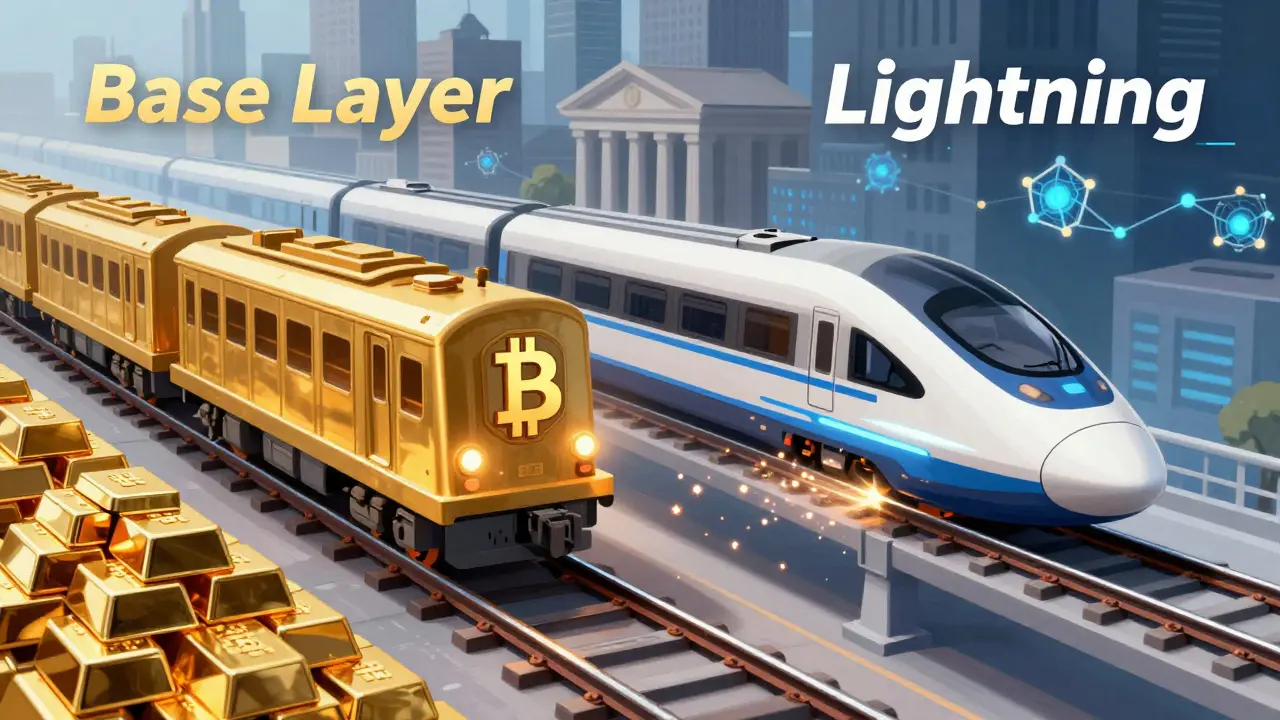
Because changing Bitcoin’s base layer breaks its primary advantage: decentralization. Faster blocks mean larger data propagation delays. Larger delays increase fork rates. Higher fork rates reduce security. Bitcoin chose immutability over velocity. It’s digital gold, not a debit card.
That said, alternatives exist. Layer-2 solutions like the Lightning Network is a second-layer payment protocol built on top of Bitcoin that enables near-instant, low-cost microtransactions through off-chain channels. solve the speed problem without sacrificing security. On Lightning, payments settle instantly between peers. Only when closing the channel does the result post to the main chain. This hybrid model gives users both speed and ultimate finality.
For everyday coffee runs, Lightning works beautifully. For buying a house, you’d still use the base layer. Knowing which tool fits your job prevents frustration.
Real-World Scenarios: What Should You Wait For?
Let’s walk through common situations so you can decide how long to wait.
- Buying lunch: Accept 1-2 confirmations. Risk is minimal. Merchant tools often auto-approve small amounts quickly.
- Selling online goods: Wait for 3 confirmations. Enough protection against chargeback-style attacks.
- Transferring large sums ($10k+): Insist on 6+. Never release assets until fully confirmed.
- Exchanging on a platform: Follow their rules. Most require 3-6. Don’t withdraw early.
- Receiving from unknown sender: Verify independently. Check multiple explorers. Trust no UI alone.
One pro tip: Always check the raw transaction hash on a trusted explorer like Blockchain.com or Mempool.space. Wallet apps can lie. Explorers don’t.
Can You Speed Up a Stuck Transaction?
Yes, sometimes. If your transaction hasn’t been picked up, you have options.
- RBF (Replace-By-Fee): If enabled, broadcast a new version with higher fees. Nodes replace the old one.
- CPFP (Child-Pays-For-Parent): Send a new transaction spending the same output with a high fee. Miners prioritize the bundle.
- Wait it out: Congestion clears eventually. Patience costs nothing.
Never try to cancel a transaction directly. Bitcoin doesn’t allow cancellations. You can only overwrite or abandon hope.
Future Outlook: Will Finality Change?
Probably not on the base layer. Core developers resist changes that threaten decentralization. Any tweak to block time or confirmation requirements needs broad consensus-which rarely happens.
But innovation continues elsewhere. Taproot improved efficiency. Ordinals added NFTs. Lightning scales payments. These layers complement Bitcoin’s role as a settlement backbone. Expect finality times to remain stable for years. The ecosystem adapts around it, not beneath it.
How long does it take for a Bitcoin transaction to be fully confirmed?
On average, full confirmation takes about 60 minutes, requiring six block confirmations. Each block averages 10 minutes to mine. However, during network congestion, this can extend to several hours or more depending on transaction fees.
Is one confirmation enough for Bitcoin?
Only for very small, low-risk transactions. One confirmation leaves room for potential reversal if the block gets orphaned. For anything valuable, wait at least three to six confirmations to ensure security.
Why doesn't Bitcoin have instant finality?
Bitcoin sacrifices speed for security and decentralization. Its proof-of-work system requires time to validate blocks globally. Instant finality would weaken resistance to attacks and compromise network integrity.
Can I speed up a pending Bitcoin transaction?
Yes, using Replace-By-Fee (RBF) or Child-Pays-For-Parent (CPFP). Both methods involve paying higher fees to incentivize miners to include your transaction sooner. Not all wallets support these features.
Does the Lightning Network change Bitcoin's finality time?
Indirectly, yes. Lightning provides instant off-chain payments. When channels close, results settle on the main chain following standard confirmation rules. So while user experience improves, underlying finality remains unchanged.