BitMesh Crypto Exchange Review: Is It Real or a Confusion with BitMEX?
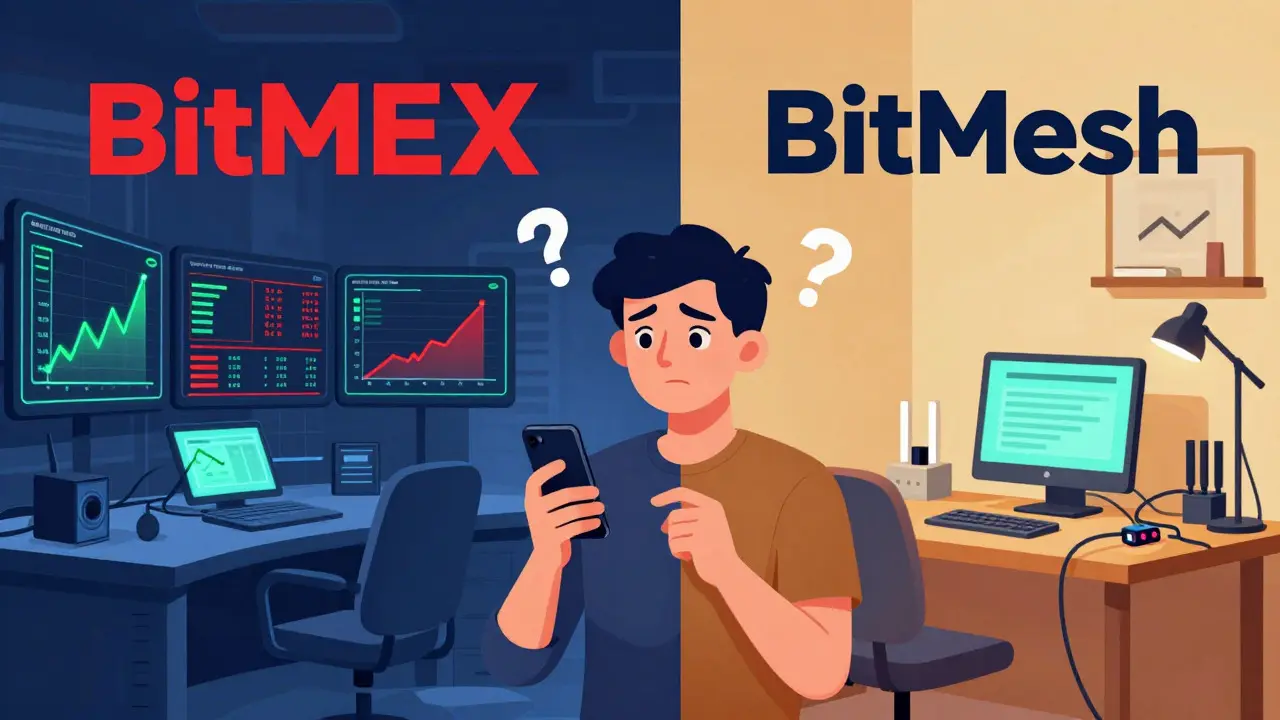
You’ve probably heard the name BitMesh thrown around in crypto circles and assumed it’s another platform for trading Bitcoin or Ethereum. You type “BitMesh crypto exchange review” into your search bar, expecting to see fee structures, leverage options, and security audits. But here is the catch: BitMesh is not a cryptocurrency exchange. In fact, if you are looking for a place to buy, sell, or trade digital assets, you are likely confusing it with BitMEX, a major derivatives exchange.
This confusion happens more often than you’d think. The names sound similar, they both involve Bitcoin technology, and they both appear in search results related to blockchain innovation. But mixing them up could lead you down a rabbit hole of broken links and dead-end projects. Before you waste time trying to sign up for an exchange that doesn’t exist in the traditional sense, let’s clear up exactly what BitMesh is, how it works, and why it matters-even if it isn’t where you go to trade crypto.
The Great Name Confusion: BitMesh vs. BitMEX
The first thing you need to understand is that BitMesh and BitMEX are two completely different entities operating in different lanes of the tech world. This distinction is critical because your expectations for each will be radically different.
BitMEX is a well-established cryptocurrency derivatives exchange. Launched in 2014, it allows traders to speculate on the price of Bitcoin and other cryptocurrencies using high leverage-up to 250x in some cases. It has a matching engine that executes trades in under 4 milliseconds. It charges taker fees as low as 0.032%. It has survived numerous market crashes and maintains a public proof of reserves showing zero funds lost to hacks since its inception. If you want to trade, you go to BitMEX (or one of its many competitors like Binance or Bybit).
BitMesh, on the other hand, is an open-source software project. It was developed by a contributor named adonley and is hosted on GitHub. It does not hold your funds. It does not offer a trading interface. It does not have customer support. Instead, BitMesh is a peer-to-peer internet connection sharing platform. Its goal is to allow people to monetize their Wi-Fi by letting neighbors pay for access using Bitcoin micropayments.
| Feature | BitMesh | BitMEX |
|---|---|---|
| Type | Open-source P2P Internet Sharing Tool | Cryptocurrency Derivatives Exchange |
| Primary Function | Sell Wi-Fi access via Bitcoin | Trade crypto futures and perpetual swaps |
| User Base | Developers, Tech Enthusiasts | Active Traders, Institutions |
| Revenue Model | None (Free/Open Source) | Trading Fees |
| Availability | GitHub Repository | Web Platform & Mobile App |
If you were looking for a place to deposit $1,000 and start trading altcoins, BitMesh is not it. But if you are curious about decentralized infrastructure and Bitcoin’s utility beyond speculation, BitMesh is fascinating.
What Is BitMesh Actually Doing?
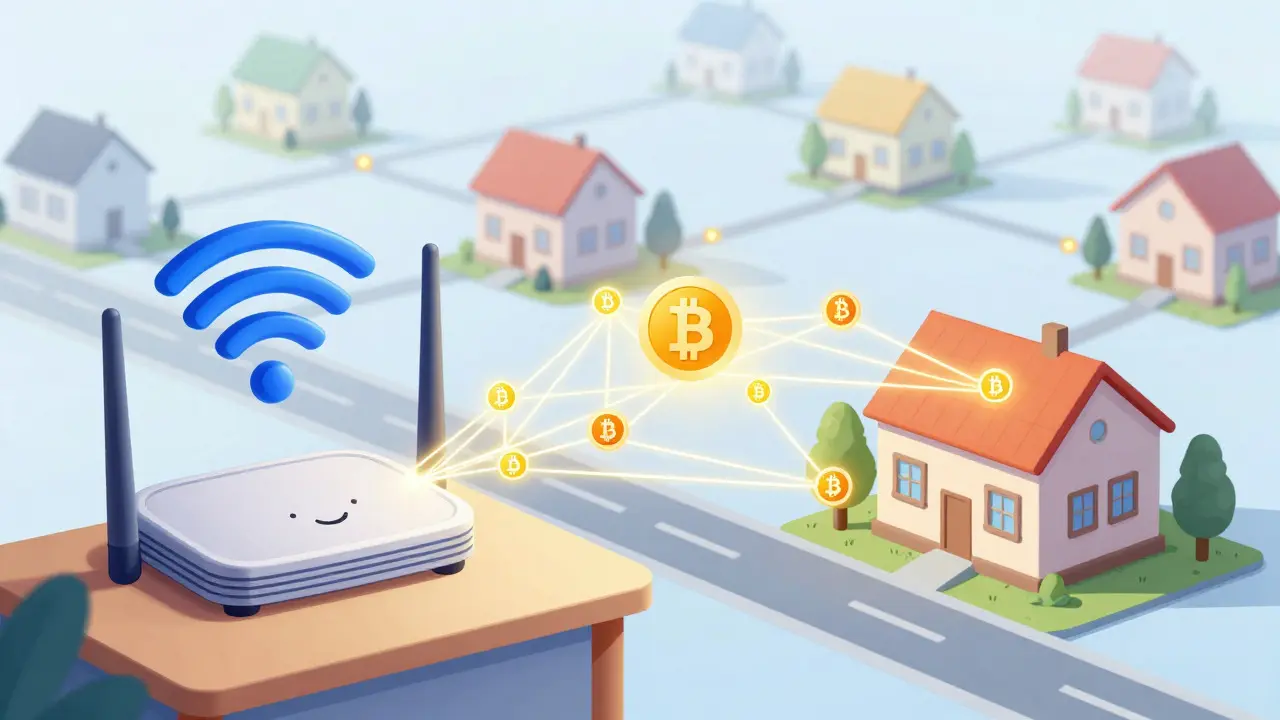
So, if BitMesh isn’t an exchange, what is the point? The core idea behind BitMesh is simple but powerful: turn any Wi-Fi router into a micro-internet service provider (micro-ISP). Imagine you have a strong home internet connection. Instead of just letting your neighbor steal your signal, you set up BitMesh. They connect to your network, but instead of getting free access, they hit a captive portal-a landing page that asks them to pay.
The twist? They don’t pay with credit cards or PayPal. They pay with Bitcoin. And not just large chunks of Bitcoin, but tiny fractions of it, measured in seconds or minutes of usage. This is where the technical magic happens. BitMesh uses Bitcoin micropayment channels to handle these transactions.
In traditional blockchain terms, sending a transaction every few seconds would clog the network and cost more in fees than the value of the data being transferred. BitMesh solves this by keeping the payments off-chain initially. The system aggregates these small payments securely between the user’s browser and the hotspot server. Only after a predetermined time limit or threshold is reached is a single aggregated transaction posted to the Bitcoin blockchain. This makes paying for internet access economically viable at a granular level.
Under the Hood: How the Technology Works
For those who enjoy digging into code, BitMesh is a study in practical blockchain integration. The project relies on several established networking tools combined with custom Bitcoin libraries. Here is a breakdown of the key components:
- Network Management: BitMesh uses
hostapdto manage WiFi authentication,dnsmasqfor DHCP IP address assignment, andiptablesfor traffic routing and NAT. These are standard Linux tools, meaning the software can run on common hardware like Raspberry Pis or old laptops. - Payment Processing: On the server side,
bitcoinjmanages connections and receives payments. On the client side (the user’s browser),bitcore.jscreates the payment channels. The developers modified these libraries to use Pay-to-Script-Hash (P2SH) rather than raw multisig transactions, allowing for smoother interoperability. - User Interface: The captive portal is served by
nanohttpd. To avoid issues with HTTPS redirects before payment is confirmed, BitMesh implements the WISPr protocol, which ensures users see the payment page before attempting to load regular websites. - State Management: Because payment channels rely on strict state logic (who owes whom, what is locked, what is spent), the Java client uses formal state machines defined in
Utils/StateMachine.javato prevent errors.
One interesting technical hurdle the developers faced was mobile browser behavior. JavaScript execution often pauses when a user switches tabs on a phone to save battery. Since BitMesh’s micropayment channel runs in the browser, this would break the connection. As a result, the project has distinct implementations for desktop (bitmesh.js) and mobile (bitmesh_mobile.js) to handle these interruptions gracefully.
Is BitMesh Ready for Mainstream Use?
Here is the honest truth: as of mid-2026, BitMesh remains primarily a developer-focused project rather than a consumer-ready product. If you check its GitHub repository, you’ll see modest engagement-around 30 stars, 12 watchers, and 9 forks. There are no formal version releases listed, suggesting it is still in active development without stable distribution channels.
There are no widespread real-world deployments documented. You won’t find cafes or airports running BitMesh hotspots yet. The ease of installation, which the developers acknowledge is critical for success, hasn’t fully matured. Setting up BitMesh currently requires technical know-how: configuring Linux servers, managing iptables rules, and ensuring your Bitcoin node is synced.
However, the vision extends beyond just Wi-Fi. The architecture is designed to be flexible. The Units directory in the source code suggests the system could theoretically sell other standardized resources, such as electricity from a solar panel or even milk from a vending machine, treating them as units purchasable through the same captive portal system. This positions BitMesh not just as an internet tool, but as a potential framework for decentralized resource sharing.

Why Does This Matter for Crypto Users?
Even if you never plan to share your Wi-Fi, understanding BitMesh helps you appreciate the broader utility of Bitcoin. Most people view Bitcoin solely as a store of value or a speculative asset traded on exchanges like BitMEX. But BitMesh demonstrates Bitcoin’s original promise: a peer-to-peer electronic cash system that enables trustless transactions between strangers.
By enabling micro-transactions without intermediaries, BitMesh proves that blockchain technology can solve real-world logistical problems, not just financial ones. It highlights the importance of Layer 2 solutions and off-chain protocols in scaling Bitcoin for everyday use cases. While BitMesh itself may not become the next big app, the concepts it explores-micropayment channels, P2SH optimizations, and decentralized service provisioning-are foundational to the future of decentralized finance (DeFi) and the decentralized web (Web3).
Final Verdict: Who Should Care About BitMesh?
If you are a trader looking for a new exchange, stop looking for BitMesh. Go to BitMEX, Binance, Coinbase, or Kraken. BitMesh will not help you profit from market movements.
But if you are a developer, a blockchain enthusiast, or someone interested in decentralized infrastructure, BitMesh is worth a look. Clone the repo, read the documentation, and experiment with the code. It’s a clean example of how Bitcoin can be integrated into physical services. Just remember: you’re reviewing a piece of open-source software, not a financial platform.
Is BitMesh a safe place to store my crypto?
No. BitMesh is not an exchange or a wallet service. It is open-source software that facilitates payments. You retain control of your own keys and funds when using BitMesh, but there is no custodial safety net like insurance or customer recovery support found on centralized exchanges.
Can I trade Bitcoin on BitMesh?
Not in the traditional sense. You cannot buy or sell Bitcoin against fiat currency or other cryptos on BitMesh. You can only spend Bitcoin to purchase internet access (or potentially other resources) from a host running the BitMesh software.
Why do search results mix up BitMesh and BitMEX?
The names are phonetically similar, and both relate to Bitcoin technology. Search engines often prioritize BitMEX due to its higher traffic volume and commercial relevance, leading to confusion. Always verify the URL: BitMEX operates at bitmex.com, while BitMesh is hosted on GitHub and bitmesh.network.
Do I need technical skills to use BitMesh?
Yes, currently. Setting up a BitMesh hotspot requires knowledge of Linux command lines, network configuration (iptables, dnsmasq), and Bitcoin node management. It is not a plug-and-play solution for average consumers yet.
How does BitMesh charge for internet?
It uses Bitcoin micropayment channels. Users pay small amounts per second of usage. These payments are aggregated off-chain and settled on the Bitcoin blockchain periodically, reducing fees and increasing speed compared to individual on-chain transactions.