BitMEX Crypto Exchange Review 2026: Is It Still the King of Bitcoin Derivatives?
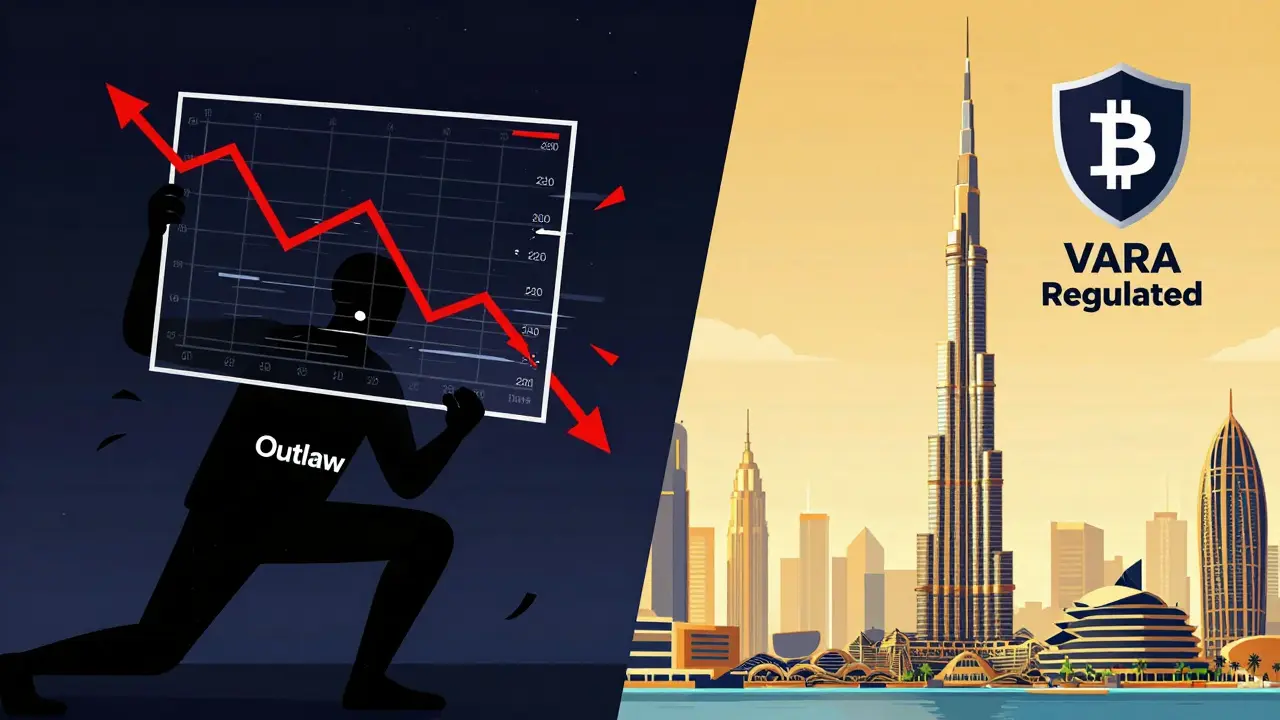
Remember when Bitcoin dropped 30% in a single day and your exchange liquidated you because their price feed glitched? That was the old days. Today, BitMEX is a specialized cryptocurrency derivatives trading platform known for its robust infrastructure and Bitcoin-focused products. Also known as Bitcoin Mercantile Exchange, it has reinvented itself from a regulatory pariah into a compliant Dubai-based entity. But here is the real question: after paying a $100 million fine to U.S. authorities in 2020 and moving headquarters to the UAE, is this platform still worth your time in 2026?
If you are a casual investor looking to buy some Ethereum and hold it for five years, BitMEX is probably not for you. This isn't Coinbase or Binance with their thousands of coins and NFT marketplaces. BitMEX is a sniper rifle, not a shotgun. It is built for one thing: high-leverage Bitcoin and Ethereum derivatives trading. If that sounds like your style, let’s break down exactly what you get, what you lose, and whether the risks still outweigh the rewards.
The Short Version: Who Should Use BitMEX?
- Best For: Professional traders who prioritize execution speed, deep order books, and reliable liquidation mechanisms over asset variety.
- Avoid If: You need spot trading for altcoins, you are a U.S. resident, or you hate mandatory KYC (Know Your Customer) checks.
- Key Stat: As of early 2026, BitMEX holds an 18.7% market share in Bitcoin perpetual swaps, ranking #3 globally behind Binance Futures and Bybit.
Regulatory Status: From Outlaw to Compliant Entity
You can’t talk about BitMEX without addressing the elephant in the room: its legal history. Founded in 2014 by Arthur Hayes, Benjamin Delo, and Samuel Reed, the exchange operated in a gray area for years. In 2020, the founders surrendered to U.S. authorities, resulting in a $100 million settlement with the CFTC and FinCEN. The company itself wasn’t charged, but the leadership change was seismic.
Fast forward to January 2026. BitMEX is now fully regulated under Dubai’s Virtual Assets Regulatory Authority (VARA). This isn’t just paperwork; it’s a structural overhaul. They implemented compulsory KYC procedures in Q3 2021. Yes, that means no more anonymous trading. Every user must verify their identity, regardless of how much they trade. For many privacy advocates, this was a dealbreaker. For institutional investors, it was a green light.
The shift to Dubai also means stricter operational controls. While this adds legitimacy, it introduces jurisdictional limitations. BitMEX currently serves only 95 countries. If you live in the United States, Canada, or several other restricted jurisdictions, you simply cannot create an account. Unlike Binance, which operates in over 180 countries, BitMEX plays a much smaller game geographically.
Trading Products: Less Is More?
Here is where BitMEX diverges sharply from the competition. Open up Binance or Bybit, and you’ll see hundreds of trading pairs. BitMEX offers roughly 35 supported cryptocurrencies as of December 2025. Their core product remains the Bitcoin Perpetual Swap (XBTUSD), a derivative contract that allows traders to speculate on Bitcoin's price without owning the underlying asset. Launched in 2016, this instrument became the industry standard for leveraged Bitcoin trading.
| Feature | BitMEX | Binance Futures | Bybit |
|---|---|---|---|
| Max Leverage (BTC) | 100x | 125x | 100x |
| Tradable Assets | ~35 | 1,000+ | 85+ Derivatives |
| Liquidation Mechanism | Index Price Based | Last Trade Price | Mark Price |
| Monthly Volume (Approx.) | $28.4 Billion | $215.7 Billion | $98.3 Billion |
| Spot Trading Pairs | 15 | 500+ | 200+ |
Why so few assets? Because BitMEX focuses on liquidity depth rather than breadth. For Bitcoin and Ethereum traders, this matters immensely. When the market crashes, thin order books lead to massive slippage. BitMEX’s XBTUSD pair consistently shows superior depth compared to rivals. A Reddit user noted in January 2026 that during major volatility events, slippage on BitMEX was "virtually non-existent" even when other exchanges froze or widened spreads significantly.
They do offer spot trading, launched in May 2022, but it’s an afterthought. With only 15 USDT pairs available, you won’t find obscure altcoins here. If you want to diversify into Solana, Cardano, or new meme coins, you’ll need another exchange.
Fees and Costs: Can You Save Money?
Trading fees are where BitMEX gets interesting. The platform uses a maker-taker model. Makers (who add liquidity by placing limit orders) often pay zero fees or receive rebates, while takers (who remove liquidity with market orders) pay higher rates. Standard taker fees start around 0.075%, which is competitive but not the cheapest in the industry.
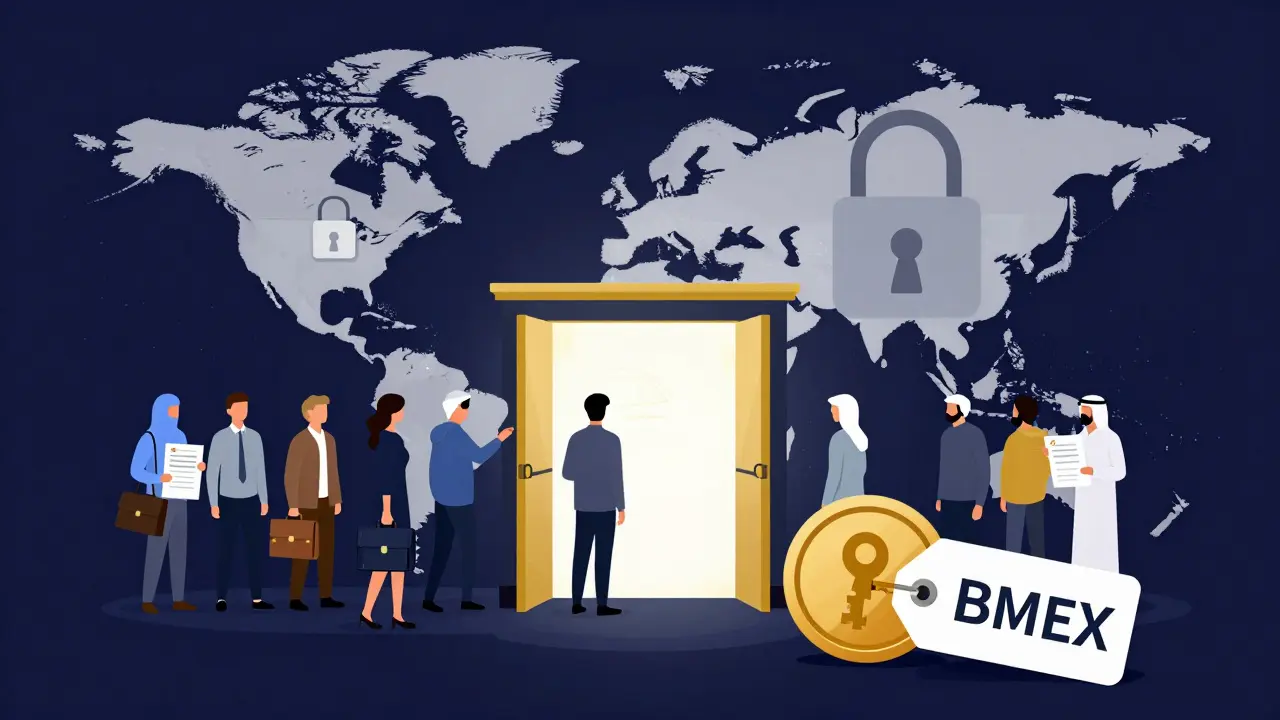
However, there is a way to slash these costs. In September 2023, BitMEX launched the BMEX Token, a utility token designed to provide fee discounts and governance rights to holders. Holding BMEX tokens unlocks tiered fee reductions. If you hold 10,000+ BMEX tokens and maintain a monthly trading volume of $50,000 or more, you can secure a maximum 25% discount on fees. For high-volume day traders, this math works out quickly. For someone trading $500 a month, the token economy doesn’t make sense.
Withdrawal fees are another consideration. BitMEX only accepts Bitcoin for free withdrawals, with a minimum threshold of 0.001 BTC. Other cryptocurrencies incur network fees. More importantly, withdrawals are processed twice daily at 08:00 and 20:00 UTC. This scheduling system saves the exchange money on gas fees but frustrates users who need instant access to funds. One Trustpilot reviewer complained about waiting 14 hours for an ETH withdrawal because they missed the scheduled window. It’s a trade-off between cost-efficiency and convenience.
Security and Technology: Built for Speed
In crypto, security isn’t a feature; it’s the foundation. BitMEX has invested heavily here. Their proprietary matching engine processes 100,000 orders per second with sub-millisecond latency, verified by independent testing from CryptoQuant in late 2025. This speed prevents front-running and ensures your orders execute at the price you see.
Funds are secured through multi-signature cold storage wallets. Specifically, withdrawals require 3-of-5 signatures from company executives. This setup makes insider theft nearly impossible. The platform also achieved ISO/IEC 27001 certification for information security management in July 2021, a rigorous standard requiring annual recertification. The most recent Hacken security audit in January 2026 confirmed zero critical vulnerabilities in their smart contract infrastructure.
But technology alone doesn’t prevent losses. The biggest risk on BitMEX is leverage-induced liquidation. However, BitMEX uses an index-based liquidation system. Instead of using the last traded price (which can be manipulated during flash crashes), it calculates margin requirements based on an underlying price index derived from multiple exchanges. This mechanism protects traders from erroneous liquidations during extreme volatility-a distinct advantage over competitors who rely solely on mark prices or last trade prices.
User Experience: Steep Learning Curve
Let’s be honest: BitMEX is not beginner-friendly. The interface is dense, packed with data, charts, and order book details. If you’ve never traded futures before, you will feel overwhelmed. The platform recommends using their TestNet demo environment first. Data suggests it takes 8-12 hours of practice to become proficient with their leverage mechanisms.
The desktop experience is superior. It integrates seamlessly with TradingView, offering advanced charting tools essential for technical analysis. The mobile app, however, lags behind. Rated 3.9/5 on the Apple App Store in January 2026, it provides basic functionality for monitoring positions but lacks the comprehensive order management features found on the desktop version. You can place trades, but managing complex strategies on a phone screen is frustrating.
Customer support is available 24/7 via in-app chat for verified accounts, with an average response time of 14 minutes. However, complex issues-like failed withdrawals or API errors-can take up to 72 hours to resolve. Documentation is mixed: derivatives guides are rated "excellent" by 78% of users, but spot trading resources are considered "inadequate" by 63%. If you’re stuck, you might find more help on community forums like Reddit than in official docs.
Verdict: Is BitMEX Worth It in 2026?
BitMEX occupies a specialized niche. It is not trying to be everything to everyone. If you are a professional trader focused on Bitcoin and Ethereum derivatives, valuing execution speed, deep liquidity, and reliable liquidation protocols above all else, BitMEX remains a top-tier choice. Its technical superiority in handling volatile markets is unmatched.
However, if you want a one-stop-shop for buying altcoins, staking rewards, or easy-to-use spot trading, look elsewhere. Binance, Bybit, or OKX offer broader ecosystems. Additionally, the mandatory KYC and geographic restrictions mean BitMEX is inaccessible to a significant portion of the global population, including all U.S. residents.
For those eligible, the platform’s transformation into a regulated Dubai entity adds a layer of trust that was missing in its early years. With plans to expand spot trading to 50+ pairs by late 2026 and integrate MetaMask for self-custody connectivity, BitMEX is evolving. But for now, it remains a powerhouse for derivatives traders who know what they’re doing.
Can I use BitMEX if I live in the United States?
No. BitMEX explicitly restricts access to U.S. persons and residents due to ongoing regulatory constraints following its 2020 settlement with the CFTC and FinCEN. The platform currently serves only 95 countries, excluding the U.S., Canada, and several other restricted jurisdictions.
Is BitMEX safe for beginners?
Not really. While the platform’s security infrastructure is robust, the trading interface and leverage mechanics pose significant risks for novices. High leverage can lead to rapid liquidation. Beginners should spend 8-12 hours practicing on the BitMEX TestNet demo platform before depositing real funds.
What is the maximum leverage on BitMEX?
BitMEX offers up to 100x leverage on Bitcoin perpetual swaps (XBTUSD). This is slightly lower than Binance Futures, which offers up to 125x, but sufficient for most professional trading strategies.
How long do withdrawals take on BitMEX?
Withdrawals are processed twice daily at 08:00 and 20:00 UTC. If you request a withdrawal outside these windows, you may wait up to 12 hours for the next processing batch. Bitcoin withdrawals are free above the 0.001 BTC minimum, while other cryptos incur network fees.
Does BitMEX require KYC verification?
Yes. Since Q3 2021, BitMEX has mandated compulsory KYC procedures for all users, regardless of trading volume. This includes identity verification to comply with its Dubai VARA regulation and previous U.S. settlement terms.
What is the BMEX token used for?
The BMEX token provides tiered fee reductions for traders. Holding 10,000+ BMEX tokens and maintaining $50,000+ in monthly trading volume can yield a maximum 25% discount on trading fees, making it valuable for high-volume active traders.
How does BitMEX compare to Binance Futures?
Binance Futures offers more assets (1,000+ vs. 35), higher leverage (125x vs. 100x), and broader geographic availability. However, BitMEX offers superior order book depth for Bitcoin, an index-based liquidation system that prevents erroneous liquidations, and a reputation for reliability during extreme volatility.
Is BitMEX regulated?
Yes. As of January 2026, BitMEX is fully regulated under Dubai’s Virtual Assets Regulatory Authority (VARA). It also holds ISO/IEC 27001 certification for information security management.

Lee Paige
They think moving to Dubai makes them compliant? Please. It's just a jurisdictional loophole for the same old CFTC violations. The $100M fine was a slap on the wrist for Arthur Hayes, and now they're back to business as usual, siphoning liquidity from US markets while hiding behind VARA regulations. Don't trust these 'regulated' entities; they are all part of the same centralized control grid designed to track your every move.
Erik Kirana
Oh, look at you, trying to sound so sophisticated with your 'sniper rifle' analogy 🎯. BitMEX is just another casino for degens who can't handle spot trading. I've been watching this space since 2017, and let me tell you, the infrastructure isn't 'robust,' it's archaic. They force KYC now because they have no choice, not because they care about compliance. You're being played, my friend 😬.
dan kaffeman
Typical American bias in this review. Why does everyone obsess over US regulations when the real innovation is happening elsewhere? BitMEX serves the global market, not just your little island nation. If you can't trade there because of your government's incompetence, that's your problem, not theirs. Stop whining about access and learn how to use the tools available to you properly.
Meg Gran
i mean... if u r gonna trade leverage, might as well go where the depth is. but lets be real, most people here dont even know what slippage is. they just ape in hoping for a moonshot. bitmex is like driving a ferrari on a dirt road - impressive tech, but useless if u dont know how to steer. also, the withdrawal times are absolutely criminal. why do i need to wait for a scheduled batch in 2026?? its 2026! fix ur backend or get out of the way.
Alexander DeVries
You must understand that discipline is the key to success in derivatives trading. BitMEX provides the environment for those who respect the process. The steep learning curve is a filter, ensuring only serious participants remain. Do not fear the complexity; embrace it. Your ability to navigate the interface will directly correlate with your profitability. Stay focused and execute with precision.
Mark Corpuz
The comparison table is quite illuminating. While Binance offers breadth, BitMEX offers depth in specific instruments. For institutional-grade execution on Bitcoin perpetuals, the index-based liquidation mechanism is indeed superior. It mitigates the risk of wick hunting during high volatility events. This is a nuanced point often overlooked by casual observers.
Steven Jacobowitz
I really want to understand the BMEX token utility better. Is it actually worth holding 10k tokens just for a fee discount? I feel like the jargon around 'maker-taker' models is confusing for newbies. Can someone explain if the rebate system is sustainable long-term? I'm worried about centralization risks with their proprietary engine.
Yogendra Dwivedi
It is interesting to see how BitMEX has adapted to regulatory pressures. The shift to Dubai seems logical given the current geopolitical landscape. However, I wonder if the limited asset list will hinder growth in the long run. Perhaps they should consider expanding their spot offerings more aggressively to attract retail investors who are currently migrating to Bybit.
Sylvia Mossman
Everyone says 'depth matters' but honestly, who cares if I can't trade Solana? I don't want a sniper rifle; I want an arsenal. BitMEX is stuck in the past, clinging to their Bitcoin glory days while the rest of the market moves on. It's arrogant to claim superiority based on one metric when the user experience is objectively worse. Move on, BitMEX.
Alexis Abster
Oh my gosh, the security features are literally amazing! 🌟 Multi-sig cold storage and ISO certification? That gives me so much peace of mind. I was terrified after reading about all those exchange hacks last year. BitMEX feels like a fortress compared to the wild west of other platforms. I’m definitely going to try the TestNet first though!
Brad Ranks
Wait, hold on. Did they just say withdrawals are processed twice daily? In 2026?! That is absolutely insane. I remember when instant settlements were the norm. Now we're back to waiting for a bus schedule? It’s dramatic how far we’ve regressed in terms of convenience. I’d rather pay higher fees on Binance than wait 14 hours for my ETH.
Caitlin Donahue
honestly, the kyc requirement is such a bummer. i liked the anonymity aspect of early crypto. but i guess thats the price of playing in the big leagues now. the interface is kinda ugly tho, reminds me of old financial terminals from the 90s. not exactly inviting for new users.
Karthikeyan S
look at this garbage review trying to sell u bitmex. they hide the fact that their customer support is non-existent unless u are a whale. i tried to withdraw once and got ghosted for 3 days. typical corporate bs. dont fall for the 'regulated' hype. its all smoke and mirrors. stay away from this scam platform 🚫📉
Dr Lynea LaVoy
As a professional trader, I appreciate the focus on execution speed. The sub-millisecond latency is crucial for algorithmic strategies. However, the lack of mobile functionality is a significant drawback for modern traders who need flexibility. I recommend using BitMEX for desktop-only operations and keeping a secondary account on a more user-friendly platform for monitoring.
Matthew Malone
Sure, call it 'compliant' all you want, but it’s still a foreign entity playing by different rules. The fact that US residents are banned proves they’re guilty of something. We don’t need Dubai’s stamp of approval; we need domestic oversight. This whole setup is a joke designed to circumvent our laws. Stick to exchanges that respect American sovereignty.