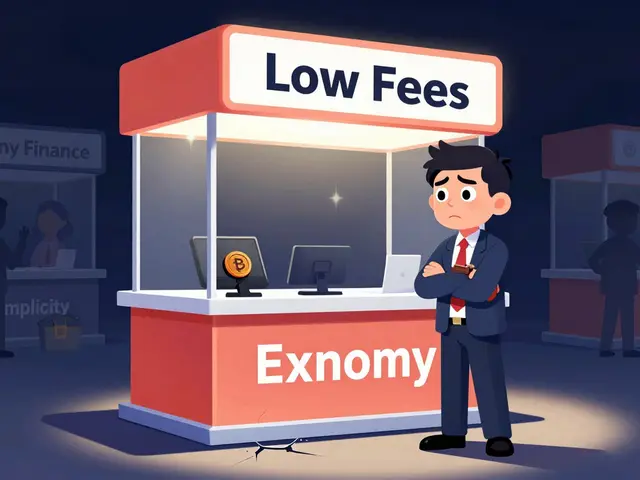
BtcPro Crypto Exchange Review: Is It Legit or a Scam?

You’ve heard the name BtcPro. Maybe you saw an ad on social media, got a DM from someone promising insane returns, or found it while searching for a new place to trade Bitcoin. The promise is always the same: easy money, high security, and a platform that just works. But here is the hard truth that most reviews won’t tell you upfront: there is no widely recognized, regulated, or reputable cryptocurrency exchange operating under the exact name "BtcPro."
When a platform sounds like a major player but lacks a digital footprint in regulatory databases, news outlets, or community forums, that is your first red flag. In the world of crypto, obscurity is often a feature, not a bug, for scammers. This review isn’t just about one missing website; it’s about protecting your capital from the growing wave of impersonation scams that use names similar to legitimate giants like Binance, Coinbase, or BitoPro.
The "Ghost" Platform Problem
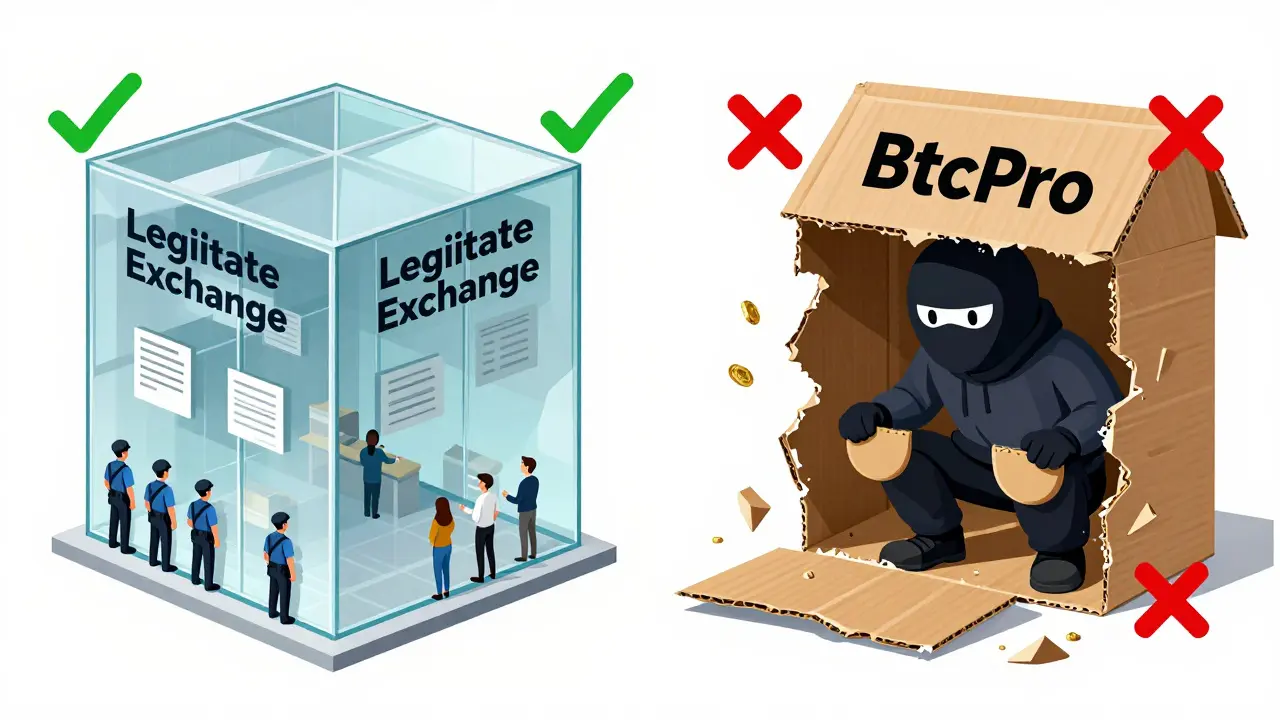
If you type "BtcPro" into a search engine today, June 1, 2026, you won’t find a clear path to a verified corporate entity. You might find forum posts asking if it’s real, or worse, generic SEO articles that don’t actually verify the business. Let’s look at what a legitimate exchange looks like versus what BtcPro represents.
A legitimate exchange, such as Coinbase, which is a publicly traded company listed on NASDAQ with strict SEC reporting requirements, has millions of dollars spent on compliance, legal teams, and security audits. Their websites are indexed by every major financial news outlet. They have verifiable physical addresses, registered business numbers, and transparent leadership teams.
BtcPro has none of this. There is no evidence of it being registered with the Financial Conduct Authority (FCA) in the UK, the Commodity Futures Trading Commission (CFTC) in the US, or any equivalent body in Europe or Asia. If a platform cannot prove its legal existence, you should assume it does not exist-or worse, that it exists solely to take your deposit and vanish.
| Feature | Legitimate Exchange (e.g., Coinbase, Kraken) | Suspicious Platform (e.g., BtcPro) |
|---|---|---|
| Regulatory Status | Licensed in multiple jurisdictions (US, EU, UK) | No license found; claims vague "international" regulation |
| Online Presence | Covered by major news (Bloomberg, Reuters) | Only appears in paid ads or Telegram groups |
| Withdrawal Process | Standard processing times (24-72 hours) | Delays, requests for "tax fees" or "verification deposits" |
| Customer Support | Public email, ticket system, live chat | Only WhatsApp or private Telegram contacts |
| Security Audits | Published proof-of-reserves and third-party audits | Claims "military-grade" security without proof |
Confusion with BitoPro: A Common Tactic
One reason people stumble upon "BtcPro" is simple typo-squatting or intentional confusion with BitoPro, which is a legitimate, ISO 27001-certified cryptocurrency exchange based in Taiwan. BitoPro has been around since the early days of the industry, holds proper anti-money laundering declarations, and offers real services like TWD bank trust deposits.
Scammers love this tactic. They register domains like BtcPro.com, BitcPro.net, or BtoPro.io hoping you’ll mistype the URL of a real service. When you land on their site, it often looks identical to the real thing-same colors, similar logos, even copied text. But once you deposit funds, the similarities end. BitoPro allows you to withdraw to your bank account or cold wallet. BtcPro will likely freeze your assets.
To avoid this trap, always bookmark the official URLs of exchanges you intend to use. Never click links sent via WhatsApp, Telegram, or SMS, even if they appear to come from a friend. Hackers frequently compromise accounts to send these malicious links.
The Anatomy of a Crypto Impersonation Scam
If BtcPro is indeed a fraudulent operation, how does it work? Based on documented cases like the TBAAPro scandal identified by California’s Department of Financial Protection and Innovation, the pattern is consistent.
- The Hook: You are invited into a private group or shown an ad promising guaranteed returns. They claim BtcPro has a special "high-yield trading bot" or "insider access" that generates 1% daily profits.
- The Deposit: You are asked to buy Bitcoin or Ethereum from a major exchange and send it to a specific wallet address provided by BtcPro. Alternatively, you wire fiat currency to a shell company.
- The Illusion: Your dashboard shows your balance growing. The interface is convincing. You see fake transaction histories and profit graphs. This is designed to make you invest more.
- The Trap: When you try to withdraw your initial investment plus profits, the process fails. You receive a message stating you must pay a "capital gains tax," "security deposit," or "account verification fee" to unlock your funds.
- The Disappearance: If you pay the fee, they invent another one. Eventually, the support team stops responding, the website goes offline, and your funds are gone forever.
This isn’t speculation. It is the standard playbook for unregulated crypto schemes. The key takeaway is this: no legitimate exchange asks you to pay extra fees to withdraw your own money. Withdrawal fees are deducted from the amount you withdraw, never added on top as a prerequisite.
Red Flags to Watch For
Before you consider using any platform with a name like BtcPro, run it through this checklist. If any of these apply, walk away immediately.
- Pressure Tactics: "This offer expires in 24 hours!" or "Only 5 spots left for this bonus!" Legitimate businesses do not rush you into financial decisions.
- Vague Ownership: The "About Us" page lists no real people, or features stock photos of smiling professionals with generic names.
- Unrealistic Returns: Promises of fixed daily returns (e.g., "Earn 2% daily!") are mathematically impossible in volatile markets. If it were possible, they wouldn’t need your money.
- Poor Website Quality: Check for spelling errors, broken links, or low-resolution images. Scammers often use template sites that haven’t been properly tested.
- Domain Age: Use a WHOIS lookup tool. If the domain was registered less than six months ago, be extremely cautious. Established exchanges have domains registered years ago.
Safe Alternatives for Trading in 2026
If you’re looking for a secure place to trade cryptocurrency, stick to platforms with proven track records and regulatory oversight. Here are three reliable options depending on your location and needs.
Coinbase is ideal for beginners in the US and Europe due to its user-friendly interface and strong regulatory compliance. It offers insurance on USD holdings and supports over 200 cryptocurrencies. While fees can be higher than some competitors, the peace of mind is worth it for new investors.
Kraken is a veteran exchange known for its robust security history and lower trading fees for advanced users. Kraken has never been hacked and provides detailed proof-of-reserves reports. It’s a great choice if you want more control over your trades and access to margin trading.
Bitkub is the leading regulated exchange in Thailand, offering full legal registration and high liquidity for Asian traders. If you are in Southeast Asia, Bitkub provides seamless fiat on-ramps and integrates with local banking systems, making it a safer alternative to obscure platforms.

What To Do If You’ve Already Deposited
If you have already sent money or crypto to BtcPro, act quickly. Time is your enemy in these situations.
- Stop All Communication: Do not pay any further "fees" or "taxes." Every dollar you send now is lost. Block their contact information.
- Document Everything: Save screenshots of your account, transaction hashes, chat logs, and emails. These are crucial for law enforcement.
- Contact Your Bank or Wallet Provider: If you used a credit card or bank transfer, call them immediately. There is a small chance they can reverse the transaction if reported within the first few hours. If you sent crypto directly from a wallet, unfortunately, blockchain transactions are irreversible.
- Report to Authorities: File a report with your local cybercrime unit. In the US, use the FBI’s Internet Crime Complaint Center (IC3). In New Zealand, report to the Police Cybercrime Unit. In the EU, contact your national financial regulator.
Recovery is difficult, but reporting helps build cases against these operations and may prevent others from falling victim.
Final Thoughts on Due Diligence
The cryptocurrency space moves fast, and new platforms launch daily. But legitimacy doesn’t happen overnight. Real exchanges spend years building trust, securing licenses, and surviving market crashes. BtcPro lacks this history. It lacks transparency. And most importantly, it lacks accountability.
Your capital is yours to protect. Don’t let a cleverly named website convince you otherwise. Stick to established, regulated platforms, enable two-factor authentication, and never share your seed phrases. If an opportunity sounds too good to be true, it almost certainly is.
Is BtcPro a legitimate cryptocurrency exchange?
There is no verifiable evidence that BtcPro is a legitimate, regulated cryptocurrency exchange. It lacks regulatory licenses, transparent ownership, and a credible online presence outside of potential promotional channels. Users should exercise extreme caution and assume it is a high-risk or fraudulent platform.
How can I tell if a crypto exchange is a scam?
Look for red flags such as promises of guaranteed high returns, pressure to deposit quickly, lack of regulatory licensing, poor website quality, and requests for payment via untraceable methods. Always check if the exchange is registered with financial authorities in your country.
What is the difference between BtcPro and BitoPro?
BitoPro is a legitimate, ISO-certified exchange based in Taiwan with a long operational history. BtcPro appears to be an unverified platform that may be using a similar name to confuse users. Always verify the exact URL and regulatory status before depositing funds.
Can I recover my money if I deposited into BtcPro?
Recovery is difficult, especially if you sent cryptocurrency directly. If you used a credit card or bank transfer, contact your provider immediately to request a chargeback. Report the incident to local cybercrime authorities and provide all documentation, including transaction IDs and chat logs.
Which crypto exchanges are considered safe in 2026?
Established, regulated exchanges like Coinbase, Kraken, and Bitkub are considered safe due to their compliance with financial regulations, transparent proof-of-reserves, and long track records. Always choose platforms that are licensed in your jurisdiction.