Combining Stop-Loss with Risk Management: A Practical Guide for Traders
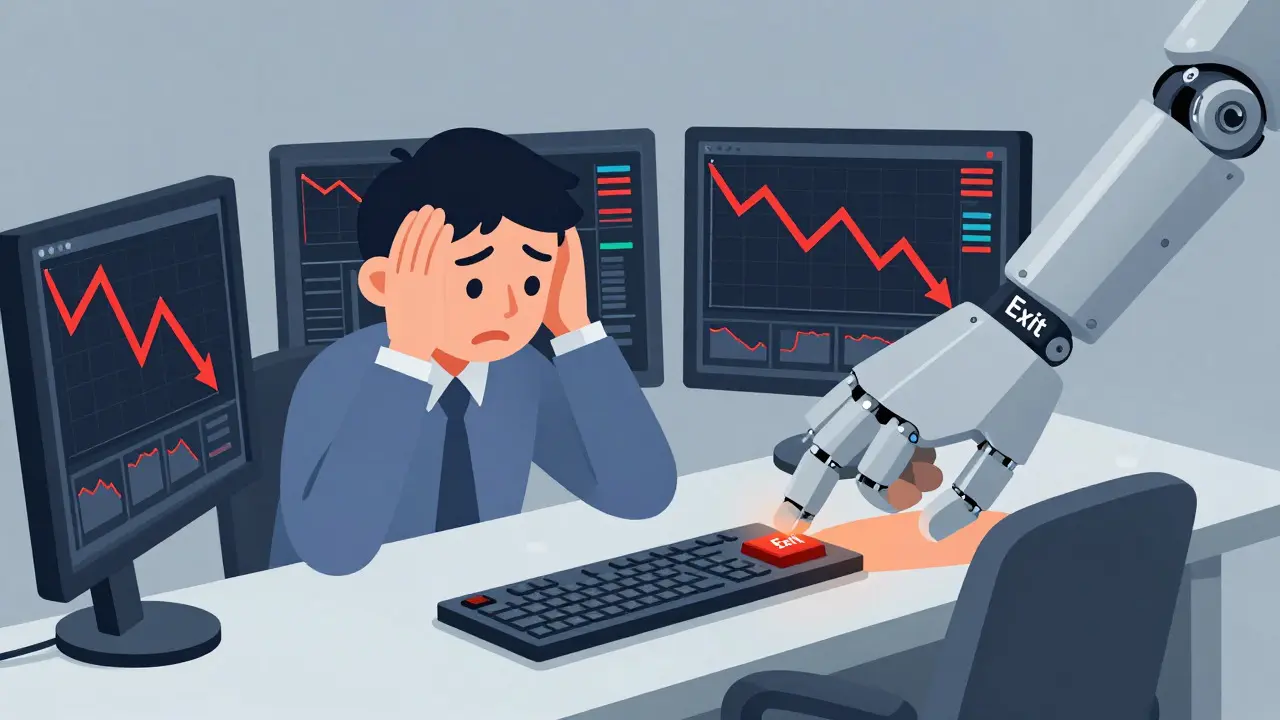
Imagine losing half your capital in a single trade because you hesitated to exit. It happens more often than you think. The difference between surviving a market crash and blowing up your account usually comes down to one thing: how well you combine stop-loss orders with broader risk management strategies. A stop-loss isn't just an order type; it's the mechanical backbone of disciplined trading. Without it, every trade carries unlimited downside potential. With it, you define exactly how much you are willing to lose before the market decides for you.
This guide breaks down how to integrate stop-losses into a complete risk framework. We will look at the math behind position sizing, the different types of stops available, and why relying on a single tool is rarely enough. Whether you trade stocks, forex, or crypto, these principles remain consistent. The goal is simple: protect your capital so you stay in the game long enough to let your edge play out.
Why Stop-Loss Orders Are Non-Negotiable
A Stop-Loss Order is a risk management tool that automatically closes a trade when the market moves against you by a predetermined amount. According to the CFA Institute's 2022 Risk Management Handbook, implementing stop-losses is a "non-negotiable element of professional trading discipline." The data backs this up. Traders who consistently apply stop-loss rules survive beyond their third year of trading at a rate of 78%, compared to just 34% for those who don't. That gap isn't luck; it's survival.
The core problem without a stop-loss is emotional interference. When prices drop, fear takes over. You might hope for a rebound, widen the stop, or simply freeze. A pre-set stop removes that decision from the heat of the moment. It forces you to act according to your plan, not your feelings. This mechanical execution is what separates professionals from gamblers. It ensures that no single bad trade can wipe out a significant portion of your portfolio.
Understanding Position Sizing: The Math Behind Survival
Placing a stop-loss is only half the job. If you place a stop but bet too much of your account on that single trade, you're still exposed to ruin. This is where Position Sizing becomes critical. It is the calculation that determines how many units of an asset to buy based on your account size and risk tolerance. The standard formula used by most professional traders is straightforward:
- Determine Risk Amount: Account Size × Risk Percentage (typically 1-2%).
- Determine Per-Unit Risk: Entry Price - Stop Loss Price.
- Calculate Position Size: Risk Amount ÷ Per-Unit Risk.
Let's make this concrete. Suppose you have a $50,000 account and decide to risk 1.5% per trade. Your risk amount is $750. You want to buy a stock at $100, and your technical analysis suggests placing the stop-loss at $95. Your per-unit risk is $5 ($100 - $95). To find your position size, divide $750 by $5. You should buy 150 shares. If the price hits $95, you lose exactly $750. If you bought 1,500 shares instead, you would lose $7,500-a 15% drawdown on a single trade. That’s the danger of ignoring position sizing.
Types of Stop-Loss Orders and Their Trade-Offs
Not all stop-losses work the same way. Choosing the right type depends on market conditions and your strategy. Here are the three main variants you’ll encounter:
| Order Type | Execution Guarantee | Price Guarantee | Best For |
|---|---|---|---|
| Stop-Market | Yes | No | Volatile markets, ensuring exit |
| Stop-Limit | No | Yes | Stable markets, avoiding slippage |
| Trailing Stop | Yes (usually) | No | Trending markets, locking in profits |
Stop-Market Orders convert to market orders once the trigger price is hit. They guarantee execution but not price. During extreme volatility, like the March 2020 crash, stop-market orders executed at prices up to 15% worse than the trigger. However, they ensure you get out. Stop-Limit Orders require both a trigger price and a limit price. They guarantee you won't sell below the limit, but if the market gaps through your limit, you might not execute at all. In fact, a FINRA study found that 43% of stop-limit orders placed within 5% of the market price failed to execute during the 2020 crash. Trailing Stops maintain a fixed distance from the current price. As the price rises, the stop follows. This locks in profits while allowing room for movement. Backtesting shows trailing stops capture 22% more profit in strong trends but underperform by 8% in choppy markets.

Integrating Volatility Adjustments
Fixed percentage stops (like always using 2%) often fail because they ignore market noise. A calm day might see a 1% swing, while a volatile news day sees a 5% swing. Placing a tight stop in a volatile environment leads to "whipsaws"-getting stopped out just before the price reverses in your favor. This is where Average True Range (ATR) comes in. ATR measures average volatility over a specific period. Dr. Brett Steenbarger's research at SUNY Upstate Medical University found that combining technical stop placement with volatility filters like ATR multiples reduces false stop triggers by 41%.
A common rule of thumb is to place your stop-loss at 1.5x to 2x the ATR value away from your entry price. If the ATR for a stock is $2, your stop should be at least $3 to $4 away. This gives the trade room to breathe. Brokers like Charles Schwab now offer "SmartStops" that automatically adjust based on VIX levels, reducing whipsaw losses by 27% during recent banking crises. While manual calculation requires more effort, understanding the concept allows you to adapt your stops dynamically rather than rigidly.
Common Mistakes and How to Avoid Them
Even experienced traders make errors with stop-losses. The most common pitfalls include:
- Placing Stops at Obvious Levels: 72% of novice traders place stops at round numbers or obvious support lines. Sophisticated algorithms hunt these clusters. Try offsetting your stop slightly above or below the level.
- Ignoring Correlation: Holding multiple positions in correlated assets multiplies your risk. Fidelity’s upcoming "correlation-aware stops" aim to address this, but until then, diversify across uncorrelated sectors.
- Disabling Stops Under Stress: 48% of retail traders admit to turning off stops when feeling anxious. Trust the process. If the stop was valid at entry, it remains valid unless the thesis changes.
- Using Fixed Stops in Trending Markets: Fixed stops cut winners short. Use trailing stops when a clear trend emerges to let profits run.
Retail trader surveys show that those who use trailing stops report 27% higher satisfaction rates than those using fixed stops. The key is matching the stop type to the market regime. Choppy? Use tighter, fixed stops. Trending? Use wider, trailing stops.
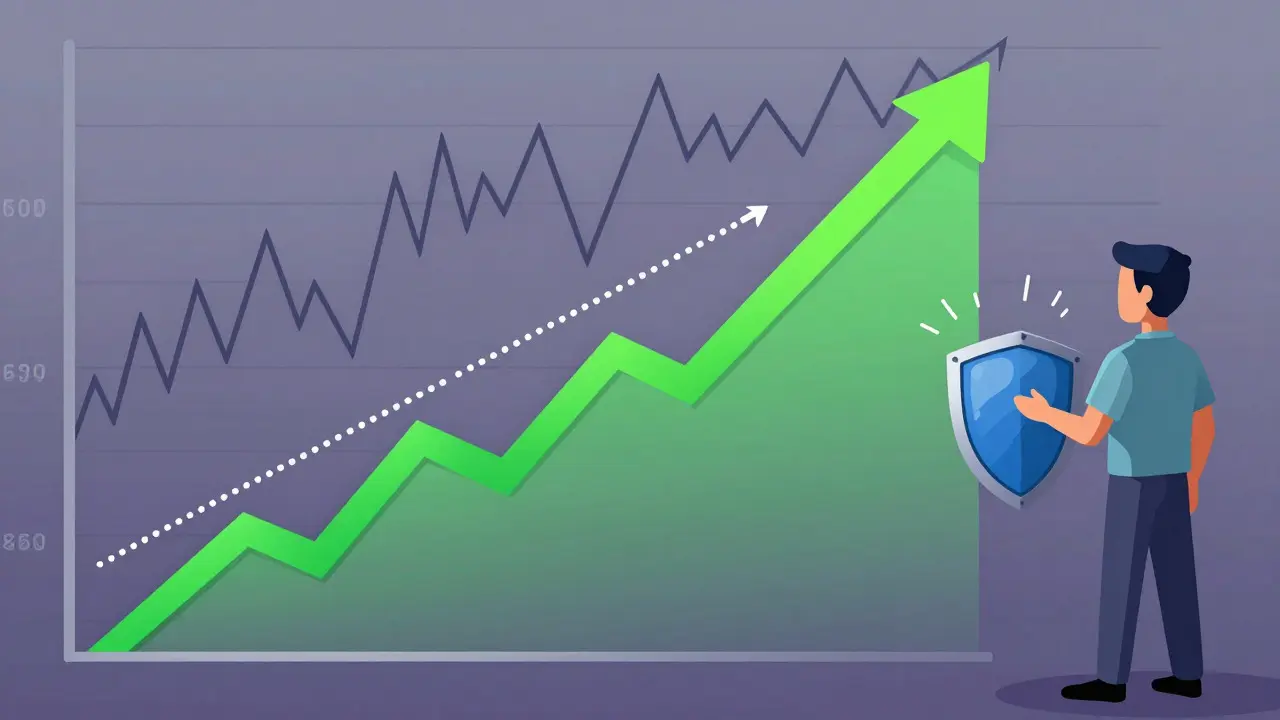
Practical Implementation Steps
To implement this system, follow these steps before entering any trade:
- Identify Entry and Exit Points: Use technical analysis to find support/resistance or volatility-based levels.
- Set the Stop-Loss: Place the stop beyond the identified level, adjusted for ATR if possible.
- Calculate Position Size: Use the formula: (Account Size × Risk %) / (Entry - Stop).
- Choose Order Type: Select Stop-Market for reliability or Stop-Limit for price control based on current volatility.
- Monitor and Adjust: Only move stops in the favorable direction (e.g., raising a trailing stop). Never lower a stop to give a losing trade more room.
Paper trading is essential here. Data from the Online Trading Academy shows that traders who simulate stop strategies for 3-6 months make 43% fewer mistakes with real money. Take the time to test your parameters in a demo account before risking capital.
Frequently Asked Questions
What is the best percentage to risk per trade?
Most professional risk managers recommend risking between 0.5% and 2% of your total account equity per trade. For beginners, staying closer to 1% is safer to build confidence and preserve capital during learning curves.
Should I use stop-market or stop-limit orders?
Use stop-market orders in highly volatile markets to guarantee execution, even if there is slippage. Use stop-limit orders in stable markets where you want to avoid selling at a significantly worse price. Remember, stop-limits may not execute if the price gaps through your limit.
How does volatility affect stop-loss placement?
Higher volatility requires wider stop-losses to avoid being stopped out by normal price fluctuations. Using indicators like Average True Range (ATR) helps quantify this. A common approach is setting the stop at 1.5x to 2x the ATR value from your entry point.
Do trailing stops work better than fixed stops?
Trailing stops generally perform better in trending markets by locking in profits as the price moves in your favor. However, they can underperform in choppy, sideways markets where prices oscillate. Choose the type based on the current market regime.
Is it okay to move my stop-loss after entering a trade?
You should only move your stop-loss in the direction of profit (e.g., raising a stop on a long position). Moving a stop further away from your entry increases your risk and contradicts the purpose of risk management. If the initial thesis is invalid, close the trade manually rather than widening the stop.

Zothana Pachuau
Oh, look at you all, finally learning that 'hope' is not a stop-loss strategy. It’s adorable how many of you still think the market owes you a rebound just because you bought high. The math in this post is basic arithmetic, yet half the room treats it like quantum physics. If you can’t do division without crying, maybe stick to index funds? But sure, keep gambling with your rent money and calling it 'trading'.
Linda Leeuwesteijn
This is such a helpful breakdown! 📉 I always struggle with position sizing because I get scared to buy too much. Seeing the $750 example really clicked for me. Thanks for making it so easy to understand! 😊👍
Shawn Schaerer
One must appreciate the mechanical rigor presented herein. However, we are left to ponder the philosophical implications of surrendering agency to an algorithmic trigger. Is discipline merely the absence of emotion, or is it the elevation of logic above the beast within? The CFA Institute data cited suggests survival, but does it suggest wisdom? We trade not just assets, but our own psychological integrity. To automate the exit is to accept that our human intuition is flawed, a terrifying admission for those who pride themselves on their gut feelings. Yet, history tells us the gut is often a liar dressed in confidence.
Alexander Scheel
It is truly refreshing to see someone articulate the moral imperative of risk management. Too many traders treat their accounts as casinos rather than businesses. One feels a profound sense of duty to adhere to these rules; to ignore them is not just financially reckless, it is ethically suspect when considering the leverage involved. The 'non-negotiable' nature of stops is a virtue we should all cultivate. Let us not be the generation that gambles away its future due to a lack of basic self-control. Discipline is character, after all.
manish jha
The ATR section is weak. Most retail traders don't have real-time ATR feeds they trust. You need to use volume spikes instead. That's the only true indicator. Everything else is noise. Stop relying on Western textbooks and look at order flow. That's where the alpha is.
Ashley Snyder
I actually agree with the point about not moving stops down. I did that once and lost way more than I planned. It was a hard lesson but I'm glad I learned it early. Just gotta stay consistent I guess.
Susan Kiley
Oh, darling, let us not pretend that this 'practical guide' is anything other than a collection of platitudes wrapped in jargon. 😒 One assumes the author has never actually watched a portfolio bleed out during a flash crash. The notion that a 'trailing stop' saves you from ruin is simply... quaint. In my experience, the market loves nothing more than hunting your obvious levels before sending you to the moon. It is a dance of deception, and this article barely scratches the surface of the theater we are all part of. :)
Gary Straiton
THIS IS AMERICA BABY AND WE TRADE LIKE KINGS! 🇺🇸 Why are we even reading some foreign textbook? We have the best markets, the best brokers, and the best guts! Stop overthinking it with your little calculators. Buy the dip, hold the bag, and if it crashes, it means the system is broken, not your strategy. Confidence is key. If you need a stop loss, you're already a loser. Go long and pray! 💪🚀
alex fordy
I find the discussion on volatility adjustments particularly resonant. 🧠 There is something deeply satisfying about aligning one's entry points with the natural rhythm of the market, rather than fighting against it. When we respect the ATR, we are essentially listening to what the price action is trying to tell us. It transforms trading from a chaotic scramble into a structured conversation. 🌟 I’ve found that when I start viewing the stop-loss not as a punishment, but as a boundary condition for my thesis, the anxiety dissipates entirely. It allows for a clearer mind and sharper execution. Truly, the best trades feel effortless precisely because the risk was defined before the emotion could interfere. 🙏
Mohamed Shoaeb
solid read man. i usually just use a fixed % but gonna try the atr method next week. seems smarter than guessing. good stuff.
Marco Maldonado
Umm excus me? Who wrote this? Some guy in a basement? The US market is the most efficient on earth and these stops are just for the weak. You know the big banks don't use stops they use options. That's why they win. Stop being a sheep and learn to hedge properly. Or better yet, buy Apple stock and forget about it. That's the American dream right there. Don't listen to these fancy metrics, they are just math for people who are afraid to make money.
Dianne Ritter
Fair enough. I've been using trailing stops for years and they work great for trends but yeah, they suck in chop. Glad someone mentioned that nuance. It's easy to forget that context matters more than the tool itself.
Calliope Clio
Meh. Another generic blog post pretending to be deep finance. 🙄 I’ve read ten thousand articles like this and they all say the same thing: 'risk manage.' Easy to type, hard to do when you’re staring at a red screen at 3 AM. But sure, thanks for the reminder that I’m probably doing it wrong. Very educational. 😬
Tasha Davis
YES! This is exactly what I needed! 🎉 I was so confused about how to size my positions. Now I get it! Thank you so much for writing this! It makes me feel like I can do this! Let's go! 💪🔥
Abigail Sparks
Listen up, rookies! Here is the hard truth: Your stop loss is only as good as your discipline. If you move it, you are dead. Period. No excuses. The market will punish hesitation. Set it, forget it, and execute. If you are scared, you sized it wrong. Cut the position in half and sleep better. Do not let ego drive the car. Drive with logic or get off the road. Now go back to your charts and fix your mistakes!
OLIVER CHRISTIAN
Great post, really well structured. I appreciate the clear steps at the end. I’ve been struggling with knowing when to switch from fixed to trailing stops. Does anyone have a specific indicator they use to identify a 'clear trend' versus a 'choppy market'? I’ve tried ADX but it feels laggy. Any tips would be appreciated! Happy to share my setup if anyone wants to compare notes.
Kelsey Anne
Short. Sweet. Truthful. Risk 1%. Stop it. Done. Anything else is noise. If you need a 500-word essay to tell you to cut your losses, you don't belong in this game. Keep it simple. Stupid is as stupid does. But hey, at least we're talking about it.
Mike Baca
What if the market gaps through your stop?? Then you lose more right? So the whole premise of 'defining exactly how much you are willing to lose' is a lie? It's probabilistic not deterministic. We need to talk about tail risk here. Black swans don't care about your ATR. They eat your stops for breakfast. Have you considered options? Maybe put spreads? That's the real protection. Stops are for the day traders who check their phones every minute. For swing traders, you need hedges. Don't let the article fool you into thinking a limit order is a shield. It's a suggestion. And the market hates suggestions. 😂
Teri W
Ugh, another article telling us what to do. Like we haven't tried everything. I moved my stop last week because I *knew* it would bounce. And it didn't. Lost 10%. But at least I felt smart for a second. Who needs actual risk management when you have vibes? Vibe trading is the new meta. Stop with the spreadsheets and just feel the energy of the candlesticks. 🕯️✨
Niall O'Rourke
boring. everyone knows this. its all just marketing fluff to sell courses. the real edge is in liquidity. you guys are all playing checkers while the pros play chess. also your grammar is terrible. who writes like this? 'whipsaws' isn't even a word. anyway. bye.
Jillian Groskreutz
Firstly,,; let us address the elephant in the room,,, which is the sheer audacity of suggesting that retail traders can compete with HFT algorithms using *stop-loss orders*. Secondly,,, the citation of the CFA handbook is a classic appeal to authority fallacy,,, which is ironic given the intellectual laziness displayed throughout this piece. Furthermore,,, the assumption that 'survival' equates to 'profitability' is a logical non-sequitur. One can survive for decades while slowly bleeding capital through underperformance relative to inflation. Therefore,,, this entire framework is built on a foundation of sand. Wake up. 🤨
Jade Brown
Let’s dive into the juicy details, shall we? The interplay between slippage and execution latency is a beautiful disaster zone. When you’re dealing with micro-cap equities, your stop-market order isn’t just an exit; it’s a liquidity event. You’re essentially shouting into the void, hoping a maker picks up the phone. The bid-ask spread widens like a chasm during panic, turning your 'safe' 2% stop into a 15% haircut. It’s not just about the math; it’s about the texture of the order book. Think of it as navigating a crowd during a fire drill-your designated exit door is blocked by bodies. You need dynamic routing strategies, not static percentages. The alpha isn’t in the stop; it’s in the speed of the kill switch. Don’t get cute with limit orders in thin books; you’ll be holding the bag while the party leaves.
Stephanie Millar
Very interesting perspective,,, thank you for sharing. I often find that the cultural approach to risk varies significantly across different markets. In the UK, we tend to be a bit more conservative with our drawdowns,,, perhaps due to our historical relationship with the pound sterling. However,,, the principles remain universal. It is a pleasure to see such a detailed analysis. Well done. 🇬🇧