Core Principles of Web3 Technology: Decentralization, Ownership, and Trust
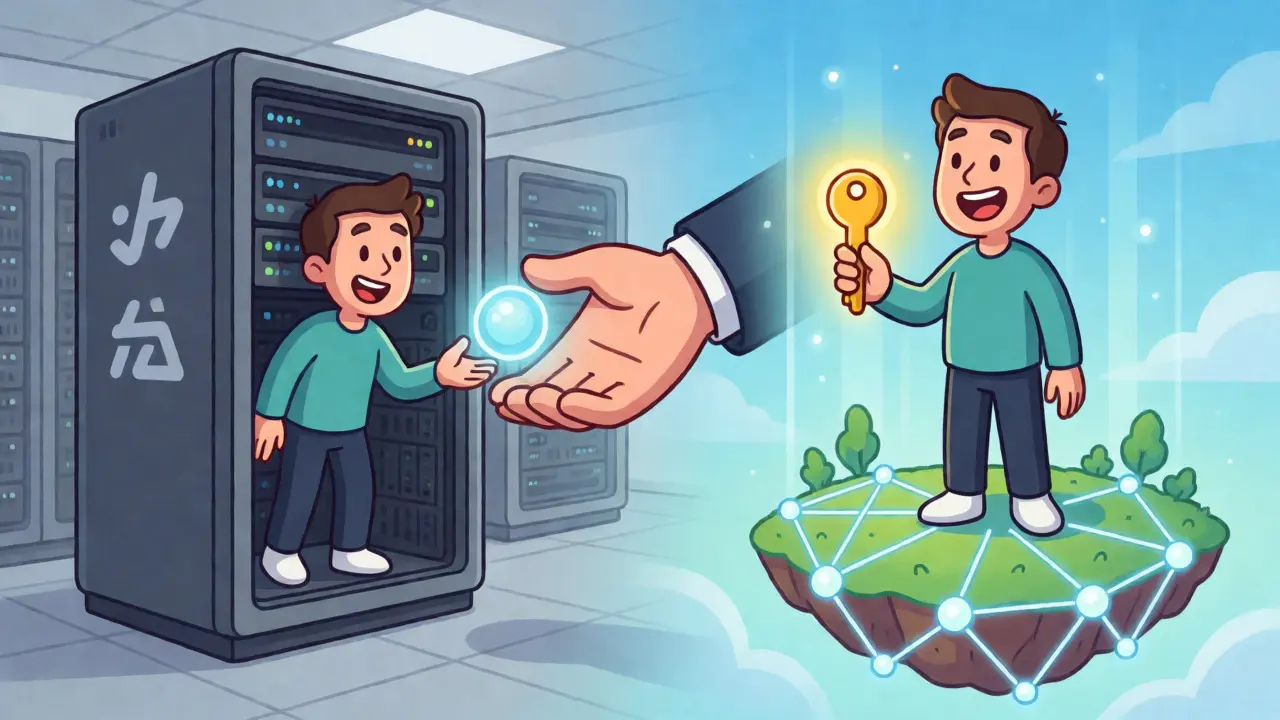
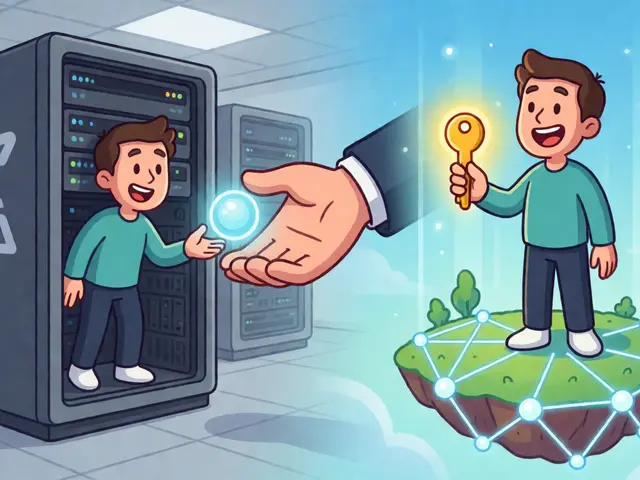
Imagine logging into a website today. You click "Sign in with Google," and instantly, that tech giant knows your name, your email, and likely what you bought last week. Now, imagine doing the same thing on Web3, where no company holds your keys, your data stays yours, and the platform can’t shut you out because it doesn’t own the server. This isn't just a technical upgrade; it's a fundamental shift in who controls the internet.
If you’ve heard terms like "decentralized web" or "read-write-own" thrown around but felt confused by the jargon, you’re not alone. The gap between hype and reality is wide. But beneath the volatile token prices and flashy NFTs lie five concrete architectural pillars that define this new era. Understanding these core principles helps you cut through the noise to see what actually works, what’s still broken, and why developers are betting billions on this shift.
The Shift from Read-Write to Read-Write-Own
To grasp where we are, look at where we came from. The first version of the web (1989-2004) was static. You could read information, but you couldn’t change it. Then came Web2 (2004-present), which let us write-post comments, upload photos, create content. But there was a catch: while you created the value, platforms like Facebook and Google owned the data. In fact, these centralized entities monetize user data to the tune of roughly $170 billion annually.
Web3 introduces the third pillar: ownership. It moves the paradigm from "read-write" to "read-write-own." This means users don’t just contribute data; they hold cryptographic proof of their assets and identity. Instead of renting space on someone else’s server, you own your digital footprint. This isn’t philosophical fluff-it’s enforced by code. When you buy a domain name or an asset on a blockchain, that record exists independently of any single company’s database. If Amazon goes down tomorrow, your AWS account might be inaccessible. If Ethereum goes down (which it hasn’t since 2015), your wallet balance remains visible on thousands of other nodes worldwide.
Decentralization: Removing the Single Point of Failure
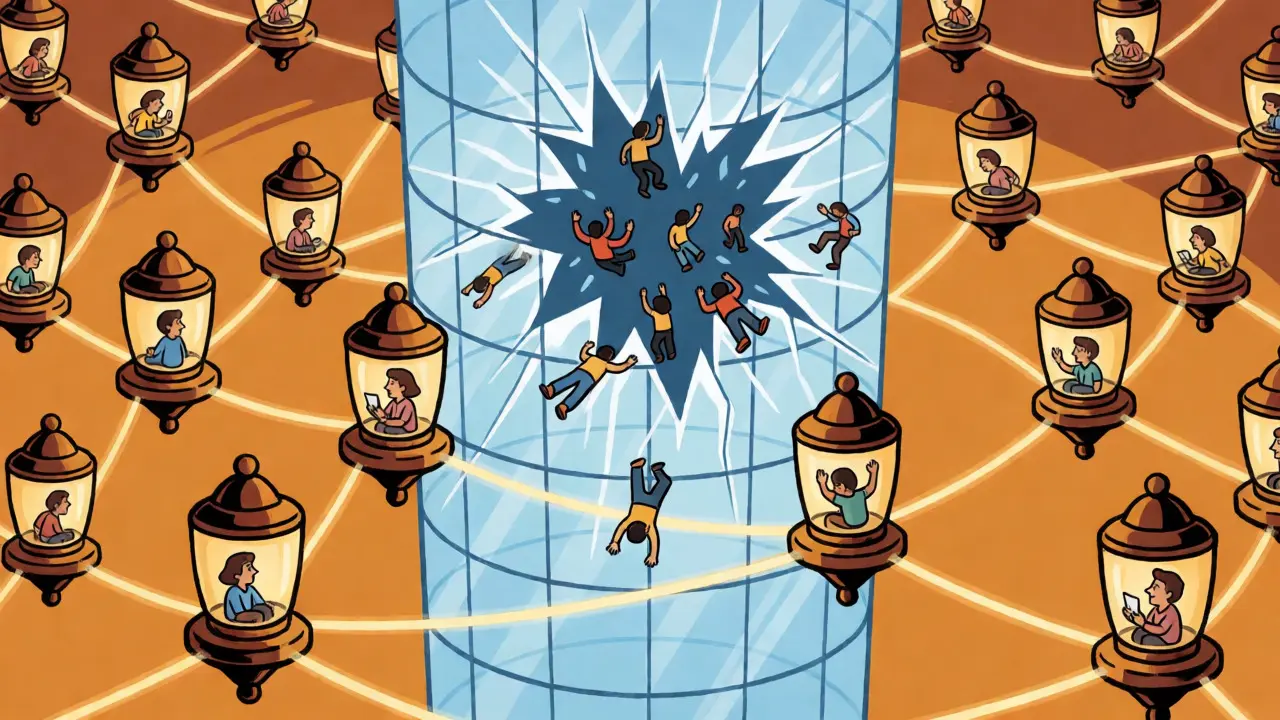
At its heart, Web3 relies on decentralization. Unlike traditional apps hosted on central servers (like AWS or Azure), Web3 applications run on distributed networks. Think of it like email versus WhatsApp. Email is decentralized; if one provider crashes, you can still send messages via another. WhatsApp is centralized; if Meta’s servers fail, everyone loses access simultaneously.
This architecture eliminates single points of failure and censorship. No CEO can arbitrarily ban your account for breaking vague community guidelines. However, decentralization comes with a trade-off: speed. Traditional databases process transactions in milliseconds. Blockchains, which require consensus across thousands of computers, are slower. For context, Visa handles about 24,000 transactions per second (TPS). Ethereum’s base layer manages only 15-20 TPS. To fix this, the industry is moving toward Layer-2 solutions like Optimism and Arbitrum, which bundle transactions off-chain before settling them on the main network, boosting effective throughput to 2,000-4,000 TPS.
Trustlessness: Code as Law
In Web2, you trust institutions. You trust the bank to hold your money, the broker to execute your trade, and the social media site to keep your posts up. Web3 replaces institutional trust with cryptographic verification. This concept, known as trustlessness, means you don’t need to trust a human intermediary because the rules are encoded in smart contracts.
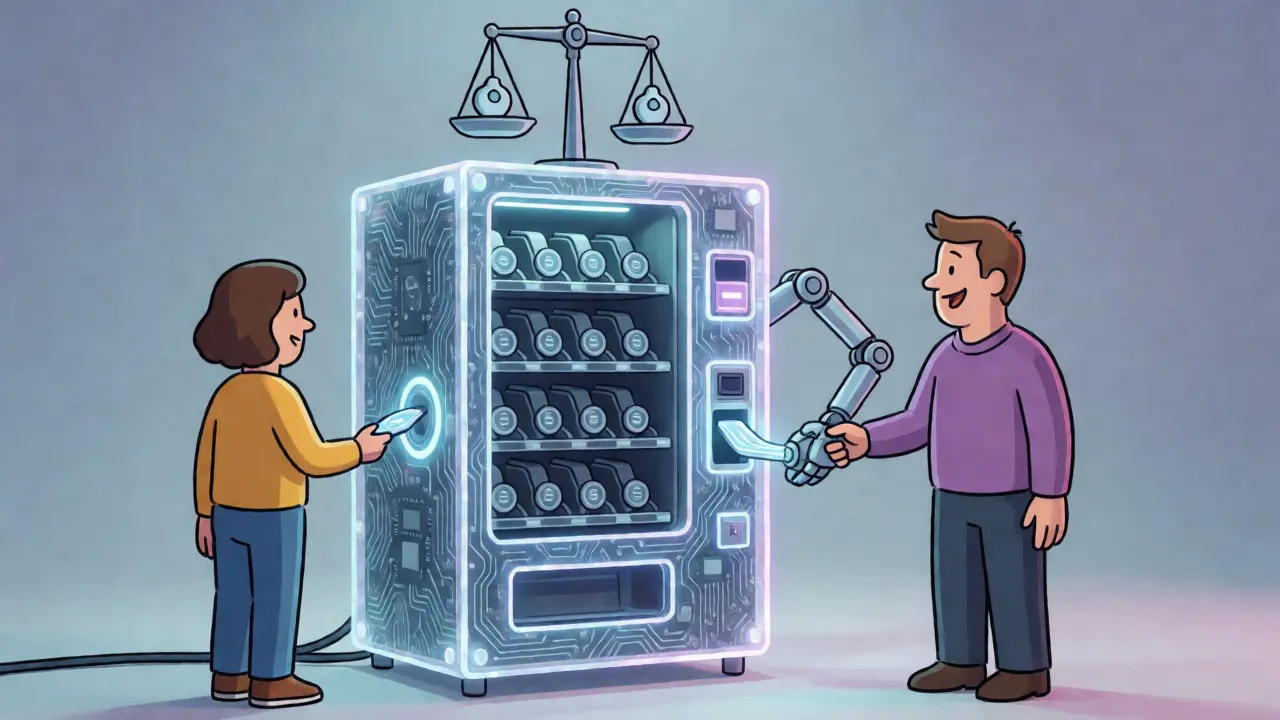
A smart contract is essentially a digital vending machine. You put in cryptocurrency, and the code automatically releases the product. If the conditions aren’t met, the transaction fails transparently. There’s no manager to argue with. This reduces counterparty risk-the chance that the other side of a deal won’t fulfill their end. However, "trustless" doesn’t mean "risk-free." It shifts the risk from people to code. If a developer writes buggy code, the funds can be lost forever. The 2016 DAO hack, where $60 million was stolen due to a reentrancy bug, serves as a stark reminder that while you don’t need to trust a bank, you do need to audit the software.
User Ownership and Self-Sovereign Identity
Your current online identity is fragmented. You have separate logins for Spotify, Netflix, and Twitter. If you lose your password, you’re locked out. If the platform bans you, you lose your history. Web3 proposes self-sovereign identity. Here, your identity is tied to a public-private key pair stored in your personal wallet, such as MetaMask or Ledger.
This gives you true portability. Your reputation, assets, and login credentials travel with you across different applications without needing a central authority to verify who you are. For example, if you build a following on a decentralized social media protocol, you take that audience with you if you switch interfaces. You control the keys, so you control the access. This also enables direct economic participation. Through tokens, users gain an economic stake in the platforms they use. Instead of being the product sold to advertisers, you become a shareholder-like participant, potentially earning rewards for contributing to the network’s security or liquidity.
Interoperability and Native Payments
Today, sending money internationally involves SWIFT codes, banks, and days of waiting. Sending assets between different blockchains (like Bitcoin and Ethereum) is even harder, often requiring centralized exchanges. Web3 aims for native interoperability, allowing different systems to communicate seamlessly.
Native payments are built into the infrastructure. Every transaction on a blockchain is inherently a payment. There’s no bolt-on credit card processor charging 2.9% + $0.30. This frictionless transfer of value opens doors for micro-payments and global commerce that were previously economically impossible. While cross-chain bridges currently face security challenges-as seen in the $600 million Poly Network hack-they represent the critical plumbing needed for a unified digital economy.
Practical Realities: What Works and What Doesn’t
It’s easy to get swept up in the idealism, but let’s look at the hard numbers. As of late 2023, active Web3 addresses grew to 64 million, yet this represents less than 1% of global internet users. Why? User experience remains a massive hurdle. A Consensys survey found that 43% of new users lose access to their funds simply because they misplace their seed phrases. Another 31% abandon transactions due to high gas fees during network congestion.
Security is another double-edged sword. While the underlying cryptography is robust, the implementation often isn’t. Smart contract vulnerabilities continue to plague the ecosystem. Furthermore, regulatory uncertainty looms large. The SEC has taken enforcement actions against numerous crypto projects, creating a complex legal landscape for developers and investors alike.
| Feature | Web2 (Current Internet) | Web3 (Next Generation) |
|---|---|---|
| Data Ownership | Platforms own user data | Users own their data and assets |
| Infrastructure | Centralized Servers (AWS, Azure) | Distributed Networks (Blockchain Nodes) |
| Authentication | Passwords, OAuth (Google/Facebook) | Crypto Wallets, Private Keys |
| Monetization | Ads, Data Sales | Tokens, Direct Value Exchange |
| Speed/Cost | Fast, Low Cost (Subsidized by Ads) | Slower, Variable Cost (Gas Fees) |
Key Takeaways
- Ownership: Web3 shifts control from corporations to individuals via cryptographic keys.
- Decentralization: Eliminates single points of failure but currently limits transaction speed compared to Web2.
- Trustlessness: Replaces institutional trust with code-based verification, though smart contract bugs remain a risk.
- Identity: Self-sovereign identity allows portable, user-controlled digital profiles.
- Adoption: Still niche (<1% of users) due to UX friction and scalability issues.
Is Web3 completely anonymous?
No, Web3 is typically pseudonymous, not anonymous. Transactions are recorded on a public ledger linked to a wallet address. While your real name isn't required, all activity associated with that address is visible to anyone. Privacy-focused chains and technologies aim to improve this, but transparency is a core feature of most major blockchains.
What happens if I lose my private key?
You lose access to your assets permanently. Because there is no central authority or customer support team in a truly decentralized system, there is no way to reset your password. This is why backing up your seed phrase securely is the most critical step in managing Web3 assets.
Why is Web3 slower than regular websites?
Blockchains require every node in the network to validate and store every transaction to maintain consensus and security. This redundancy creates bottlenecks. Solutions like Layer-2 rollups are currently being deployed to batch transactions and settle them more efficiently, significantly improving speeds.
Do I need to know how to code to use Web3?
Not necessarily. While building dApps requires coding skills, using them usually just requires a browser extension wallet like MetaMask. However, understanding basic concepts like gas fees and network selection is essential for a smooth experience.
Can Web3 replace Web2 entirely?
Unlikely in the near future. Most experts predict a hybrid model where Web3 powers specific functions like payments, identity, and asset ownership, while Web2 continues to handle high-speed data retrieval and social interaction. The two will likely coexist for years.