Cross-border crypto transfers from Egypt: Legal risks and realities in 2026
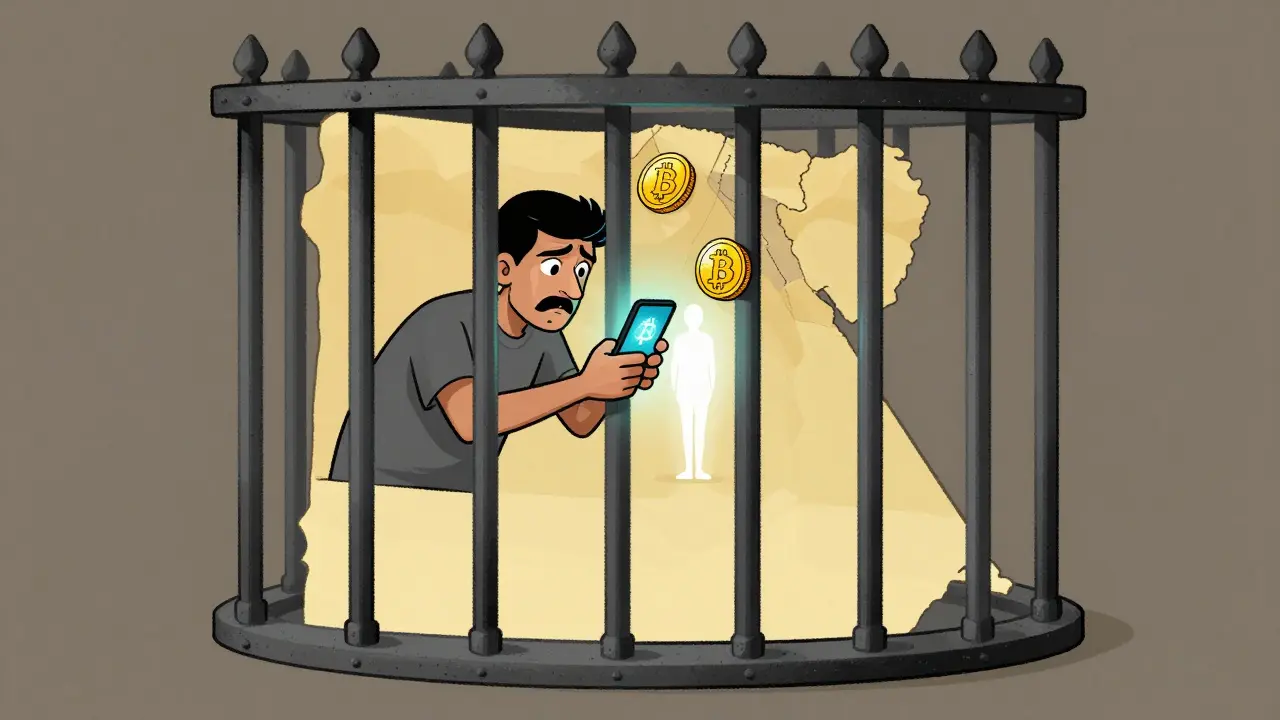
Imagine sending money to a family member abroad or trying to secure your savings against inflation, only to find that the very act of moving digital assets across borders could land you in serious legal trouble. For millions of Egyptians, this isn't a hypothetical scenario-it's daily reality. Despite the global surge in cryptocurrency adoption, Egypt remains one of the few countries where cross-border cryptocurrency transfers are explicitly prohibited under strict banking laws. The disconnect between what people do online and what the law permits is widening, creating a high-stakes environment for anyone attempting to move crypto out of the country.
You might be wondering why the government maintains such a hardline stance when crypto usage is skyrocketing. The answer lies in a combination of financial control, religious doctrine, and regulatory caution. If you are considering sending crypto from Egypt, you need to understand not just the technical steps, but the severe legal consequences that come with bypassing these restrictions. This guide breaks down the current legal landscape, the real-world risks you face, and the practical methods people use-along with the dangers inherent in those workarounds.
The Legal Framework: Why Crypto is Banned
To understand the risk, you first need to look at the law. The cornerstone of Egypt’s prohibition is Law No. 194 of 2020, also known as the Central Bank and Banking System Law. Enacted on December 28, 2020, this legislation explicitly prohibits the issuance, trading, promotion, or operation of cryptocurrencies without approval from the Central Bank of Egypt (CBE). Crucially, as of late 2025, the CBE has not issued a single license for any cryptocurrency operation. This means there is no legal pathway for individuals or businesses to trade or transfer crypto legally.
The penalties for violating this law are not minor fines; they are designed to be deterrents. Under Law No. 194, violations can result in imprisonment and fines reaching up to EGP 10 million (approximately $213,000 USD). The CBE views unauthorized crypto activities as a direct threat to monetary stability and foreign exchange reserves. When you attempt a cross-border transfer, you aren't just breaking a rule-you are engaging in an activity classified as illegal trading under Egyptian law.
This legal ban is reinforced by cultural and religious authorities. Dar al-Ifta, Egypt’s primary Islamic legislative body, has issued a fatwā declaring cryptocurrency transactions forbidden (ḥarām) under Islamic law. This adds a layer of social and moral pressure to the legal restrictions, making it difficult for mainstream financial institutions to even acknowledge the existence of crypto markets within the country.
The Enforcement Reality: What Actually Happens?
While the law is clear, enforcement is nuanced. You might hear conflicting stories from friends about whether "buying" crypto is illegal versus "trading" it. Experts like Dr. Ahmed El-Maghraby from Cairo University note that regulatory walls have struggled to hold back economic drivers like high inflation. However, don't mistake this for leniency.
The CBE actively targets large-scale operations. In May 2024, the bank shut down three unauthorized cryptocurrency exchange platforms, imposing fines totaling EGP 27 million. These actions signal that while individual users might slip through the cracks temporarily, the state is willing to crack down on infrastructure that facilitates mass movement of funds. For the average user, the risk shifts from immediate arrest to account freezes, asset seizures, and potential criminal charges if your activity draws attention.
Internet Service Providers (ISPs) in Egypt have also become more sophisticated. A 2024 analysis by Reporters Without Borders found that 78% of cryptocurrency-related websites were blocked by Q3 2025. This isn't just about blocking access to exchanges; it's about monitoring traffic. If you're using standard connections to interact with blockchain networks or P2P platforms, your IP address and transaction patterns are visible to local authorities.

Why People Risk It: The Economic Drivers
If the risks are so high, why does Egypt rank 20th globally for crypto adoption? The answer is economic necessity. With annual inflation hitting 33.7% in October 2025 and the Egyptian pound losing 68% of its value against the US dollar since 2020, citizens are desperate to preserve their wealth.
Cross-border crypto transfers have become a critical tool for remittances. Traditional channels charge average fees of 8.2%, while crypto transfers can cost between 1.5% and 3%. According to the World Bank, cryptocurrency now accounts for approximately 5.7% of total remittance flows into Egypt. This underground market is estimated to be worth $1.2 billion. People aren't doing this for speculation alone; they are doing it to survive economic volatility and send money home efficiently.
| Method | Legal Status | Average Fee | Risk Level |
|---|---|---|---|
| Traditional Bank Wire | Legal | 8.2% | Low |
| Crypto P2P (e.g., Binance) | Illegal | 1.5-3% | High |
| Privacy Coins (Monero) | Illegal | Variable | Very High |

Common Workarounds and Their Dangers
Despite the ban, users have developed various methods to execute cross-border transfers. Understanding these methods is crucial not because we recommend them, but so you can recognize the pitfalls if you choose to proceed anyway.
Peer-to-Peer (P2P) Platforms: Many users turn to platforms like Binance P2P. They buy crypto from other users within Egypt using local bank transfers or cash, then sell that crypto to buyers abroad. While this avoids direct interaction with centralized exchanges that might freeze accounts, it carries significant operational risk. Users often report having to provide fake ID details to bypass KYC (Know Your Customer) checks, which is itself a crime. A Trustpilot review from November 2025 highlighted a user who successfully transferred BTC to the UAE but noted the process took three days and required risky identity fabrication.
Non-KYC Wallets: Some tech-savvy users employ non-custodial wallets like Samourai Wallet or privacy-focused coins like Monero. These tools offer greater anonymity but require advanced technical knowledge. Setting up proper operational security-using separate devices, encrypted communication, and Tor browsers-can take weeks. Even then, blockchain forensics tools used by authorities have improved significantly since 2023. Chainalysis training materials indicate that Egyptian agencies have acquired basic blockchain analysis capabilities, meaning "anonymous" transactions are rarely truly untraceable.
The Danger of Scams: The lack of legal recourse makes users vulnerable to fraud. In August 2025, the Egyptian Financial Review documented a case where an individual lost EGP 185,000 ($3,930) after attempting a cross-border transfer through an unlicensed platform that was subsequently shut down by authorities. Because the platform was illegal, there was no way to recover the funds.
Future Outlook: Will the Rules Change?
There are signs that the regulatory landscape may shift, though not immediately. The introduction of Law No. 6 of 2025 to support small businesses suggests a modernization of the financial framework, but it does not amend the crypto prohibition. The CBE established a Fintech and Innovation Unit in March 2024, which has held closed-door consultations with international regulators.
However, experts remain divided on the timeline for change. Optimistic projections suggest meaningful reform could happen in 2-3 years, while pessimists estimate 5-7 years. Given the 27.4% year-over-year growth in crypto adoption, the status quo is becoming increasingly untenable. Until then, however, the legal risks remain unchanged. Any cross-border transfer executed today is done at your own peril, with no legal protection if things go wrong.
Is it illegal to own cryptocurrency in Egypt?
Owning cryptocurrency exists in a legal grey area. While Law No. 194 of 2020 prohibits trading, issuing, and promoting crypto, it does not explicitly criminalize mere possession. However, since buying and selling are illegal, ownership is often treated as evidence of illegal trading activity if discovered by authorities.
What happens if I get caught sending crypto abroad?
Violations can result in imprisonment and fines up to EGP 10 million. Authorities may also seize your assets and freeze your bank accounts. The severity of the penalty often depends on the volume of transactions and whether you are deemed part of a larger organized network.
Can I use Binance or Coinbase in Egypt?
These platforms are not officially licensed in Egypt. While some users access them via VPNs, using them violates CBE regulations. Additionally, these platforms may freeze your account if they detect activity from restricted jurisdictions, leaving your funds inaccessible.
Are there any safe ways to send money abroad from Egypt?
The only legally safe method is through traditional banking channels or licensed remittance services like Western Union or MoneyGram. While fees are higher and limits may apply, these methods offer legal protection and consumer recourse in case of disputes.
Will Egypt legalize crypto soon?
There is no confirmed timeline for legalization. While the CBE is exploring fintech innovations, the religious fatwā against crypto and concerns over monetary stability make immediate legalization unlikely. Experts predict changes could take anywhere from 2 to 7 years.