Crypto Custody Regulations in Germany: A Practical Guide to MiCAR and BaFin Rules
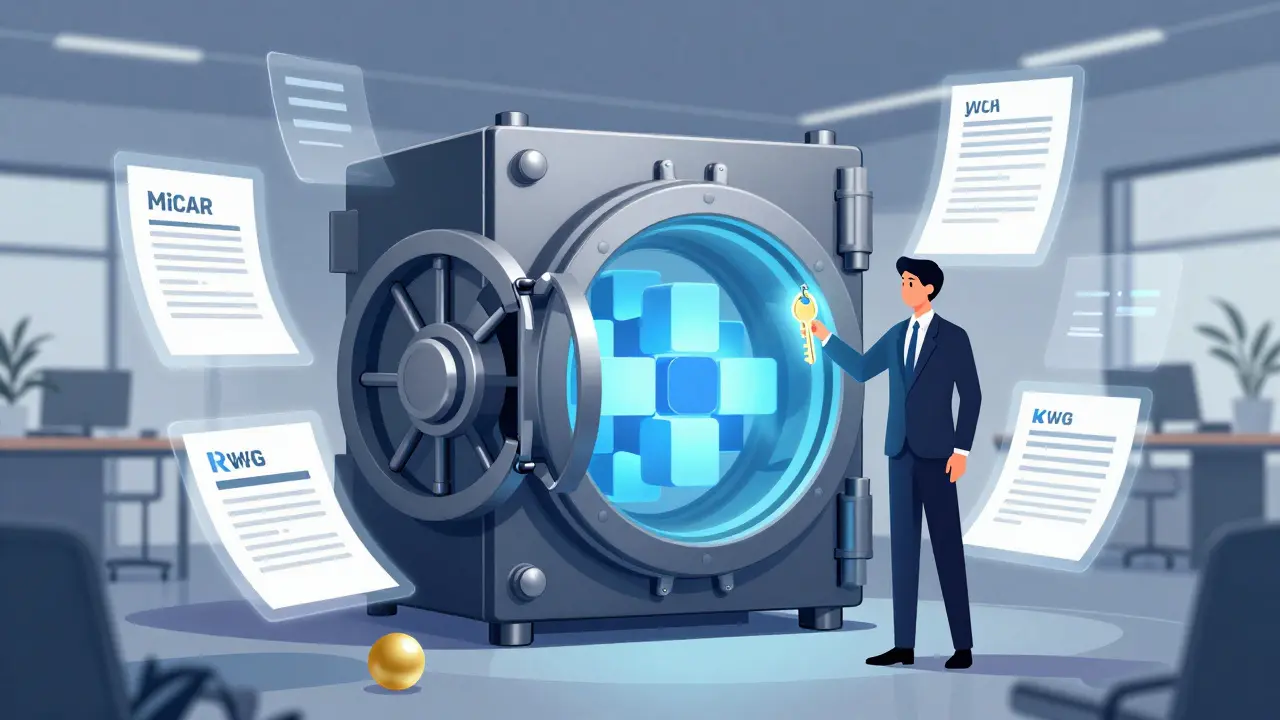
Imagine you are building a digital vault for high-value assets. In most places, the rules are vague or non-existent. But if you look at Germany, the picture is starkly different. Here, the government has built one of the most structured, strict, and transparent regulatory environments in Europe for holding digital assets. If you are looking to offer crypto custody services here, you aren't just following guidelines; you are navigating a complex legal maze that blends European Union mandates with national banking laws.
This isn't about slowing down innovation-it's about trust. The goal is simple: protect investors from losing their money when things go wrong. For businesses, this means higher barriers to entry. For users, it means sleeping better at night knowing their Bitcoin or Ether is held by someone who can prove they follow the law. Let’s break down exactly what these rules mean for you in 2026.
The Regulatory Backbone: MiCAR and the KWG
To understand how crypto custody works in Germany, you first need to grasp the two main pillars holding up the roof. The first is MiCAR (Markets in Crypto-Assets Regulation). This is an EU-wide rulebook that officially became fully applicable on December 30, 2024. It sets the standard for how Crypto-Asset Service Providers (CASPs) must operate across all member states. The second pillar is Germany’s own KWG (Kreditwesengesetz), which is the national Banking Act. While MiCAR covers general crypto assets like Bitcoin and Ether, the KWG still governs "security tokens"-digital assets that function like traditional stocks or bonds.
This dual system creates a unique situation. Under the new framework implemented via the Act on the Digitalisation of the Financial Market (FinmadiG), pure cryptocurrencies fall under MiCAR, while security tokens remain under stricter banking supervision. This distinction matters because it dictates your license type, capital requirements, and daily reporting duties. You cannot treat all crypto assets the same way in Germany; the law forces you to categorize them carefully before you even start building your infrastructure.
Who Watches the Watchers? The Role of BaFin
In Germany, there is no separate crypto regulator. Instead, the BaFin (Bundesanstalt für Finanzdienstleistungsaufsicht) takes charge. BaFin is known for being thorough, meticulous, and uncompromising. They don't just glance at your application; they dissect it. Every aspect of your business model, from your cybersecurity protocols to your employee background checks, comes under scrutiny.
BaFin’s primary objective, as stated by President Claudia Olafsson in early 2025, is ensuring client assets remain protected even if the custodian goes bankrupt. This focus on insolvency protection drives many of the specific technical requirements you will face. BaFin doesn’t accept vague promises of safety. They demand documented proof, regular audits, and clear separation between company funds and client holdings. If you think you can cut corners on compliance, BaFin will likely shut you down before you launch.
Licensing Requirements: What It Takes to Get Approved
You cannot provide crypto custody services in Germany without an explicit license from BaFin. The process is rigorous and typically takes six to nine months for new applicants. Here is what you need to prepare:
- Minimum Capital: Pure crypto custody providers must hold at least €125,000 in operational capital. If you offer multiple services under MiCAR Article 6, this jumps to up to €730,000.
- Documentation: BaFin requires 47 distinct documentation components. This includes detailed business plans, organizational charts showing three lines of defense, IT security architecture diagrams, and proof of capital.
- Personnel: You must employ at least two senior managers with "fitness and propriety" certification. There is currently a shortage of these certified professionals in Germany, making recruitment a challenge.
- Security Standards: Hardware wallets must meet Common Criteria EAL 4+ standards. Software solutions require regular third-party penetration testing with results submitted quarterly to BaFin.
Existing license holders had a grandfathering period until December 31, 2025. After that date, everyone operates under full MiCAR compliance. BaFin received 87 applications for crypto custody licenses between January 2020 and June 2025, indicating that while the bar is high, serious players are willing to jump through the hoops.

Technical and Operational Mandates
Compliance in Germany isn't just paperwork; it’s engineering. The regulations impose strict technical requirements designed to prevent loss, theft, and unauthorized access. You need to build your system around these constraints from day one.
| Requirement | Specification | Purpose |
|---|---|---|
| Asset Segregation | Mandatory physical or logical separation | Protect client assets from custodian insolvency |
| Cold Storage | 95% of assets offline | Minimize exposure to cyberattacks |
| Multi-Signature Wallets | At least 3-of-5 signature scheme | Prevent single-point failure or insider theft |
| Business Continuity | Operational resilience for 72 hours | Ensure service during disruptions |
| Data Retention | Transaction records kept for 5 years | Audit trail and regulatory oversight |
Additionally, you must comply with the DORA (Digital Operational Resilience Act). This EU regulation demands robust cybersecurity frameworks and incident reporting mechanisms. Your systems must withstand significant stress without failing. Biometric access controls for physical facilities are also mandatory, adding another layer of security beyond digital encryption.
Market Landscape and Competitive Advantages
Why choose Germany despite the complexity? Because clarity breeds confidence. Compared to jurisdictions like Switzerland, which offers more flexible sandbox environments, Germany provides long-term legal certainty. France allows faster market entry through registration rather than full licensing, but this can raise questions about investor protection. Germany’s approach is slower but sturdier.
Traditional financial institutions have thrived here. Deutsche Bank, Commerzbank, and DZ Bank collectively hold 58% of the market share by assets under custody. They benefit from an accelerated notification procedure under MiCAR Article 91(2) if they already hold MiFID II licenses, cutting approval time to about three months. Meanwhile, specialized providers like Coinbase Custody and Finoa hold 27% combined. As of mid-2025, total assets under custody in Germany reached €48.7 billion, showing strong institutional adoption.
Costs and Challenges for New Entrants
Let’s be real: getting licensed is expensive. A survey by Blockchain Bundesverband in June 2025 found that 54% of German crypto firms spent over €250,000 on regulatory compliance in the previous year alone. That’s significantly higher than the EU average of €175,000. Implementation costs for basic setups range from €500,000 to over €2 million for enterprise solutions.
The biggest hurdle isn’t just money; it’s bureaucracy. Reddit discussions among startup founders reveal that 68% find the licensing process "excessively bureaucratic," with average processing times hovering around seven months. Furthermore, 22% of initial license applications are rejected due to insufficient Anti-Money Laundering (AML) procedures. You need to integrate MiCAR’s transaction monitoring with Germany’s existing AML framework seamlessly, or BaFin will send you back to the drawing board.
Looking Ahead: Taxation and Future Changes
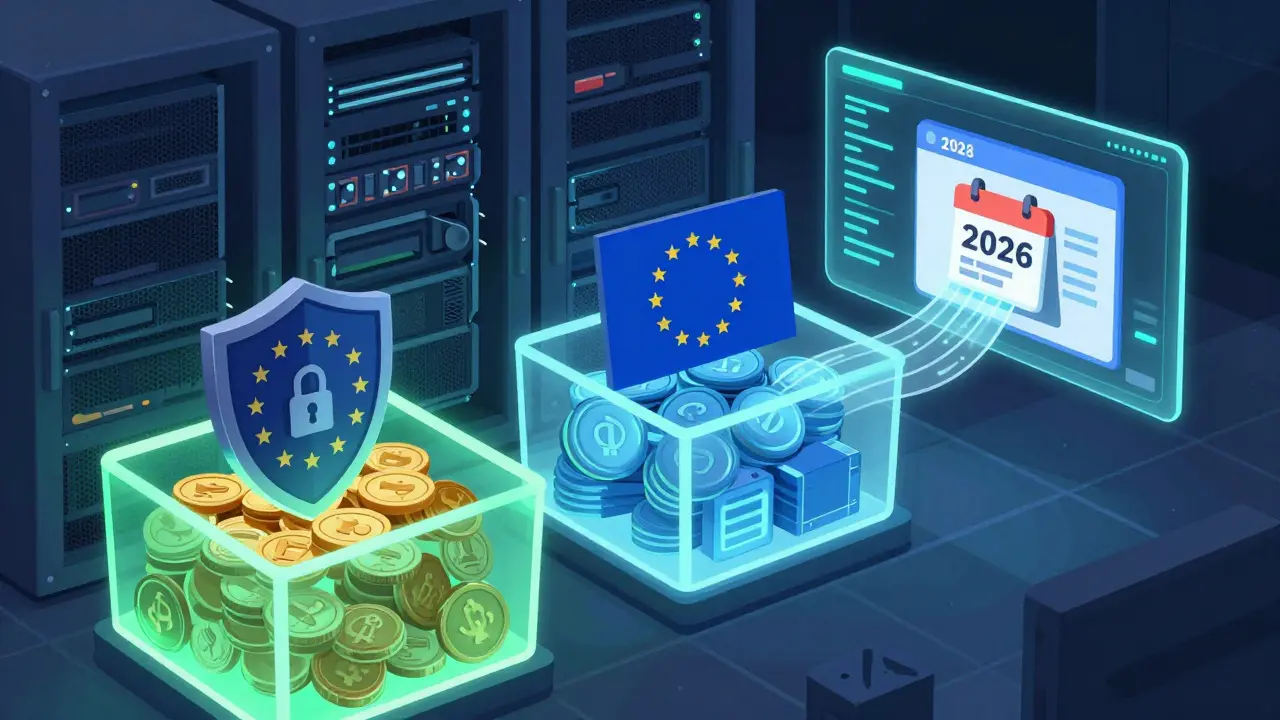
The regulatory landscape continues to evolve. Starting January 1, 2026, the DAC 8 reporting requirements will take effect. Custody providers must implement new technical interfaces to report crypto transactions to tax authorities under the OECD’s Crypto-Asset Reporting Framework. Expect compliance costs to rise by 15-20% as a result.
Tax treatment is also becoming clearer. Updated circulars from March 2025 differentiate between active and passive staking, with active staking now taxed as commercial income. Guidance on DeFi implications has also been introduced. Looking further ahead, revisions to civil securities law expected by Q2 2026 may classify more crypto assets as securities, triggering stricter banking licenses instead of financial services licenses. This could fundamentally reshape the custody landscape by 2027.
How long does it take to get a crypto custody license in Germany?
For new applicants, the process typically takes 6 to 9 months. However, existing financial institutions with MiFID II licenses can use an accelerated notification procedure, reducing the timeline to approximately 3 months.
What is the minimum capital requirement for crypto custody providers?
Pure crypto custody providers must maintain a minimum operational capital of €125,000. If you offer multiple services under MiCAR Article 6, the requirement increases to up to €730,000.
Is MiCAR the only regulation I need to worry about?
No. While MiCAR covers general crypto assets like Bitcoin, security tokens remain regulated under Germany’s national Banking Act (KWG) and MiFID II. You must determine which category your assets fall into to ensure proper compliance.
What happens if my custody provider goes bankrupt?
German regulations mandate strict segregation of client assets from custodian assets. This means client holdings are legally separated and should not be used to cover the custodian’s debts, providing a layer of protection against insolvency.
When do DAC 8 reporting requirements start?
DAC 8 reporting requirements, which mandate the disclosure of crypto transactions to tax authorities, will take effect on January 1, 2026. Providers must implement necessary technical interfaces by Q4 2025.