Crypto Exchanges Iranian Users Should Avoid in 2025
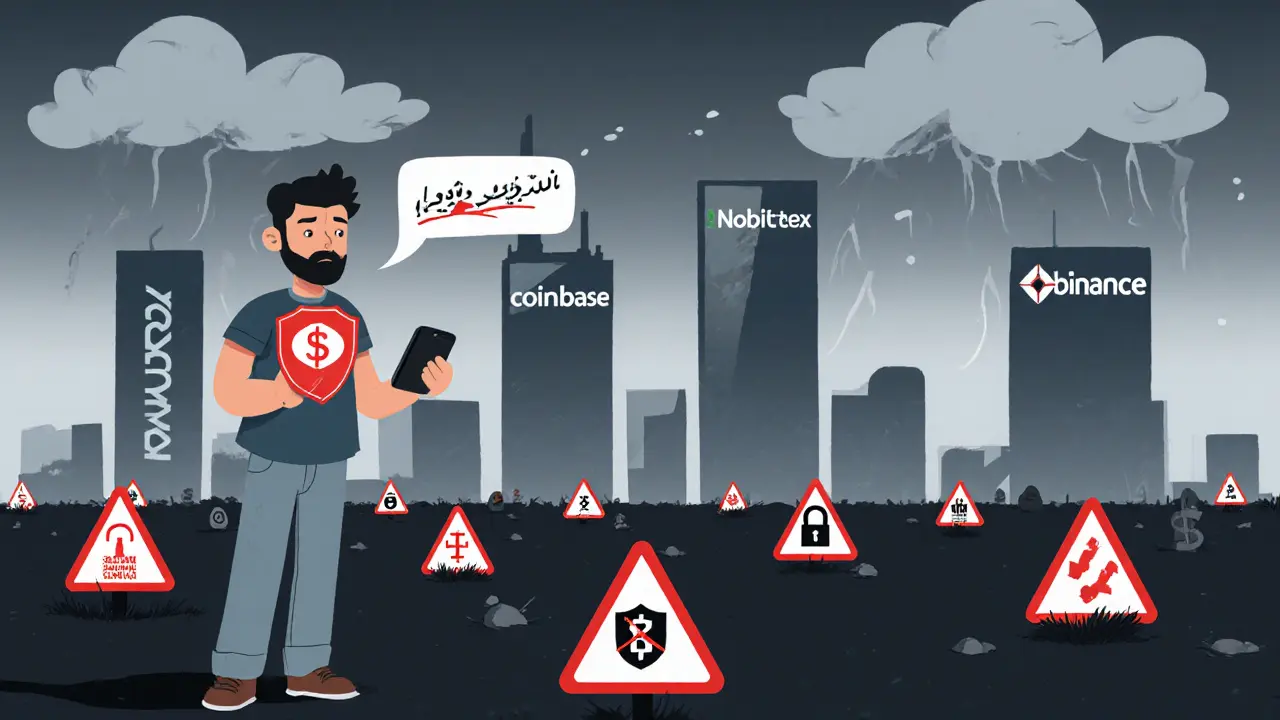
Crypto Exchange Risk Checker
Check Exchange Risk Level
Enter an exchange name to assess its risk level for Iranian users in 2025 based on current regulations and incidents.
Red Flags to Watch For
Exchanges to Avoid in 2025
Nobitex
Sanctions & security breach
$90M hack (June 2025); OFAC listing
High RiskCoinbase
Strict sanctions compliance
Multiple Iranian accounts frozen post-July 2025
Medium RiskBinance
Sanctions screening & unstable KYC
Account bans for Iranian IPs (2025)
Medium RiskKraken
OFAC enforcement
Blocked USDT withdrawals for Iranian users
High RiskStablecoin-only platforms
Stablecoin caps
Iranian users hit with freeze after exceeding $10k holdings
High RiskUnregulated P2P sites
Lack of legal recourse
Frequent exit scams and no customer support
Medium RiskQuick Summary
- Avoid any platform that relies heavily on USDT or other US‑linked stablecoins - Tether’s July2025 freeze shows why.
- Stay away from unlicensed Iranian exchanges like Nobitex, which faced a $90M hack and sanctions scrutiny.
- Major international venues (Coinbase, Binance, Kraken) enforce strict sanctions screening; Iranian accounts are often frozen or banned.
- Stablecoin‑centric services are now limited by Iran’s $5,000 annual purchase cap - violations lead to penalties.
- Watch for IRGC‑linked platforms or any service promoted through government‑affiliated media; they carry extreme compliance risk.
If you’re an Iranian crypto enthusiast, the landscape feels like a minefield. Between U.S. sanctions, new Iranian rules, and a spate of hacks, picking a safe exchange is tougher than ever. Below you’ll find the exchanges you should steer clear of, why they’re risky, and what red‑flags to watch for.
Iranian crypto exchanges have become a focal point for regulators worldwide. The Iranian government cracked down on unlicensed platforms, while the U.S. Treasury’s Office of Foreign Assets Control (OFAC) slapped sanctions on several local players. When an exchange sits at the intersection of these forces, your assets can disappear overnight.
Why Sanctions Matter - The Tether Freeze Case Study
On July2,2025, Tether executed its largest‑ever freeze of Iranian‑linked wallets. Forty‑two addresses tied to domestic exchanges were blocked, many of them funneling funds to Nobitex. The freeze didn’t just lock money; it sent a clear message that any platform dealing heavily in USDT is a prime target for asset seizure.
For everyday users, the lesson is simple: if an exchange lists USDT as a primary stablecoin, you’re walking a regulatory tightrope. The same logic applies to other U.S.‑based stablecoins like USDC and BUSD.
Domestic Danger Zone - Nobitex and Its Fallout
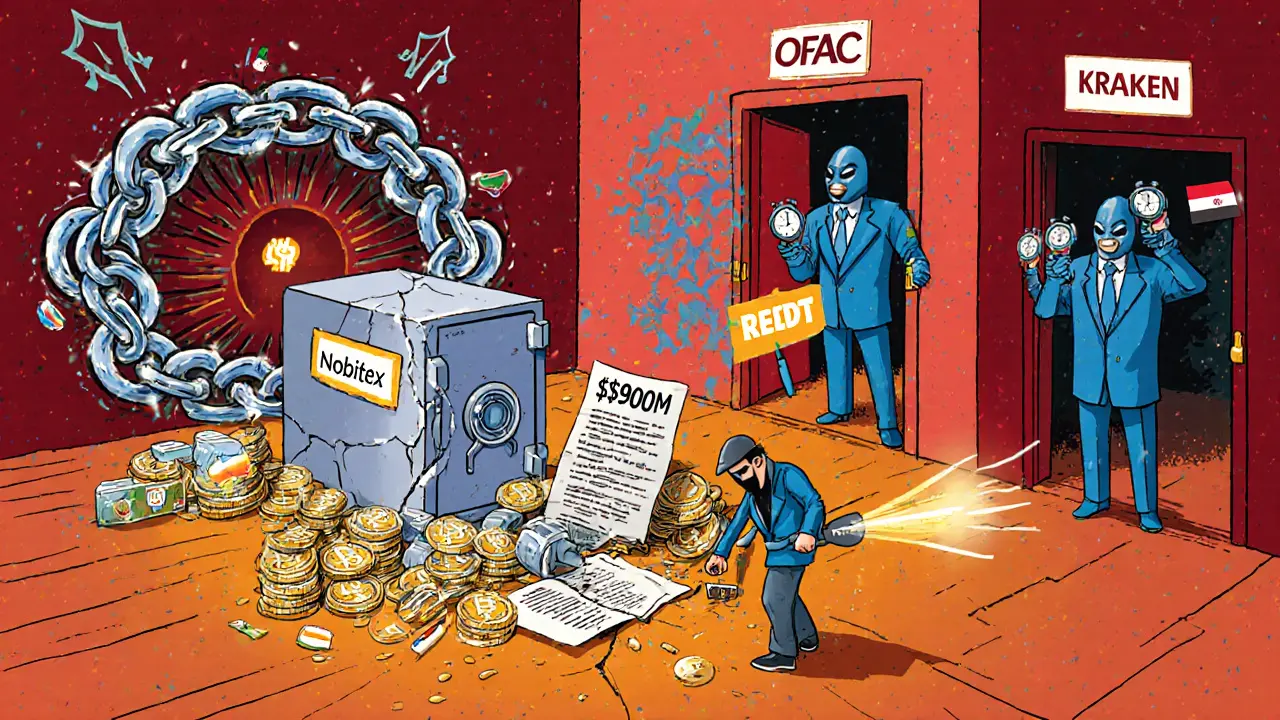
Iranian crypto exchanges are often grouped together, but Nobitex stands out for two reasons. First, it’s Iran’s biggest exchange, serving over 11million users. Second, it became a sanctions target after Elliptic’s analysis linked its wallet network to IRGC‑affiliated addresses.
In June2025, the platform suffered a $90million hack that siphoned funds from both user wallets and the exchange’s hot storage. The incident exposed weak security practices and highlighted how international enforcement agencies can quickly zero in on a domestic platform when sanctions are involved.
International Platforms - Not a Safe Haven
Big names like Coinbase, Binance, and Kraken enforce rigorous OFAC screening. When they spot an Iranian IP address, banking link, or KYC document that hints at Iranian residency, they often freeze the account without warning.
For example, after the July2025 Tether freeze, a coordinated campaign urged Iranian users to exit USDT holdings on these platforms. Within weeks, dozens of accounts were permanently banned. The takeaway? International exchanges are not a loophole; they’re actually the most likely place to see your assets frozen.
Stablecoin Restrictions - The New Iranian Rules
In September2025, Iran’s Central Bank introduced a strict cap: individuals can purchase a maximum of $5,000 worth of stablecoins per year and hold no more than $10,000 at any time. Violating these limits can lead to a one‑month compliance deadline followed by undefined penalties.
Exchanges that specialize in stablecoin swaps-especially on the Polygon network where DAI became a popular alternative-are now under heavy scrutiny. If you exceed the caps, you risk both regulatory fines and exchange‑initiated account closures.
Red‑Flag Checklist - How to Spot a Bad Exchange
| Red Flag | Why It’s Dangerous |
|---|---|
| Heavy USDT/USDC listings | Subject to U.S. sanctions freezes |
| No Iranian licensing | Can be shut down by Central Bank |
| IRGC‑affiliated promotion | Likely to attract sanctions enforcement |
| History of hacks or security breaches | Increases chance of asset loss |
| Focus on high‑volume stablecoin trading | Violates new $5k/$10k limits |
| Lack of KYC/AML transparency | May be deemed “unregistered” by regulators |
Exchanges to Avoid - The Current List (2025)
| Exchange | Primary Risk | Notable Incident |
|---|---|---|
| Nobitex | Sanctions & security breach | $90M hack (June2025); OFAC listing |
| Coinbase | Strict sanctions compliance | Multiple Iranian accounts frozen post‑July2025 |
| Binance | Sanctions screening & unstable KYC | Account bans for Iranian IPs (2025) |
| Kraken | OFAC enforcement | Blocked USDT withdrawals for Iranian users |
| Stablecoin‑only platforms (e.g., Circle, Tether‑direct) | Stablecoin caps | Iranian users hit with freeze after exceeding $10k holdings |
| Unregulated peer‑to‑peer sites (e.g., local crypto forums) | Lack of legal recourse | Frequent exit scams and no customer support |
Safer Alternatives - What Works in 2025
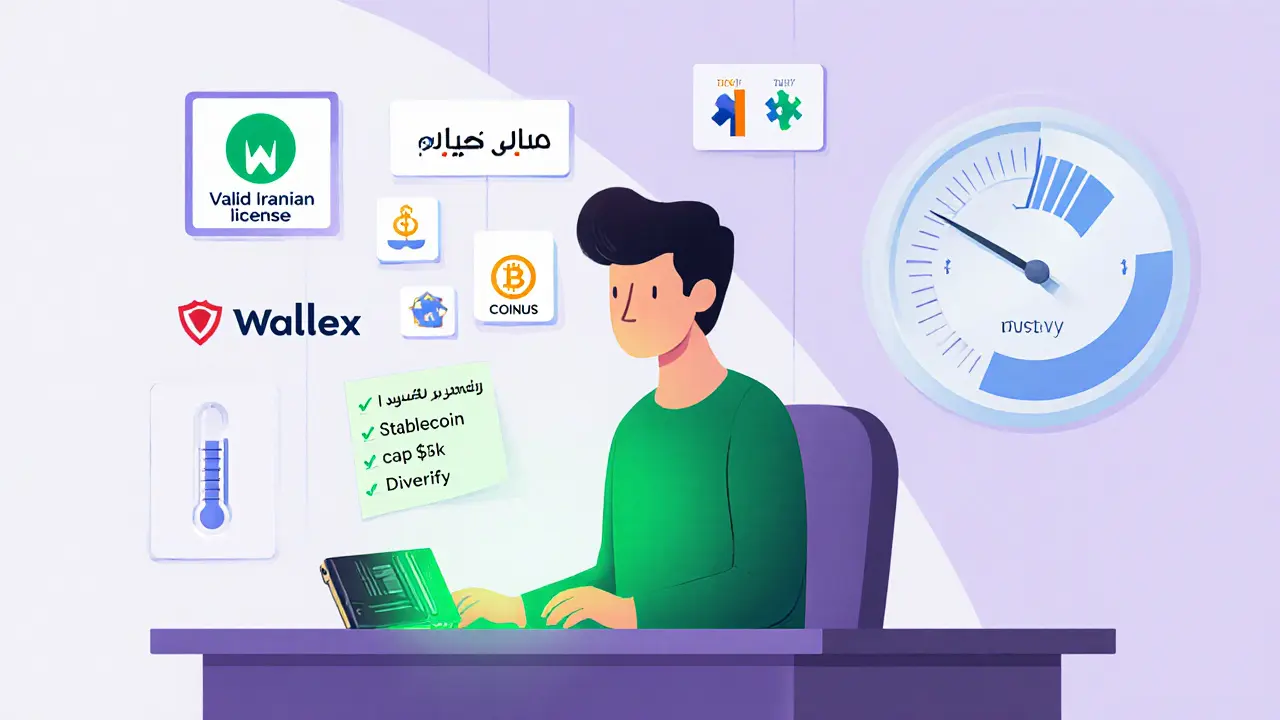
While the article focuses on what to avoid, a quick note on safer routes is helpful. Look for exchanges that:
- Hold a valid Iranian license from the Central Bank.
- Offer fiat off‑ramps via approved Iranian banks.
- Limit stablecoin exposure and provide robust KYC/AML procedures.
- Are based in jurisdictions with neutral sanction policies (e.g., some European regulators).
Examples include Wallex and Coinus, both of which have secured local licenses and operate under Iranian AML oversight.
How to Keep Your Assets Safe
- Regularly check sanction lists - OFAC updates its website weekly.
- Use hardware wallets for long‑term storage; keep only a small trading balance on exchanges.
- Diversify across multiple compliant platforms to minimize the impact of a single freeze.
- Stay under the $5,000 stablecoin purchase limit and track holdings monthly.
- Avoid any service promoted through IRGC‑linked media outlets or state‑run channels.
Frequently Asked Questions
Can I use Binance if I’m an Iranian resident?
Binance enforces strict OFAC screening, so an Iranian IP address or Iranian‑linked documents will likely trigger a freeze. Most users choose to avoid Binance entirely or use a VPN, but even that carries the risk of a sudden account ban.
What happened with the Tether freeze?
On July2,2025 Tether blocked 42 wallets linked to Iranian activity, freezing millions of dollars worth of USDT. The move was part of a broader U.S. sanctions effort targeting crypto channels used for sanctions evasion.
Are unlicensed Iranian exchanges illegal?
Since early 2025 the Central Bank requires a license for any platform handling rial‑based crypto payments. Operating without that license can lead to forced shutdowns and seizure of user funds.
How can I stay compliant with stablecoin caps?
Track purchases in a spreadsheet, keep holdings below $10,000, and prefer local Iranian stablecoins (if available) that are exempt from the cap. Exceeding limits can trigger fines or account closures.
Is using a hardware wallet safe in Iran?
Yes. Hardware wallets keep private keys offline, shielding you from exchange hacks and freezes. Just store the device in a secure place and back up the recovery seed.
Remember, the risk landscape shifts fast. Keep an eye on sanctions updates, watch for new domestic regulations, and never leave large sums sitting on an exchange you’re not 100% sure about.

Debra Sears
Reading through this rundown really hit home for anyone trying to stay safe in the crypto space right now. The crackdown on USDT and the heavy hand of OFAC have turned what used to be a wild west into a tightly monitored battlefield. I remember when the first big hack hit a local exchange and everyone thought it was an isolated incident, only to see the ripple effects cascade across the region. The $90 million Nobitex breach was a stark reminder that even the biggest platforms can crumble under pressure. Coupled with the new Iranian stablecoin caps, users are forced to juggle regulatory compliance and personal security at the same time. It’s not just about picking an exchange; it’s about understanding the entire ecosystem of sanctions, licensing, and technical safeguards. Hardware wallets, for instance, have become a lifeline for many who can’t trust centralized services. Diversifying across a few compliant platforms also mitigates the risk of a single-point freeze. Keeping a spreadsheet of stablecoin purchases can sound tedious, but it’s the most reliable way to avoid accidental breaches of the $5k limit. Watching for any IRGC‑affiliated promotions is another layer of vigilance many overlook. The Tether freeze in July 2025 was a clear signal that even seemingly neutral stablecoin issuers can be weaponized by sanctions bodies. If you’re using Binance or Kraken, expect aggressive KYC checks and possible IP bans; it’s not a myth, it’s happening right now. The advice about using local licensed exchanges like Wallex holds water, but those platforms aren’t immune either-regulatory landscapes shift fast. Staying updated with OFAC releases and Iranian Central Bank announcements is a non‑negotiable habit. Ultimately, the safest strategy mixes technical defenses, regulatory awareness, and a healthy dose of skepticism.
Andrew Lin
Seriously, this article is just a rip‑off of the usual panic‑fuel. Most of these "red flags" are just common‑sense. If you can’t handle a simple KYC, don’t bother with crypto.
Matthew Laird
People love to blame everything on sanctions like it's some mystical curse. The real issue is that many users are clueless about basic security. Learn to store your keys offline before you start whining.
Caitlin Eliason
What really scares me is how quickly these platforms swing from "trusted" to "dangerous" overnight. One day you’re trading, the next your assets are frozen and you’re left scrambling.
Richard Bocchinfuso
Sounds risky.
Nicholas Kulick
For anyone looking for a quick safety checklist: verify Iranian licensing, avoid heavy USDT exposure, and keep most of your crypto in a hardware wallet.
Jason Wuchenich
Staying calm and diversifying is key. Even if one platform goes down, you’ll have other places to fall back on.
Kate O'Brien
All this talk about sanctions is just the tip of the iceberg. They’re probably already planting backdoors in these exchanges, waiting for a chance to seize assets.
Ricky Xibey
Yo, if you’re using Binance, you’re basically handing over your keys to the CIA. Keep it off your radar.
Anna Engel
Wow, another list of “don’t use this” – what a surprise. Might as well tell us not to breathe.
Marcus Henderson
It is incumbent upon every participant to meticulously assess regulatory and technical risk vectors in order to safeguard assets against sanctions‑related disruptions.
Ken Pritchard
For newcomers, the safest bet is to start with a locally licensed exchange, keep only minimal funds for trading, and move the rest to a hardware wallet.
Jasmine Kate
Oh great, another “start small” tip. As if the big wolves aren’t already circling.
Franceska Willis
Honestly, if you’re still reading this, you’re probably already in trouble. Time to get a hardware wallet before it’s too late!
Heather Zappella
From a cultural perspective, it’s fascinating how quickly the Iranian crypto community has adapted to regulatory pressure. Historically, Iranian users have shown resilience in the face of external constraints, and this trend continues. Many are turning to community‑run educational initiatives to spread awareness about hardware wallets and best security practices. The emergence of local “crypto clubs” on messaging apps demonstrates a grassroots approach to risk mitigation. These groups often share vetted exchange lists, focusing on platforms that have secured Iranian licenses. While the legal environment remains fluid, the collective knowledge base is expanding, which helps users navigate the shifting landscape. It’s also worth noting that some developers are creating open‑source tools to help users anonymize transactions within the limits of the law. This aligns with the broader global trend of decentralization, even under sanction regimes. Moreover, the Iranian diaspora is contributing by offering fiat on‑ramps through trusted relatives abroad, thereby reducing reliance on risky local services. All of these factors together suggest a community that’s not only surviving but also innovating under pressure.
Sal Sam
Leverage multi‑sig vaults and cross‑chain bridges to distribute assets; this reduces single‑point exposure and aligns with best‑practice cybersecurity frameworks.
Moses Yeo
Well, folks, aren’t we just dancing on the edge of a regulatory razor? The world’s a stage, and each of us is playing the role of the frantic crypto‑trader, desperately trying to stay ahead of yet another sanction policy change!
Lara Decker
All this “stay compliant” talk is just a way for the powers that be to keep us in line. The moment you think you’re safe, they’ll find a new way to screw you over.
Mark Fewster
It’s essential to keep a detailed log of all transactions; such documentation can serve as both a personal audit trail and a defense against potential regulatory inquiries.
EDWARD SAKTI PUTRA
Glad to see the community sharing these warnings; knowledge is the best defense against sudden freezes and hacks.
Patrick Gullion
Sure thing, but let’s not forget that some of these “hype” exchanges might actually be safer than the big names-just because they’re less flashy doesn’t mean they’re riskier.