Crypto Tax Rates by Country in 2026: A Global Comparison Guide

Imagine selling Bitcoin for a profit. In one country, you keep every penny. In another, the government takes more than half. This isn't science fiction; it is the reality of cryptocurrency taxation in 2026. Where you live-or where you hold your assets-dictates how much of your hard-earned gains stay in your pocket.
The landscape has shifted dramatically since the early days of wild west regulation. Today, nations are actively competing to attract blockchain businesses and investors, while others are tightening the net to capture revenue from this booming sector. Understanding these differences is no longer optional for serious investors. It is the difference between growing your wealth and watching it shrink due to compliance costs.
The Zero-Tax Havens: Keeping 100% of Your Gains
If your goal is to maximize returns without any tax drag, certain jurisdictions stand out as clear winners. As of 2026, several countries offer complete exemption from capital gains tax on cryptocurrencies. These nations have made strategic decisions to position themselves as hubs for digital innovation.
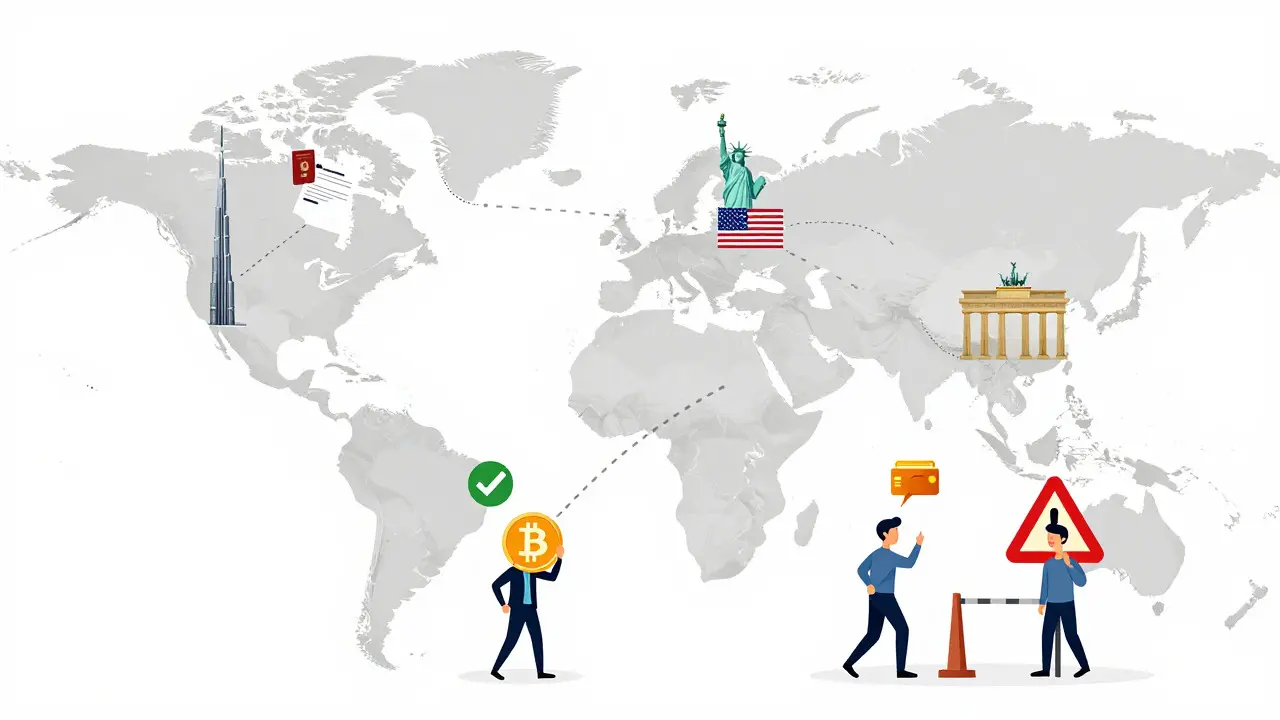
United Arab Emirates (UAE) is perhaps the most prominent example. The UAE imposes a 0% tax rate on all cryptocurrency transactions, regardless of holding period or transaction type. Whether you are day trading Ethereum or holding Bitcoin for a decade, the federal government does not levy a capital gains tax. This policy applies to both residents and non-residents, making it a top choice for high-net-worth individuals relocating their financial lives.
Other notable zero-tax jurisdictions include:
- El Salvador: Famous for adopting Bitcoin as legal tender, El Salvador does not tax capital gains on digital assets. This aligns with its national strategy to integrate crypto into the broader economy.
- Panama: Panama offers a territorial tax system. Since crypto gains are often considered foreign-sourced income, they are typically exempt from local taxation unless repatriated under specific business structures.
- Saudi Arabia: Currently, there is no specific capital gains tax on crypto for individuals, though regulatory frameworks are evolving rapidly.
- Hong Kong: Crypto gains are only taxed if classified as "business profits." For pure personal investment holdings, the effective tax rate is 0%.
However, "zero tax" does not mean "zero rules." Countries like the UAE still require strict anti-money laundering (AML) compliance and may impose corporate taxes on entities running mining operations or exchanges. Always verify residency requirements, as some benefits apply only to citizens or long-term residents.
The High-Tax Zones: Preparing for Significant Deductions
On the opposite end of the spectrum, some countries treat cryptocurrency similarly to ordinary income or apply steep progressive tax rates. If you reside in these jurisdictions, accurate record-keeping is not just good practice-it is essential for survival.
Japan remains one of the most expensive places to hold crypto. The Japanese government classifies crypto gains as "miscellaneous income," subjecting them to a progressive tax structure that can reach up to 55%. This includes national and local inhabitant taxes. There is no distinction between short-term and long-term holdings, meaning patient investors do not receive preferential treatment compared to day traders.
Denmark also imposes heavy burdens, with tax rates ranging from 37% to 52% depending on your total income bracket. Unlike Japan, Denmark allows for loss harvesting, but the high marginal rates significantly reduce net profitability for active traders.
In France, the situation is nuanced. France applies a flat 30% tax rate on crypto-to-fiat conversions. This rate combines a 12.8% capital gains tax with 17.2% social contributions. However, if you choose to declare crypto gains as part of your standard income, you might pay less if your overall income is low, but potentially more if you are in higher brackets. Crucially, France distinguishes between passive holding and active activities like mining or staking, which are taxed as professional income at rates up to 45% plus social charges.
The Middle Ground: Favorable Conditions with Caveats
Many major economies fall into a middle category where taxes exist but are manageable, especially if you play the game correctly. These countries often reward long-term holding or offer allowances that shield small investors from paying anything at all.
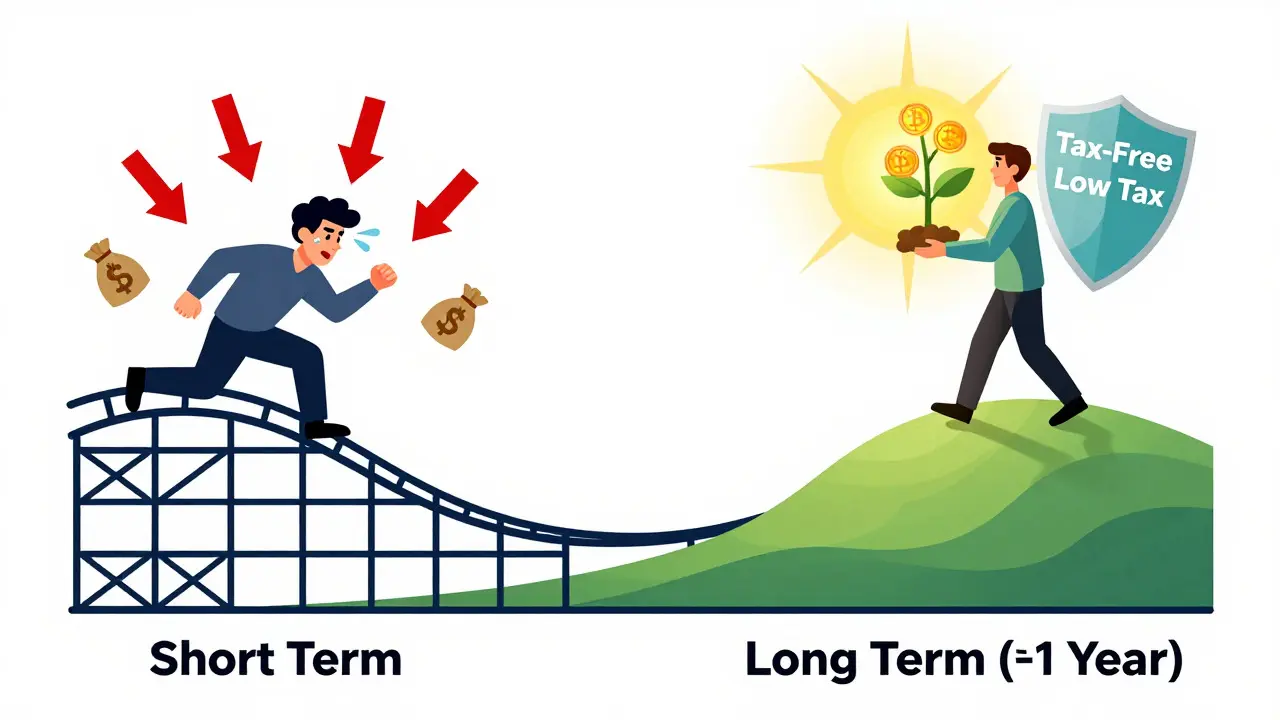
Germany offers a unique incentive for patience. Cryptocurrency held for more than one year is entirely tax-free. If you sell within that year, gains are taxed as ordinary income, with rates progressing up to 45%. This creates a powerful behavioral nudge toward HODLing. Additionally, Germany provides a small annual tax-free allowance (currently €1,000), meaning casual investors who make minimal profits may owe nothing.
The United Kingdom uses a capital gains tax (CGT) framework. Basic-rate taxpayers pay 10% on crypto gains, while higher-rate taxpayers pay 20%. For the 2025-2026 tax year, the CGT allowance stands at £3,000. This means if your total capital gains across all assets (stocks, property, crypto) are below £3,000, you pay zero tax. Above that threshold, the rate depends on your income band. Mining and staking rewards are treated as income, taxed at your marginal income tax rate, adding complexity for DeFi enthusiasts.
In the United States, the IRS treats crypto as property. Short-term gains (held less than a year) are taxed as ordinary income, ranging from 10% to 37%. Long-term gains (held over a year) enjoy preferential rates of 0%, 15%, or 20%, depending on your taxable income. This structure heavily favors long-term investors. However, the US requires reporting of every single transaction, including crypto-to-crypto trades, which makes software solutions almost mandatory for compliance.
Comparison Table: Crypto Tax Rates by Major Jurisdiction
| Country | Tax Rate Structure | Long-Term Benefit | Key Compliance Note |
|---|---|---|---|
| UAE | 0% | N/A | No capital gains tax; strict AML rules apply. |
| Japan | Progressive (15%-55%) | None | Treated as miscellaneous income; no loss carry-forward beyond current year. |
| Germany | Progressive (up to 45%) | Tax-free after 1 year | Must report transactions annually; €1,000 allowance. |
| UK | 10% / 20% CGT | £3,000 Allowance | Mining/staking taxed as income; Self-Assessment required. |
| USA | Short: 10-37% Long: 0-20% |
Preferential long-term rates | All trades taxable events; Form 8949 reporting. |
| France | Flat 30% | Optional income declaration | Crypto-to-crypto tax-exempt; fiat conversion taxed. |
Navigating Residency and Reporting Requirements
Tax liability is not just about where you buy crypto; it is about where you are considered a tax resident. Most countries use the "183-day rule," meaning if you spend more than half the year in a jurisdiction, you are likely liable for taxes on your worldwide income, including crypto gains.
This creates opportunities for optimization but also risks of double taxation. Many countries have bilateral treaties to prevent this, but crypto often falls through the cracks of older agreements. For instance, if you move to Portugal, you must ensure you meet the residency criteria to benefit from any local exemptions. Conversely, leaving your home country does not automatically erase your past tax liabilities. You must formally terminate tax residency to avoid ongoing obligations.
Reporting requirements are intensifying globally. The OECD's Crypto-Asset Reporting Framework (CARF) is gaining traction, requiring exchanges to share user data with tax authorities. This means the era of anonymous wallets evading detection is ending. Even in zero-tax countries like Switzerland, banks and exchanges will report large transactions to prevent money laundering. Accurate records are your best defense against audits and penalties.
Strategic Considerations for Investors
When planning your crypto strategy, consider these three pillars:
- Holding Period: In countries like the US, Germany, and Portugal, holding assets for over a year drastically reduces your tax bill. If you are in Japan or Denmark, time matters less, so focus on minimizing transaction frequency to reduce administrative burden.
- Activity Type: Distinguish between investing and trading. Passive holding is generally taxed as capital gains. Active trading, mining, staking, and providing liquidity are often taxed as ordinary income, which carries higher rates. Structuring your activities can influence your classification.
- Residency Planning: If you are mobile, consider jurisdictions with favorable regimes. However, weigh the cost of living and quality of life against tax savings. Moving to the UAE saves on taxes but may involve higher housing costs. Ensure your move is genuine; tax authorities scrutinize "paper moves" designed solely to evade taxes.
Finally, consult a local tax professional. Laws change frequently, and individual circumstances vary widely. What works for a solo trader may not apply to a DAO participant or a corporate treasury manager.
Is cryptocurrency tax-free in Switzerland?
For private investors, yes. Switzerland does not levy capital gains tax on cryptocurrencies held as private assets. However, if you trade professionally or run a mining operation, those gains are treated as business income and are subject to cantonal and federal income taxes, which can be significant.
Do I need to pay tax on crypto-to-crypto trades?
It depends on your country. In the US, UK, and Germany, swapping Bitcoin for Ethereum is a taxable event because you disposed of an asset. In France, crypto-to-crypto trades are currently tax-exempt, but converting crypto to fiat currency triggers the 30% flat tax. Always check local regulations regarding "disposal" definitions.
What happens if I don't report my crypto gains?
Penalties vary but are severe. The UK can fine up to 200% of unpaid tax. The US IRS imposes accuracy-related penalties and interest. With increasing data sharing between exchanges and governments via frameworks like CARF, unreported income is easier to detect than ever. Compliance is safer than evasion.
Can I offset crypto losses against other income?
In many jurisdictions, yes. The US allows you to deduct up to $3,000 in capital losses against ordinary income, with excess losses carried forward indefinitely. The UK allows loss relief against other capital gains. Japan is stricter, allowing loss offsets only within the same tax year for miscellaneous income. Check your local rules for loss harvesting strategies.
How are staking and mining rewards taxed?
Most countries treat staking and mining rewards as ordinary income at the fair market value when received. This means you pay income tax on the reward amount, establishing a new cost basis for future capital gains calculations. For example, in the US, you report the USD value of mined coins as income in the year they are received.