Crypto Taxation in Nigeria: What You Need to Know in 2026

Before 2026, owning cryptocurrency in Nigeria was legal-but taxing it? That was a gray area. Banks wouldn’t touch crypto businesses. Exchanges operated in the shadows. The government watched, but didn’t act. That changed on January 1, 2026, when the Nigeria Tax Act 2025 kicked in. Now, every crypto trade, every token sale, every salary paid in Bitcoin is taxable. And the authorities have the tools to find out.
What’s Taxable Now?
The new law doesn’t just tax Bitcoin or Ethereum. It covers every digital asset: tokens, NFTs, stablecoins, even utility coins. If you sell, trade, or exchange them for goods, services, or fiat currency, you owe tax. It’s not about holding-it’s about disposing.
Here’s what triggers a taxable event:
- Selling crypto for Nigerian Naira
- Trading one cryptocurrency for another (like ETH for SOL)
- Using crypto to pay for goods or services
- Receiving crypto as payment for work or services
- Coinbase rewards, staking income, or airdrops (treated as ordinary income)
Even if you didn’t convert to Naira, you still owe tax. The value is calculated at the time of the transaction using the official exchange rate published by the Central Bank of Nigeria. No more guessing. No more claiming "I didn’t make money." If the price went up between when you bought and when you spent it, the gain is taxable.
Who Pays? Individuals and Businesses
It doesn’t matter if you’re a student trading on your phone or a startup paying employees in crypto. Everyone is covered.
For individuals: Capital gains tax applies. You report gains on your annual tax return. The rate depends on your total income, but crypto gains are added to your other income and taxed at your marginal rate. There’s no separate crypto tax rate. No exemptions. No thresholds. Even a $50 profit from swapping Dogecoin for Shiba Inu gets reported.
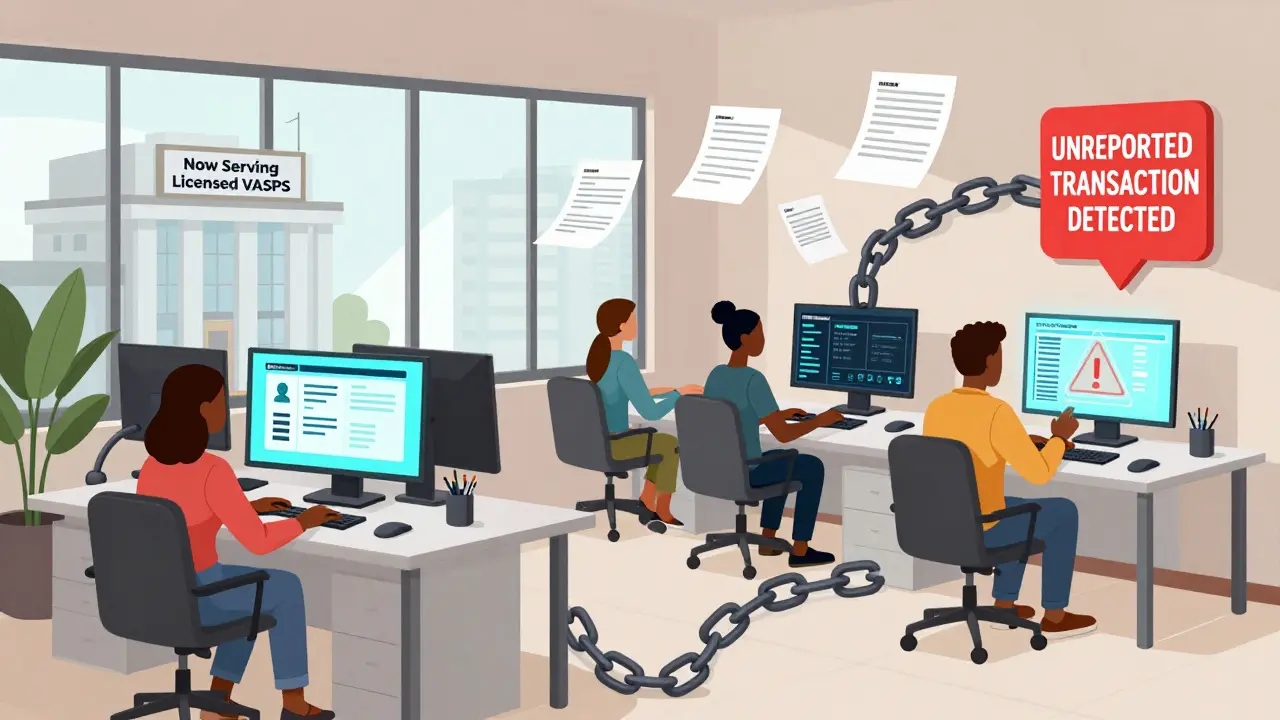
For businesses: The rules are stricter. If you’re running a crypto exchange, mining operation, or even just accepting crypto as payment, you must register as a licensed Virtual Asset Service Provider (VASP) with the Securities and Exchange Commission (SEC). This isn’t optional. Unlicensed businesses face fines, asset freezes, and criminal charges.
Businesses must now track every crypto transaction in their accounting software. Payroll in crypto? That’s income for the employee and a deductible expense for the employer. Both sides need records. The government expects you to use certified accounting systems that can integrate with the Federal Inland Revenue Service’s (FIRS) digital filing portal.
How the Government Is Tracking You
Before 2023, crypto transactions were invisible. Banks refused to work with crypto firms. Now, everything flows through regulated channels.
In December 2023, the Central Bank of Nigeria reversed its ban and allowed banks to open accounts for licensed VASPs. That meant transactions started leaving digital footprints. If you’re using a local exchange like Busha-approved by the SEC-all your trades are recorded. Your bank account shows deposits from crypto sales. The FIRS can request those records.
Offshore exchanges like Binance and KuCoin are blocked. Nigerian users can’t access them through local payment gateways. The government doesn’t need to spy on your MetaMask wallet. It just needs to watch what happens when you cash out through a licensed platform.
There’s also a new digital tax reporting system. Licensed VASPs must submit monthly reports to the FIRS, including:
- User IDs
- Transaction dates and values
- Types of assets traded
- Counterparties (if applicable)
It’s not perfect-but it’s enough. The system is designed to catch the majority of active users. If you’re trading regularly, you’re in the system.
What Happens If You Don’t Comply?
Non-compliance isn’t just a warning. It’s a risk.
The FIRS has new powers under the Nigeria Tax Act 2025. They can:
- Freeze bank accounts linked to unreported crypto activity
- Impose penalties of up to 150% of the unpaid tax
- Block access to government services (like business licenses or tax clearance certificates)
- Pursue criminal charges for tax evasion
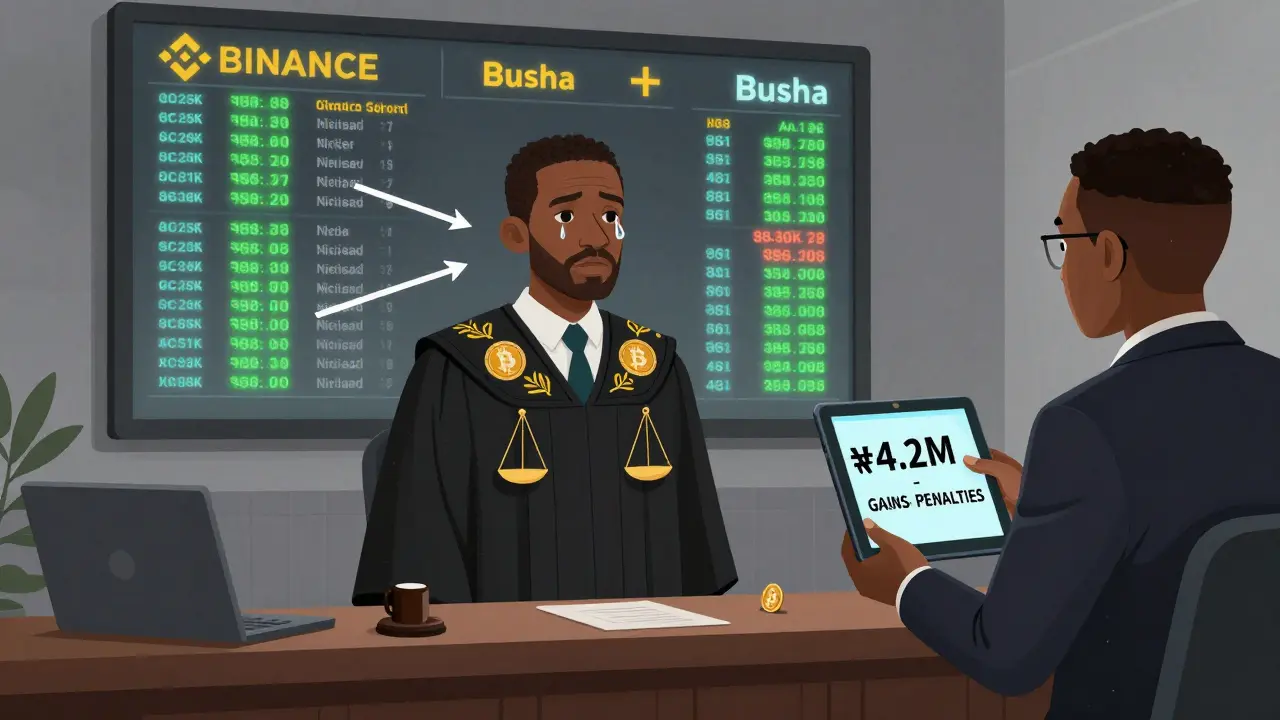
One case in Lagos made headlines in early 2026. A trader who made ₦4.2 million in crypto gains over six months didn’t file. The FIRS traced his withdrawals through Busha, matched them to his bank account, and issued a demand for ₦1.2 million in back taxes plus ₦1.8 million in penalties. He lost his business license. His account was frozen. He had to pay everything in one lump sum to get back on track.
There’s no grace period. The clock started January 1, 2026. Even transactions from late 2025 are being reviewed. If you didn’t report them then, you need to file an amended return now.
How to Stay Compliant
Don’t panic. But don’t ignore it either. Here’s what you need to do:
- Use only licensed exchanges. Busha, Yellow Card, and NairaEx are approved. Avoid offshore platforms.
- Track every transaction. Use a crypto tax software that supports Nigerian Naira and integrates with FIRS reporting standards. Manual spreadsheets are risky.
- Classify income correctly. Staking rewards? Ordinary income. Trading profit? Capital gain. Salary paid in crypto? Taxable wages. Mixing them up leads to errors.
- File on time. Annual returns are due by March 31. If you’re a business, quarterly filings may apply.
- Get professional help. Tax advisors familiar with digital assets are in high demand. Don’t try to wing it with a general accountant.
Many crypto users in Nigeria are still in denial. They think the government won’t notice. But the infrastructure is in place. The data is flowing. The penalties are real. The only question left is: Are you prepared?
What’s Next?
Nigeria isn’t done. The SEC is already working on rules for decentralized finance (DeFi) platforms and non-custodial wallets. The next phase could require wallet address disclosures for large transactions. Mining operations may soon need energy usage reports. The goal isn’t to stop crypto-it’s to bring it into the light.
For now, the message is clear: If you’re active in crypto in Nigeria, you’re part of the tax system. No more hiding. No more loopholes. The rules are out. The tools are here. The time to act is now.
Are crypto-to-crypto trades taxable in Nigeria?
Yes. Swapping one cryptocurrency for another is treated as a disposal. You must calculate the fair market value in Naira at the time of the trade. Any gain over your original cost basis is subject to capital gains tax. Even if you didn’t convert to Naira, the tax still applies.
Do I need to report crypto I bought in 2024 but sold in 2026?
Yes. The Nigeria Tax Act 2025 applies retroactively to transactions from January 1, 2025. If you sold crypto in 2026, you must report the gain-even if you bought it in 2024. You’ll need records of your purchase price and date to calculate your cost basis.
Can I use a foreign crypto exchange and avoid taxes?
No. Even if you use an offshore exchange like Binance, if you cash out to a Nigerian bank account, the transaction leaves a trace. The FIRS can request bank records and cross-reference them with data from licensed local exchanges. Using offshore platforms increases your risk of being flagged for non-compliance.
Is staking crypto taxable in Nigeria?
Yes. Staking rewards are treated as ordinary income. The value is calculated in Naira at the time you receive the reward. You must report this on your annual tax return. Failure to report staking income is considered underreporting of income and can trigger penalties.
What if I lost money trading crypto? Do I still owe tax?
You don’t owe tax on losses-but you still need to report them. Losses can offset gains in the same tax year. If your losses exceed your gains, you can carry them forward to future years. But if you don’t report the loss, you can’t use it to reduce your tax bill later. Documentation is key.
Do I need to register as a business if I trade crypto occasionally?
No, not unless you’re operating as a business. Occasional personal trading doesn’t require VASP registration. But you still need to report gains on your individual tax return. If you’re trading frequently, advertising services, or earning significant income, the FIRS may classify you as a business-and then VASP licensing becomes mandatory.




Patty Atima
Honestly? This is the best thing that could’ve happened. Crypto’s been a wild west for too long. Now we’ve got rules, and that’s how real markets grow. 🌱
Lucy de Gruchy
This is a power grab disguised as fiscal responsibility. The government didn’t 'modernize'-they weaponized banking. Every transaction tracked? That’s not taxation, it’s surveillance.
Lauren J. Walter
So… I’m supposed to care about a tax law that just dropped? Cool. I’ll be over here, quietly holding my BTC and pretending I never read this.
Carol Lueneburg
YESSSS!!! FINALLY some clarity!!! 🎉✨ I’ve been using Busha since last year and honestly? The tax software integration made my life so much easier. You guys are gonna be okay. I believe in you!! 💪💖
Brenda White
wait so if i swap doge for shiba do i really owe tax? like even if i just did it for fun? this is insane. who even keeps track of this??
Tobias Wriedt
Crypto is the people’s money. This is the state saying, 'You can’t be free.' They’re scared. And they’re gonna lose.
Ernestine La Baronne Orange
I’ve been doing this since 2017. I’ve lost money. I’ve made money. I’ve staked. I’ve swapped. I’ve been audited once already. And now? Now they want MONTHLY reports from exchanges? I’m not a corporation. I’m a single mom who trades on her phone between school pickups. This isn’t taxation-it’s persecution. I’m not even gonna file. Let them freeze my account. I’ve got 37 cents in my wallet. What are they gonna take? My socks?
Manali Sovani
The Nigerian government has demonstrated a commendable commitment to fiscal transparency. This regulatory framework aligns with global best practices in digital asset governance, particularly in jurisdictions with high informal economic activity. One must acknowledge the institutional maturity required to implement such a system.
Konakuze Christopher
Binance got blocked? That’s the first red flag. If they’re scared of offshore exchanges, it’s because they know they can’t track it. They’re bluffing.
S F
Nigeria’s finally growing up. If you can’t pay taxes, you shouldn’t be trading. This isn’t oppression-it’s responsibility. America’s been doing this for decades. Time to catch up.
Angelica Stovall
They’re not catching anyone. Everyone’s using Phantom wallets and peer-to-peer. This whole thing is a show for the IMF. The real traders? They’re not on Busha.
Taylor Holloman.
I get why people are freaked out. But honestly? This isn’t the end of crypto. It’s the beginning of legitimacy. I’ve seen this before-remember when banks refused to touch online gambling? Look where that is now. This is messy, but it’s real. Take a breath. Track your stuff. It’ll be fine.
Bryan Roth
If you’re trading crypto in Nigeria, you’re part of a movement. This isn’t just about taxes-it’s about building a new financial future. You don’t need to be a genius. Just be consistent. Use the tools. Talk to someone who’s done it. You’ve got this. And if you’re scared? That’s okay. Start small. One transaction at a time. You’re not alone.
Sahithi Reddy
This is good. Now people stop playing games. Tax it. Report it. Move on.
George Hutchings
The irony is thick. We spent years screaming about decentralization, then built an entire ecosystem that now depends on a single government-approved exchange. The revolution got franchised.
Henrique Lyma
The Nigeria Tax Act 2025 represents a significant departure from the principles of monetary sovereignty. By mandating centralized reporting of peer-to-peer asset transfers, the state effectively nullifies the foundational tenet of blockchain technology: trustlessness. The use of official exchange rates, which are subject to political manipulation, further undermines the integrity of the valuation mechanism. This is not fiscal policy-it is economic colonization under the guise of regulation.
Steph Andrews
I know it feels overwhelming but honestly if you just use one app to track everything it gets way easier like just pick one and go with it
Prakash Patel
You think this is new? In 2018, India tried this. Look where they are now. Half the traders left. The government didn’t win. The banks did.
Elizabeth Kurtz
I’m a tax advisor in Lagos. I’ve helped 87 people file their crypto returns since January. Most were terrified. Now they’re relieved. You don’t need to be rich. You just need to be organized. And yes, I’ve seen people turn losses into savings. It’s possible.
john peter
The state has always sought to monopolize the means of value. This is merely the latest iteration of that ancient impulse. To tax a decentralized medium is to confess its power. The irony is exquisite: they regulate to control, yet in doing so, they validate its necessity.
Marc Morgan
I love how everyone’s acting like this is unique. Australia’s been doing this since 2014. You trade? You pay tax. Simple. Stop making it a drama. It’s just accounting.
Anastasia Thyroff
I just sold my last ETH for naira today and I’m crying because I didn’t know I had to report it and now I’m scared I’m gonna get fined and I just wanted to buy a new phone and now I have to pay taxes on my dreams and why is this happening to me
Kira Dreamland
I started using Busha last month. The tax tool auto-calculates everything. I didn’t even have to think about it. It’s kind of nice, honestly.
shreya gupta
I must express my profound concern regarding the potential for systemic financial instability arising from the conflation of speculative asset transactions with traditional income taxation. The absence of a clear distinction between personal and commercial activity in this framework may inadvertently incentivize capital flight.