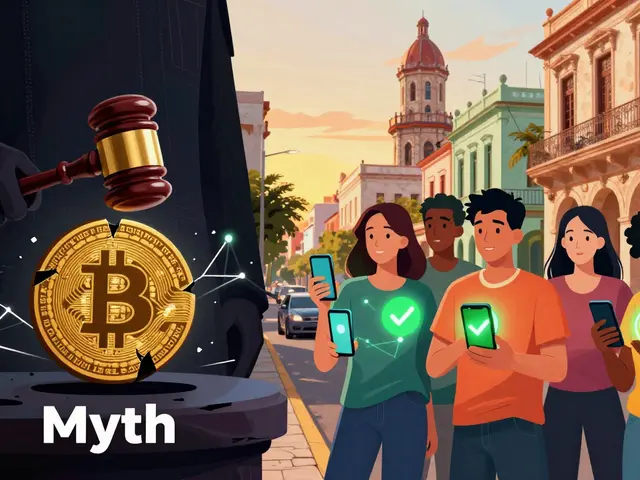
Cuba Cryptocurrency Ban: Myth vs. Reality in 2026

For years, the narrative surrounding Cuba and digital currencies was simple: it was banned. If you looked at headlines from a few years ago or heard rumors from relatives on the island, you’d assume that holding a Bitcoin wallet in Havana was a fast track to legal trouble. But if you’ve been following the financial shifts in the Caribbean, you know that story changed dramatically. In fact, as of 2026, Cuba is not prohibiting cryptocurrency; it is actively regulating it.
This isn’t just a minor policy tweak. It’s a complete reversal of status. Cuba became one of only two countries globally to officially recognize cryptocurrencies like Bitcoin and decentralized digital money as legal payment methods. This shift didn’t happen because the government suddenly fell in love with blockchain technology. It happened because they had no other choice. The reality on the ground is far more complex than a simple ban, involving strict licenses, heavy oversight by the Central Bank of Cuba and state financial authority, and a desperate need for citizens to bypass decades of economic isolation.
The Shift from Gray Area to Legal Recognition
To understand where things stand today, you have to look back at the timeline. Around 2020, cryptocurrency use in Cuba surged into a legal gray area. People were using it, but there were no rules. Then, in August 2021, everything changed with the publication of Resolution 215 and legal framework for digital assets. This resolution granted the Central Bank of Cuba the authority to regulate digital currencies and license service providers.
The government cited "reasons of socio-economic interest" for this move. That’s bureaucratic speak for "we need this to keep our economy functioning." By April 2022, the framework was fully operational, requiring licenses for anyone acting as a virtual asset service provider. This wasn’t about stopping people from using crypto; it was about bringing it under state control. Unlike China, which implemented an outright ban on mining and trading, Cuba chose regulation. They recognized that banning something people desperately needed would only push it further underground, making it harder to tax and monitor.
| Country | Stance (as of 2026) | Primary Motivation | Regulatory Body |
|---|---|---|---|
| Cuba | Legal & Regulated | Bypass U.S. Sanctions | Central Bank of Cuba |
| China | Banned | Capital Control / Stability | People's Bank of China |
| El Salvador | Legal Tender | Financial Inclusion | Ministry of Finance |
| United States | Regulated Asset | Taxation / Investment | SEC / CFTC |
Why Cuba Embraced Crypto: The Sanctions Factor
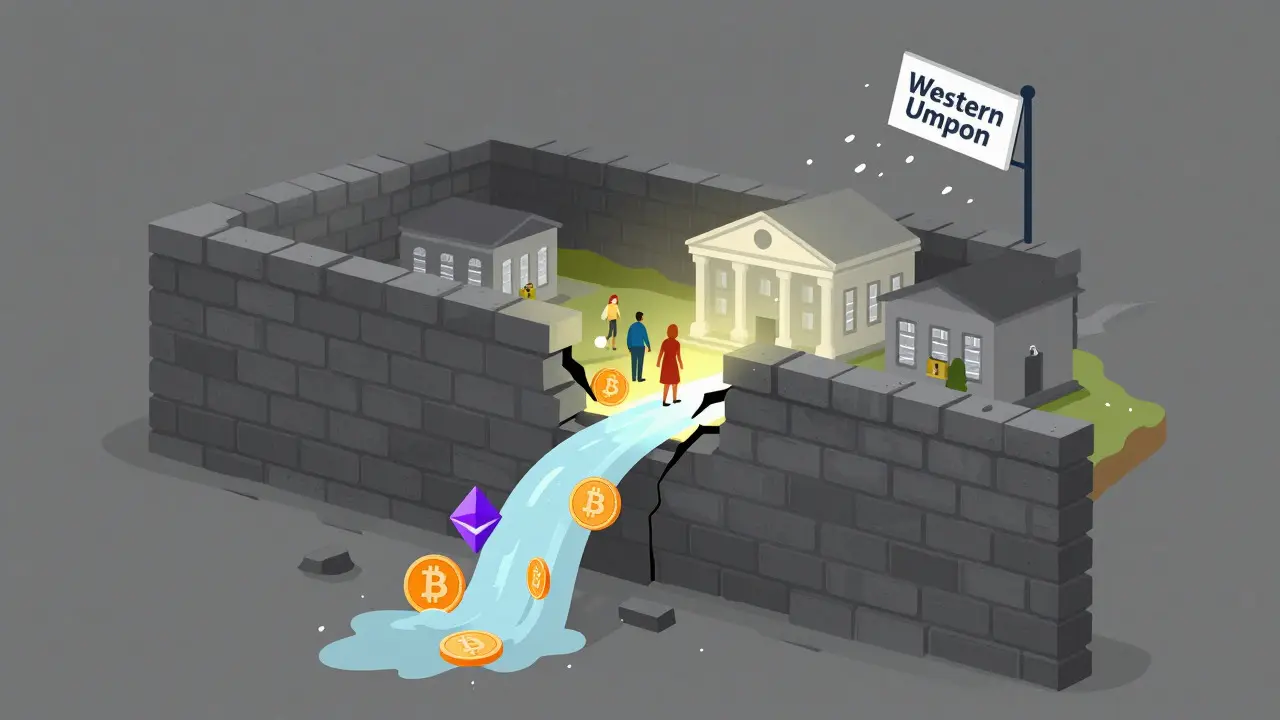
You can’t talk about crypto in Cuba without talking about the U.S. Economic Sanctions and financial restrictions imposed by the United States. These sanctions, starting in 1962, have created a wall around the island’s economy. For decades, Cubans couldn’t access PayPal, use most credit cards internationally, or shop on Amazon. Traditional money transfer services like Western Union pulled out of Cuba in 2020, shutting down over 400 locations overnight.
Imagine trying to send money to your family across the ocean when every major bank refuses to touch your account. That was the daily reality for millions of Cubans. The Cuban Assets Control Regulations and U.S. federal laws restricting transactions (31 CFR 515) freeze Cuban assets under U.S. jurisdiction. This made traditional banking nearly impossible for cross-border transfers.
Cryptocurrency offered a loophole. Bitcoin and Ethereum don’t care about borders or embargoes. They allow peer-to-peer transactions that bypass the traditional banking system entirely. For the Cuban government, allowing crypto wasn’t just about letting people buy pizza online; it was about enabling remittances. Family members in the U.S. could send Bitcoin to relatives in Havana, who could then convert it to local currency or use it to buy goods. It became a financial lifeline.
How the Regulation Works Today
If you’re thinking about doing business with crypto in Cuba, or sending money to someone there, you need to know how the current system works. It’s not a wild west scenario. The Central Bank of Cuba and regulatory authority for digital finance holds all the cards.
Here’s what the landscape looks like in 2026:
- Licensed Providers Only: You can’t just open a street-side exchange booth. Virtual asset service providers must obtain a license from the Central Bank. These licenses are initially granted for one year and are subject to renewal based on compliance.
- Strict AML Rules: Anti-money laundering (AML) requirements are tight. Service providers must perform customer due diligence. If you’re moving large amounts of crypto, expect questions. The government wants to ensure these funds aren’t being used for illicit activities.
- Business Acceptance: Businesses can legally accept cryptocurrencies as payment, provided they have the necessary licenses. This means you can technically buy groceries or pay for services using digital assets, though adoption varies by location.
- Socio-Economic Interest Test: The Central Bank evaluates applications based on whether they serve a "socio-economic interest." This gives the state significant discretion over who gets to operate in the space.
This structure allows the government to maintain oversight while still providing the utility citizens need. It’s a balance between control and necessity.
Real-World Usage: Who Is Using Crypto in Cuba?
So, is everyone in Cuba using Bitcoin? Not quite. But the numbers are growing fast. Estimates suggest that between 100,000 and 200,000 Cubans currently use cryptocurrencies like Bitcoin, Ethereum, and Avalanche. That’s roughly 1% to 2% of the population of 11 million.
While 2% might sound small compared to nations like Nigeria or Vietnam, consider the context. Widespread mobile internet access in Cuba is a relatively recent development. Before that, accessing a crypto wallet required a computer and stable Wi-Fi, which were luxuries for many. Now, with better connectivity, adoption is accelerating.
Who are these users? Mostly, they are young entrepreneurs, freelancers, and families receiving remittances. A common scenario involves a Cuban developer working remotely for a foreign client. Instead of dealing with blocked bank accounts, they get paid in USDT (Tether) or Bitcoin. They can then use licensed exchanges to convert that into Cuban Pesos or spend it directly if the merchant accepts it.
Another major use case is remittances. With Western Union gone, families rely on crypto to send money home. It’s faster and often cheaper than the remaining informal channels. However, it comes with risks. Volatility can eat into the value of the transfer, and technical glitches can leave funds stuck in limbo.

Challenges and Risks for Users
Despite the legal framework, using crypto in Cuba isn’t without its headaches. Here are the main hurdles you’ll face:
- Internet Infrastructure: While improving, internet speeds in Cuba can still be slow and unreliable. Trying to confirm a blockchain transaction during a network outage is frustrating. Many users rely on specific apps that work well on lower-bandwidth connections.
- Education Gap: Understanding private keys, seed phrases, and gas fees is not intuitive for everyone. Scams are prevalent. Because the government promotes crypto as a tool for economic survival, some bad actors prey on inexperienced users, promising high returns or fake exchange services.
- Licensing Complexity: For businesses, getting a license from the Central Bank is not a quick process. It requires documentation, compliance checks, and ongoing reporting. Small mom-and-pop shops may find this too burdensome, limiting widespread merchant acceptance.
- U.S. Policy Uncertainty: The biggest wildcard is Washington. If U.S. sanctions tighten further, or if new regulations target crypto remittances specifically, the entire ecosystem could face pressure. The viability of Cuba’s crypto model depends heavily on the geopolitical relationship between Havana and Washington.
Future Outlook: Will Crypto Expand in Cuba?
Looking ahead, the trend points toward expansion, not prohibition. The Central Bank of Cuba continues to issue licenses and refine its regulatory framework. Industry analysts believe Cuba’s approach could serve as a model for other sanctions-affected nations looking for alternative financial access methods.
As infrastructure improves and user education increases, we’ll likely see more integration of digital assets into daily life. We might see more local businesses accepting crypto, more sophisticated DeFi (Decentralized Finance) applications tailored to the Cuban market, and perhaps even state-backed stablecoins pegged to the peso to reduce volatility risks.
However, the government will never lose sight of control. The "socio-economic interest" clause ensures that any crypto activity must align with state goals. Expect continued strict monitoring of large transactions and potential crackdowns on unlicensed exchanges. The goal is not a free market; it’s a controlled channel for essential financial flows.
Is cryptocurrency illegal in Cuba in 2026?
No, cryptocurrency is not illegal in Cuba. Since August 2021, under Resolution 215, cryptocurrencies like Bitcoin have been recognized as legal payment methods. However, they are strictly regulated by the Central Bank of Cuba, and service providers must hold a license.
Can I send Bitcoin to someone in Cuba?
Yes, you can send Bitcoin to someone in Cuba. It is a common method for remittances since traditional services like Western Union have limited presence. The recipient can use licensed virtual asset service providers to convert the Bitcoin into local currency or spend it directly.
What is the role of the Central Bank of Cuba in crypto?
The Central Bank of Cuba is the primary regulatory authority for digital assets. It issues licenses to virtual asset service providers, enforces anti-money laundering (AML) rules, and oversees compliance to ensure crypto activities serve socio-economic interests.
Which cryptocurrencies are popular in Cuba?
Bitcoin (BTC) is the most widely used cryptocurrency in Cuba due to its recognition and liquidity. Ethereum (ETH) and stablecoins like Tether (USDT) are also popular for their utility in smart contracts and price stability, respectively.
Do businesses in Cuba accept cryptocurrency?
Yes, businesses can legally accept cryptocurrency if they have obtained the required license from the Central Bank. While not universal, acceptance is growing among tech-savvy merchants and those dealing with international clients.