Distributed Ledger Technology in the Digital Economy: The 2026 Reality Check
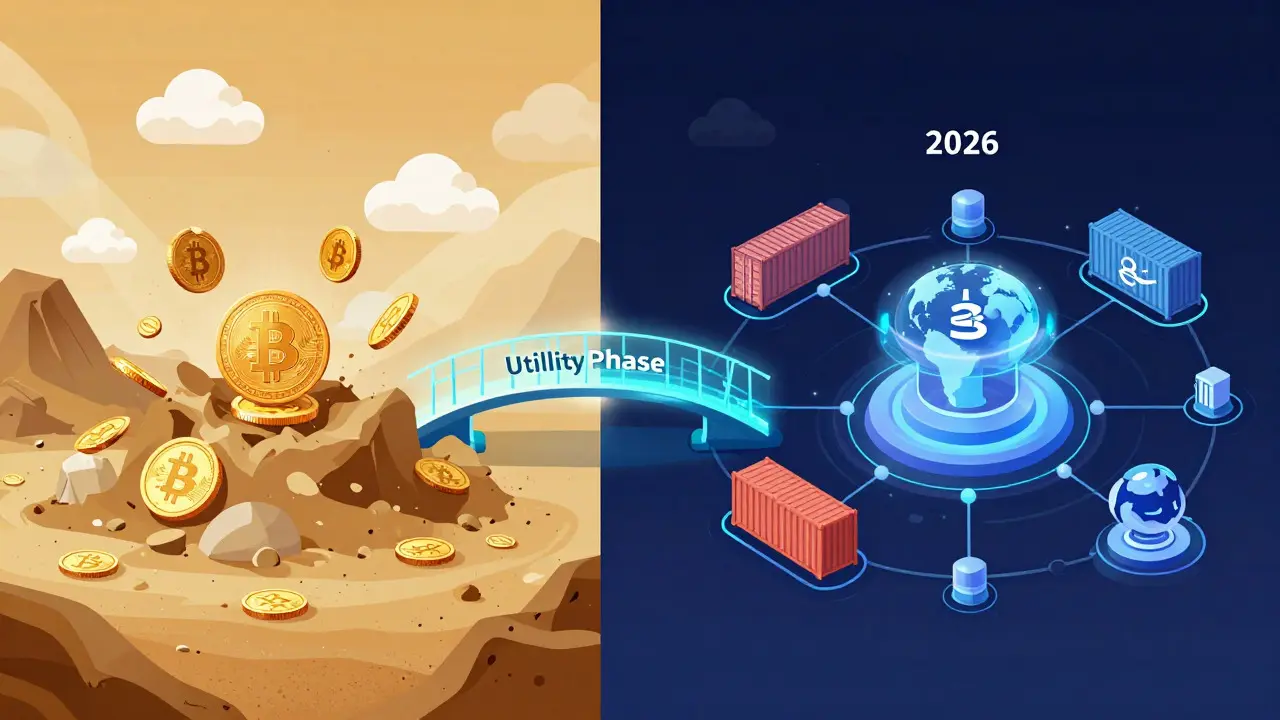
For years, Distributed Ledger Technology (DLT) was a decentralized system for recording transactions across multiple nodes without a central authority, often dismissed as just the engine behind speculative crypto coins. That era is over. As of August 2026, we are witnessing the transition from experimental pilots to production-grade infrastructure. Central banks, global shipping giants, and Fortune 500 companies are no longer asking if DLT works; they are asking how fast they can integrate it into their core operations.
The shift is stark. We moved from the hype cycle of 2017 to the utility phase of today. The Bank of England recently highlighted that DLT has the potential to fundamentally reshape economies by enabling near-instant settlement and reducing financial friction. This isn't about buying the next meme coin; it's about rewriting the plumbing of the global digital economy.
From Concept to Critical Infrastructure
To understand where we are heading, we have to look at what changed between 2020 and 2026. Early DLT implementations were plagued by slow speeds and high energy costs. Today, the landscape is defined by efficiency and interoperability. The market for blockchain technology-the most visible form of DLT-is projected to surge from $57.7 billion in 2025 to $1.4 trillion by 2030. This represents a compound annual growth rate (CAGR) of roughly 80%.
But numbers only tell half the story. The real change is in performance. Enterprise-grade networks like Solana now handle over 10,000 transactions per second (TPS). Compare this to traditional financial systems that might process 24,000 TPS but take two to three business days to settle cross-border payments. With modern permissioned networks like R3 Corda, settlement happens in under five seconds. This speed difference is not marginal; it is revolutionary for liquidity management.
We also see a massive shift in consensus mechanisms. Proof-of-Work, which powered early Bitcoin, is largely being replaced by Proof-of-Stake (PoS). PoS now dominates 68% of new implementations because it reduces energy consumption by 99.95%. This environmental improvement was crucial for gaining regulatory approval and corporate buy-in.
Tokenization: The New Asset Class
If there is one trend defining the current digital economy, it is tokenization. This process converts rights to an asset into a digital token on a blockchain. It allows for fractional ownership and instant transferability of assets that were previously illiquid or hard to trade.
In 2025 alone, J.P. Morgan’s Onyx platform processed $2.1 trillion in tokenized assets with a 98.7% successful settlement rate. This includes everything from government bonds to real estate deeds. The ability to program these assets via smart contracts means compliance rules can be embedded directly into the code. For example, a bond could automatically pay interest to holders on a specific date without any manual intervention from a bank clerk.
This programmability extends to supply chains too. IBM Food Trust reduced traceability time from seven days to just 2.2 seconds. When a contamination issue arises, companies can pinpoint the source batch instantly rather than recalling entire inventories. This level of transparency builds trust with consumers and reduces waste significantly.
The Regulatory Landscape: Clarity Amidst Chaos
Regulation used to be the biggest barrier to entry. Now, it is becoming the catalyst for growth. By Q3 2025, 78% of G20 countries had implemented specific DLT regulations. The European Union’s Markets in Crypto-Assets (MiCA) framework became fully operational in January 2025, providing a clear legal structure for issuers and service providers.
In the United States, the situation remains complex but evolving. The White House President’s Working Group on Digital Asset Markets published a strategy in January 2025 calling for clear frameworks while opposing a US Central Bank Digital Currency (CBDC). However, the implementation of the GENIUS Act allowed 14 federally-chartered banks to issue USD-backed stablecoins. By September 2025, the circulating value of these stablecoins reached $87 billion.
Despite progress, challenges remain. Only 12% of enterprise implementations achieve seamless cross-chain functionality, according to Deloitte. Interoperability is still a major technical hurdle. Furthermore, 43% of global jurisdictions still lack clear legal recognition for smart contracts, creating uncertainty for international deals.
| Feature | Traditional Financial Systems | Modern DLT (e.g., Corda, Solana) |
|---|---|---|
| Settlement Time | 2-5 Business Days | Seconds to Minutes |
| Transaction Cost | High (Intermediaries) | Low (Direct Peer-to-Peer) |
| Transparency | Opaque (Private Ledgers) | Transparent (Shared Ledger) |
| Operational Hours | Business Hours Only | 24/7/365 |
| Energy Efficiency | Moderate | High (PoS Networks) |

Enterprise Adoption: Who Is Leading?
Adoption is no longer limited to tech startups. According to Gartner’s Q3 2025 report, 63% of Fortune 500 companies have implemented some form of DLT. The financial services sector leads with 82% adoption, followed by supply chain management at 67% and healthcare at 41%.
Private enterprise solutions hold a significant share of the market. Hyperledger Fabric and R3 Corda account for 52% of market share among financial institutions. These platforms offer the privacy and control that large corporations require, unlike public blockchains which expose all transaction data.
However, public protocols still dominate decentralized finance (DeFi). Ethereum and Solana capture 78% of DeFi usage. This dual-track approach-private ledgers for corporate back-office functions and public chains for consumer-facing applications-is likely to persist for the foreseeable future.
Challenges and Risks to Watch
It is not all smooth sailing. Integration with legacy systems remains a pain point. Reddit discussions from August 2025 highlight frequent complaints about the complexity of connecting modern DLT platforms with outdated banking software. Enterprises typically require 6-9 months for initial implementation, with average costs reaching $1.2 million for medium-sized deployments.
Security is another concern. In Q2 2025, two major DeFi protocols collapsed due to smart contract vulnerabilities, resulting in $387 million in losses. While these incidents are less common as auditing standards improve, they serve as a reminder that code is law, and bugs can be expensive.
Talent shortages also pose a risk. Blockchain architects command a 37% salary premium, and finding developers proficient in Solidity (which holds 68% market share for smart contract development) is difficult. This skills gap slows down innovation and increases project costs.
Future Outlook: Convergence with AI and Quantum Computing
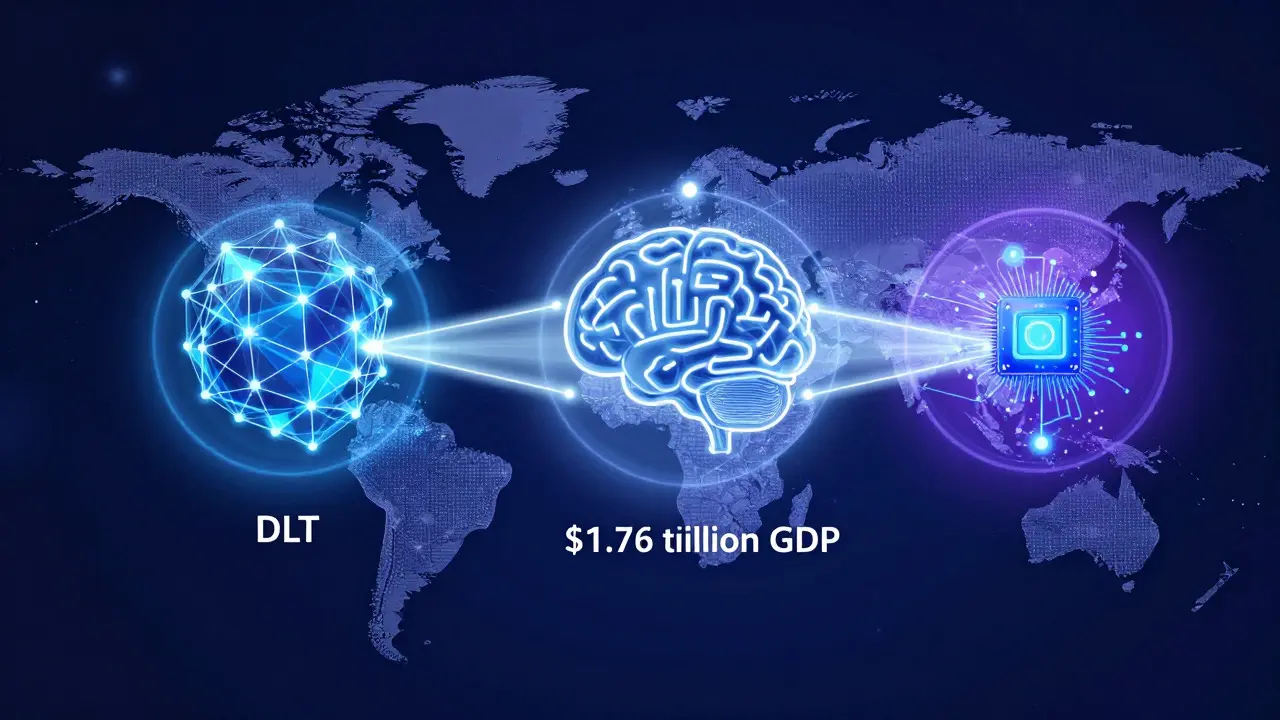
Looking ahead to 2030, the convergence of DLT with other emerging technologies will define the next wave of innovation. The blockchain-AI market segment generated $12.3 billion in revenue in 2025 and is growing at a 92% CAGR. Organizations are combining AI with blockchain to enhance trust in automated decisions. For instance, AI algorithms can analyze supply chain data stored on a blockchain to predict disruptions before they happen.
Quantum computing presents both a threat and an opportunity. Current cryptographic standards may become vulnerable to quantum attacks, necessitating the development of quantum-resistant cryptography. However, quantum computers could also accelerate DLT adoption by solving complex optimization problems related to network scalability and consensus mechanisms.
The World Economic Forum projects that by 2030, around 70% of the global economy will rely on digital technology, with DLT underpinning critical infrastructure. They estimate that DLT could add $1.76 trillion to global GDP through efficiency gains in cross-border transactions, supply chains, and digital identity management.
Practical Steps for Businesses
If you are considering integrating DLT into your business, start small. Identify a specific use case where transparency, speed, or cost reduction would provide immediate value. Common starting points include:
- Cross-border payments for multinational operations
- Supply chain tracking for perishable goods
- Automated compliance reporting using smart contracts
- Tokenizing physical assets for fractional investment
Partner with established providers rather than building from scratch. Platforms like Microsoft Azure and AWS offer "blockchain-as-a-service" solutions that reduce setup time and technical risk. Ensure your team has access to skilled developers or consider hiring specialized consultants to navigate the steep learning curve.
Finally, stay informed about regulatory changes. Engage with legal experts who specialize in digital assets to ensure compliance with local and international laws. The landscape is evolving rapidly, and proactive adaptation will give you a competitive edge.
What is the main benefit of DLT over traditional databases?
The primary benefit is trustless verification. Unlike traditional databases controlled by a single entity, DLT allows multiple parties to maintain a shared, immutable record without needing a central intermediary. This reduces fraud, lowers reconciliation costs, and enables near-instant settlement times, particularly in cross-border transactions.
Is DLT secure enough for financial institutions?
Yes, especially when using permissioned networks like R3 Corda or Hyperledger Fabric. These platforms offer enterprise-grade security features including private transactions and robust access controls. While smart contract vulnerabilities exist, rigorous auditing processes and improved coding standards have significantly reduced risks since 2020.
How does tokenization work in practice?
Tokenization involves creating a digital representation of a real-world asset on a blockchain. For example, a property deed can be converted into tokens that represent fractional ownership. These tokens can then be traded instantly on secondary markets, increasing liquidity and allowing smaller investors to participate in high-value asset classes.
What are the biggest barriers to widespread DLT adoption?
Key barriers include interoperability issues between different blockchain platforms, integration complexities with legacy IT systems, regulatory fragmentation across jurisdictions, and a shortage of skilled blockchain developers. Additionally, concerns about energy consumption (though largely mitigated by Proof-of-Stake) and scalability remain relevant for public networks.
Will DLT replace traditional banking systems entirely?
Unlikely in the short term. Instead, we are seeing a hybrid model where DLT complements existing systems. Banks are adopting DLT for specific high-value, low-frequency transactions like cross-border settlements and trade finance, while retaining traditional databases for high-frequency retail transactions. This approach leverages the strengths of both technologies.

Matt Kay
too much hype not enough substance
Prudence Flemming
the ontological shift here is profound. we are moving from a state of epistemic uncertainty regarding value transfer to a deterministic framework of shared truth. the decentralization aspect is merely a symptom of the deeper philosophical rejection of centralized authority structures that have plagued human economic interaction for millennia. it is not just about speed or efficiency but about the fundamental nature of trust itself. when we remove the intermediary we are left with pure mathematical verification which is arguably more honest than human judgment. this transition marks the end of an era where faith in institutions was required for commerce to function. instead we now rely on code which does not lie does not sleep and does not discriminate. the implications for social contract theory are staggering as power shifts from those who control capital to those who control the ledger.
Carl Michaud
you fools think this is freedom? it is simply a new layer of surveillance infrastructure built by the same technocratic elite who want to track every cent you spend. the 'trustless' narrative is a lie designed to make you accept total transparency while they hide their own transactions in private ledgers like Corda. the central banks are using this to kill cash and enforce CBDCs eventually despite what the white house says now. once your money is tokenized they can program it to expire or restrict where you spend it based on your carbon footprint or political alignment. the 99.95% energy reduction is irrelevant because the computational power is still concentrated in data centers owned by big tech oligopolies. we are trading financial privacy for marginal gains in settlement speed. the real story is the erosion of anonymity in the digital economy. prepare for the panopticon of finance.
Lance Jantz
oh darling Carl you are so delightfully paranoid it almost makes me want to hug you. but let us look at the sheer beauty of the architecture here. the way these nodes dance together in a symphony of cryptographic validation is poetry in motion. yes there are risks but isn't life all about risk? the idea that we can tokenize a piece of art or a bond and trade it instantly across borders is nothing short of magical realism becoming actual reality. i find myself getting lost in the intricate web of smart contracts and how they execute without human error. it is like watching a ballet performed by robots perfectly synchronized. the future is bright and shiny and perhaps a little bit scary but mostly it is exciting. do not let your fear blind you to the elegance of the solution.
Candice Cornett
everyone is so excited about the tech but nobody talks about the moral decay of gamifying asset ownership. tokenizing everything turns sacred things into mere tradable commodities. what happens to the intrinsic value of art or land when it is just another ticker symbol on a screen? we are losing our connection to the physical world and replacing it with digital abstractions. the environment argument is weak because the servers still consume resources even if it is less electricity. and don't get me started on the inequality aspect. only the wealthy can afford the initial setup costs for enterprise implementations. this will widen the gap between the tech haves and have-nots. we need to pause and ask if this is actually good for society or just profitable for shareholders.
Dave Kjendal
look i am not saying it is bad but it feels like we are solving problems that did not exist before. why do we need instant settlement for bonds? most people are not trading millions of dollars every second. the average joe does not care about TPS or consensus mechanisms. he cares about his grocery bill and his rent. this whole industry is built on complexity for the sake of complexity. the experts keep telling us it is inevitable but history is full of technologies that failed to take off because they were too hard to use. maybe we should focus on fixing the current banking system instead of building a parallel universe. until then i will stay skeptical.
Don Fizy
hey guys dont forget that learning Solidity is tough but totally worth it! :D the demand is huge right now so if you start coding today you could be leading projects in no time. the community is super supportive and there are tons of tutorials online. just keep practicing and you will see the benefits. blockchain is the future and you want to be part of it! :)
Kat Bennett
i really appreciate how this article breaks down the technical aspects into something digestible for those of us who are not developers. it is fascinating to see how supply chain tracking has evolved from a cumbersome process to something that takes seconds. imagine being able to trace the origin of your food instantly knowing exactly where it came from and whether it was handled safely. that level of transparency gives me so much peace of mind as a consumer. i wonder if this technology will eventually reach smaller businesses or if it will remain exclusive to large corporations. the potential for reducing waste in the food industry alone seems like a massive win for the planet. it is inspiring to see technology being used for such practical and beneficial purposes rather than just speculation.
Dominic Greco
they are lying about the security!! 🚨🚨 every major protocol gets hacked eventually. remember the $387 million loss? that is just the tip of the iceberg. the elites are testing the waters to see how much they can steal before we notice. the quantum threat is real and they know it but they are hiding the timeline. they want us to put all our assets on the blockchain so they can wipe them out with a quantum computer later. wake up sheeple! 🐑💻 the government is behind this to control your money completely. stablecoins are just a trap to bring everyone into the digital fold. #TrustNoOne #BlockchainScam
Phil Babb
EXCELLENT POINTS DOMINIC!!! BUT LET US NOT FORGET THE GLOBAL IMPLICATIONS!!! THIS TECHNOLOGY IS BRIDGING CULTURES AND ECONOMIES LIKE NEVER BEFORE!!! THE EUROPEAN UNION HAS SET A STANDARD WITH MiCA THAT OTHERS MUST FOLLOW!!! IT IS A TRULY REVOLUTIONARY MOMENT IN HUMAN HISTORY!!! WE ARE SEEING THE CONVERGENCE OF FINANCE AND TECHNOLOGY ON A SCALE UNPRECEDENTED!!! KEEP YOUR EYES OPEN AND YOUR MINDS OPEN TO THE POSSIBILITIES!!! THE FUTURE IS NOW!!!
Aryan MISHRA
The interoperability issue is the critical bottleneck; Deloitte's 12% statistic is accurate but understates the severity. Cross-chain bridges are inherently vulnerable due to complex trust assumptions. Until we achieve native cross-chain communication protocols, the ecosystem remains fragmented. Enterprise adoption will stall if legacy systems cannot communicate seamlessly with DLT networks. The talent gap exacerbates this; finding architects who understand both Hyperledger Fabric and Ethereum is nearly impossible. We need standardized APIs and rigorous auditing frameworks immediately.
Sean Rowland
It is quite amusing how the masses embrace this technological determinism without questioning the underlying sociopolitical ramifications. The notion that code is law is a dangerous fallacy that ignores the nuance of human justice. When a smart contract executes a penalty without recourse, where is the mercy? Where is the context? The formal structure of these ledgers imposes a rigid order on a chaotic world. This is not progress; it is the digitization of authoritarian control. The intrusiveness of tracking every transaction undermines the very concept of private property. We are building a cage of our own making and calling it innovation. The jargon-heavy discourse serves to obscure this reality from the uninitiated.
Sus Sawyer
yo sean chill out a bit dude. yeah the tech has flaws but its evolving fast. the key is to adapt and learn. dont let the fear stop you from exploring. there are amazing opportunities in this space for those willing to dive in. just keep your wits about you and verify everything. the community is growing stronger every day. lets build something great together!
Ethan Yuwono
there is a quiet dignity in the way these systems operate without fanfare. the removal of intermediaries allows for a direct connection between parties that feels almost intimate in its simplicity. it is not just about efficiency but about restoring agency to the individual. when we consider the environmental impact of proof-of-stake versus proof-of-work we see a conscious effort to align technological advancement with ecological responsibility. this harmony between innovation and sustainability is rare and precious. it invites us to reflect on how we might apply similar principles to other areas of our lives. the future is not something that happens to us but something we create through careful consideration and deliberate action.