DSX Crypto Exchange Review: Why It Failed and What to Use Instead
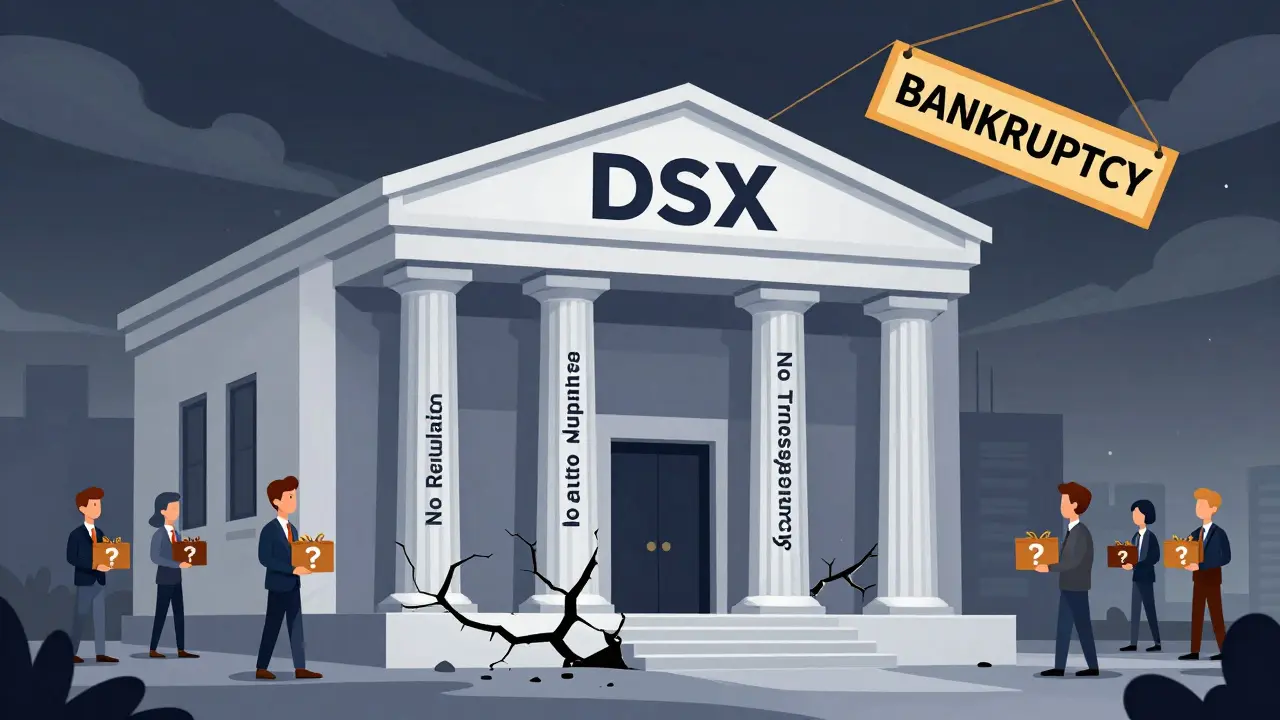
DSX was once a name you might have seen on crypto forums - a quiet, professional-looking exchange that promised the reliability of London’s financial markets. But today, it’s gone. Not just offline - dead. If you’re looking at DSX crypto exchange right now, you’re probably wondering if it’s still safe, if you can get your money back, or if it’s worth considering as an option. The answer is simple: Don’t use it. DSX filed for bankruptcy in January 2021 and hasn’t come back. Worse, it’s now listed as a scam on Crypto Legal UK’s 2025 fraud database. This isn’t just another failed startup. It’s a cautionary tale about what happens when a crypto exchange cuts corners on security, transparency, and regulation.
What Was DSX Crypto Exchange?
DSX Global launched in 2014 out of London, founded by people with backgrounds in traditional finance. They didn’t want to be another flashy crypto platform. Instead, they aimed to look and feel like a bank - clean interface, professional design, and a focus on established cryptocurrencies only. At its peak, DSX supported 29 coins, including Bitcoin, Ethereum, Litecoin, and Ripple. It accepted EUR, GBP, USD, and even RUB for deposits, and later added credit card funding in 2019. It even had mobile apps for iOS and Android, which was rare for smaller exchanges back then.
Their pitch was simple: We’re not here for the latest meme coins. We’re here for serious traders who want stability. And for a while, that worked. Users liked the clean UI, the two-factor authentication, and the cold storage setup. But behind the polished surface, things were crumbling.
Why DSX Failed
There’s no single reason DSX died. It was a slow collapse built on three fatal flaws.
- Limited coin selection - Supporting only 29 cryptocurrencies meant DSX missed the entire altcoin boom. While Binance and Coinbase added hundreds of new tokens each year, DSX stuck to the basics. Traders who wanted exposure to Solana, Cardano, or Polkadot had to leave. That killed growth.
- No regulatory approval - DSX was applying for FCA registration under the UK’s 5th AMLD, but never got it. By 2021, regulators were cracking down hard. Exchanges without proper licensing were being shut down. DSX didn’t have the capital or compliance team to push through.
- No financial transparency - No one ever saw DSX’s reserve reports. No audits. No proof of funds. CoinMarketCap listed its volume as "untracked" - a red flag for any serious trader. When users asked where their money was, the answer was silence.
Then came the final blow: bankruptcy. On January 12, 2021, DSX shut down without warning. No email. No notice. Just a website that went dark. Users reported being unable to withdraw funds. Some tried contacting support - no replies. Others checked forums and found others in the same boat. A few even claimed they’d been scammed.
Was DSX a Scam?
Technically, DSX wasn’t a classic "pump-and-dump" scam. It didn’t create fake tokens or run rug pulls. But being a scam isn’t just about theft. It’s about betrayal of trust.
The UK’s Crypto Legal UK added DSX to its "List of Reported Scam Companies in 2025" - not because of fraud, but because of its failure to return user funds and its lack of accountability after bankruptcy. That’s a key distinction. Most exchanges that fail go quiet. DSX went from quiet to criminal. If you deposited money, you likely lost it. There’s no public record of any compensation, clawback, or legal action that helped users recover their assets.
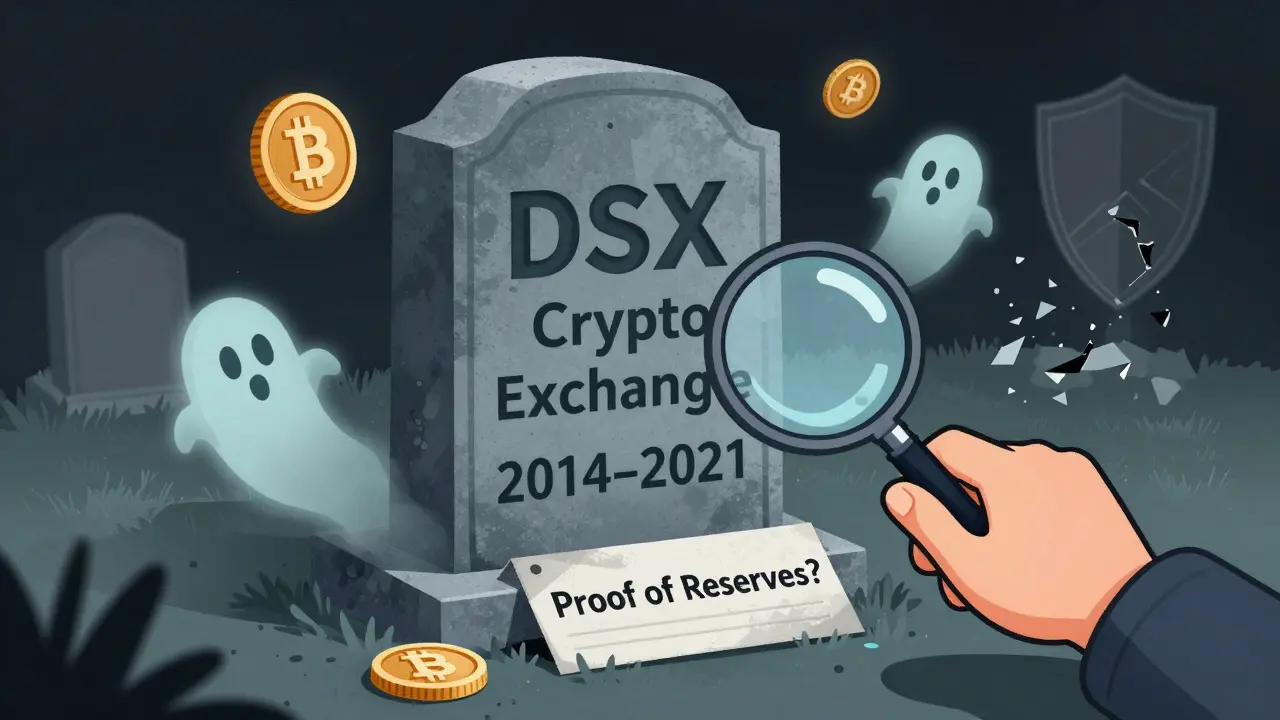
Even worse, the exchange’s website still exists - but it’s a ghost. No updates. No contact info. No support. It’s a digital tombstone.
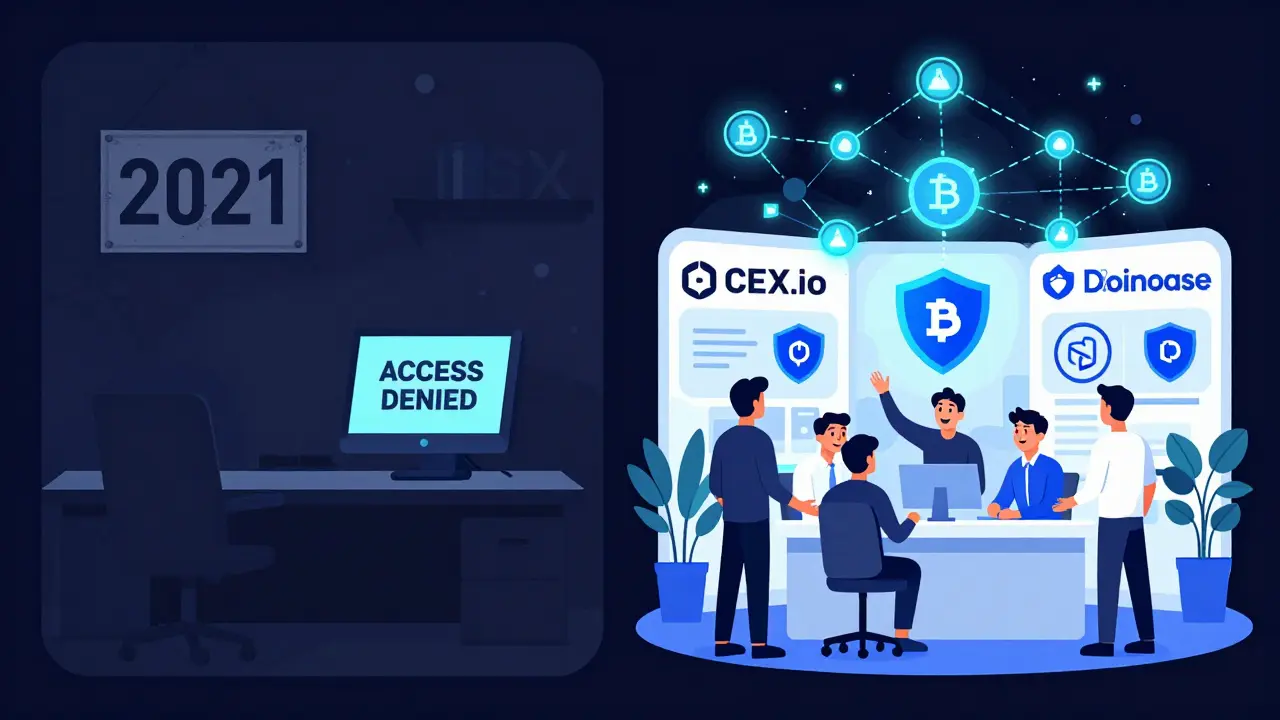
How DSX Compared to Other Exchanges
At its height, DSX was somewhere in the middle. Not the biggest, not the worst. But it had serious weaknesses.
| Feature | DSX (2021) | CEX.io | Coinbase |
|---|---|---|---|
| Cryptocurrencies Supported | 29 | 100+ | 200+ |
| Fiat Support | EUR, GBP, USD, RUB | EUR, USD, GBP, CAD | USD, EUR, GBP, AUD |
| Mobile Apps | iOS & Android | iOS & Android | iOS & Android |
| Regulatory Status | Applied, never approved | Licensed in EU/UK | Licensed in US/EU/UK |
| Security | Cold storage, 2FA | Cold storage, insurance | Cold storage, insurance, SOC 2 |
| Current Status | Bankrupt since 2021 | Active, trusted | Active, top-rated |
CEX.io and Coinbase didn’t just outperform DSX - they made it irrelevant. They offered more coins, better security, insurance for user funds, and clear regulatory compliance. DSX had none of that.
What Happened to Users’ Money?
No one knows. Not even regulators.
After the bankruptcy filing, DSX vanished. No liquidation plan. No trustee appointed. No public update. Users who had Bitcoin, Ethereum, or fiat deposits simply lost access. Some tried filing claims through UK insolvency courts - but without proper documentation or legal backing, most were ignored.
There are no reports of users recovering funds. No news articles. No Reddit threads with happy endings. Just silence.
This is the biggest lesson from DSX: Never trust an exchange that doesn’t prove it has your money. If they won’t show you proof of reserves, don’t leave your coins there.
Where Should You Go Instead?
If you’re looking for a reliable, safe, and active crypto exchange, here are two solid replacements:
- CEX.io - A well-established platform with strong security, insurance, and regulatory compliance. It supports over 100 cryptocurrencies, has mobile apps, and accepts bank transfers and cards. It’s the direct successor to DSX’s original promise - professional, stable, and transparent.
- Coinbase - The gold standard. Licensed in the US, UK, EU, and Australia. Offers insurance on all stored assets, real-time audits, and a simple interface. With over 100 million users, it’s the most trusted name in crypto.
Both have full regulatory licenses. Both publish proof of reserves. Both respond to customer support. DSX had none of that.
Lessons Learned
DSX didn’t fail because it was too small. It failed because it pretended to be safe without the systems to back it up.
Here’s what you should always check before using any exchange:
- Is it licensed? Look for FCA (UK), FinCEN (US), or similar regulatory approval.
- Do they show proof of reserves? If they don’t, don’t trust them.
- Is there insurance? Coinbase and CEX.io insure user funds. DSX did not.
- Can you withdraw easily? Test with a small amount first.
- Is the platform active? Check forums, Reddit, and Twitter. If no one’s talking about it, that’s a warning.
DSX is gone. But its legacy lives on - as a warning. Don’t let your next crypto move be based on a pretty website or a name you remember from five years ago. Do the homework. Choose exchanges that prove they’re trustworthy - not ones that just look like it.
Is DSX crypto exchange still operational?
No. DSX filed for bankruptcy on January 12, 2021, and has been completely inactive since. Its website no longer accepts deposits, withdrawals, or trades. All services have been permanently shut down.
Can I recover my funds from DSX?
There is no known way to recover funds from DSX. No official liquidation process was announced, no trustee was appointed, and no user compensation occurred. Users who deposited funds have not received any refunds. The exchange’s failure was total and unmanaged.
Why was DSX listed as a scam?
DSX was added to Crypto Legal UK’s 2025 scam list because it vanished after bankruptcy without returning user funds or providing transparency. While it wasn’t a classic fraud scheme, its failure to fulfill obligations and lack of accountability meet the definition of a scam under financial misconduct standards.
What cryptocurrencies did DSX support?
DSX supported 29 cryptocurrencies, including Bitcoin (BTC), Ethereum (ETH), Litecoin (LTC), Ripple (XRP), Bitcoin Cash (BCH), and a few others. It deliberately avoided newer or less established tokens, focusing only on major, high-market-cap coins.
Did DSX have mobile apps?
Yes. DSX launched iOS and Android apps in October 2019, making it one of the few smaller exchanges at the time to offer mobile trading. However, both apps were taken offline after the 2021 bankruptcy.
Is DSX safe to use today?
Absolutely not. DSX is defunct, its website is inactive, and user funds are lost. Using it now is impossible, and even attempting to access its site could expose you to phishing risks. Never trust any exchange that’s been dead for over five years.

Brian Lemke
It's wild how DSX looked so polished-like a Swiss bank in digital form-but crumbled under the weight of its own silence. I remember using it back in '18; the UI was buttery smooth, and the cold storage felt reassuring. But no audits? No transparency? That’s like buying a luxury car with no engine. You admire the leather seats, then realize you can’t drive it. The real tragedy? So many users trusted the aesthetics over accountability. We need more posts like this to remind people: beauty doesn’t protect your assets.
Reggie Fifty
Of course it failed. No regulation, no oversight, just some London guys in suits pretending to be serious. America’s got Coinbase, Europe’s got CEX.io-why would anyone trust a half-baked UK startup with zero legal backbone? This isn’t a cautionary tale-it’s a national embarrassment. If you can’t get FCA approval, you don’t belong in finance. Period.
Vishakha Singh
Thank you for this detailed breakdown. As someone from India who’s seen too many crypto platforms vanish overnight, I appreciate the clarity. The comparison table is especially helpful-it shows how DSX wasn’t just outdated, it was dangerously unprepared. I’ve been advising new investors to prioritize licensed platforms with proof of reserves. This post reinforces why that advice matters. Let’s keep spreading awareness.
Don B.
DSX? Yeah, I used it. Looked cool, right? Like a corporate app from Apple. But the moment I tried to withdraw $500, it ghosted me. No emails. No replies. Just a spinning wheel for three days. Then poof-gone. I still get mad thinking about it. People think crypto’s risky? Nah. The real risk is trusting a website that looks professional but has no soul. And no backup plan.
Neeti Sharma
why do people keep falling for this shit they make it look nice and think its safe but no audit no insurance no nothing its just a pretty face with empty pockets
Maggie House
Wait so DSX had mobile apps? I thought I was the only one who used it back then! I still have the icon on my phone… I never deleted it. Kinda weird, like a ghost app. I never got my ETH back, but I kinda stopped checking. I guess I just… accepted it. This post actually made me feel less alone.
Dana Sikand
God this hits hard. I lost my entire portfolio on DSX. I was so proud of myself for picking a "professional" exchange. I thought I was being smart. Turns out I was just gullible. I didn’t even know what proof of reserves meant. Now I check every single exchange like a hawk. If they don’t show it, I don’t trust it. This isn’t just advice-it’s survival.
Elizabeth Smith
It’s not about money. It’s about trust. You give someone your life savings because they look like they know what they’re doing. And then they vanish. No apology. No explanation. Just silence. That’s the real crime here. Not the lost Bitcoin. The broken faith in human responsibility. We’ve turned finance into a game of appearances-and DSX was the ultimate con artist in a tailored suit.
Robert Kromberg
I think DSX’s story is a mirror for a lot of crypto’s early days. We were dazzled by clean interfaces and European branding. We ignored the red flags because we wanted to believe. Maybe we were too eager to find legitimacy in a chaotic space. I don’t blame the users-I blame the system that let them get this far without oversight. Maybe that’s the real lesson: don’t romanticize professionalism. Demand proof.
Curtis Dunnett-Jones
It is imperative to underscore the gravity of this situation. The absence of regulatory compliance, coupled with the lack of transparent financial reporting, constitutes a systemic failure of fiduciary duty. DSX did not merely collapse-it violated the foundational tenets of financial stewardship. The fact that users were left with no recourse is not an oversight. It is a dereliction of ethical and legal obligation. One must conclude that this outcome was foreseeable, and therefore, preventable.
McKenna Becker
They didn’t fail because they were small. They failed because they pretended to be safe. That’s the real sin.
precious Ncube
Ugh. Another "professional" exchange that thought a sleek UI was enough. People need to stop falling for aesthetics. If you can’t show me your reserves, you’re not a bank-you’re a magic trick. Coinbase and CEX.io don’t need to be flashy. They just need to be real. DSX? Just a digital ghost story with a logo.
Jan Czuchaj
There’s something deeply human about how we invest. We don’t just look at numbers-we look at faces, at names, at design. DSX gave us a face: calm, clean, British. It felt like stability. But stability isn’t a UI. It’s audits, insurance, legal structure. We wanted a friend in finance, and DSX was a very convincing actor. The tragedy isn’t just the lost funds-it’s the realization that we were manipulated by our own desire to believe. We didn’t just lose money. We lost innocence.
Tracy Peterson
I used to brag about DSX to my friends. "Look how professional it is!" Now I cringe. I lost everything. And the worst part? No one cared. No one reached out. No one even acknowledged it happened. I’m still mad. And I’m still warning people. Don’t be fooled by polish. Demand proof. Always.
George Suggs
Yeah, I remember DSX. Used it for a bit. Didn’t think twice. Guess that’s on me. Lesson learned. Now I only use ones with insurance and public audits. Simple. No drama. Just facts. Rest in peace, DSX. You were pretty. But you weren’t real.
Dianna Bethea
For anyone new to crypto: this is why you check licenses. This is why you ask for proof of reserves. This is why you test withdrawals with $10 first. DSX didn’t vanish overnight-it was dying for years. No one noticed because it still looked good. But if your exchange doesn’t talk to you, doesn’t update, doesn’t respond… it’s already dead. Don’t wait for the website to go dark. Watch for the silence. That’s your real warning sign.