EchoDex Review 2026: Why This Linea DEX Is a Ghost Town

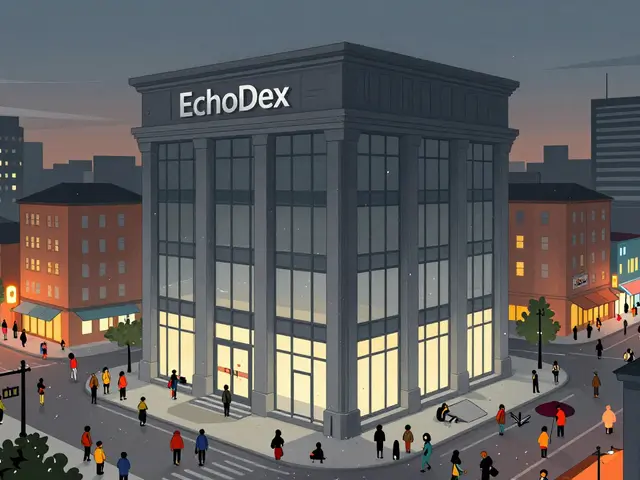
Imagine walking into a bustling financial district, only to find the biggest bank building completely empty. The lights are on, the doors are open, but there isn’t a single customer or teller inside. That is exactly what EchoDex looks like in the current crypto landscape.
You might have stumbled upon this name while exploring the Linea Network, a popular Layer 2 scaling solution for Ethereum built by ConsenSys. EchoDex markets itself as a native decentralized exchange (DEX) on this network, promising low fees and access to the growing zkEVM ecosystem. But if you are looking for a place to trade serious volume or earn reliable yields, you need to look elsewhere. As of mid-2026, EchoDex is effectively a ghost town with near-zero activity, no security audits, and virtually no user trust.
The Reality Behind the Hype: What Is EchoDex?
EchoDex launched in 2023, riding the wave of excitement around Linea’s mainnet rollout. It positioned itself as a first-generation DEX using breakthrough ZK-EVM technology. On paper, that sounds impressive. In practice, it has failed to attract even a fraction of the market share needed to survive.
The platform functions as both a swap interface and an aggregator, allowing users to trade tokens and earn its native ECP token through farming and staking. However, the numbers tell a starkly different story than the marketing copy. According to data from late 2025, EchoDex recorded a 24-hour trading volume of just $84.75. Yes, less than one hundred dollars. For context, major competitors like Uniswap process billions in daily volume. Even smaller niche exchanges handle millions.
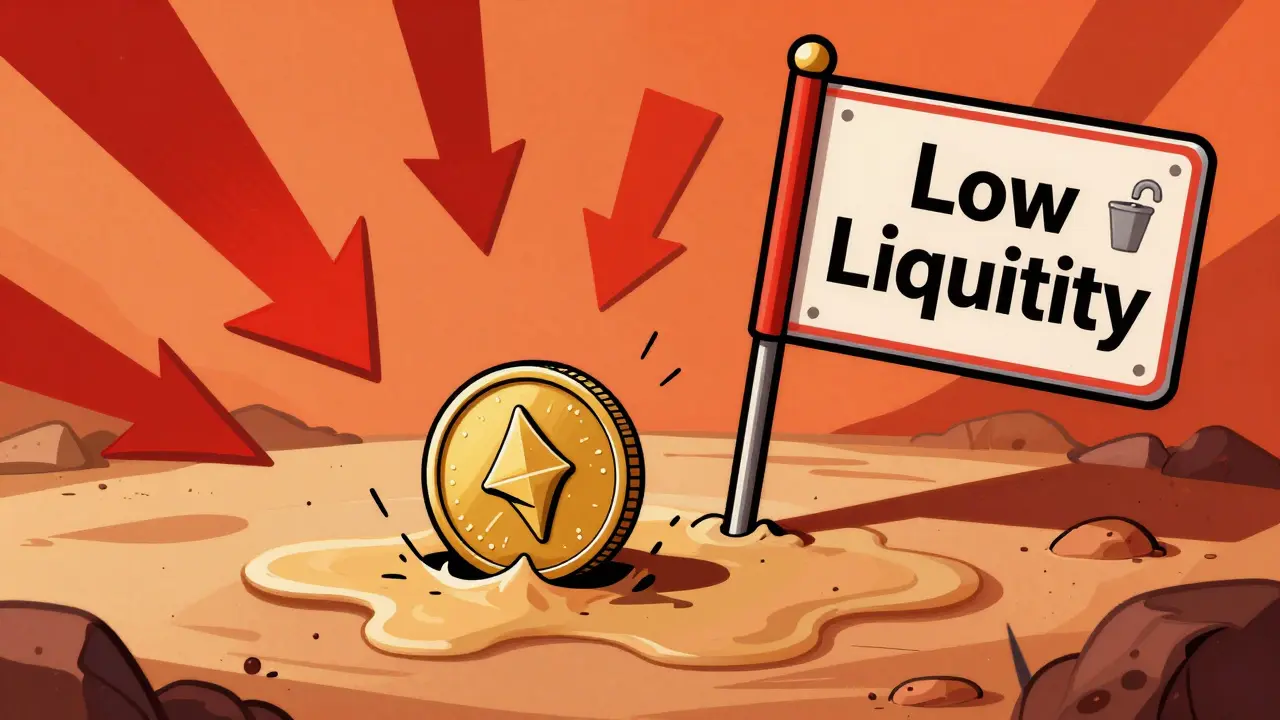
This lack of activity means there is almost no liquidity. If you try to swap a significant amount of ETH for ECP, you will likely face massive slippage-meaning you get far fewer tokens than expected because the pool is too shallow. The most active pair, ECP/WETH, saw only $59.55 in volume in a single day. That is not a market; that is a rounding error.
Why Liquidity Matters More Than You Think
In decentralized finance, liquidity is oxygen. Without it, a DEX cannot function properly. When you trade on a healthy exchange like Uniswap or PancakeSwap, your order is filled instantly at a fair price because thousands of other traders are providing depth to the pools.
On EchoDex, the absence of liquidity creates several critical problems:
- Massive Slippage: A small trade can move the price drastically, costing you money immediately.
- Impermanent Loss Risks: Providing liquidity here offers little reward relative to the high risk of value erosion.
- No Market Makers: Professional traders avoid EchoDex because there is no volume to profit from, leaving retail users exposed.
CoinGecko explicitly labels EchoDex with a 'Low Liquidity' warning. CoinMarketCap lists it as an 'Untracked Listing,' meaning it falls below the threshold for basic monitoring. These aren't just badges; they are red flags screaming that the platform is inactive.
Security Concerns: No Audits, No Trust
If you are putting real money into a smart contract-based platform, security should be your top priority. Legitimate DEXs undergo rigorous audits by firms like CertiK or OpenZeppelin. These audits check for vulnerabilities that hackers could exploit to drain funds.
EchoDex has no publicly available audit reports. There is no documentation of security protocols, bug bounties, or insurance funds. In the world of DeFi, an unaudited contract is a loaded gun pointed at your wallet. Industry analysts have noted that the legitimacy of the ECP tokenomics is questionable, with a self-reported circulating supply of 9.25 million out of 100 million total, yet no verifiable mechanism to support its value.
Without audits, you are trusting code that hasn't been tested by independent experts. Given the history of hacks in the crypto space, this is a gamble few professionals would take.
How EchoDex Compares to Real Competitors
To understand why EchoDex is failing, we need to compare it to platforms that are actually working. Let's look at the leaders in the space as of 2026.
| Exchange | Network | 24h Volume (Approx.) | TVL (Total Value Locked) | Audited? |
|---|---|---|---|---|
| Uniswap | Ethereum/Multi-chain | $1.2B+ | $4B+ | Yes |
| PancakeSwap | BSC/Ethereum | $500M+ | $2B+ | Yes |
| SyncSwap (Linea Native) | Linea | $47M | $15M+ | Yes |
| EchoDex | Linea | $84 | Negligible | No |
Notice the gap? Even within the Linea ecosystem, EchoDex is not the go-to choice. SyncSwap, another Linea-native DEX, processes tens of millions in daily volume and has established liquidity pools. If you want to use Linea, SyncSwap is the rational choice. EchoDex offers no unique advantage-it doesn't have better fees, faster execution, or superior features. It simply lacks users.
The ECP Token: A Speculative Trap?
EchoDex relies on its native ECP token for governance and rewards. Users are encouraged to stake ECP or provide liquidity to earn more ECP. This model works well when the token has utility and demand. Here, it appears to be a circular economy with no external value drivers.
With only 37 mentions on social media platforms like Twitter/X in all of 2025-and most of those from bot accounts-the community engagement is non-existent. There is no active Discord, no Telegram group, and no GitHub repository showing development progress. Nansen, a blockchain analytics firm, reported zero verifiable updates or partnerships since mid-2024.
Holding or farming ECP carries significant regulatory risk. Without clear disclosures, the token could potentially be classified as an unregistered security. Combined with the lack of liquidity, selling your ECP tokens could be impossible without crashing the price to near zero.

Who Should Avoid EchoDex?
Let's be direct. Almost everyone should avoid EchoDex right now.
- Beginners: The interface requires technical knowledge to connect wallets to Linea, and the lack of tutorials makes it confusing. You risk losing funds due to user error or hidden slippage.
- Traders: There is no volume to trade against. You cannot enter or exit positions efficiently.
- Yield Farmers: The APY might look high on paper, but it is paid in a worthless token with no buy pressure. The impermanent loss will likely exceed any rewards.
- Security-Conscious Users: The absence of audits means you are exposing your assets to unknown smart contract risks.
The only scenario where EchoDex might make sense is if you are a developer testing smart contracts on Linea and need a sandbox environment with minimal real-world impact. Even then, testnets exist for that purpose.
Better Alternatives on Linea and Beyond
If you are interested in the Linea ecosystem, there are much safer and more vibrant options. Linea itself has grown to become Ethereum's fourth-largest Layer 2 solution with over $1.8 billion in TVL. You can participate in this growth without risking your capital on a dead platform.
Consider these alternatives:
- SyncSwap: The leading DEX on Linea with deep liquidity and regular updates.
- Orbiter Finance: For bridging assets onto Linea securely.
- Uniswap: Available via bridges, offering the deepest liquidity across all networks.
- Mono Protocol: Offers unified balances across chains and MEV-resistant execution, features EchoDex lacks entirely.
These platforms have active communities, audited code, and real economic activity. They represent the future of DeFi, whereas EchoDex represents a cautionary tale of what happens when a project launches without a product-market fit.
Final Verdict: Stay Away
EchoDex is not a viable option for trading, investing, or yield generation in 2026. It lacks liquidity, security audits, community support, and development momentum. The 'ghost exchange' label given by industry reviewers is accurate. While the Linea Network itself is promising, EchoDex has failed to capitalize on it.
Protect your capital. Stick to established, audited, and liquid platforms. The crypto market is full of opportunities, but they don't come in empty buildings.
Is EchoDex safe to use?
No. EchoDex has not undergone public security audits, which is a critical requirement for any decentralized exchange handling real funds. The lack of audits, combined with extremely low liquidity and no active development, makes it highly risky. Users could lose funds due to smart contract vulnerabilities or inability to withdraw assets.
What is the ECP token worth?
The ECP token has negligible market value and liquidity. With trading volumes often under $100 per day, there is no stable market price. Attempting to sell large amounts would result in massive slippage, effectively wiping out the value of your holdings. It is considered a speculative asset with high risk of total loss.
Can I use EchoDex on Ethereum Mainnet?
No. EchoDex operates exclusively on the Linea Network, which is a Layer 2 scaling solution for Ethereum. To use it, you must bridge your assets from Ethereum Mainnet to Linea. However, given the platform's lack of utility, bridging assets specifically for EchoDex is not recommended.
Why is EchoDex's trading volume so low?
EchoDex failed to attract users or liquidity providers after its launch in 2023. Unlike competitors such as SyncSwap or Uniswap, it offers no unique features, competitive fees, or incentives that justify switching. The lack of marketing, community engagement, and technical innovation has resulted in near-zero adoption.
What is the best DEX on Linea Network?
As of 2026, SyncSwap is widely considered the best and most active DEX on Linea. It offers deeper liquidity, higher trading volumes, and a more robust feature set compared to EchoDex. Other reputable options include bridged versions of Uniswap and specialized platforms like Orbiter for cross-chain transfers.