EU Crypto AML Requirements: MiCA, Travel Rule & Compliance Guide

Running a crypto business in Europe used to mean playing a guessing game with regulators. One country said you were fine; the next one shut you down for not having the right paperwork. That era is officially over. The European Union has built one of the strictest anti-money laundering (AML) frameworks in the world, specifically targeting digital assets. If you are operating or planning to launch a crypto service in the EU, understanding these rules isn't just legal homework-it’s your license to stay open.
The landscape shifted dramatically with the introduction of MiCA, which stands for Markets in Crypto-Assets Regulation. Alongside new laws like the Anti-Money Laundering Regulation (AMLR), the EU now demands total transparency. No more anonymous transactions. No more hiding behind complex corporate structures. The goal is clear: stop money laundering and terrorist financing while letting legitimate innovation happen. But how do you actually comply? Let's break down what you need to know to survive and thrive under these new rules.
Key Takeaways
- MiCA is mandatory: All Crypto-Asset Service Providers (CASPs) must hold an EU-wide license to operate across all 27 member states.
- The Travel Rule applies everywhere: Unlike the US, there is no minimum threshold. You must verify sender and receiver data for every transfer.
- Costs are high: Expect to spend €350,000-€500,000 on initial compliance setup and months on licensing.
- AMLA is watching: The new Anti-Money Laundering Authority coordinates supervision and will conduct rigorous reviews starting in 2026.
- DeFi is not safe from scrutiny: Regulators are closing loopholes that allow decentralized protocols to evade oversight.
The Core Framework: MiCA and the New AMLR
To understand the current rules, you have to look at two main pillars. First, there is MiCA, the comprehensive regulation for crypto-assets that came into full effect in 2024. Before MiCA, companies had to navigate 27 different national regimes. Now, one license covers the whole bloc. This was a huge win for larger firms like Coinbase and Kraken, who reported a 70% drop in operational complexity after getting their EU-wide authorization.
Second, there is the upcoming AMLR, the Anti-Money Laundering Regulation set to take effect on July 1, 2027. While MiCA handles market integrity, AMLR focuses purely on financial crime prevention. It replaces older directives like AMLD5 and AMLD6 with a single rulebook. This means no more "forum shopping," where companies would register in countries with lax oversight (like Malta or Estonia) to serve customers elsewhere. The AMLR closes those gaps by harmonizing standards across all member states.
The combination of these two regulations creates a "dual-supervision" model. The European Banking Authority (EBA) oversees market integrity under MiCA, while the newly formed AMLA, the Anti-Money Laundering Authority established in 2025, takes charge of financial crime prevention. AMLA Chair Bruna Szego made it clear early on: technology is welcome, but not if it facilitates crime. This dual approach ensures that every angle of your business is being watched.
The Travel Rule: No More Anonymous Transfers
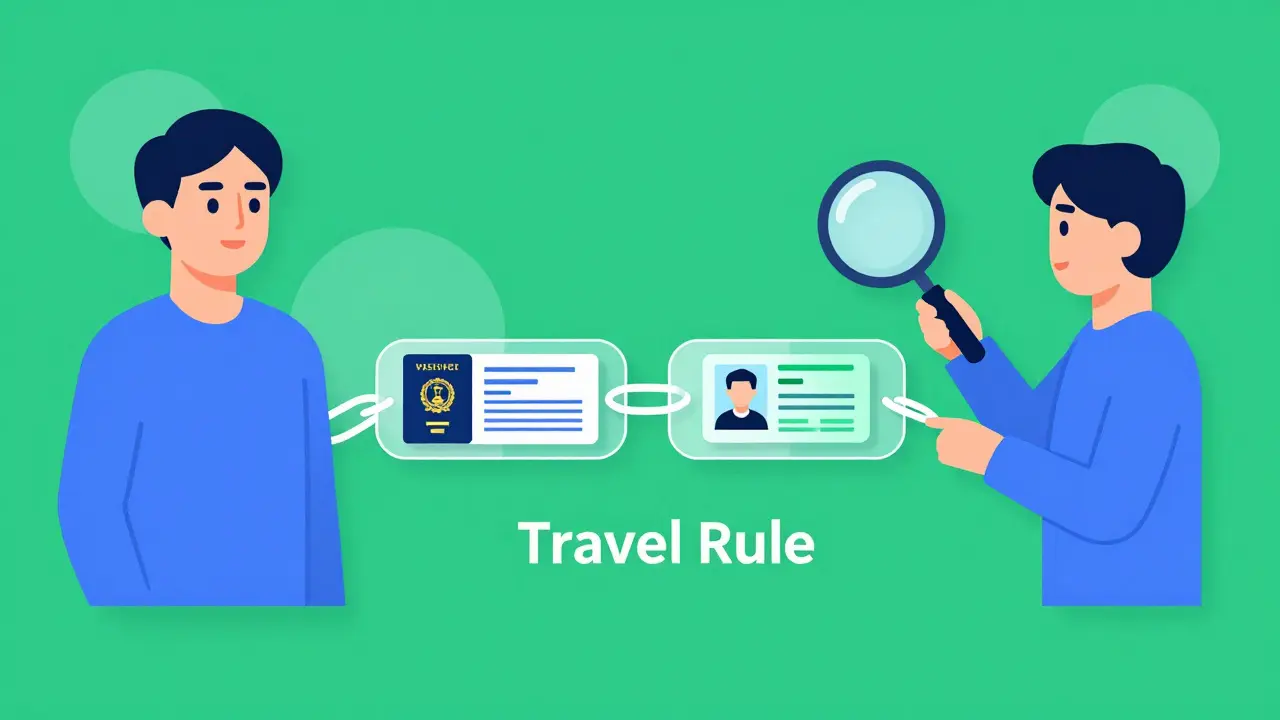
If there is one rule that changes everything for crypto businesses, it is the Travel Rule. In the United States, this rule only kicks in for transfers above $3,000. In the EU, there is no such luxury. The Transfer of Funds Regulation requires you to collect and verify specific data for every crypto transaction, regardless of size.
Here is exactly what you need to capture for each transfer:
- Originator name
- Originator account number
- Originator physical address OR date of birth
- Beneficiary name
- Beneficiary account number
- Beneficiary physical address
This sounds simple until you realize you have to integrate with 28 different national Financial Intelligence Units (FIUs). Companies like Kraken spent approximately €2.1 million just to get their systems talking to all these units correctly. For smaller startups, this is a massive hurdle. Many have turned to middleware solutions like the Traveler platform, which can cut implementation time from six months to eight weeks, though the setup cost still hovers around €420,000.
Why is the EU so strict here? Because anonymity is the enemy of compliance. The EU prohibits anonymous crypto transactions entirely. Even self-hosted wallets face scrutiny. If a user sends funds from a non-custodial wallet exceeding €1,000, you must verify their identity. This aligns with the EU's broader push for financial transparency but puts significant pressure on privacy-focused projects.
Customer Due Diligence (CDD) Tiers
You cannot treat all customers the same way anymore. AMLA mandates a risk-based approach with three distinct tiers of verification. Your systems must be able to automatically sort users into these categories based on transaction volume and risk profile.
| Tier Level | Transaction Range | Required Verification |
|---|---|---|
| Basic Verification | Under €1,000 | Name and address confirmation |
| Enhanced Verification | €1,000 - €10,000 | Identity document verification (passport/ID) |
| Strict Enhanced Due Diligence | Over €10,000 | Source of funds verification + senior management approval |
Notice the jump at €10,000. At this level, you aren't just checking who they are; you are checking where their money comes from. This requires robust internal policies and a designated Money Laundering Reporting Officer (MLRO). You also need to file Suspicious Transaction Reports (STRs) immediately if something looks off. Ignoring red flags can lead to severe penalties, including criminal liability for senior management.
The DeFi Challenge: Can Decentralization Survive?
Decentralized Finance (DeFi) protocols have long argued that they don't have a central entity to regulate. Unfortunately for them, the EU disagrees. The EBA's October 2025 report highlighted that DeFi remains a major vulnerability, with criminals exploiting the lack of centralized control. Regulators are actively looking for ways to apply CASP definitions to decentralized platforms.
If your protocol has any interface that interacts with users-like a front-end website-you might be considered a service provider. The German Federal Financial Supervisory Authority (BaFin) already took action against entities using DeFi loopholes in early 2025. Professor Angela Walch of the University of Texas warned that the EU's prescriptive approach could stifle innovation, but the regulatory trend is undeniable. Expect tighter rules on stablecoins and decentralized exchanges in the coming years.

Operational Resilience: DORA Compliance
Compliance isn't just about tracking money; it's about keeping your lights on. The Digital Operational Resilience Act (DORA), effective January 2025, adds another layer to your workload. You must prove that your ICT systems can withstand cyberattacks and severe disruptions. This means regular testing, incident reporting, and third-party risk management. For a crypto exchange, downtime isn't just an inconvenience; it's a compliance failure. Ensure your tech stack is bulletproof before applying for your license.
Costs and Timeline: What to Expect
Let's talk numbers. Getting a full MiCA license typically takes 9 to 12 months. During this time, you'll need 3 to 5 full-time compliance staff dedicated solely to the application process. The average cost for setting up a compliant operation ranges from €350,000 to €500,000. These figures come from real-world experiences shared by business owners in the r/CryptoEU community and confirmed by industry reports.
Staff training is also mandatory. ESMA guidelines require 40 hours of annual AML training for compliance teams and 16 hours for operational staff. These aren't optional webinars; they are verified through quarterly knowledge assessments. Failure to train your team can invalidate your license.
Market Impact and Future Outlook
Despite the high costs, the market is growing. As of September 2025, 217 CASPs held full MiCA licenses, processing €4.2 billion daily. Regulated entities now capture 89% of institutional client business. Trust is becoming a competitive advantage. However, the barrier to entry is pushing out smaller players. A Deloitte report notes that 31% of crypto startups are considering moving to Switzerland or Singapore due to these costs.
Looking ahead, AMLA will conduct its first coordinated supervisory review in Q2 2026. Focus areas include Travel Rule implementation and beneficial ownership verification. The 2027 AMLR will introduce even stricter deadlines, such as a five-working-day limit for responding to FIU requests. If you want to stay in the EU market, start preparing now. The window for easy compliance is closed.
Who needs to comply with EU crypto AML rules?
Any entity classified as a Crypto-Asset Service Provider (CASP) must comply. This includes fiat-to-crypto exchanges, custodial wallet providers, trading platforms, and increasingly, interfaces for DeFi protocols. If you facilitate transactions or custody assets for EU residents, you fall under MiCA and AMLR jurisdiction.
Is the Travel Rule applied to small transactions?
Yes. Unlike the US, which has a $3,000 threshold, the EU requires originator and beneficiary information for all crypto transfers, regardless of amount. For self-hosted wallets, verification is required for transfers exceeding €1,000.
How much does it cost to get a MiCA license?
Initial compliance setup costs typically range between €350,000 and €500,000. This includes legal fees, system integration for the Travel Rule, hiring compliance staff, and training. The licensing process itself takes 9-12 months.
What happens if I don't comply with AMLA regulations?
Non-compliance can result in heavy fines, revocation of your license, and criminal liability for senior management. AMLA has the power to coordinate cross-border investigations and enforce penalties uniformly across the EU.
When does the new AMLR take effect?
The Anti-Money Laundering Regulation (AMLR) is scheduled to take effect on July 1, 2027. It will replace previous directives and establish a single rulebook for all EU member states, introducing stricter due diligence obligations and response times.

Ryan Peters
Another day, another EU nanny state regulation designed to crush innovation and hand the keys to big banks. MiCA isn't about safety; it's about control. They want to know where every satoshi goes so they can tax you into oblivion or freeze your assets if you disagree with their policies. The Travel Rule is just a digital leash. We built crypto to escape this surveillance capitalism, not to invite Brussels bureaucrats into our wallets.
Carol @minaszilda
It really is a balancing act between security and freedom. I try to stay optimistic that clear rules will actually bring more institutional money in, which could be good for long-term stability.
Trent Erman1
I totally agree with the optimism here! Clear rules mean less fear of sudden shutdowns. Plus, seeing Coinbase and Kraken streamline their ops is a huge win for the ecosystem. Let's build compliant bridges to the future! 🚀
ross harris
The bureaucratic hydra grows another head while the true decentralized spirit bleeds out in the gutter of compliance. You think these suits care about 'terrorist financing'? No, they care about the velvet rope of exclusion. The DeFi loophole is closing, yes, but only because the wolves are finally cornering the sheep. It’s a tragicomic ballet of red tape strangling the very innovation it claims to protect. Soon, even your smart contract needs a notarized birth certificate from the Vatican.
Rob Morton
One must consider the philosophical implications of forced transparency. Is privacy a right or a privilege? The EU seems to argue that financial anonymity is inherently suspect, yet history shows that secrecy often protects the vulnerable as much as the criminal. Perhaps we need a new social contract for digital identity, one that doesn't rely on total surveillance but on verified trust layers. It’s a complex ethical maze.
Emma Rémond
Fascinating analysis, though I find the notion that startups can simply 'adapt' rather quaint. The barrier to entry of €500k effectively cements the oligopoly of established players like Kraken. It is a classic example of regulatory capture disguised as consumer protection. Only those with deep pockets and legal teams can navigate this labyrinthine bureaucracy. The rest of us are merely spectators to the consolidation of power.
Jay Sharma
They are building the global ID system piece by piece. First crypto, then everything else. Don't fall for the 'anti-money laundering' narrative. It's about tracking every transaction you make so they can predict your behavior. Wake up people.
Carl Belgrave
About time someone said it loud and clear. This weak-kneed European approach is why their tech sector is dying. Meanwhile, America is leading the charge in real innovation, not just filling out forms. These regulations are an insult to free enterprise. If you can't handle the heat, get out of the kitchen. Simple as that.
ELNORA JEFFERSON
This is all so exhausting. Just let people trade without jumping through hoops. Why does everyone have to make it so complicated?
Fiona Ellis
I suppose there is merit in ensuring that illicit funds do not flow freely through anonymous channels. However, the implementation feels overly aggressive towards individual users who simply wish to maintain some degree of privacy. It is a delicate balance, indeed. 😊
Jon Milton
Look, I get the frustration, but maybe we should see this as a maturation phase for the industry. Chaos was never sustainable. If we want crypto to be used by grandma, we need these guardrails. It’s not perfect, but it’s progress. Let’s focus on building solutions within the framework rather than burning it down.
Abby Martin
Oh please. 'Maturation'? It’s capitulation. The moral high ground is lost when you prioritize compliance over liberty. I’m moving my stack to jurisdictions that respect individual sovereignty. Europe can keep its fines and red tape. I’d rather pay higher fees to a private exchange than give my data to the government.
Mélanie Boulay
While I understand the desire for simplicity, one must acknowledge that the complexity arises from the necessity of harmonizing laws across twenty-seven distinct member states, each with its own historical and legal nuances, which inevitably leads to a comprehensive but cumbersome regulatory framework that aims to prevent jurisdictional arbitrage and ensure a level playing field for all participants in the digital asset market.
nancy jarecki
Boring. Predictable. Typical. The article reads like a press release from a law firm trying to bill more hours. Who cares about the 'dual-supervision model'? Just tell me if I can still buy coffee with Bitcoin without filling out a census form. Spoiler: no. And that’s sad.
Robert Hundley
Hey guys! Let's not lose hope! 🌟 Every industry has growing pains. The fact that we have a clear roadmap now is better than the wild west days. Keep learning, keep adapting! :)
Maurice Flynn
Sitting back and watching this unfold. It’s interesting how the 'decentralized' dream is slowly being co-opted by centralized entities that can afford the compliance costs. Maybe that’s just the natural order of things. Innovation gets regulated, then monopolized. Food for thought.
Melissa L
i dont get why its so hard cant they just check once and leave us alone??
Rebecca Shoniker
The nuance here is critical; the distinction between basic and enhanced verification tiers is not merely administrative but foundational to the risk-based approach mandated by AMLA. One cannot simply 'check once'; continuous monitoring is required due to the dynamic nature of transaction patterns and emerging typologies in financial crime. Ignorance of these procedural intricacies is not an excuse for non-compliance.
Routh Middaugh
It’s a lot to take in, isn’t it? On one hand, you have the security benefits. On the other, the sheer cost and hassle. I think most of us are just waiting to see how it plays out in practice. Will the big players crush the small ones? Or will middleware solutions save the day? Time will tell.
Nicole Woessner
from my perspective living outside the eu it feels like watching a slow motion car crash but with spreadsheets instead of metal. i wonder if this will become the global standard or if other regions will resist. either way the genie is out of the bottle
Sajjad Ghorbani Moghaddam
Let’s break it down simply. If you’re running a business, you need to budget for this. It’s not optional anymore. Treat compliance as a product feature, not a bug. Users trust platforms that are secure and legal. That’s the bottom line.
Scott Miller
Come on! Stop whining and start building! Yes, it’s expensive. Yes, it’s annoying. But the opportunity is massive. Be the company that nails compliance early and dominates the market. Weak minds quit, strong minds adapt. Get to work!
John Curry
There is a certain poetic tragedy in the death of anonymity. We sought a borderless utopia, and instead received a borderless panopticon. Yet, perhaps this is the price of maturity. The drama of the revolution gives way to the mundane reality of governance. How shall we live in this new world?