How Argentines Use Crypto for Savings Against Inflation

Imagine getting your paycheck on Monday. By Wednesday, that money has lost 2% of its buying power. Not because you spent it, but because the currency itself is melting like ice in a hot car. This isn't a hypothetical scenario for most people; it's daily life in Argentina. With inflation rates hitting 161% in 2023 and hovering around 43.5% as of May 2025, holding local pesos feels less like saving and more like watching your wealth evaporate. So, what do millions of Argentines do? They don't just complain-they adapt. They turn to cryptocurrency, specifically stablecoins, to protect their hard-earned cash.
You might think crypto adoption is driven by tech enthusiasts chasing the next Bitcoin moonshot. In Argentina, it’s driven by survival. The country leads Latin America in crypto ownership at 19.8%, surpassing neighbors like Brazil and El Salvador. Why? Because traditional banking options are locked down. Government capital controls make it nearly impossible for average citizens to open US dollar bank accounts. If you want to save in dollars-the standard refuge during economic turmoil-you usually need special permits or offshore access. Cryptocurrency bypasses these barriers. It offers a "digital dollar" that anyone with a smartphone can hold, send, and spend.
The Rise of Stablecoins Over Volatile Assets
When people hear "crypto," they often picture wild price swings. But for Argentine savers, volatility is the enemy. That’s why stablecoins are the real heroes here. These digital assets are pegged to the US dollar, meaning one unit is designed to always equal one dollar. The most popular ones include Tether (USDT), USD Coin (USDC), and DAI.
Why choose stablecoins over Bitcoin? Simple: predictability. If you’re trying to save for rent or groceries, you don’t want your savings dropping 10% overnight because the global market had a bad day. You want stability. Carlos Torres, lead partner of the Payments Practice at EY, notes that adoption is "driven mainly by inflation, economic instability and currency volatility." For an Argentine worker, converting pesos into USDC isn't an investment gamble; it's a defensive move. It stops the bleeding caused by the peso's rapid devaluation.
How the Lemon App Changed the Game
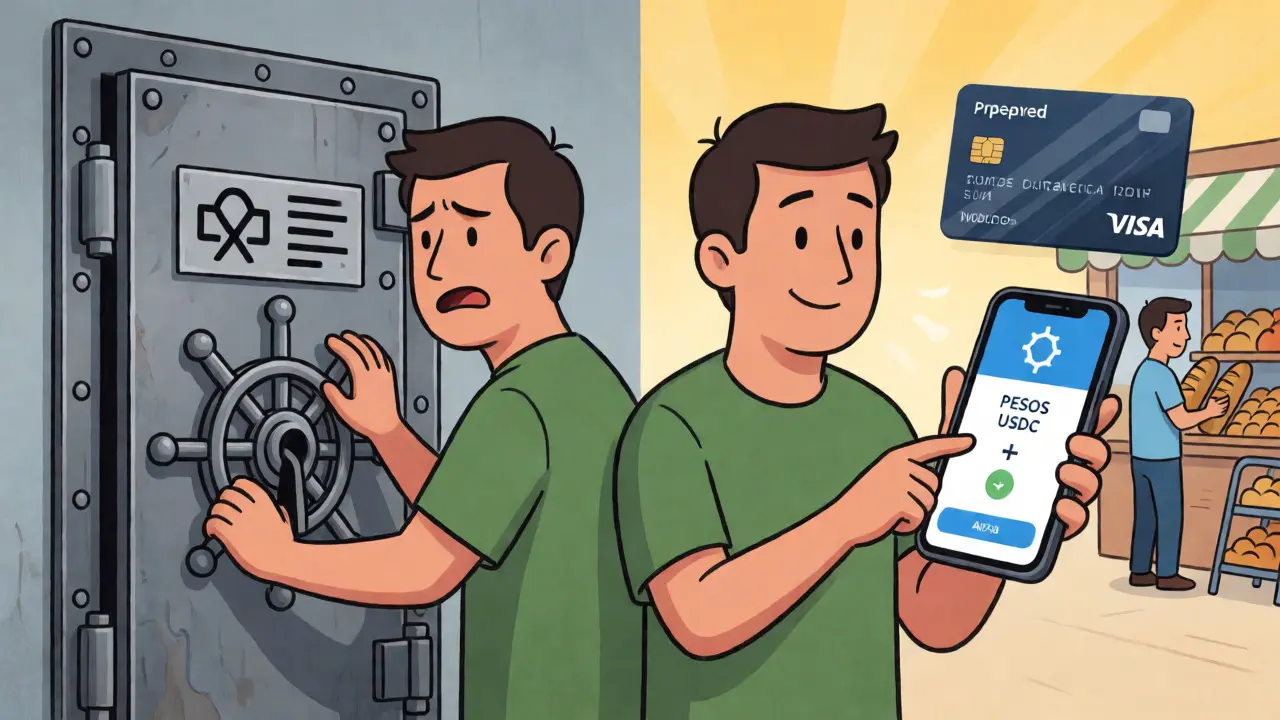
Talking about blockchain technology can sound intimidating. Do you need to understand private keys and gas fees to save money? Not anymore. Platforms like Lemon have simplified the process so much that it feels like using any other fintech app. Here’s how a typical user operates:
- Receive Paycheck: A worker gets paid in Argentine pesos via direct deposit.
- Instant Conversion: Within seconds, they use the Lemon app to convert those pesos into USDC.
- Spend Locally: When they go shopping, they use a prepaid Visa debit card linked to their USDC balance. The merchant sees pesos, but the user’s savings remain in dollars.
This seamless integration solves the biggest hurdle: usability. Users don't need to be crypto experts. They just need to know that moving money from "peso mode" to "dollar mode" protects their purchasing power. Francisco Diaz, director of the business school at Universidad Mayor, explains that restrictions on foreign exchange pushed Argentines to seek "creative solutions." Lemon provides exactly that-a way to hold dollar value without needing a physical dollar bill or a restricted bank account.
Regulatory Clarity Under Milei’s Presidency
For years, the regulatory landscape for crypto in Argentina was murky. Was it legal? Could you get taxed? Were exchanges safe? Things shifted significantly under President Javier Milei, who took office with pro-crypto sentiments. His administration views digital assets as tools for economic liberalization rather than threats to state control.
A major milestone occurred in March 2025 when the National Securities Commission (CNV) announced Resolution 1058/2025. This regulation established clear rules for cryptocurrency players, positioning the CNV as the official regulator. For businesses and users alike, this means legal certainty. Exchanges must now comply with stricter standards, reducing the risk of scams and improving trust. As Torres points out, Argentina "has all the conditions to expand the use of crypto, especially now that it has the regulatory framework launched in 2024." This clarity encourages more institutional participation and makes everyday users feel safer storing their savings digitally.
Crypto for Remittances and Cross-Border Payments
Saving is only half the story. Many Argentines also rely on remittances-money sent home by relatives working abroad. Traditional methods like Western Union or bank wires come with high fees and slow processing times. In 2023, remittance values reached approximately $156 billion, growing by 11% from the previous year. Yet, sending money through banks could take days and cost significant percentages in fees.
Stablecoins offer a faster, cheaper alternative. Sending USDC from Miami to Buenos Aires takes minutes and costs cents, not dollars. This efficiency has made crypto a preferred channel for families supporting loved ones back home. It’s not just about speculation; it’s about keeping more money in the family’s pocket. Posts on social media platforms frequently highlight these practical wins, showing that crypto adoption in Argentina is deeply rooted in community and familial support networks.

Comparing Crypto Options for Argentine Savers
Not all crypto strategies are created equal. Depending on your risk tolerance and goals, different assets serve different purposes. Here’s a quick breakdown of what Argentines typically use:
| Asset Type | Primary Use Case | Risk Level | Best For |
|---|---|---|---|
| USDC / USDT | Daily Savings & Spending | Low | Protecting salary against immediate inflation |
| Bitcoin | Long-term Store of Value | Medium-High | Hedging against long-term peso collapse |
| DAI | Decentralized Savings | Low-Medium | Users preferring decentralized collateral models |
| Ethereum | Smart Contract Utility | High | Advanced users engaging in DeFi protocols |
Notice that stablecoins dominate the "daily savings" category. While Bitcoin is popular for long-term hedging, its volatility makes it unsuitable for covering next month’s rent. DAI has gained traction among tech-savvy users because its value is maintained through collateral published on the Ethereum blockchain, offering transparency that some centralized issuers lack.
The Future of Digital Dollars in Latin America
Argentina’s experience serves as a case study for other nations facing economic instability. Chainalysis reported in 2024 that Latin America is the second-fastest-growing region for crypto adoption, largely due to inflation-fighting strategies similar to those in Argentina. The ecosystem is expanding beyond simple savings. Entrepreneurs are building apps that allow users to earn interest on stablecoins, pay bills automatically, and even invest in tokenized real estate.
However, challenges remain. Regulatory changes can still shift rapidly. Tax implications for crypto gains need clearer guidelines for individual users. And while smartphone penetration is high, not everyone has reliable internet access for real-time transactions. Despite these hurdles, the trend is undeniable. Crypto has moved from a niche hobby to a mainstream financial tool in Argentina. It’s no longer about being early to the party; it’s about staying solvent.
Is it legal to use cryptocurrency in Argentina?
Yes, using cryptocurrency is legal in Argentina. Recent regulations, including Resolution 1058/2025 from the National Securities Commission (CNV), have established a formal regulatory framework. This provides legal certainty for both users and exchanges, allowing them to operate within defined boundaries.
Why do Argentines prefer stablecoins over Bitcoin for savings?
Argentines primarily use stablecoins like USDC and USDT for savings because they are pegged to the US dollar. This provides stability against the volatile Argentine peso. Bitcoin, while popular for long-term investment, is too volatile for short-term savings needs like paying rent or buying groceries.
Can I use crypto to pay for things in stores?
Yes, through platforms like Lemon. Users can hold their savings in USDC but spend them using a prepaid Visa debit card. The transaction converts the digital dollars into pesos at the point of sale, making it accepted by merchants who may not directly accept cryptocurrency.
What are the risks of using crypto for savings in Argentina?
Key risks include platform security (choosing reputable exchanges), regulatory changes, and the technical learning curve. However, the primary risk mitigated by stablecoins is currency devaluation. Users should ensure they use regulated platforms to minimize counterparty risk.
How does crypto help with remittances?
Crypto enables faster and cheaper cross-border transfers. Sending stablecoins like USDC internationally takes minutes and incurs minimal fees compared to traditional wire transfers, which can take days and charge higher percentages. This is particularly beneficial for families receiving funds from abroad.