How Block Size Affects Blockchain Performance: The Trade-Offs Explained
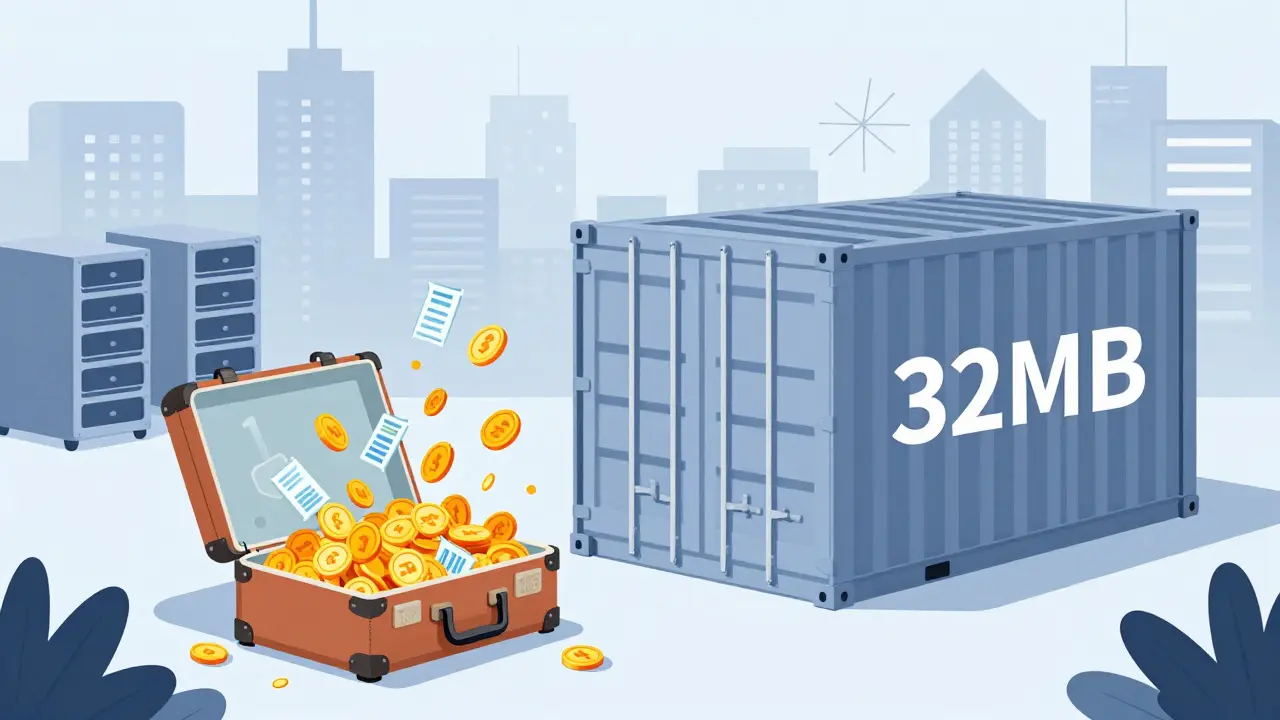
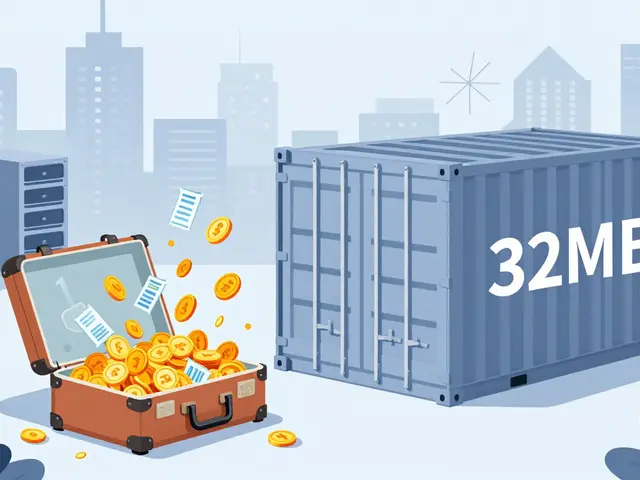
Imagine trying to fit a massive library into a single suitcase. That is essentially what happens when you try to cram too many transactions into a small block is a data structure in blockchain technology that contains a list of transactions and links to the previous block. The size of that suitcase determines how much information you can carry at once. In the world of cryptocurrency, this limit is known as block size is the maximum amount of data, measured in bytes or megabytes, that can be stored in a single block on a blockchain network.. It sounds like a simple technical detail, but it is actually the most debated lever in the entire crypto industry. Change it, and you change everything: speed, cost, security, and who gets to run the network.
Why does this matter to you? If you have ever waited hours for a Bitcoin transaction to confirm while paying sky-high fees, you have felt the impact of block size limits firsthand. On the flip side, if you use a faster, cheaper chain, you might wonder why it doesn't get hacked every five minutes. The answer lies in the delicate balance between processing power and network participation. Let's break down exactly how block size dictates performance and why there is no free lunch in blockchain design.
The Mechanics of Throughput
To understand performance, you first need to look at the math. Blockchain networks process transactions in batches called blocks. Two main variables control how fast these batches move: block time is the average interval between the creation of consecutive blocks in a blockchain network. and block size. Think of block time as how often a bus leaves the station, and block size as how many passengers fit inside. If buses leave frequently but are tiny, you still have a bottleneck. If they are huge but leave rarely, people wait in long lines.
Bitcoin is the first decentralized cryptocurrency created by Satoshi Nakamoto in 2009, using a Proof-of-Work consensus mechanism. set the original standard with a strict 1-megabyte (MB) block size limit and a 10-minute block time. This combination restricts the network to roughly 3 to 7 transactions per second (TPS). Compare that to Visa, which handles thousands of TPS, and the difference is stark. However, simply increasing the block size multiplies capacity. For example, Bitcoin Cash is a cryptocurrency forked from Bitcoin in 2017 that increased the block size limit to 32MB to improve transaction throughput. adopted a 32MB block size. Theoretically, this allows 32 times more data per block, drastically boosting throughput potential compared to Bitcoin’s original specification.
Other chains tweak the block time variable instead. Litecoin is a peer-to-peer cryptocurrency created in 2011 as a fork of Bitcoin, featuring faster block generation times. produces blocks four times faster than Bitcoin, achieving a 4x improvement in throughput without changing the block size significantly. Dogecoin is a meme-based cryptocurrency launched in 2013 with a 1-minute block time to enable faster transactions. pushes this further with 1-minute block times. These adjustments show that performance isn't just about block size; it is about the interplay between size and frequency.
The Decentralization Trap
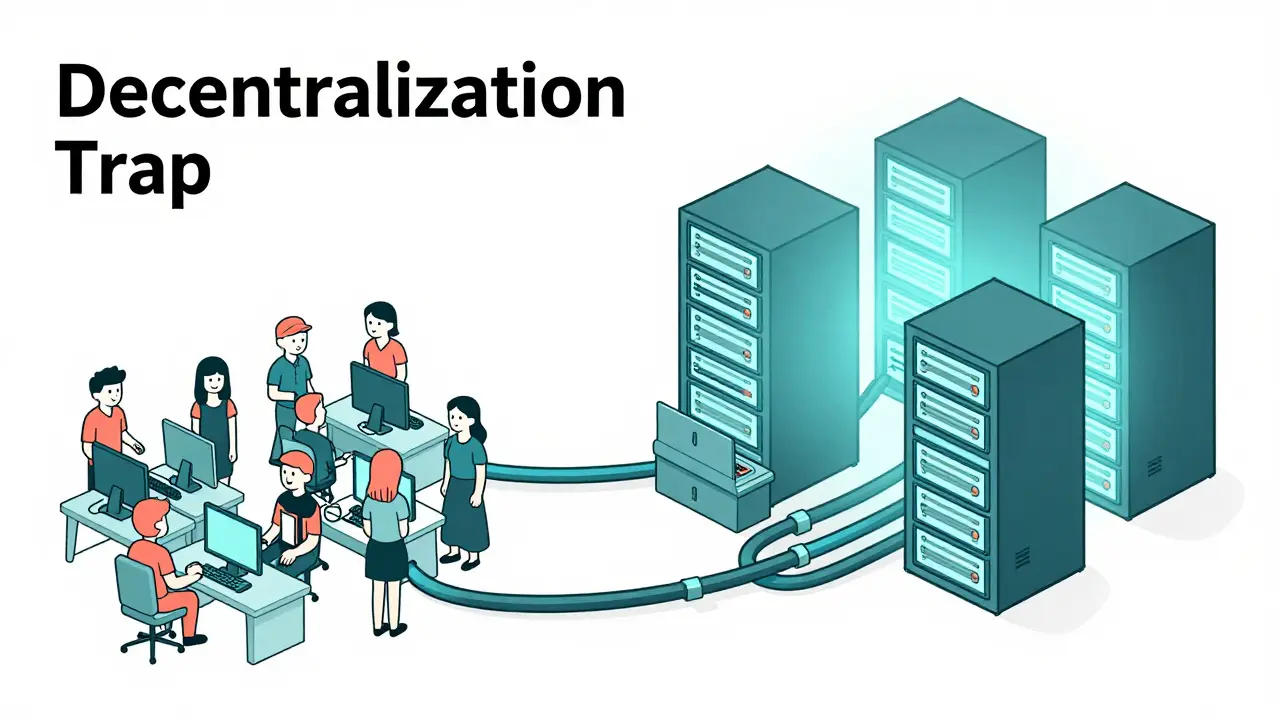
If larger blocks mean faster transactions and lower fees, why doesn't everyone just make them infinite? The catch is resource consumption. When you increase block size, you force every participant in the network to download, verify, and store more data. This creates a barrier to entry for running a full node.
A full node is a software program that downloads the entire blockchain history and validates all transactions according to the network's rules. acts as an independent validator of the network's state. In a healthy decentralized system, anyone with a decent computer should be able to run one. But as blocks grow, so do the hardware requirements. You need faster processors, more RAM, higher bandwidth, and massive hard drives. Eventually, only large corporations with data centers can afford to participate. This shifts power away from individual users and toward centralized entities, undermining the core promise of blockchain technology.
This tension was central to the "Block War" debate within the Bitcoin community. Proponents of larger blocks argued that high fees priced out everyday users, making Bitcoin unusable for payments. Opponents warned that bloating blocks would kill decentralization, turning Bitcoin into a permissioned system controlled by a few powerful miners. The result remains a conservative approach on the main Bitcoin network, prioritizing security and decentralization over raw speed.
Alternative Approaches to Scaling
Not all blockchains handle scaling the same way. While Bitcoin relies on fixed block sizes, Ethereum is a decentralized platform for smart contracts and dApps, using a gas-based fee market to manage block space. uses a different metric: gas limits. Instead of measuring data in megabytes, Ethereum measures computational effort in "gas." The current target is around 15 million gas units per block. Increasing this limit requires Ethereum Improvement Proposals (EIPs) are design documents providing information to the Ethereum community about new features or processes., which must gain community consensus. This dynamic approach allows the network to adjust to demand but introduces complexity in predicting costs.
Some networks take extreme measures. Bitcoin SV is a Bitcoin fork that removed block size limits entirely to prioritize maximum transaction throughput. removed block size limits altogether, betting that unlimited growth would solve congestion. Others focus on architecture. Recent testing by Dartmouth College highlighted SKALE is an elastic network of app-specific EVM-compatible blockchains designed for high-performance dApps., which achieved nearly 400 TPS with sub-second finality. By optimizing network topology-how nodes connect and communicate-SKALE demonstrated that infrastructure design can complement block size strategies to boost performance without solely relying on bigger blocks.
| Blockchain | Scaling Mechanism | Approx. TPS | Decentralization Risk |
|---|---|---|---|
| Bitcoin | Fixed 1MB Block Size | 3-7 | Low (Highly Decentralized) |
| Bitcoin Cash | 32MB Block Size | Higher potential | Moderate |
| Ethereum | Gas Limits + Layer 2 | 15-30 (Base) | Low (with L2 support) |
| SKALE | Optimized Topology | ~400 | Variable |
User Experience vs. Network Health
For the average user, larger blocks feel better. Transactions confirm faster, and fees drop during busy periods. This is crucial for applications requiring microtransactions, like gaming or high-frequency trading. If you are building a dApp where users need instant feedback, a congested network with small blocks is a dealbreaker.
However, network health depends on widespread participation. If running a node becomes too expensive, fewer people validate the chain. This makes the network vulnerable to attacks. A 51% attack becomes easier if only a handful of entities control the validation power. Therefore, developers face a tough choice: optimize for immediate user convenience or long-term network resilience. Most mature projects choose resilience, accepting slower speeds as the cost of security.
Beyond Block Size: The Future of Scaling
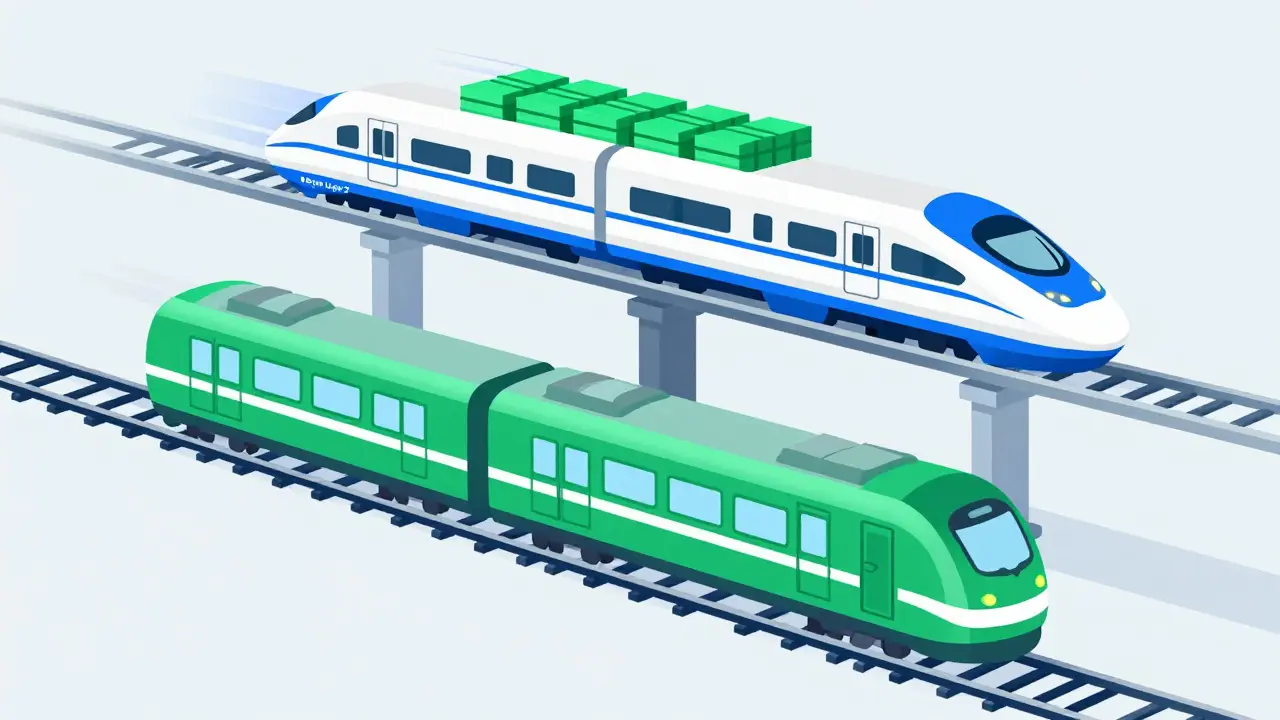
The industry has realized that tweaking block size alone won't solve the scalability trilemma. New solutions focus on moving computation off the main chain. Layer-2 solutions are secondary protocols built on top of existing blockchains to increase transaction throughput and reduce fees. like Lightning Network for Bitcoin or Arbitrum for Ethereum handle transactions separately and then settle the final results on the main chain. This keeps the base layer secure and decentralized while enabling high-speed interactions.
Sharding is another emerging technique. It splits the blockchain database into smaller pieces, allowing different parts of the network to process transactions simultaneously. Combined with interoperability protocols, future architectures will likely use a mix of optimized block sizes, efficient network topologies, and off-chain processing. The goal is no longer just "bigger blocks," but smarter systems that balance throughput, security, and accessibility.
What is the ideal block size for a blockchain?
There is no single ideal block size because it depends on the network's goals. Bitcoin uses 1MB to maximize decentralization, while Bitcoin Cash uses 32MB to prioritize transaction speed. The "ideal" size balances throughput needs against the hardware resources required to run full nodes.
Does increasing block size always improve performance?
It improves transaction throughput and reduces fees, but it can degrade network performance by slowing down block propagation. Larger blocks take longer to transmit across the globe, which can lead to more orphaned blocks and reduced miner efficiency.
Why didn't Bitcoin adopt larger blocks?
The Bitcoin community decided that maintaining a highly decentralized network was more important than increasing transaction speed. Larger blocks would require expensive hardware, limiting who could run nodes and centralizing control among large mining pools.
How do Layer-2 solutions relate to block size?
Layer-2 solutions bypass the need for larger base-layer blocks by processing transactions off-chain. They bundle many transactions into a single settlement on the main blockchain, effectively increasing throughput without changing the underlying block size limit.
What is the impact of block size on storage?
Larger blocks increase the rate at which the blockchain grows. Every full node must store the entire history, so larger blocks mean faster-growing storage requirements. Over time, this can make it prohibitively expensive for individuals to maintain nodes.