How Citizens in Sanctioned Countries Access Crypto Exchanges: Methods, Risks, and Realities
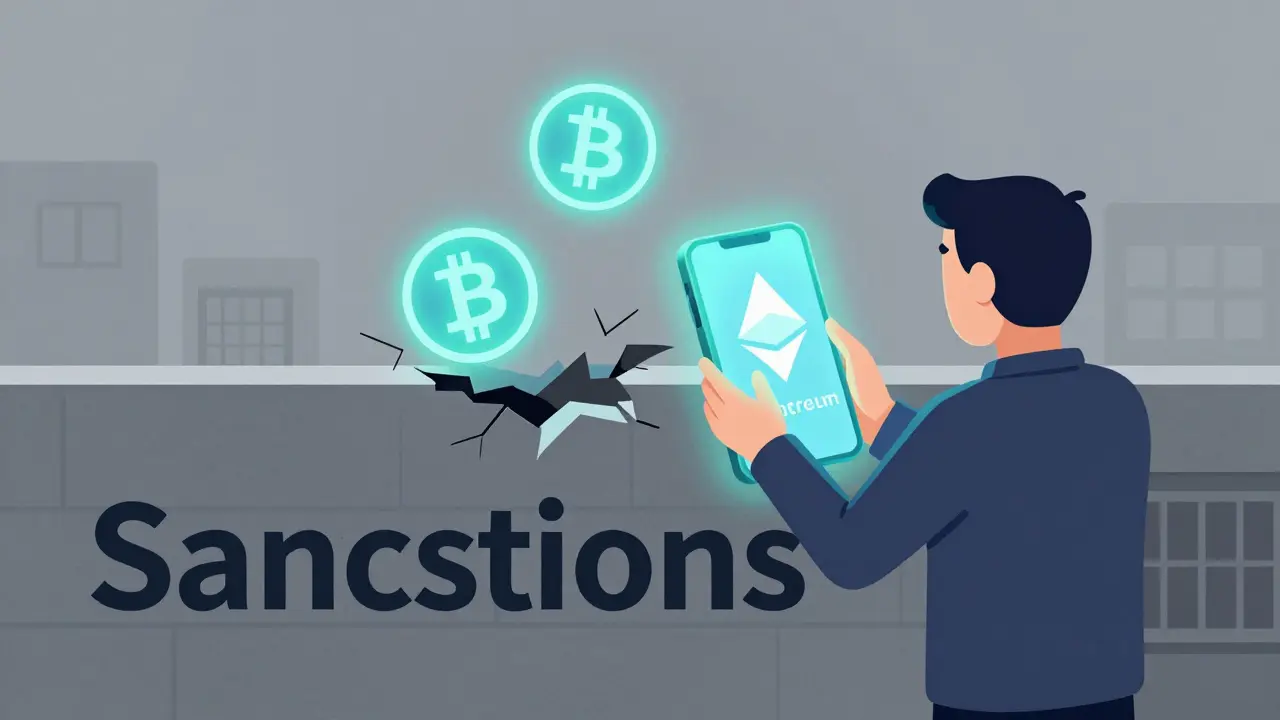
Living under economic sanctions means living with restricted access to the global financial system. For citizens in nations like Iran, Russia, or North Korea, traditional banking channels are often blocked or heavily monitored. This reality has pushed many toward cryptocurrency as a lifeline for preserving wealth, sending remittances, or accessing international markets. However, accessing these digital assets is not as simple as downloading an app. The landscape is fraught with legal minefields, sophisticated surveillance, and constant adaptation.
The Office of Foreign Assets Control (OFAC) in the United States has tightened its grip on the crypto world significantly. As of 2025, OFAC has sanctioned 57 individuals and entities specifically for illicit cryptocurrency activities. North Korea remains the most targeted nation, accounting for 38% of these actions in 2024, followed closely by Russia and Iran. With 23% of all new sanctions designations in 2024 being crypto-related, the window for casual or unmonitored access is closing fast. Understanding how people navigate this environment requires looking at the technical workarounds, the legal risks, and the evolving enforcement strategies.
The Technical Workarounds: How Access Happens
Citizens in sanctioned countries do not typically use mainstream centralized exchanges like Coinbase or Binance directly, as these platforms enforce strict Know Your Customer (KYC) and Anti-Money Laundering (AML) protocols. Instead, they rely on a layered approach involving decentralized finance (DeFi), peer-to-peer (P2P) networks, and privacy-focused tools.
Decentralized Finance (DeFi) Protocols
DeFi platforms operate without a central authority, meaning there is no single entity to block a user based on their IP address or nationality. Users can connect wallets directly to protocols like Uniswap or Aave to swap tokens or provide liquidity. Bitcoin (BTC) accounts for 65% of identified transactions by sanctioned entities, while Ethereum (ETH) represents 18%. Stablecoins make up another 12%, serving as a crucial bridge between volatile crypto assets and stable value. By using non-custodial wallets, users retain control over their private keys, making it harder for authorities to freeze funds directly-though tracking remains possible.
Peer-to-Peer (P2P) Marketplaces
P2P platforms allow users to buy and sell crypto directly with each other, often using local currencies or cash. These transactions are facilitated by escrow services within the platform but lack the stringent identity verification of major exchanges. In regions where bank cards are blocked, users might trade crypto for gold, electronics, or even physical cash. This method is high-risk because it exposes users to scams and local law enforcement scrutiny, but it remains one of the most common entry points for fiat currency conversion.
Mixers and Privacy Coins
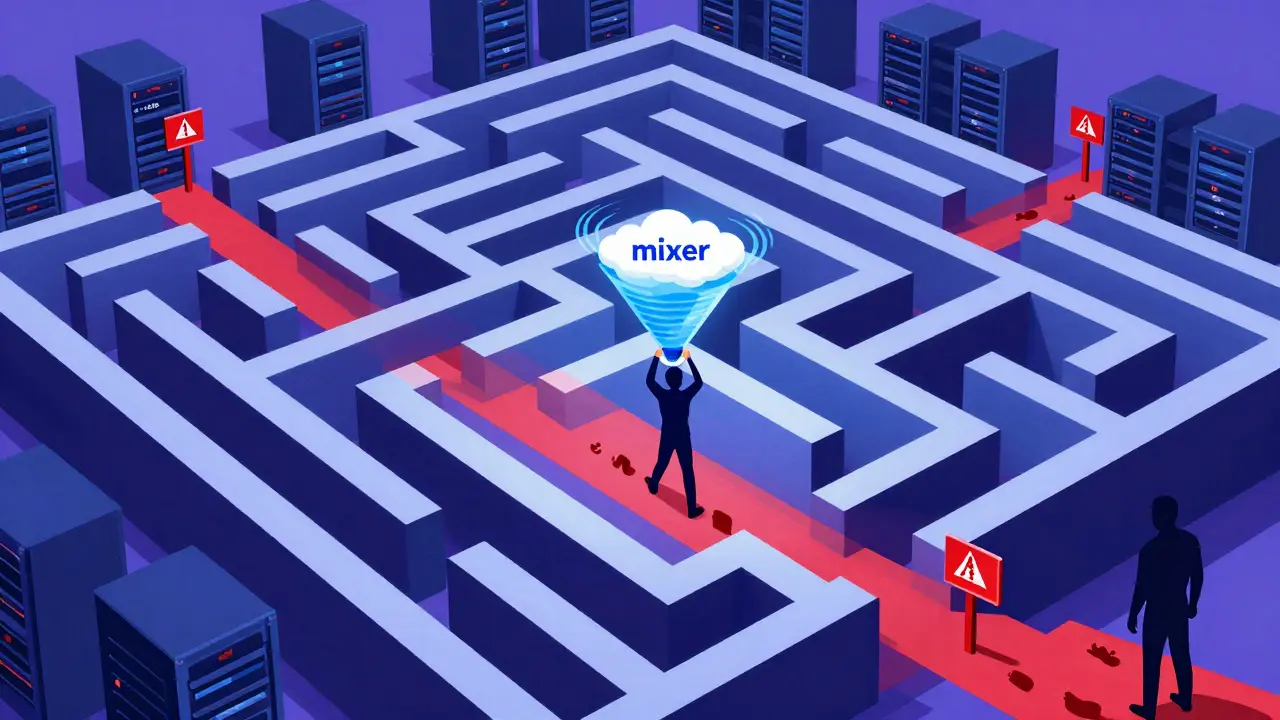
To obscure the trail of funds, some users turn to mixing services or privacy coins like Monero (XMR). Mixers pool together funds from multiple users and redistribute them, breaking the link between the source and destination addresses. However, this is a double-edged sword. The U.S. Treasury Department has aggressively targeted mixers, issuing its first-ever sanction against a DeFi protocol in January 2025, freezing $150 million in assets. Services similar to Tornado Cash have faced five major enforcement actions in 2024 alone. Using these tools can flag your wallet as "high risk" on compliant exchanges, potentially leading to frozen funds if you ever try to off-ramp to fiat.
The Legal Landscape: OFAC Enforcement and Penalties
It is critical to understand that accessing crypto exchanges from a sanctioned country is not just a technical challenge; it is a serious legal violation under U.S. law. OFAC’s Specially Designated Nationals (SDN) List now includes over 1,200 crypto wallet addresses. If your wallet interacts with any of these addresses, it can be flagged by blockchain analysis firms like Chainalysis or TRM Labs, which partner with regulators worldwide.
The consequences for non-compliance are severe. In 2024, penalties imposed on crypto businesses for sanctions violations totaled $430 million, a 40% increase from the previous year. The case of ShapeShift serves as a stark warning. The defunct Swiss exchange paid $750,000 to OFAC in 2025 for allowing users from Cuba, Iran, Sudan, and Syria to use its platform. OFAC determined that ShapeShift had no sanctions compliance program, highlighting that ignorance of the rules is not a valid defense.
For individual citizens, the risks include:
- Asset Freezes: Funds held on centralized exchanges can be instantly frozen if the exchange detects a sanctioned IP address or KYC document.
- Blacklisting: Wallet addresses can be added to the SDN List, rendering them unusable on any compliant platform globally.
- Criminal Charges: Attempting to evade sanctions can lead to criminal prosecution, especially if the funds are linked to illicit activities such as terrorism financing or drug trafficking.
Case Study: The Iranian Adaptation Strategy
The situation in Iran offers a clear example of how users adapt to enforcement pressures. On July 2, 2025, Tether conducted its largest-ever freeze of Iranian-linked funds, blocking 42 cryptocurrency addresses with significant exposure to the Iranian exchange Nobitex. This action sent shockwaves through the community, forcing immediate adaptation.
Rather than abandoning crypto entirely, Iranian users pivoted quickly. Influenced by domestic exchanges and crypto influencers, many swapped their USDT holdings into DAI, a stablecoin that operates on the Polygon network. This move allowed them to preserve access to liquid stablecoins despite the heightened sanctions pressure on Tether. The Iranian government also responded by enacting the Law on Taxation of Speculation and Profiteering in August 2025, imposing a capital gains tax on cryptocurrency trading. This move positioned crypto alongside other speculative assets like gold and real estate, attempting to bring some level of state control over the market.
Data from TRM Labs shows an 11% drop in crypto inflows to Iran in the first half of 2025, indicating that enforcement measures are having an impact. However, activity continues, demonstrating the resilience and ingenuity of users in navigating these restrictions.
The Rise of Successor Platforms and Decentralized Laundering
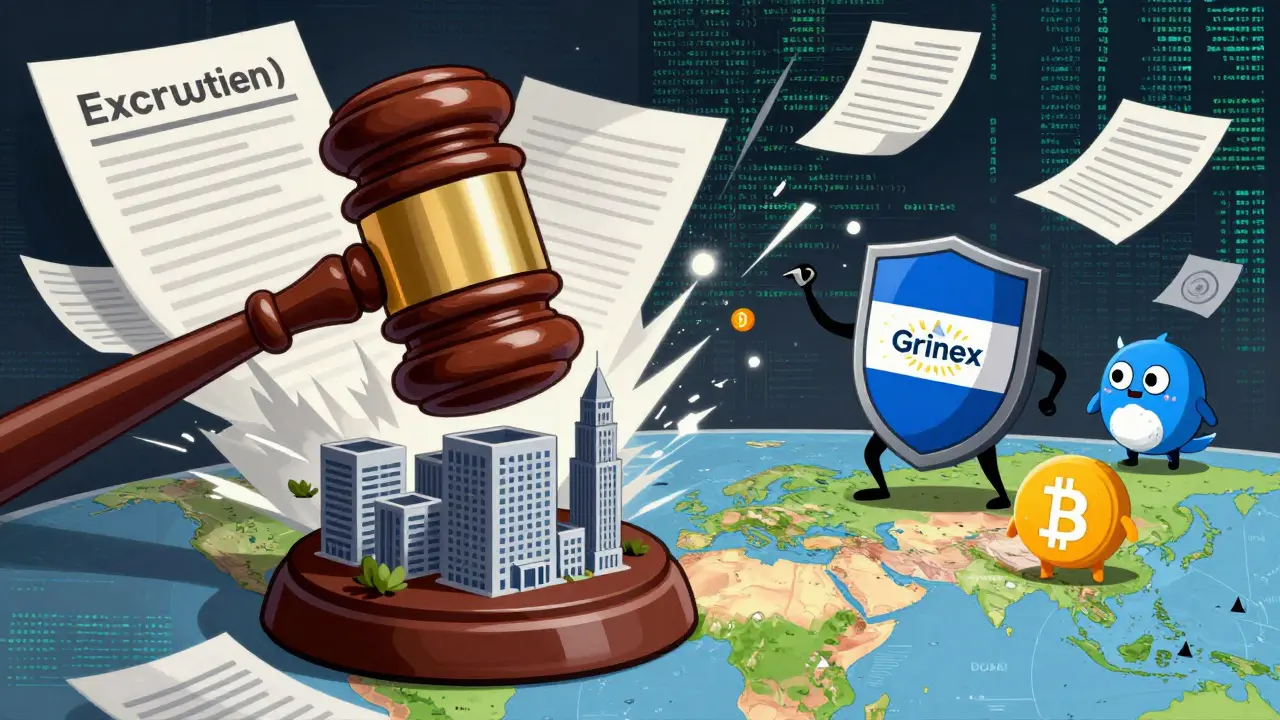
When primary exchanges are shut down, they often morph into successor platforms. The Russian exchange Garantex is a prime example. Sanctioned by OFAC in 2022 for processing tens of millions of dollars in illicit transactions, Garantex was effectively dismantled when the U.S. Secret Service, in partnership with German and Finnish law enforcement, seized its domain and froze over $26 million in cryptocurrency on March 6, 2025.
Instead of disappearing, Garantex moved its customer base and infrastructure to a successor exchange called Grinex. It evolved into a decentralized money laundering system supported by entities like Exved, a cross-border payment processing platform, and MKAN Coin, a Telegram-based exchange operating from Dubai. These platforms replicate the core functions of Garantex but operate in a more fragmented, harder-to-track manner. Transparency International Russia exposed this infrastructure in September 2025, revealing how sanctioned exchanges continue to serve clients despite intense pressure.
This pattern illustrates a broader trend: sanctions drive innovation in evasion techniques. As centralized points of failure are eliminated, the ecosystem shifts toward decentralized, offshore hubs in jurisdictions with lax regulations, such as Dubai or El Salvador.
Global Context: Crypto-Friendly Jurisdictions
While citizens in sanctioned countries face barriers, others benefit from the global expansion of crypto-friendly jurisdictions. These regions offer regulatory clarity and tax advantages that indirectly facilitate access for sophisticated users who can navigate the compliance requirements.
| Country | Tax Policy | Regulatory Body | Key Feature |
|---|---|---|---|
| Singapore | No capital gains tax | Monetary Authority of Singapore (MAS) | Strong AML regulation, 43% of young adults own crypto |
| El Salvador | 0% tax on foreign crypto income | Financial Trade Secretary | Bitcoin is legal tender |
| United Arab Emirates (Dubai) | Tax-free personal crypto income | VARA (Virtual Assets Regulatory Authority) | Home to over 1,000 crypto firms |
| Malta | Favorable corporate tax rates | Malta Financial Services Authority (MFSA) | Known as "Blockchain Island" |
These jurisdictions attract businesses and wealthy individuals, creating a complex web of cross-border flows. For citizens in sanctioned countries, interacting with entities in these hubs can provide a veneer of legitimacy, though it does not exempt them from OFAC jurisdiction if U.S. persons or dollars are involved.
Risks and Pitfalls to Avoid
Navigating this landscape is dangerous. Here are the most common pitfalls:
- Using Centralized Exchanges Without Verification: Even if you bypass IP checks, KYC requirements will eventually catch up. Providing false documents is fraud and can lead to permanent bans and legal action.
- Interacting with High-Risk Wallets: Accidentally receiving funds from a sanctioned address can contaminate your entire wallet history. Always check incoming transactions using blockchain explorers and risk-scoring tools.
- Over-Reliance on Mixers: While mixers offer privacy, they are heavily scrutinized. Many compliant exchanges now blacklist funds that have passed through known mixers, leaving you unable to cash out.
- Ignoring Local Laws: Beyond U.S. sanctions, many countries have their own laws regarding crypto usage. Violating local regulations can result in fines, imprisonment, or asset confiscation.
The Future: An Arms Race Between Enforcement and Evasion
The battle between enforcement authorities and those seeking to bypass sanctions is intensifying. OFAC’s annual growth rate in crypto sanctions stands at 18%, suggesting that regulatory pressure will only increase. The focus is shifting from centralized exchanges to DeFi protocols, smart contracts, and decentralized identifiers.
At the same time, users are becoming more sophisticated. The use of cross-chain bridges, layer-2 solutions like Polygon, and privacy-enhancing technologies is growing. The Department of State has announced rewards of up to $5 million for information leading to the arrest of key figures like Garantex executive Aleksandr Mira Serda, showing the high stakes involved.
However, complete prevention of access remains challenging. The decentralized nature of blockchain technology ensures that as long as there is demand, there will be ways to circumvent restrictions. The key for users is to understand the risks, stay informed about regulatory changes, and prioritize security and compliance wherever possible.
Is it illegal for citizens in sanctioned countries to use cryptocurrency?
Yes, under U.S. law enforced by OFAC, it is illegal for individuals and entities in sanctioned countries to engage in transactions with U.S. persons or use the U.S. financial system. While holding crypto itself may not always be banned locally, accessing global exchanges or converting to fiat often violates international sanctions regimes. Non-compliance can lead to asset freezes, blacklisting, and criminal charges.
What happens if my crypto wallet is sanctioned by OFAC?
If your wallet is added to the OFAC SDN List, all property and interests in property subject to U.S. jurisdiction are blocked. This means you cannot transfer, sell, or withdraw funds from any compliant exchange. Additionally, other entities must freeze any assets they hold related to your wallet. Effectively, your funds become inaccessible in the formal financial system.
Can I use DeFi to avoid sanctions?
Can I use DeFi to avoid sanctions?
DeFi protocols do not inherently enforce sanctions, but using them does not protect you from legal liability. OFAC has begun sanctioning DeFi protocols directly, as seen in January 2025. Furthermore, blockchain analysis firms can trace DeFi transactions, and interacting with sanctioned addresses can still lead to penalties. DeFi offers technical anonymity but not legal immunity.
Why did Tether freeze Iranian-linked funds in 2025?
Tether froze 42 addresses linked to the Iranian exchange Nobitex to comply with U.S. sanctions and maintain its license to operate in regulated markets. This action demonstrates the power of centralized stablecoin issuers to enforce compliance, forcing users to migrate to alternative assets like DAI on less restricted networks.
What is the role of P2P exchanges in sanctioned countries?
P2P exchanges allow users to trade crypto directly with each other, often using local payment methods. They serve as a critical entry point for citizens in sanctioned countries to convert fiat to crypto without going through traditional banks. However, these platforms carry high risks of fraud and local law enforcement scrutiny.
Are privacy coins like Monero safe to use in sanctioned countries?
Privacy coins offer greater transactional anonymity, but they are increasingly viewed with suspicion by regulators. Many centralized exchanges delist privacy coins due to compliance concerns. Using them can signal illicit intent to blockchain analysts, potentially leading to further scrutiny or blacklisting.
How do successor platforms like Grinex operate after sanctions?
Successor platforms emerge when original exchanges are shut down. They often rebrand, change domains, and decentralize operations to evade detection. For example, Garantex morphed into Grinex and other entities like Exved and MKAN Coin, continuing to facilitate transactions despite sanctions. These platforms are harder to track but still pose significant legal risks.
What should I do if I accidentally receive sanctioned funds?
If you receive funds from a sanctioned address, do not spend or move them. Immediately consult with a legal expert specializing in international sanctions. You may need to report the incident to relevant authorities and potentially forfeit the funds to avoid legal repercussions. Ignoring the issue can lead to your entire wallet being flagged.
Which countries are most affected by crypto sanctions?
North Korea, Russia, and Iran are the most frequently targeted nations. North Korea accounted for 38% of OFAC's crypto-related actions in 2024. These countries face extensive restrictions on accessing global financial systems, driving their citizens to seek alternative crypto-based solutions.
Is there a future where sanctions cannot stop crypto access?
The decentralized nature of blockchain makes complete prevention difficult. As enforcement expands to DeFi and privacy tools, users adapt with new technologies. However, the legal and practical risks remain high. The arms race between regulators and evaders will likely continue, with neither side achieving total victory.
14 Comments
Write a comment

Mark Tuason
It is quite fascinating to observe how decentralized finance protocols are being utilized as a workaround for traditional banking restrictions. The article highlights the significant role of DeFi in allowing users to bypass KYC requirements, which raises important questions about regulatory oversight.
Ella Collinson
The assertion that DeFi offers 'technical anonymity' is fundamentally flawed from a forensic accounting perspective. Blockchain analysis firms like Chainalysis utilize heuristic clustering and entity attribution models to de-anonymize wallet addresses with high precision. Furthermore, the concept of 'privacy coins' as a safe harbor is obsolete given the integration of zero-knowledge proof verifiers into mainstream compliance frameworks. Users engaging in these activities are essentially participating in a high-risk arbitrage against sophisticated surveillance infrastructure.
Ray Arney
I guess you're right about the risks being pretty high. It's scary to think about how much data is out there.
Andrew Schneider
Oh please, spare me the tech-bro jargon! 🙄 You act like you're some kind of blockchain wizard, but let's be real: the government just wants to control everything! They sanction North Korea one day and then freeze your Tether because they feel like it? That's not 'compliance,' that's tyranny with a spreadsheet! 😡 I mean, sure, maybe don't buy drugs with Monero if you want to stay out of jail, but acting like every Iranian using DAI is a terrorist is just absurd drama for clicks! 💀
Eric Braddock
You are all missing the bigger picture here. This isn't just about sanctions; it's about the New World Order trying to crush individual sovereignty through digital surveillance capitalism. The OFAC designations are merely the tip of the iceberg in a coordinated effort to implement CBDCs globally. When they freeze those $150 million in assets, they aren't stopping crime; they are testing the kill-switch mechanism for your own bank accounts. Wake up! The blockchain is a trap designed to track every single satoshi you own so they can confiscate it when the 'emergency' happens. Don't fall for the narrative that this is about safety; it's about total control.
Nick G
I understand the frustration many people feel regarding financial restrictions, and it is truly heartbreaking to see citizens in nations like Iran or Russia struggle to access basic economic opportunities. However, we must also consider the broader geopolitical implications and the necessity of international cooperation in maintaining global stability. While the technical workarounds described in the article are ingenious, they often come at a significant human cost, exposing individuals to severe legal repercussions and financial loss. It is essential that we approach this topic with empathy and a desire for peaceful resolution rather than simply focusing on evasion techniques. Perhaps there is a middle ground where humanitarian exceptions can be made without compromising security protocols.
Nick Wengel
That's a nice thought, but reality is harsh. People just need to survive.
Alicia Hull
I find it deeply troubling that the article suggests using mixers is a viable option. While I appreciate the detailed breakdown of the technical aspects, promoting methods that facilitate money laundering is ethically questionable. We need to hold platforms accountable for their lack of due diligence. Why are we even discussing how to evade sanctions instead of addressing the root causes of the conflicts that lead to them? This is a serious issue that requires robust legal frameworks, not clever hacks.
Johan Otto
Boring stuff. Just use cash.
Anuj Kashyap
One might ponder the irony of a system built on transparency being used to hide illicit flows 🤔. The cat-and-mouse game between regulators and evaders is reminiscent of ancient philosophical debates on freedom versus order. But let us not forget that behind every wallet address is a human story, often one of desperation rather than malice. The rigid application of sanctions rarely achieves its intended political goals, yet it invariably punishes the most vulnerable. Perhaps true wisdom lies in recognizing the limitations of both technology and law in resolving complex human conflicts 🧘♂️.
Tracy Marshall
its obvious that the deep state is manipulating crypto markets to destabilize sovereign nations. they claim its about safety but really its about power. i dont trust any centralized exchange because they are all complicit in this grand conspiracy. you should never give anyone your private keys ever. stay vigilant folks (:
Guy Davis
Thos ppl deserv eit. If u break da law u get punished. Simple as dat.
KEITH WONG
Lol look at all these noobs thinking they can outsmart the gov. 🤡 You guys are clueless. The only way to win is to not play. Or better yet, move to Dubai and live the good life while the rest of you deal with frozen assets. #CryptoLife #FOMO
Natalie Lucas
Hey everyone! Lets keep the conversation positive! Its amazing how resilient people are right? Even with all these challenges, communities are finding ways to connect and support each other. Lets focus on the innovation side of things! 🚀