How to Legally Reduce Crypto Taxes Through International Relocation

Imagine waking up and realizing that a massive chunk of your Bitcoin gains belongs to the government simply because of where you sleep at night. For many high-net-worth holders, the tax bill on a bull market run can be devastating. But here is the reality: taxes are often a matter of geography. By strategically moving your tax residency, you can legally shift from a high-tax environment to a jurisdiction that views cryptocurrency with a much friendlier eye. This isn't about hiding assets in a secret account; it is about crypto tax migration-the process of establishing legal residency in a country that offers zero or low taxes on digital assets.
| Country | Tax Treatment | Key Requirement | Best For |
|---|---|---|---|
| Dubai (UAE) | 0% Capital Gains | Property or 183+ days | Max Wealth Preservation |
| Portugal | Exempt for Individuals | Residency/Property | EU Access & Lifestyle |
| Germany | 0% after 1 year holding | Tax Residency | Long-term Investors |
| United Kingdom | FIG Regime (4-year exempt) | New Resident Status | Short-term Migration |
Picking Your Tax Haven: Where the Rules Work for You
Not all "crypto-friendly" countries are the same. Some offer a blanket exemption, while others require you to hold your coins for a specific period. If you are looking for a complete wipeout of capital gains, Dubai is a global hub in the UAE that imposes no capital gains tax on cryptocurrency transactions for its tax residents . It is the gold standard for those who want a clean break from heavy taxation, provided they can meet the residency requirements through property ownership or physical presence.
If you prefer Europe, Portugal is a Mediterranean country that exempts personal gains from crypto trading from both VAT and income taxes . However, there is a catch: this is for individuals. If the Portuguese authorities decide you are running a professional business, the tax-free ride ends. This is a critical distinction; your activity must look like personal investing, not a high-frequency trading firm.
Then there is Germany, which takes a "patient investor" approach. In Germany, if you hold your cryptocurrency for more than one year, the gains from the sale are completely exempt from tax. This is a massive incentive for HODLers, though it requires meticulous record-keeping to prove exactly when you acquired each coin.
The Trap of the 'Paper Resident'
One of the biggest mistakes people make is thinking they can just buy a residency permit and keep living in their home country. Tax authorities are getting smarter. Whether it is the IRS or the HMRC, they look for "economic substance." If you claim to live in Dubai but spend 300 days a year in New York or London, you are still a tax resident of the latter. To make this legal, you need to actually move.
This means establishing a genuine life in the new country. This includes renting or buying a home, spending at least 183 days there annually, and moving your primary center of economic interest. If you treat relocation as a mere paperwork exercise, you risk being hit with massive back-taxes and penalties for tax evasion. Genuine residency is your only real shield.
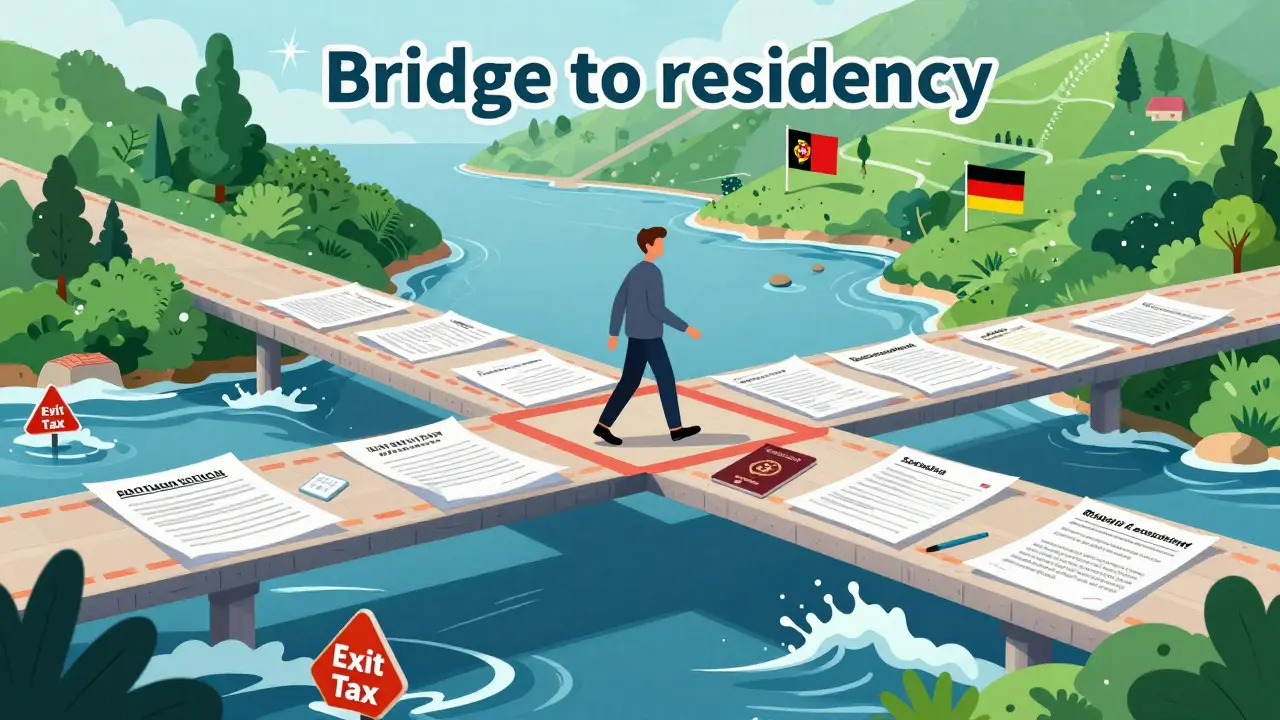
Dealing with Exit Taxes and 'Sticky' Jurisdictions
Moving out doesn't always mean you're free. Some countries have what is known as an Exit Tax is a tax imposed by a country when a resident moves their tax domicile abroad, effectively taxing unrealized gains at the moment of departure . Essentially, the government says, "Since you're leaving, we're treating your current holdings as if you sold them today." This can create a massive liquidity crisis if you have huge unrealized gains but not enough cash to pay the exit bill.
The most challenging case is the United States, which uses citizenship-based taxation. Unlike almost every other country, the U.S. taxes its citizens on their worldwide income regardless of where they live. If you are a U.S. citizen, moving to Dubai does absolutely nothing for your tax bill unless you undergo the drastic process of renouncing your citizenship-a move that has permanent legal and personal consequences.
The Technical Side of the Move: Timing and Documentation
Timing is everything. If you sell your ETH for a massive profit and then move to Portugal the next day, you've already triggered a taxable event in your old country. To optimize your gains, you generally want to establish residency in the new jurisdiction before you execute the trade. This often requires a lead time of 12 to 18 months to ensure your residency is bulletproof before you hit the "sell" button.
Because crypto moves fast and across many chains, record-keeping is a nightmare. You cannot rely on exchange history alone. Professionals recommend using tools like Koinly or CoinTracker, which are specialized crypto tax software solutions that track transactions across multiple wallets and exchanges to generate compliant tax reports . In a place like Germany, where the one-year rule applies, a gap in your transaction history could result in a total loss of your tax exemption.

The Changing Landscape: MiCA and Global Cooperation
The days of simple tax arbitrage are slowly fading. The EU's MiCA (Markets in Crypto-Assets) regulation is creating a standardized framework for crypto across Europe. While this provides clarity, it also makes it easier for countries to share information. Moreover, the OECD is pushing for international tax information sharing, meaning your local tax office will likely know what you're doing abroad sooner than they used to.
As jurisdictions add "anti-avoidance" provisions, the focus is shifting from simply "where is the tax lowest?" to "where can I legally maintain a high quality of life while protecting my wealth?" The goal is now a sustainable long-term strategy rather than a quick tax dodge.
Can I just use a VPN to pretend I'm in a tax haven?
Absolutely not. A VPN masks your IP address, but it doesn't change your legal tax residency. Tax residency is based on physical presence, ties to the country (like owning a home), and legal filings. Using a VPN to hide your location while claiming residency in another country is tax fraud, not tax optimization.
Does moving to Portugal mean all my crypto is tax-free?
For individuals, generally yes, but it's nuanced. Personal gains from trading are typically exempt. However, if you are categorized as a professional trader or if the gains are tied to a business entity, you will be taxed. It's vital to ensure your activity is classified as personal investing.
What is the '183-day rule'?
The 183-day rule is a common benchmark used by many countries (including the UAE and Portugal) to determine tax residency. If you spend more than half the year (183 days) in a country, you are typically considered a tax resident there, which allows you to benefit from their local tax laws.
Do crypto-to-crypto swaps trigger taxes?
In most jurisdictions, yes. Swapping Bitcoin for Ethereum is treated as selling BTC for a profit and then buying ETH. This is a taxable event. Moving to a zero-tax jurisdiction before these swaps occur is one of the primary reasons people relocate.
How long does the relocation process actually take?
For a legally sound transition, plan for 12 to 18 months. You need time to secure a visa, find a residence, establish your physical presence, and coordinate with tax advisors in both your old and new countries to avoid double taxation or exit tax surprises.
Next Steps for Your Migration
If you are serious about moving, start by auditing your portfolio. Identify which assets are long-term and which are short-term. Next, consult a cross-border tax specialist who understands both your current country's exit laws and the destination's residency requirements. Finally, begin documenting your "trail of life"-save boarding passes, rental agreements, and utility bills. These small pieces of evidence will be your best defense if a tax authority ever audits your residency claim.