How Turkish Citizens Trade Crypto Despite Payment Ban: A 2026 Guide
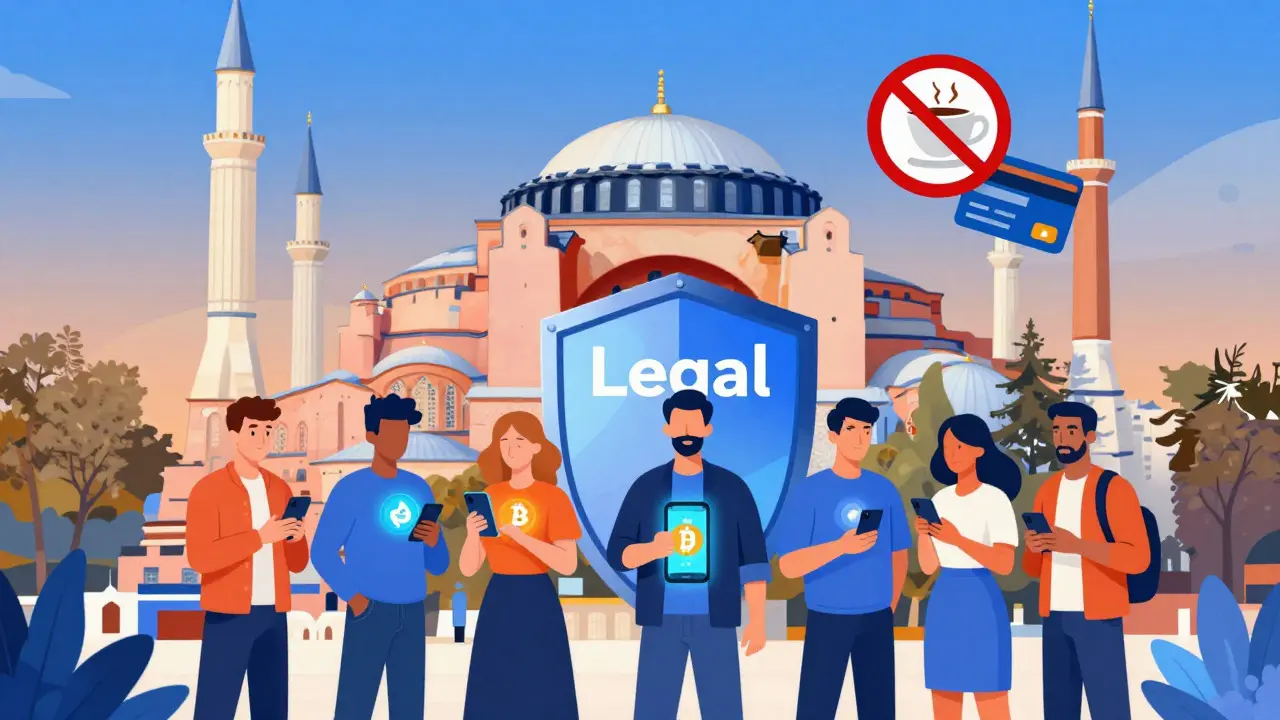
Imagine wanting to buy a coffee with Bitcoin in Istanbul. You can’t. Since April 2021, the Central Bank of the Republic of Turkey (CBRT) has banned using cryptocurrency for payments. But here is the twist: holding and trading crypto is still legal. This paradox has created one of the most active, complex, and innovative crypto markets in the world. So, how do millions of Turks actually trade? They use a mix of licensed exchanges, peer-to-peer networks, and technical workarounds that would make a privacy expert nod in approval.
The Regulatory Paradox: Banned Payments, Legal Trading
To understand how people trade, you first need to understand the rules they are navigating. The CBRT’s Circular No. 2021-32/33 explicitly forbids banks from processing transactions where crypto is used as money. However, it never said you couldn’t own digital assets. This distinction is crucial. It means Turkish citizens can buy Bitcoin or Ethereum, hold them in a wallet, and sell them later for profit, but they cannot swipe their crypto card at a grocery store.
This dual approach was designed to protect consumers from volatility and prevent financial system disruptions. Yet, the market didn’t shrink; it adapted. According to the Chainalysis 2023 Global Crypto Adoption Index, Turkey ranked 11th globally for grassroots adoption, moving over $70 billion in transaction volume between mid-2022 and mid-2023. By 2024, TripleA reported that 45% of Turkey’s adult population-roughly 19.5 million people-are crypto users. That is not a niche hobby; that is a mainstream financial behavior driven by inflation hedging and investment opportunities.
Method 1: Licensed Centralized Exchanges (The Safe Route)
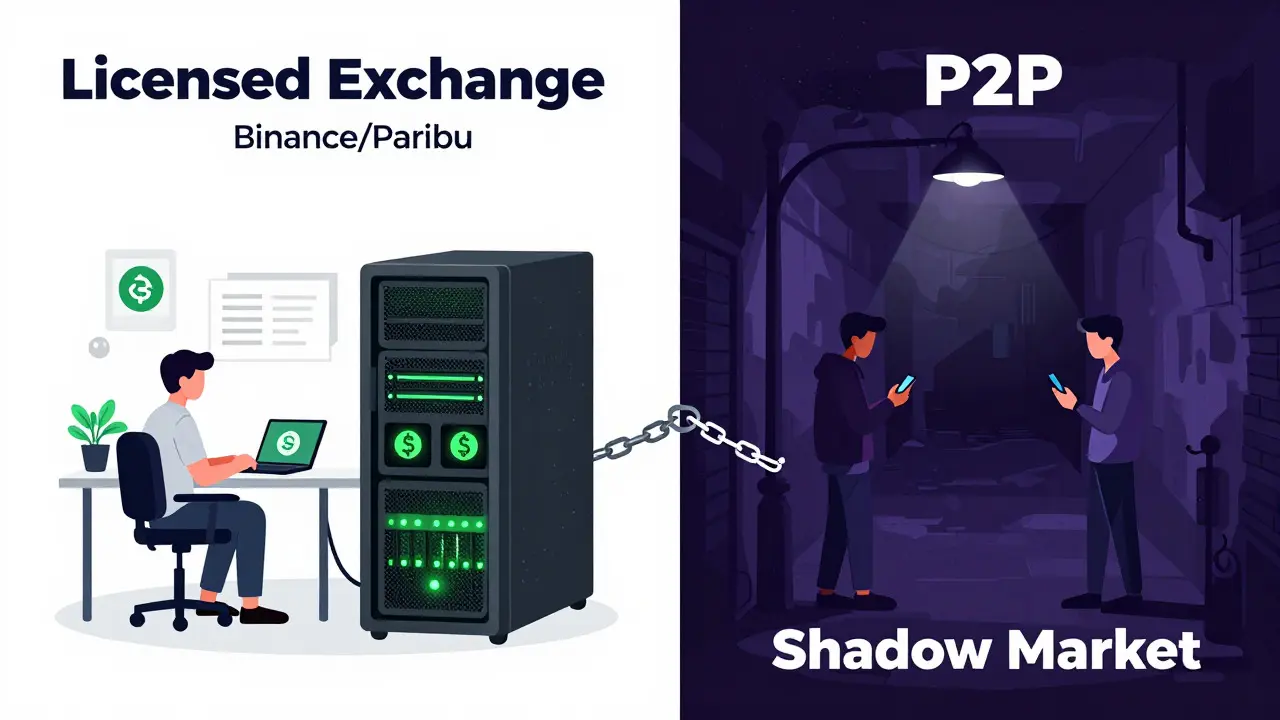
For most users, the primary way to trade is through licensed centralized exchanges (CEX). As of January 2025, platforms like Binance Turkey, Paribu, and Bitlo received provisional authorization from the Capital Markets Board (CMB). These platforms offer a regulated environment with consumer protections.
Here is how it works in practice:
- Identity Verification: You must complete KYC (Know Your Customer) checks. For transactions under 15,000 Turkish Lira (TRY), basic verification suffices. Above this threshold, stricter AML (Anti-Money Laundering) rules apply.
- Fees: Transaction fees on these platforms range from 0.05% to 0.25%, which is competitive globally.
- Speed: Withdrawals to TRY bank accounts usually take under two hours.
However, there is a catch. The CMB mandates that exchanges monitor large movements closely. If you exceed certain monthly limits, your account may face temporary freezes while MASAK (the Financial Crimes Investigation Board) reviews the activity. About 22% of surveyed users report experiencing such interventions. To avoid this, many users split transactions across multiple family members’ accounts-a common workaround documented in nearly 70% of community guides.
Method 2: Peer-to-Peer (P2P) Trading (The Shadow Market)
When centralized exchanges feel too restrictive or when users want to avoid identity trails for smaller amounts, they turn to Peer-to-Peer trading. P2P allows buyers and sellers to trade directly, often using escrow services provided by platforms like LocalBitcoins or even Telegram groups.
P2P trading has exploded in Turkey. Between Q4 2021 and Q4 2024, LocalBitcoins saw a 217% increase in Turkish user activity. By late 2024, these channels were processing approximately $1.2 billion in monthly transactions. Why is this popular?
- Anonymity: Many P2P platforms require zero or minimal identity verification compared to licensed CEXs.
- Access to Stablecoins: Users often trade USDT (Tether) against TRY to hedge against lira volatility without going through bank rails.
- Avoiding Limits: Since each trade is individual, users can bypass the 15,000 TRY institutional thresholds by making many small trades.
The downside? Risk. Without the backing of a regulated exchange, disputes are harder to resolve. Scams exist, and counterparty risk is real. Nevertheless, 63% of Turkish crypto users engage in P2P trading alongside their use of licensed exchanges.
Method 3: Technical Workarounds and DeFi (The Hacker’s Way)
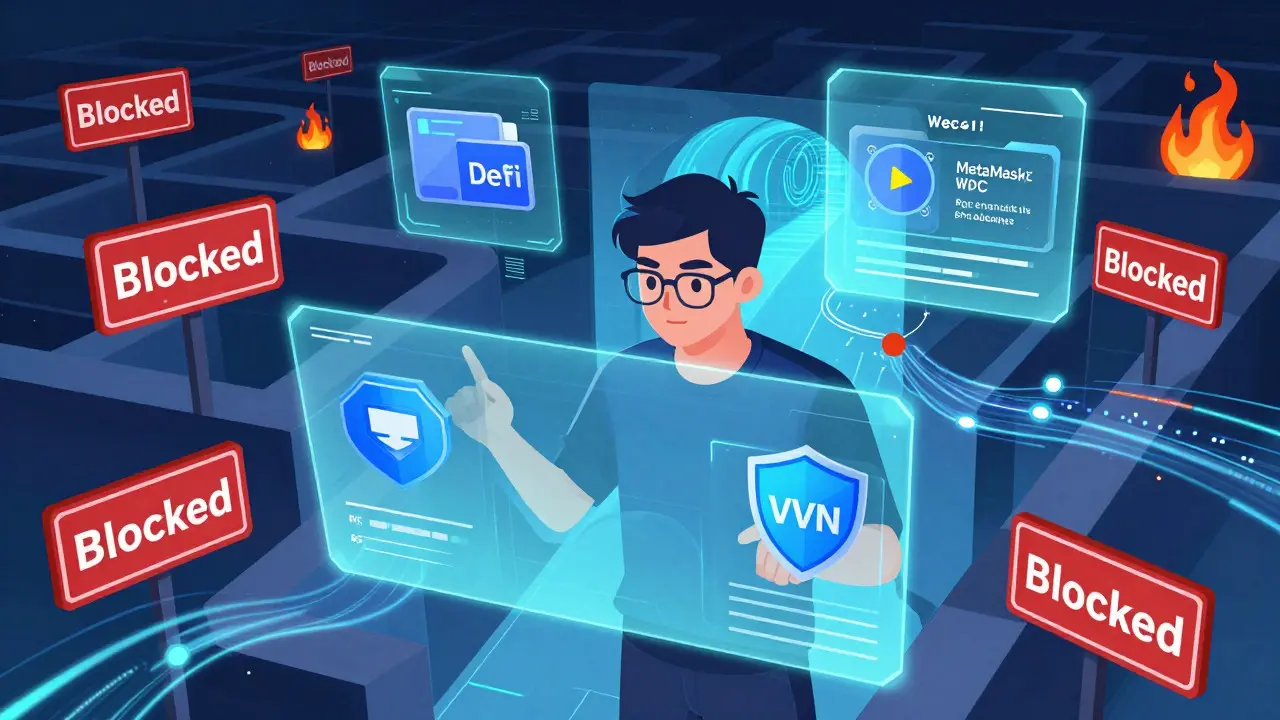
For tech-savvy users who want access to global decentralized finance (DeFi) protocols, the options are more creative. In February 2025, the CMB banned 46 platforms, including PancakeSwap. Did this stop DeFi usage? Not really. Instead, it pushed users toward self-custody wallets and custom configurations.
Here is the typical workflow for a Turkish DeFi user:
| Tool/Platform | Function | Regulatory Status |
|---|---|---|
| MetaMask | Non-custodial wallet connecting to Ethereum networks | Unregulated (Software) |
| Trust Wallet | Mobile wallet supporting multi-chain assets | Unregulated (Software) |
| Custom RPC Endpoints | Bypasses local IP restrictions to access DApps | Technical Workaround |
| VPNs | Hides IP location to access banned sites like Coinbase | Grey Area |
Users set up MetaMask or Trust Wallet and connect to non-Turkish RPC endpoints. This allows them to interact with Uniswap or other decentralized exchanges (DEXs) that aren’t directly blocked at the DNS level. A TÜİK statistic from Q1 2025 shows that 3.7 million Turkish addresses interacted with DeFi protocols despite the bans. Additionally, 68% of users utilize VPNs to access international platforms like Kraken or Coinbase. While not illegal per se, using a VPN to circumvent financial regulations exists in a grey area, though enforcement has largely focused on providers rather than end-users.
The Two-Tier Market: Compliant vs. Shadow
The result of these diverse methods is a segmented market. Research from Istanbul Technical University highlights a clear divide:
- The Compliant Tier: Licensed exchanges process 58% of total volume but serve only 35% of users. These are typically larger investors seeking security and legal recourse.
- The Shadow Tier: P2P and unregulated platforms handle 42% of volume but serve 65% of users. This group values anonymity, flexibility, and access to a wider range of tokens.
This segmentation creates arbitrage opportunities. Some traders buy Bitcoin on Paribu (compliant) and sell it on LocalBitcoins (P2P) to capture the price difference caused by liquidity gaps and regulatory friction. One user on the CryptoPazar forum reported consistent 3-5% profits using this method. However, this strategy requires careful management to avoid triggering MASAK alerts.
Risks and Challenges for Traders
Trading in this environment isn’t without risks. Here are the main hurdles:
- Account Freezes: As mentioned, exceeding transaction thresholds can lead to frozen accounts. Resolution takes 14-30 days via formal appeals to MASAK.
- Scams: The P2P market lacks robust dispute resolution. Always use escrow services when possible.
- Technical Complexity: Navigating DeFi requires intermediate technical skills. Setting up multi-wallet ecosystems and managing RPC endpoints can be daunting for beginners.
- Regulatory Uncertainty: The CMB continues to update its banned list. In May 2025, 17 additional platforms were added. What works today might be blocked tomorrow.
Despite these challenges, the market remains resilient. Dr. Ayşenur Acar from Ankara University notes that the payment ban has created a "paradoxical situation" where Turkey has one of the world’s most active trading markets but artificially restricted utility. This drives innovation in circumvention methods, turning regulatory arbitrage into a $3.2 billion industry employing thousands of professionals in VPN services and wallet development.
What’s Next for Turkish Crypto?
Looking ahead, the landscape is evolving. The CMB plans to launch a "Crypto Asset Gateway" by Q2 2026. This system aims to centralize all on/off ramps while maintaining the payment ban. If implemented effectively, it could reduce the need for shadowy workarounds by providing a single, regulated entry point for fiat-to-crypto conversions.
However, experts like Dr. Hasan Yılmaz predict that as long as the payment ban persists while trading is allowed, innovative workarounds will continue. The World Bank projects crypto trading volume in Turkey to reach $102 billion in 2025. The demand is too strong, driven by economic factors like inflation, to be suppressed by regulation alone.
For the average citizen, the advice is simple: diversify your methods. Use licensed exchanges for large, secure holdings. Utilize P2P for flexible, smaller transactions. And if you are technically inclined, explore DeFi for greater autonomy. Just stay informed, keep your records clean, and always verify the current status of any platform before depositing funds.
Is crypto trading legal in Turkey?
Yes, holding and trading cryptocurrency is legal in Turkey. However, using crypto as a means of payment is banned by the Central Bank of the Republic of Turkey (CBRT) since April 2021.
Which exchanges are licensed in Turkey?
As of early 2025, major licensed exchanges include Binance Turkey, Paribu, Bitlo, and Thodex (relaunched). These platforms are authorized by the Capital Markets Board (CMB) and require KYC verification.
Do I need a VPN to trade crypto in Turkey?
Not necessarily. Licensed domestic exchanges do not require a VPN. However, if you want to access international platforms like Coinbase or Kraken, or specific DeFi protocols that have been blocked, a VPN is commonly used by about 68% of advanced users.
What happens if I exceed the 15,000 TRY transaction limit?
Transactions above 15,000 TRY trigger stricter Anti-Money Laundering (AML) checks. Your account may be temporarily frozen while MASAK reviews the source of funds. Most users avoid this by splitting transactions or using multiple accounts.
Can I use DeFi in Turkey?
Yes, but indirectly. While some DEXs like PancakeSwap are banned, users can access DeFi protocols like Uniswap using non-custodial wallets (e.g., MetaMask) connected to custom RPC endpoints, bypassing local blocks.

amy miranda
It is absolutely scandalous that people are forced into this shadow economy just to preserve their wealth. The moral decay of a society that trusts code over community is palpable and deeply troubling for the future of human connection.
Ed Wallace
The irony is rich here. You ban payments but allow trading, so everyone just trades more frantically to hedge against inflation. It's like banning water in a desert but allowing people to dig wells. The Turkish market isn't breaking the rules; it's evolving around them because the rules ignore reality.
Subhash Kashyap Dm
typical state control narrative. they claim its for consumer protection but really its about maintaining fiat hegemony. MASAK is just the digital panopticon watching every move. split transactions arent workarounds they are survival tactics against a surveillance state that wants you broke and compliant
Billy Cunningham
So much drama for what is essentially just buying assets 📉
Ryan Robinson
honestly i think ppl make it way too complicated. if u just want to hold btc u dont need to be a hacker. just use binance or paribu and chill. why do we always gotta fight the system? cant we just let it be?
Joshua Hofford
I find it fascinating how culture shapes finance. In Turkey, crypto isn't just an investment; it's a cultural response to economic instability. The resilience shown by these users is admirable. They are adapting traditional values of saving and prudence to a new digital age. It shows that when people are given a choice, they will choose innovation over stagnation.
Jack Delasquez
the vpn part is crazy tho. who has time for that setup every day? seems like a huge pain in the neck for regular folks just trying to buy some stablecoins. hope the gateway thing actually works out soon so we can stop playing cat and mouse with the regulators
Earl Kott65
Oh, look at us, the 'innovative' traders! 😂 We're basically running a global arbitrage business while pretending to be normal citizens. But hey, if the Central Bank wants to play hardball, we'll just build our own table. Keep your bans, I'll keep my profits. 💸
Marcia Albert
Watching this unfold from afar is like observing a complex ecosystem in a terrarium. The shadows lengthen as the light of regulation tries to pierce through, creating intricate patterns of compliance and evasion. It’s a dance of necessity rather than rebellion.
Qolbina Islami
American exchanges are failing because they are too regulated!!! Turkey is winning because they have the spirit of the free market!! Don't listen to the elites who say P2P is risky. It is the purest form of capitalism. We are the pioneers of the new world order!!!
Pernelia Wahkan
You know what's wild? The technical workaround section reads like a recipe for disaster if you don't know what you're doing. RPC endpoints aren't exactly plug-and-play for grandma. But I respect the hustle. If I were stuck with a currency losing value daily, I'd probably set up a whole server rack in my basement just to stay ahead of the DNS blocks.
Aryan MISHRA
Let us analyze the macroeconomic implications herein. The bifurcation of the market into 'Compliant' and 'Shadow' tiers creates a dual-velocity money supply. This is inefficient. Friction costs are high. Arbitrage opportunities exist due to regulatory asymmetry. One must optimize their liquidity pools accordingly. Do not be a sheep. Be a wolf.
Ethan Yuwono
it is interesting how fear drives adoption. when you take away the safety net people jump higher. i wonder if this will spread to other countries facing similar inflation issues. the human spirit finds a way even when the doors are locked
Matthew Smith
we have lost our way as a species when we trust algorithms over central banks which are supposed to protect us. yet here we are enabling a black market under the guise of financial freedom. where is the morality in hiding your wealth from the state? surely there is a greater good to consider beyond individual profit margins
Harman Singh
i feel like nobody understands the real struggle here. its not just about money its about dignity. being treated like a criminal for trying to save your pension is heartbreaking. why does the system hate us so much? we just want to survive but everything is designed to drain us dry
SUBHAM CHOUDHURY
Keep pushing forward friends. The path may be rocky but the view from the top is worth it. Remember that every restriction is just a challenge waiting to be solved. Stay positive and keep learning new tools.
Joy Kwant
This entire situation is exhausting. People should just accept their fate instead of constantly fighting regulations. It's selfish to try to bypass laws meant for the collective good. Everyone needs to just sit down and shut up about their 'freedom'. It's not that deep.