How TVL Manipulation Inflates DeFi Metrics - What You Need to Know
TVL Manipulation Checker
TVL (USD)
Total value locked in protocol contracts
Protocol Token TVL (USD)
Value of protocol's own token locked
Recent Incentive Lock-Up (USD)
Value of temporary incentives
Liquidity Pool Depth (USD)
Actual liquidity available for trading
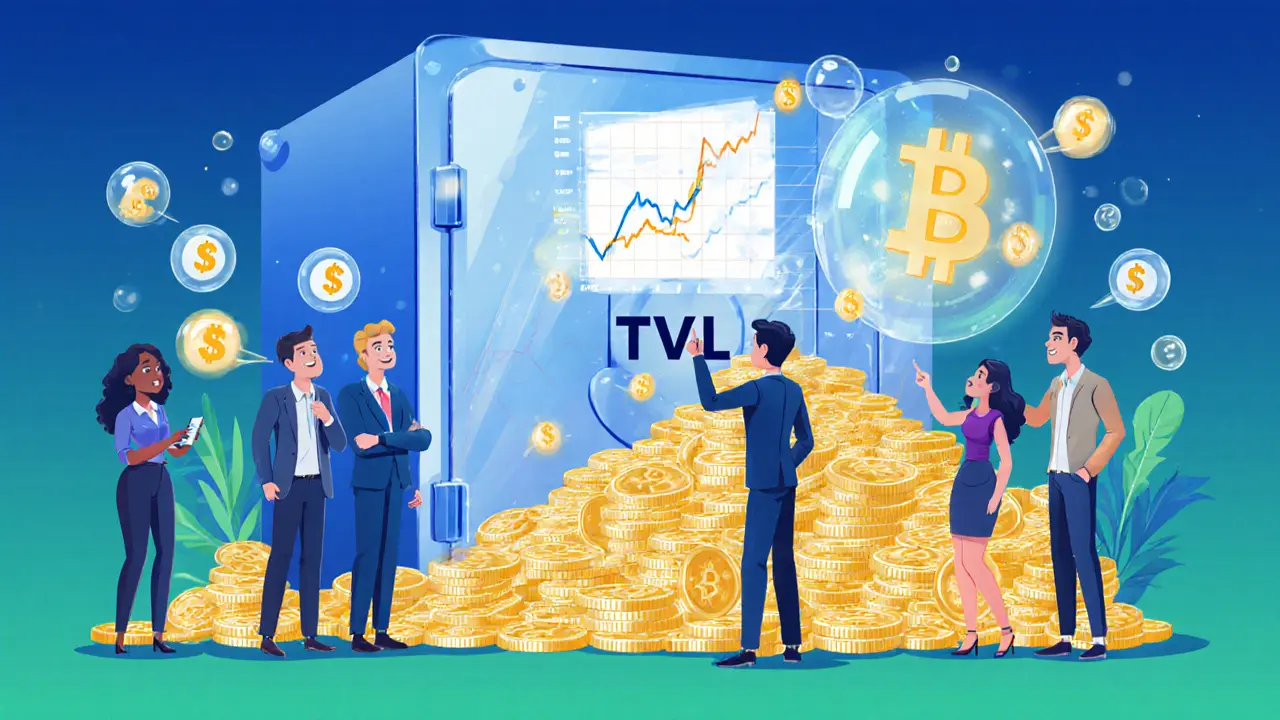
In decentralized finance, Total Value Locked (TVL) is the total US‑dollar value of crypto assets that are locked in a protocol, either as liquidity or as stake. Investors and developers look at TVL like a health score, assuming higher numbers mean a more trustworthy platform. That perception creates a lucrative incentive for projects to make those numbers look bigger than they really are. Understanding TVL manipulation is essential if you want to separate genuine growth from marketing tricks.
What TVL Actually Measures
DeFi protocol a set of smart contracts that provide financial services without a central intermediary calculates TVL by adding the USD value of every token held in its contracts. The simple formula looks like this:
TVL = Σ (Amount of Token_i × Price_i)
Each token price the market price of a cryptocurrency at a given moment is pulled from oracle feeds or decentralized exchanges, then multiplied by the quantity locked. The sum across all assets gives the headline figure you see on dashboards like DeFiLlama, DappRadar, or l2Beat.
Why TVL Became the DeFi Yardstick
The metric grew popular because it’s easy to compute and appears objective. A higher TVL usually signals strong user confidence, liquidity depth, and capital efficiency-all attractive signals for investors, developers, and partnerships. When DeFi projects raise funds, a polished TVL chart often tops pitch decks, and media outlets frequently rank platforms by their locked value.
Common Tactics Used to Inflate TVL
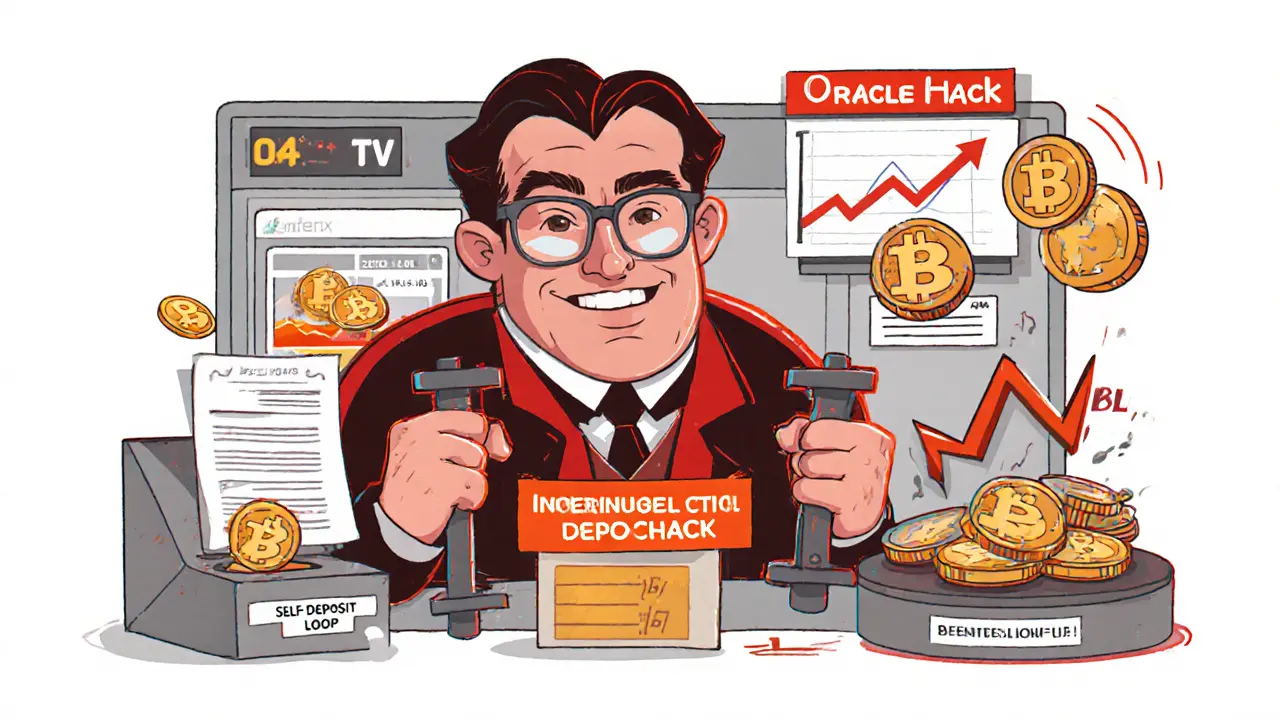
Because TVL directly influences perception and funding, some projects deploy deliberate tactics to boost the figure without delivering real economic value. Below are the most frequently observed methods:
- Self‑deposit loops: The protocol’s own token or a partner token is minted, sent to the contract, and counted as locked value, even though it can be withdrawn instantly.
- Price‑oracles manipulation: By coordinating trades on low‑liquidity markets, a project can temporarily spike the price the market price derived from an oracle source of a token it holds, inflating the TVL calculation.
- Incentive‑driven lock‑ups: Reward programs pay users with newly minted tokens that can only be locked for a short period, creating a burst of TVL that disappears once rewards vest.
- Collateral ratio tricks: Platforms that require over‑collateralization can artificially lower the ratio, allowing more assets to be counted as “locked” than would be safe under normal conditions.
- Cross‑chain mirroring: Assets are bridged to a secondary chain, locked there, and reported as additional TVL on the primary chain, even though the same underlying capital is counted twice.
Real‑World Patterns: What You Might See on a Dashboard
While specific project names are often omitted to avoid defamation, analysts have observed recurring patterns. A sudden TVL spike that coincides with a new token launch, followed by a rapid drop once the token price stabilizes, is a classic red flag. Similarly, a protocol that advertises a massive TVL increase during a “harvest” event-where users claim rewards-usually reflects a short‑term lock‑up rather than sustainable growth.
How to Spot Inflated TVL: Red Flags and Tools
Detecting manipulation requires a mix of on‑chain analysis and contextual awareness. Here are practical steps you can take:
- Check the smart contract the immutable code that controls asset locking and release for functions that mint or escrow the protocol’s own token.
- Compare the protocol’s TVL to its liquidity pool a pool of paired assets used for swapping or providing yield depth; a mismatch often indicates artificial inflation.
- Monitor the token’s price source. If the price is derived from a single, low‑volume exchange, it’s easier to manipulate.
- Look for “locked‑value spikes” that align with token emissions schedules or incentive campaigns.
- Use analytics platforms that break down TVL by asset type; a disproportionate share of a freshly launched token is suspicious.
Beyond TVL: Complementary Metrics for a Fuller Picture
Relying solely on TVL is risky. Below is a quick comparison of TVL against three alternative health indicators.
| Metric | What It Shows | Strengths | Weaknesses |
|---|---|---|---|
| TVL | Total USD value locked in contracts | Easy to compare across projects | Susceptible to price and incentive manipulation |
| Revenue / Fees Earned | Actual cash flow generated by the protocol | Direct link to economic sustainability | May be low for early‑stage projects |
| Active Users (DAU/MAU) | Number of unique addresses interacting | Reflects genuine community engagement | Can be inflated by bots or airdrops |
| Token Velocity | Rate at which a token circulates | Highlights utility vs speculation | Complex to calculate accurately |
When you pair TVL with revenue, user activity, and token velocity, you can gauge whether the locked capital is actually being used or just sitting idle to boost a headline number.

Industry Response and Emerging Safeguards
Recognizing the problem, several stakeholders are working on standards and tools:
- Data aggregators are adding “adjusted TVL” columns that filter out protocol‑minted tokens.
- Audit firms are reviewing incentive program the reward scheme that encourages users to lock assets designs for potential circular lock‑ups.
- Researchers are proposing a collateral‑adjusted TVL metric that normalizes for leverage and over‑collateralization.
- Regulators in several jurisdictions are drafting guidance that requires transparent reporting of TVL sources.
While none of these solutions fully eliminate manipulation, they raise the cost of pulling off a fake TVL surge and give savvy investors better data to act on.
Quick Takeaways
- TVL is a simple sum of locked asset values, but that simplicity makes it vulnerable.
- Common manipulation tactics include self‑deposit loops, oracle price tricks, and short‑term incentive lock‑ups.
- Red flags: sudden spikes, heavy reliance on a brand‑new token, and mismatched liquidity pool depth.
- Combine TVL with revenue, active users, and token velocity for a balanced view.
- Emerging adjusted‑TVL metrics and audit standards are improving transparency.
Frequently Asked Questions
What does TVL actually represent?
TVL (Total Value Locked) is the combined USD value of all assets that a DeFi protocol holds in its smart contracts, either as liquidity for swaps or as staked collateral for borrowing.
Why is TVL considered a risky metric on its own?
Because TVL depends on token prices and can be boosted by artificial lock‑ups, it may not reflect real usage, profitability, or sustainability of a protocol.
How can I tell if a protocol is inflating its TVL?
Look for sudden TVL spikes that line up with new token emissions, check whether the locked assets are primarily the protocol’s own token, and compare the TVL claim with on‑chain liquidity pool depth and fee revenue.
Are there better alternatives to TVL for evaluating DeFi projects?
Yes. Metrics such as monthly fee revenue, active user count, token velocity, and adjusted TVL (which excludes protocol‑minted tokens) give a more nuanced picture of health.
What steps are the industry taking to curb TVL manipulation?
Data aggregators are adding adjusted TVL columns, auditors are reviewing incentive designs, and some regulators are demanding transparent reporting of locked‑value sources.

Debra Sears
I've been poking around the TVL checker and noticed that the protocol token ratio often spikes right after a token launch.
That pattern usually indicates a self‑deposit loop, where the project mints its own token just to pad the numbers.
Also, keep an eye on the liquidity pool depth – when it’s considerably lower than the reported TVL, the value might be largely illiquid.
Cross‑checking the price source can reveal if the oracle is being gamed on a thin market.
Overall, pairing TVL with fee revenue and active user metrics gives a clearer picture of genuine growth.
Matthew Laird
Everyone’s hyped on TVL, but it’s just a numbers game to distract from the real risks.
Lara Decker
The data shows a classic case of inflated TVL: a sudden surge, heavy protocol‑token weighting, and a liquidity mismatch.
These are textbook red flags that any decent analyst would flag as manipulation.
Don’t be fooled by glossy charts; the underlying economics are often hollow.
Anna Engel
Oh great, another "record‑breaking" TVL figure – as if that magically makes the protocol trustworthy.
Sure, if you enjoy watching numbers get pumped by self‑minted tokens, go ahead.
But for anyone with a pulse, the warning signs are blindingly obvious.
Marcus Henderson
The recent surge in TVL figures across many DeFi platforms often masks underlying fragility.
A rigorous analysis must begin by dissecting the composition of the locked assets.
When a disproportionate share of the total value is derived from the protocol’s native token, the metric becomes self‑referential.
Moreover, reliance on price feeds from low‑liquidity exchanges opens avenues for oracle manipulation.
Short‑term incentive programs, while beneficial for user acquisition, can create artificial spikes that evaporate once vesting periods conclude.
Cross‑chain mirroring, if not transparently reported, effectively double‑counts the same capital, inflating the headline number.
Consequently, investors should juxtapose raw TVL with adjusted TVL that excludes protocol‑minted tokens.
Complementary metrics such as fee revenue provide insight into the protocol’s economic sustainability.
Active user counts reveal whether the locked assets are being utilized or merely idle.
Token velocity offers a window into whether the native token circulates meaningfully or merely sits as a placeholder.
Audits of smart‑contract code can uncover functions that enable self‑deposit loops, a classic manipulation technique.
Transparency around incentive schedules allows stakeholders to anticipate when TVL may contract.
Regulatory guidance emerging in several jurisdictions now mandates disclosure of TVL sources, which should improve data reliability.
Analytics platforms are responding by labeling “adjusted TVL” columns for user convenience.
In sum, a multi‑dimensional approach-combining TVL with revenue, usage, and token dynamics-yields a more robust assessment of DeFi health.
Jason Wuchenich
Nice breakdown! I think the key takeaway is to always validate TVL against real usage signals.
When the fee income climbs in step with the locked value, that’s a good sign the platform is doing actual work.
Otherwise, you’re just looking at a numbers illusion.
Andrew Lin
Look, i cant believe how many projects are pulling this cheap trick. they just mint their own token, lock it, and boom – TVL skyrockets. it's a total scam, and folks need to stop being so gullible. the market will sort them out soon, mark my words.
Jasmine Kate
Wow, the drama around TVL manipulation never ends. I watched a protocol pump its numbers overnight with a new token drop, only to see the value crash the next day. That's the kind of rollercoaster I signed up for when I started DeFi, and I'm still not over it.
Franceska Willis
Honestly, the whole self‑deposit loop thing is like watching a magician pull a rabbit out of a hat – you know there's a trick, but you still feel a little fooled.
When you see the protocol token dominating the TVL chart, that's your cue to dig deeper.
EDWARD SAKTI PUTRA
It's pretty clear that relying solely on TVL can be misleading. Looking at fee revenue adds that extra layer of confidence.
Heather Zappella
From a cultural standpoint, the proliferation of TVL‑centric reporting reflects a broader narrative of “bigger is better” that pervades many tech sectors.
However, a nuanced understanding requires us to interrogate the provenance of that value, especially when native tokens constitute a large fraction.
In practice, cross‑referencing adjusted TVL with onboarding metrics yields a more balanced assessment.
Kate O'Brien
Ever notice how every time a new DeFi protocol pops up, they claim some astronomical TVL? That's exactly what the shadowy elite want you to believe – a way to keep us distracted while they pull the strings behind the scenes.
Ricky Xibey
Quick tip: always check the liquidity depth. If it’s low compared to TVL, that’s a red flag.
Caitlin Eliason
Honestly, the hype machine loves TVL numbers so much that they’ll spin any metric into gold ✨. But when you peel back the layers, you’ll often see a thin slice of real value 😬. Keep your eyes peeled! 🚀
Melanie LeBlanc
Great overview! The colorful analogy of TVL being a “headline score” really hits home. It’s crucial to remember that underneath the flash, the substance is what matters.
Nicholas Kulick
Adjusted TVL plus fee revenue gives a clearer health picture.
manika nathaemploy
i think tvl is okay but when u see a lot of new token in the lock it feels sus. better to check the real usage data.
Mark Bosky
In light of the presented evidence, it is incumbent upon investors to adopt a diversified analytical framework. Incorporating adjusted TVL, fee accruals, and active user metrics constitutes a prudent approach to mitigate exposure to superficial volatility.
Richard Bocchinfuso
i dunno why ppl trust tvl so much lol. if they cant even see real liquidity they r just gettin scammed.
Mark Fewster
When evaluating TVL, one must consider, not only the sheer magnitude, but also the composition, the source of price data, the liquidity depth, and, crucially, the proportion of native tokens, which often reveals, hidden inflationary practices.
Sal Sam
The protocol’s TVL metric suffers from a classic case of “double‑counting” due to cross‑chain asset mirroring, which inflates the aggregate value without delivering net liquidity. This misrepresentation skews the risk‑adjusted return models and undermines proper capital allocation decisions.