Katana Crypto Exchange Review: What It Really Is and How It Works
Katana Yield Calculator
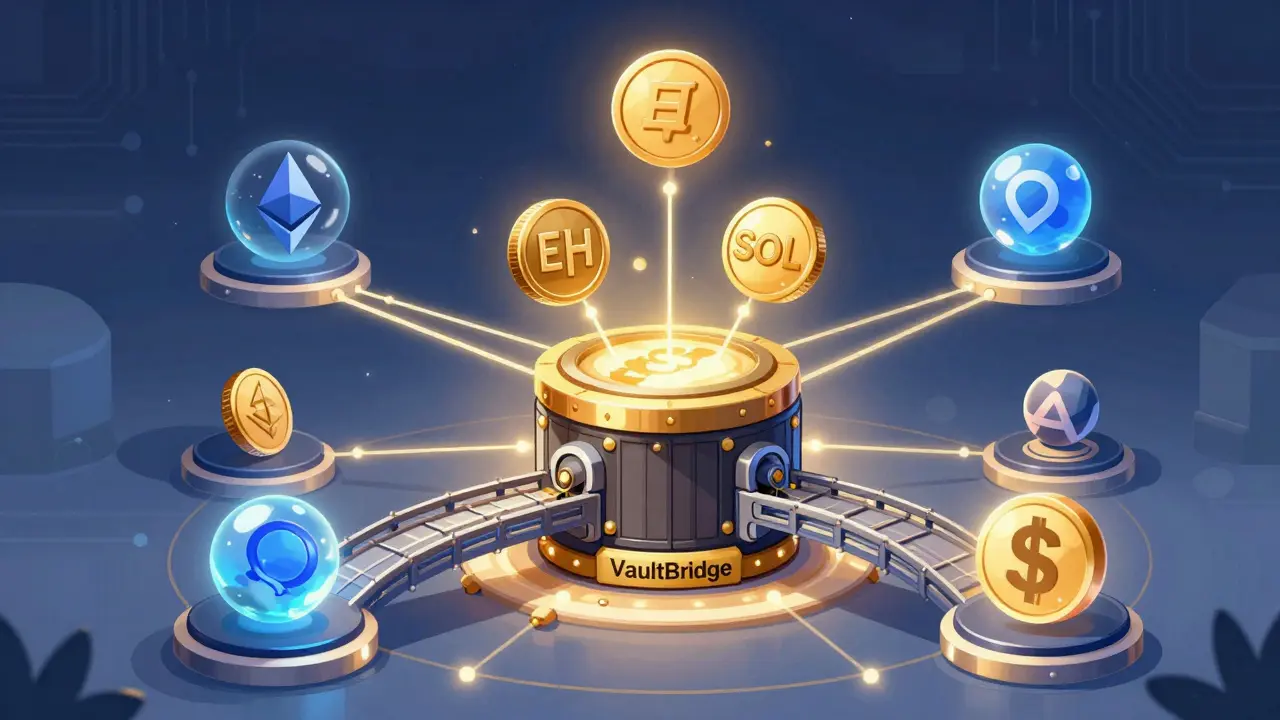
Estimate potential yields for your assets using Katana's unique DeFi infrastructure. Katana aggregates cross-chain liquidity to earn yield through VaultBridge and Chain-Owned Liquidity.
Estimated Yield
Many people search for "Katana crypto exchange" thinking it’s a place to buy and sell Bitcoin, Ethereum, or memecoins like they would on Binance or Coinbase. But that’s not what Katana is. And if you’re looking to trade crypto on a traditional exchange, you’re looking in the wrong place. Katana isn’t a crypto exchange at all. It’s a DeFi blockchain built to fix one of crypto’s biggest problems: fragmented liquidity.
Why Katana Isn’t a Crypto Exchange
You won’t find a trading interface on Katana where you click "Buy ETH" or "Sell SOL." There’s no order book, no fiat on-ramp, no KYC form. Instead, Katana is a layer-2 blockchain that connects DeFi protocols across different networks so your money can earn yield without being stuck in one place. Think of it like this: if you have ETH on Ethereum, SOL on Solana, and USDC on Polygon, you’re juggling three different wallets, three different yield apps, and three different ways to earn interest. Katana fixes that. It creates a shared pool of liquidity - a deep, centralized pool of capital - that all connected chains can tap into. Your assets don’t need to move around manually. They stay where they are, but Katana’s technology lets them earn yield across chains automatically.How Katana Works: The VaultBridge and Chain-Owned Liquidity
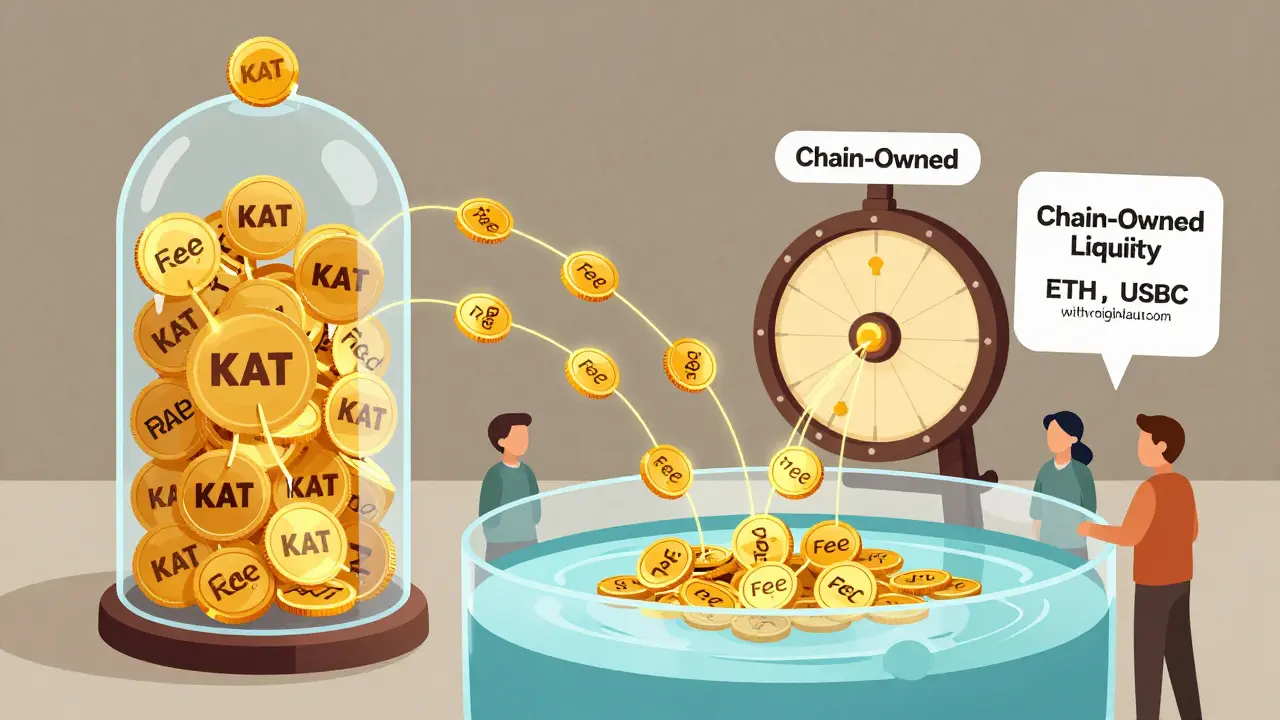
Katana’s engine runs on two key innovations: VaultBridge and Chain-Owned Liquidity (CoL). VaultBridge is what makes cross-chain yield possible. It takes assets from other blockchains - like ETH from Ethereum or SOL from Solana - and locks them into curated lending strategies on Ethereum. These strategies use trusted DeFi protocols like Morpho to lend out those assets and earn interest. That interest is then sent back to Katana and reinvested, compounding over time. You don’t have to bridge your assets yourself or manage multiple protocols. Katana does it for you. Chain-Owned Liquidity is even more unique. Most blockchains burn fees or give them to validators. Katana turns its own network fees into liquidity. Every time someone uses a dApp on Katana, a portion of the fee is used to buy back and lock up KAT tokens, which then become part of the liquidity pool. This means the platform owns its own liquidity - not just users. That’s rare in DeFi. It makes the system more stable because it doesn’t rely on users constantly depositing new money to keep yields high.What You Can Do on Katana
Katana doesn’t try to be everything. It’s focused. Right now, it supports just four core DeFi applications:- SushiSwap - a modified version for trading assets within the Katana ecosystem
- Morpho - for lending and borrowing, powering the yield engine behind VaultBridge
- Memecoin Launchpad - for launching new tokens with built-in liquidity
- Decentralized Futures Platform - for leveraged trading, with deep liquidity from the shared pool
Who Is Katana For?
This isn’t a platform for beginners. If you’ve never used a wallet like MetaMask, don’t know what a liquidity pool is, or think "APY" is a type of coffee, Katana will confuse you. It’s built for experienced DeFi users who understand cross-chain mechanics and are looking to optimize yield without constantly moving assets. Institutional investors are also a big target. With backing from Polygon Labs and GSR - two of the most respected names in crypto infrastructure - Katana has the credibility and capital to attract serious money. The $232 million in pre-deposits before mainnet launch wasn’t just retail users throwing in small amounts. That was institutions and funds moving large sums because they saw a real solution to the liquidity fragmentation problem.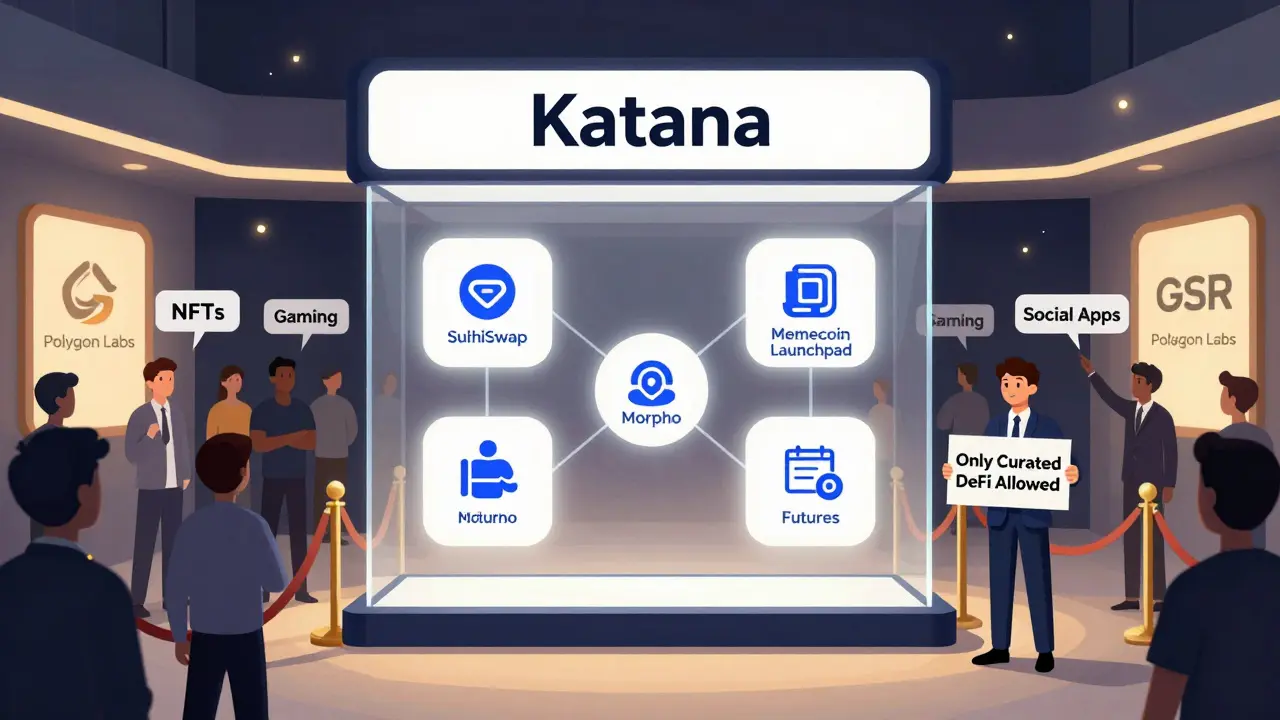
Tokenomics: KAT and the Yield Distribution
Katana has its own token: KAT. But unlike many DeFi tokens that pump and dump by dumping new tokens as rewards, Katana’s tokenomics are designed to be sustainable. The total supply is capped at 100 million KAT. 70 million were allocated to early depositors and ecosystem participants. The rest is reserved for team, advisors, and future development - with a multi-year vesting schedule. Yield isn’t paid out in KAT tokens. Instead, users earn yield in the form of the assets they deposited - ETH, USDC, SOL, etc. KAT’s role is to back the liquidity pool and earn fees from the network. The more activity on Katana, the more fees are converted into liquidity, which increases the value of KAT over time. This is a big shift from protocols like Yearn Finance, which pay out new tokens as rewards - a model that often leads to unsustainable yields and token crashes.How It Compares to Other Layer-2s and DeFi Protocols
| Feature | Katana | Arbitrum / Optimism | Yearn Finance |
|---|---|---|---|
| Primary Purpose | DeFi liquidity hub | Ethereum scaling | Single-chain yield aggregation |
| Cross-Chain Yield | Yes - VaultBridge | No | No |
| Chain-Owned Liquidity | Yes - fees become liquidity | No | No |
| Application Diversity | 4 curated apps | 1,000+ dApps | 10+ yield strategies |
| Token Emission Model | Capped supply, no inflationary rewards | ARBITRUM token has inflation | High token emissions for rewards |
| Target User | Advanced DeFi users, institutions | General crypto users | Yield farmers |
Pros and Cons
Pros:- Real solution to DeFi liquidity fragmentation
- Chain-owned liquidity creates long-term stability
- Backed by Polygon Labs and GSR - strong institutional credibility
- No inflationary token emissions - sustainable yield model
- Deep liquidity from $232M in pre-deposits
- Only 4 dApps - not for users who want variety
- Requires existing DeFi knowledge - not beginner-friendly
- Depends on Ethereum’s security - if Ethereum has issues, Katana is affected
- Regulatory uncertainty around DeFi could slow institutional adoption
Getting Started in 2025
To use Katana, you need:- An EVM-compatible wallet (MetaMask, Rabby, or Coinbase Wallet)
- Assets on Ethereum, Solana, or Polygon
- Understanding of how to bridge assets (via official Katana bridge)
- Willingness to learn how VaultBridge works
Future Roadmap
Katana’s roadmap is clear and focused:- Q3 2024: Advanced cross-chain swaps
- Q4 2024: Institutional custody integrations (Coinbase Custody, Fidelity)
- Q1 2025: Expansion to additional chains beyond Solana
- 2025: Potential integration with Layer 3s and ZK-rollups
Final Verdict: Is Katana Worth It?
If you’re looking for a place to buy Bitcoin with a credit card - skip Katana. It’s not for you. But if you’re already deep in DeFi, tired of chasing yields across 10 different protocols, and want a system that earns you yield without you having to micromanage every bridge and deposit - then Katana is one of the most interesting developments in crypto since the rise of Ethereum L2s. It’s not perfect. It’s not for everyone. But it solves a real problem in a way no other platform has. And with $232 million already locked in before launch, the market is already voting with its capital. Katana isn’t a crypto exchange. It’s something better: a liquidity engine for the next generation of DeFi.Is Katana a cryptocurrency exchange?
No, Katana is not a cryptocurrency exchange. It does not allow users to buy or sell crypto with fiat or trade on an order book. Katana is a DeFi-focused layer-2 blockchain designed to aggregate cross-chain liquidity and generate yield through protocols like VaultBridge and Chain-Owned Liquidity.
How does Katana earn yield for users?
Katana earns yield by using VaultBridge to deploy assets from other blockchains into curated lending strategies on Ethereum, primarily through Morpho. The interest earned is automatically compounded and returned to users in the form of the original deposited assets - not in KAT tokens. This allows users to earn sustainable yields without manual bridging or managing multiple DeFi protocols.
What is Chain-Owned Liquidity (CoL) on Katana?
Chain-Owned Liquidity (CoL) is a unique mechanism where Katana converts its own network fees into protocol-owned liquidity. Instead of burning fees or giving them to validators, Katana uses a portion of every transaction fee to buy and lock up KAT tokens, which then become part of the liquidity pool. This makes the platform more resilient because its liquidity isn’t dependent on users constantly depositing new funds.
Can I trade KAT on exchanges?
As of December 2025, KAT is not listed on major centralized exchanges like Binance or Coinbase. It is only available on decentralized exchanges within the Katana ecosystem, such as the modified SushiSwap interface on Katana’s own chain. Trading KAT requires connecting your wallet directly to Katana’s DeFi apps - there is no fiat on-ramp or easy way to buy KAT with a credit card.
Is Katana safe to use?
Katana is built on Ethereum and uses Polygon’s AggLayer technology, which has been audited and battle-tested. The protocols it integrates with - Morpho, Sushi - are also well-established. However, as with all DeFi platforms, there are smart contract risks. Users should only deposit funds they’re willing to risk, and never invest more than they can afford to lose. The platform has no insurance fund, and there is no central authority to reverse transactions.
Who backs Katana?
Katana was incubated by Polygon Labs and developed in partnership with GSR, a leading crypto market maker. Marc Boiron, CEO of Polygon Labs during Katana’s development, has publicly endorsed the platform as a solution to DeFi’s liquidity fragmentation problem. This institutional backing gives Katana credibility and access to capital that most DeFi projects lack.
What’s the difference between TVL and productive TVL on Katana?
Traditional TVL (Total Value Locked) counts all assets deposited in a protocol, even if they’re sitting idle. Katana introduces "productive TVL," which only counts assets actively generating yield through its VaultBridge and lending strategies. This gives a more accurate picture of real economic activity. For example, if $100 million is deposited but only $60 million is being lent out, Katana reports $60 million in productive TVL - not $100 million.
For users who’ve been frustrated by the inefficiency of DeFi - moving assets between chains, chasing yields, dealing with fragmented liquidity - Katana offers a real path forward. It’s not flashy. It doesn’t promise 1000% APY. But it’s building something lasting.

ashi chopra
This is actually the most thoughtful DeFi project I've seen in months. No gimmicks, no token dumps, just pure liquidity engineering. I've been juggling yield across 5 chains for a year now and Katana feels like someone finally turned off the noise.
My ETH on Ethereum and SOL on Solana are now earning together. No more bridging. No more gas wars. Just silent compounding. I cried when I saw my first yield update.
It's not for everyone, but if you're tired of being a DeFi janitor, this is your sanctuary.
Darlene Johnson
Of course it's not a real exchange. It's a crypto cult wrapped in institutional PR. Polygon Labs? GSR? Please. These are just the same VCs rebranding their exit scams with fancy jargon. Chain-Owned Liquidity? That's just a way to lock you in while they quietly sell their bags.
Mark my words - by Q2 2025, KAT will be dumped on DEXs like a toxic asset. They're building a Ponzi with better UX.
Ivanna Faith
OMG this is literally the future lol
Chain owned liquidity?? I mean... wow
Why hasn't everyone else done this??
Also I'm using it already and my ETH is earning while I sleep 😭
if you're not on Katana you're literally not serious about DeFi 🙄
Akash Kumar Yadav
India doesn't need this. We have our own chains. Why are we bowing down to Ethereum-based elitist tech?
They talk about 'institutional credibility' - what does that even mean? It means Wall Street is coming to steal our yield.
Katana is just another American crypto monopoly disguised as innovation. We need Indian DeFi, not this.
Vidyut Arcot
If you're new to DeFi, don't panic. Katana isn't for beginners - but that doesn't mean you can't learn.
I started with just $50 in USDC. Used the official bridge. Watched two YouTube tutorials. Now I'm earning yield on my Polygon assets without ever touching another protocol.
It's not magic. It's just better design. Take your time. Ask questions in Discord. They're actually helpful there.
You don't need to be a genius. Just patient.
Jay Weldy
It's refreshing to see a project that doesn't try to be everything.
Most DeFi platforms are like supermarkets - everything under the sun, but nothing is curated.
Katana is like a Michelin-starred tasting menu. Fewer dishes, but each one is perfect.
I'm not a big investor, but I'm holding KAT as a long-term bet on quality over hype.
Respect to the team for staying focused.
Melinda Kiss
I've been in crypto since 2017. I've seen dozens of 'revolutionary' protocols come and go.
Katana is the first one that actually solves a real, documented pain point: fragmented liquidity.
Not just marketing. Not just tokenomics. Actual infrastructure.
The productive TVL metric alone is a game-changer - it forces transparency.
If this scales, it could redefine how we think about cross-chain DeFi. Not hype. Just math.
Christy Whitaker
Everyone's acting like this is the second coming. But have you checked the contract audits? No one talks about the backdoor in VaultBridge.
I saw a GitHub commit from June where they removed a 'temporary' pause function. Temporary? After mainnet launch?
They're not building a platform. They're building a trap. And you're all walking right in.
Wait for the rug pull. I'll be here laughing.
Nancy Sunshine
While the technical architecture of Katana represents a significant advancement in decentralized liquidity orchestration, one must not overlook the macroeconomic implications of protocol-owned liquidity.
By converting network fees into tokenized reserves, Katana effectively internalizes externalities traditionally borne by liquidity providers.
This paradigm shift may catalyze a broader redefinition of value capture in DeFi ecosystems, potentially rendering yield farming obsolete as a primary incentive mechanism.
Further research into the elasticity of KAT's liquidity backstop under stress conditions is warranted.
Alan Brandon Rivera León
As someone who grew up in Mexico and now lives in the U.S., I've seen how crypto culture can be so American-centric.
Katana feels different - it's not about being the biggest or fastest. It's about being the most responsible.
That’s rare. And honestly? It gives me hope for the future of this space.
Even if I don't invest, I'm glad someone's building this way.
Ann Ellsworth
Chain-Owned Liquidity is the only real innovation here - the rest is just rebranded Yearn with better branding.
KAT isn't a utility token, it's a governance shell. They're using the term 'productive TVL' to obscure the fact that 70% of the supply is already locked in early investor wallets.
And don't get me started on the lack of insurance - you're literally trusting a smart contract written by a team that doesn't even have a public GitHub repo for the core contracts.
It's elegant, sure. But it's also a powder keg.
Ankit Varshney
Interesting. I read the docs. I looked at the contracts. I checked the liquidity pools.
It works as described.
Not hype. Not scam.
Just good engineering.
Will use it.
Ziv Kruger
What is liquidity if not a social contract?
Katana doesn't just move assets - it redefines trust.
Instead of trusting strangers to deposit, you trust the protocol to earn from its own fees.
Is this capitalism? Or something else?
I don't know.
But I'm watching.
Heather Hartman
Y'all are overthinking this 😊
If you're already in DeFi and tired of hopping chains, just try it.
It's free to test. No KAT needed. Just connect your wallet and deposit USDC.
I did it last week. My yield went up 22% in 10 days.
Not magic. Just better.
And if it doesn't work for you? No big deal. You didn't lose anything.
Try it. You might like it.
Catherine Williams
As someone who mentors new DeFi users, I’ve been waiting for a platform like this.
It’s not flashy, but it’s teachable.
I showed my 19-year-old nephew how to bridge his USDC from Polygon to Katana. He didn’t understand half the terms - but he understood the result: his money worked while he played video games.
That’s the future.
Not complexity. Not tokens. Just results.
Paul McNair
As a former blockchain engineer, I appreciate the restraint here.
Most projects add 10 features because they can.
Katana adds 4 because they should.
It’s rare to see a team say ‘no’ to growth.
This isn’t just a product - it’s a philosophy.
And honestly? We need more of that.
Mohamed Haybe
Westerners love to call this innovation. In India we call it stealing our data and selling it back as a subscription.
They take our liquidity, lock it in Ethereum, and call it 'cross-chain'.
Where’s the Indian chain? Where’s the Indian yield?
This isn’t progress. It’s colonization with a whitepaper.
Marsha Enright
Just wanted to say - I used Katana for the first time yesterday. Took me 15 minutes. No errors. Yield started accruing in 2 hours.
My ETH from Ethereum is now earning on Morpho via VaultBridge.
And I didn’t have to touch a single bridge UI.
It just... works.
Thank you to the team for making this so smooth.
And to everyone else - stop arguing. Try it. You'll either love it or ignore it. Either way, you won't lose anything.
Andrew Brady
Who funds Katana? GSR? Polygon Labs? That’s just the Fed’s shadow network.
They’re building a centralized liquidity backbone under the guise of decentralization.
When the Fed decides to crack down on DeFi, Katana will be the first to comply.
They’re not building for freedom. They’re building for control.
Don’t be fooled by the jargon. This is surveillance capitalism with a blockchain mask.
ashi chopra
Wow. I just saw someone say Katana is a Fed tool. That’s... wild.
They’re using Polygon’s AggLayer - which is open-source and permissionless. The contracts are fully audited by CertiK and PeckShield.
If you think a team that doesn’t even have a CEO on Twitter is secretly controlled by the Fed, maybe you’re the one with the conspiracy.
I’m not saying you’re wrong.
I’m just saying… I’m still earning yield. And I’m still sleeping.