Klickl Crypto Exchange Review: Is This Web3 Banking Platform Safe?

Imagine trying to send money internationally and having it arrive in seconds, not days, while simultaneously buying Bitcoin with that same balance. Sounds like a fantasy? That is exactly what Klickl promises to deliver as a hybrid of traditional banking and cryptocurrency infrastructure. But here is the catch: while the platform boasts heavy regulatory backing from Abu Dhabi and Poland, third-party security auditors have given it a surprisingly low score. So, is Klickl the future of finance or just another risky venture?
What Exactly Is Klickl?
Klickl is a regulated PayFi (Payment Finance) ecosystem that bridges the gap between conventional fiat banking and digital assets. Unlike standard exchanges where you trade coins and leave, Klickl operates more like a bank that happens to speak fluent blockchain. Headquartered in Abu Dhabi, it functions under the strict oversight of the Financial Services Regulatory Authority (FSRA) within the Abu Dhabi Global Market (ADGM). This isn't just marketing fluff; ADGM is known for being one of the most rigorous financial zones globally.
The platform integrates spot trading, over-the-counter (OTC) deals, and contract trading into a single interface. It also offers virtual IBANs, which allow users to hold fiat currencies alongside their crypto holdings. If you are looking for a place to simply buy Dogecoin, this might be overkill. But if you need to pay suppliers in Europe using USDT settled instantly, Klickl’s architecture makes sense. It positions itself as a full-stack solution, claiming that less than 1% of competitors can match its comprehensive service range.
Regulatory Compliance and Trust Factors
Trust is the currency of crypto, and Klickl tries hard to earn it through regulation. Beyond its UAE roots, the platform is registered in Poland’s register of virtual currency activities (entry RD WWW-930). This means it complies with EU Directive 2015/849 regarding anti-money laundering (AML) and counter-terrorist financing. For users in Europe, this provides a layer of legal comfort that many offshore exchanges lack.
Furthermore, Klickl recently achieved PCI DSS v4.0.1 certification. If you don’t know what that is, think of it as the gold standard for handling credit card data securely. ATSEC confirmed that Klickl’s payment systems meet these stringent requirements. This suggests they take user data seriously, at least on the compliance front. However, regulation doesn’t always equal safety. It equals legality. You still need to look at how they handle your actual funds.
The Security Reality Check
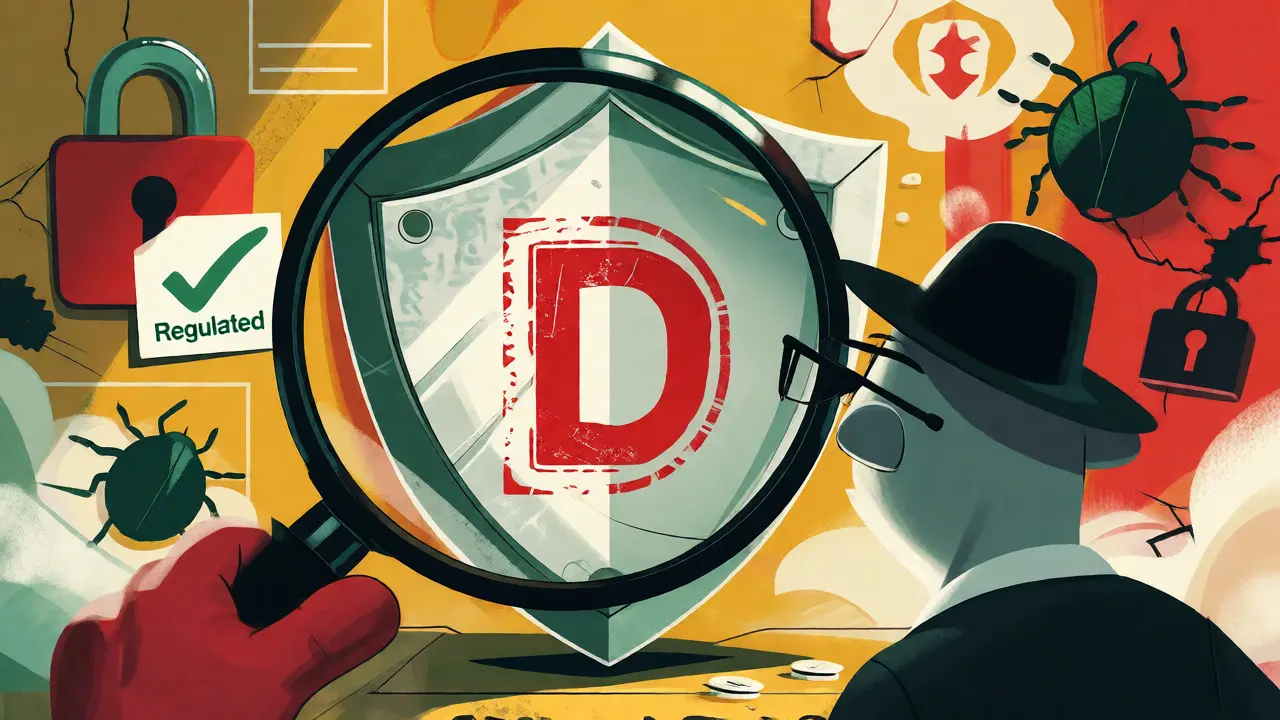
Here is where things get tricky. While Klickl markets itself as "bank-grade," independent evaluators see it differently. CER.live, a platform that ranks exchange safety, awarded Klickl a security rating of 'D' with a 24% score. Why so low? The report indicates the exchange lacks an approved penetration test and does not run an ongoing bug bounty program. In the crypto world, bug bounties are crucial because white-hat hackers constantly probe for vulnerabilities.
Does a 'D' rating mean you will lose your money? Not necessarily. Many reputable platforms operate without publicized bug bounties. However, it does mean there is less external validation of their code integrity compared to giants like Coinbase or Kraken. Klickl claims to use proprietary modular technology, but until we see a transparent audit of that specific stack, caution is warranted. If you plan to store large amounts of value on Klickl, consider whether you are comfortable with this level of third-party scrutiny.
The KLK Token and Ecosystem Utility
Every modern crypto platform needs a native token, and Klickl has KLK. Unlike the platform itself, which is the service provider, KLK is the utility token powering the network. Governed by the KLK Foundation, it has a fixed supply of 1 billion tokens. Users stake KLK to earn rewards, participate in governance decisions, and access lower fees on the platform.
Think of KLK as the fuel for the engine. You don’t need to buy KLK to use the basic banking features, but holding it unlocks perks. The token’s value is tied to the adoption of the Klickl ecosystem. If more businesses use Klickl’s SaaS solutions-described as the "Shopify for Digital Assets"-demand for KLK could rise. However, like all altcoins, KLK is subject to market volatility. Don’t confuse the stability of the underlying fiat services with the price action of the token.
Who Should Use Klickl?
Klickl isn’t for everyone. It shines for specific user profiles:
- Cross-Border Businesses: If you frequently move money between jurisdictions and want instant settlement via stablecoins like USDT or USDC, Klickl’s infrastructure saves time and fees.
- Compliance-Conscious Users: If you live in the EU or UAE and prefer dealing with entities under AML/KYC supervision rather than anonymous DeFi protocols, Klickl fits well.
- SaaS Partners: Developers and entrepreneurs who want to launch their own crypto-branded cards or wallets without building the backend from scratch can leverage Klickl’s modular API.
Conversely, if you are a casual trader looking for the highest liquidity and deepest order books for meme coins, you might find Klickl’s volume lower than Binance or Bybit. It is a specialized tool, not a general-purpose casino.
| Feature | Klickl | Standard CEX (e.g., Binance) |
|---|---|---|
| Primary Focus | PayFi / Banking Integration | Trading Volume / Speculation |
| Regulation | FSRA (UAE), KNF (Poland) | Varies widely by jurisdiction |
| Security Rating (CER.live) | D (Uncertified/Pending Audit) | A/B (Often Audited) |
| Fiat Support | Virtual IBANs, Instant Settlement | Bank Transfers, P2P Markets |
| Native Token | KLK (Governance/Staking) | BNB, FTT, etc. (Fee Discounts) |

Potential Risks and Pitfalls
You must read the fine print. Klickl explicitly states it cannot be held liable for actions of third parties providing investment advice on its platform. More importantly, they disclaim accountability if you withdraw your crypto to a wallet outside their control. Once those keys leave their custody, any loss due to phishing or user error is on you.
Also, keep an eye on the regulatory landscape. While current compliance is strong, crypto laws change fast. A platform operating under Polish and UAE rules today might face new restrictions tomorrow. Always diversify your storage. Do not keep 100% of your net worth on any single centralized entity, no matter how regulated it claims to be.
Final Verdict
Klickl represents an ambitious attempt to merge the reliability of banking with the speed of crypto. Its regulatory footprint is impressive, offering peace of mind for users who fear unregulated offshore exchanges. The integration of virtual IBANs and instant cross-border settlements solves real pain points for businesses and international users.
However, the security rating remains a red flag for risk-averse investors. The lack of a public bug bounty program and a 'D' safety score from CER.live suggests that while the legal framework is solid, the technical fortress may still be under construction. If you choose to use Klickl, treat it as a transactional hub rather than a long-term vault. Move funds in when needed, execute your transfers, and move them out to cold storage if you plan to hold for years.
Is Klickl safe to use?
Klickl is legally compliant and regulated in the UAE and Poland, which provides a good baseline for trust. However, independent security ratings are currently low (Grade D) due to a lack of public penetration testing. It is safer than unregulated exchanges but requires caution compared to fully audited top-tier platforms.
What is the KLK token used for?
The KLK token is the native utility token of the Klickl ecosystem. It is used for staking rewards, participating in network governance, and accessing premium features or reduced fees on the platform. It has a fixed supply of 1 billion tokens.
Can I hold fiat currency on Klickl?
Yes, Klickl offers virtual IBANs that allow users to hold and manage fiat currencies alongside cryptocurrencies. This feature supports instant cross-border settlements and integrates traditional banking capabilities with crypto transactions.
Who regulates Klickl?
Klickl is primarily regulated by the Financial Services Regulatory Authority (FSRA) in Abu Dhabi Global Market (ADGM). Additionally, it is registered with the Polish Financial Supervision Authority (KNF) for virtual currency activities, ensuring compliance with EU anti-money laundering directives.
Does Klickl offer cold storage for crypto?
Klickl emphasizes bank-grade custody solutions, which typically involve a mix of hot and cold storage to ensure both accessibility and security. They claim to use encrypted POS systems and secure key management, though specific breakdowns of asset allocation between hot/cold wallets are not always publicly detailed in real-time.