LNR Lunar Crystal NFT Airdrop: What Actually Happened and Why It Disappeared
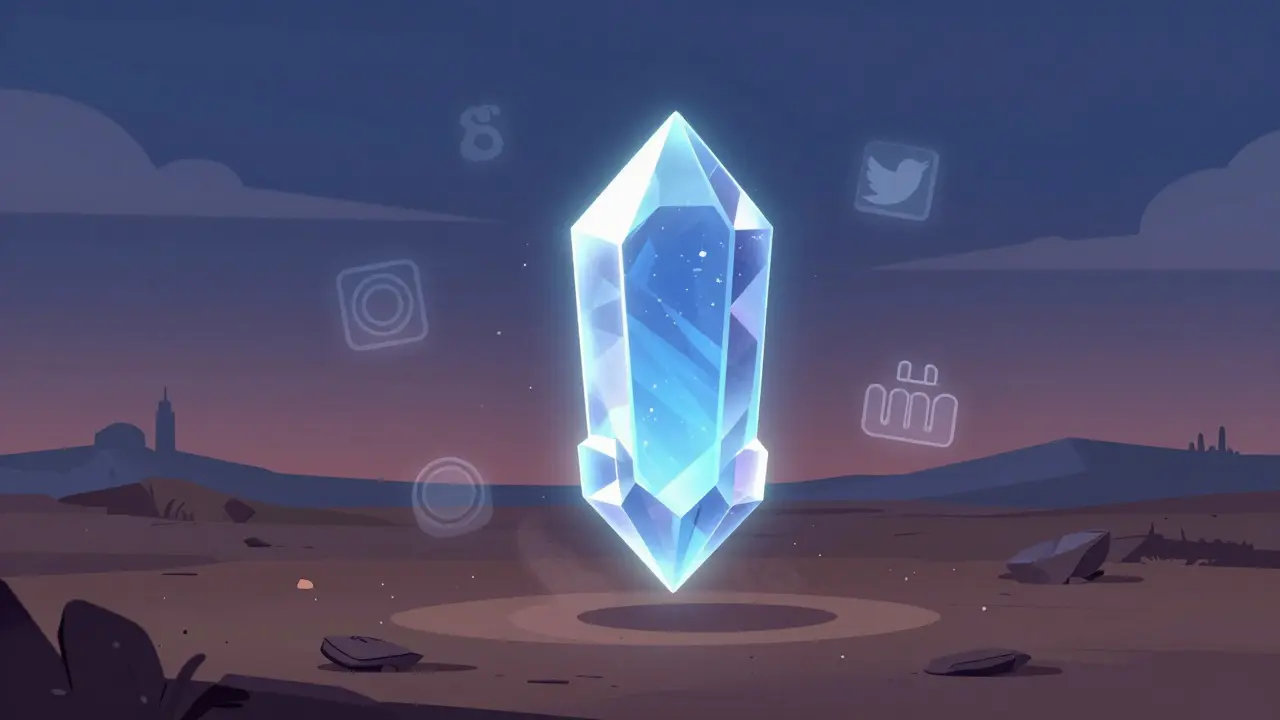
The LNR Lunar Crystal NFT airdrop was never meant to be a long-term project. It was a quick burst of hype in early 2022 - one of hundreds that flooded the crypto space during the last bull run. If you’re reading this now, in late 2025, you’re probably wondering: did anyone actually get these NFTs? Was it real? And why doesn’t anyone talk about it anymore?
The short answer: it faded out. Quietly. Completely. And here’s why that matters.
What Was the Lunar Crystal NFT Airdrop?
Lunar, a DeFi platform built on Binance Smart Chain (BSC), launched the Lunar Crystal NFT airdrop on March 1, 2022. The goal? Get people to engage with their ecosystem by promising at least one NFT to anyone who completed simple tasks. No upfront cost. No minting fee. Just sign up, link your wallet, follow their socials, and claim your NFT.
The LNR token was their native currency, designed to reward holders with passive earnings - basically, you’d earn more LNR just by holding it. The NFTs were meant to be the hook. A shiny, collectible token that gave you extra perks, maybe even future airdrops or voting rights. It sounded simple. It sounded fair.
But here’s the catch: no one ever saw the NFTs.
How Was It Supposed to Work?
According to AirdropAlert’s original post, participation required three things:
- A BSC-compatible wallet (like MetaMask or Trust Wallet)
- A CoinMarketCap account
- Following Lunar on Twitter and joining their Discord
That’s it. No complicated smart contract interactions. No KYC. No gas fees beyond the standard network cost. It was designed to be easy - and that’s what made it appealing.
What made it different from other airdrops was the CoinMarketCap integration. At the time, CoinMarketCap was one of the few trusted platforms that let users claim NFTs directly through their existing account. Projects like Baby Ape Beast and Luna’s LSTR airdrop required users to jump through Telegram bots or custom portals. Lunar skipped that. They used CoinMarketCap’s infrastructure, which sounded more legitimate.
But here’s what no one told you: the system was never tested.
Why Did It Fail?
There’s no public record of anyone receiving their Lunar Crystal NFT. No screenshots. No wallet addresses showing the NFT in their collection. No Reddit threads celebrating the drop. No Twitter threads from users who got theirs.
Compare that to other airdrops from the same period. Baby Ape Beast had hundreds of users posting about their 150-trait NFTs. Luna’s LSTR airdrop had detailed step-by-step guides and verified claim rates. Even obscure projects had at least a few success stories.
Lunar? Nothing.
The most likely explanation? The NFTs were never minted.
No smart contract address was ever published. No blockchain explorer ever showed the collection. No NFT metadata was ever uploaded to IPFS. No one could verify the traits, rarity, or even the total supply. It was a promise with no technical backing.
And then, the silence.
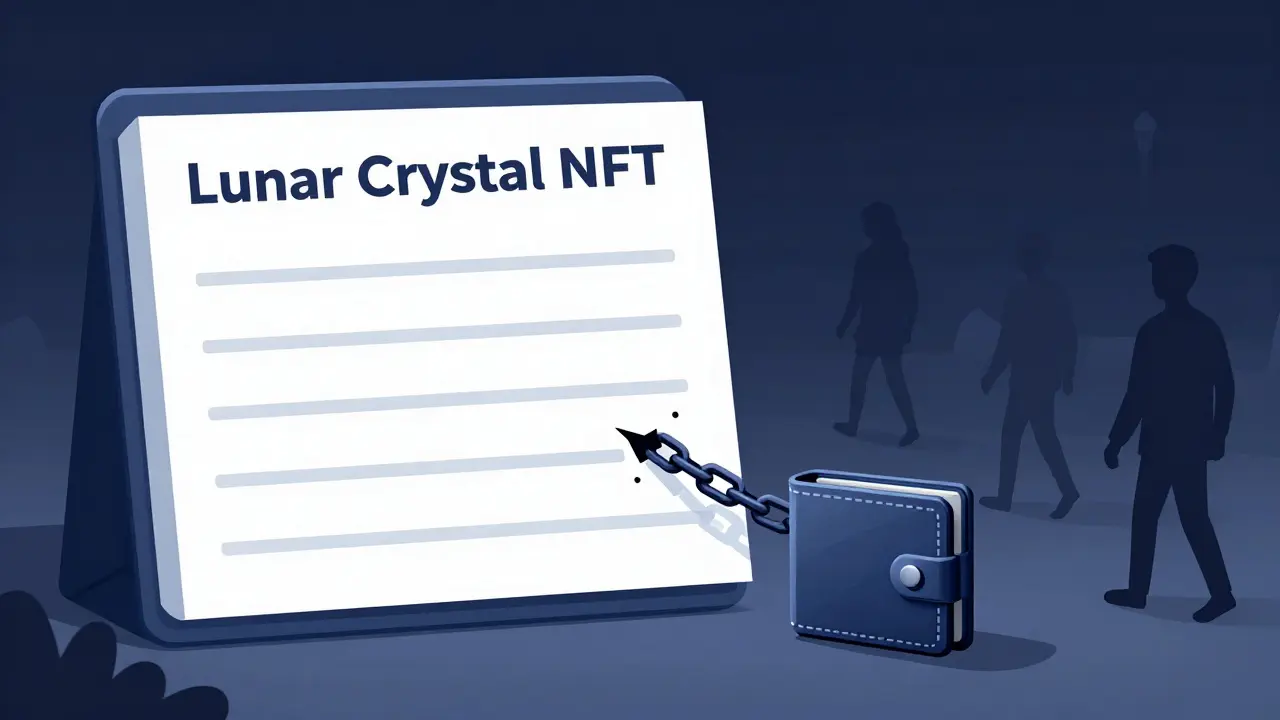
What Happened to Lunar.io?
By October 2023, Lunar.io’s website had changed. The LNR token? Gone. The Lunar Crystal NFTs? Never mentioned again.
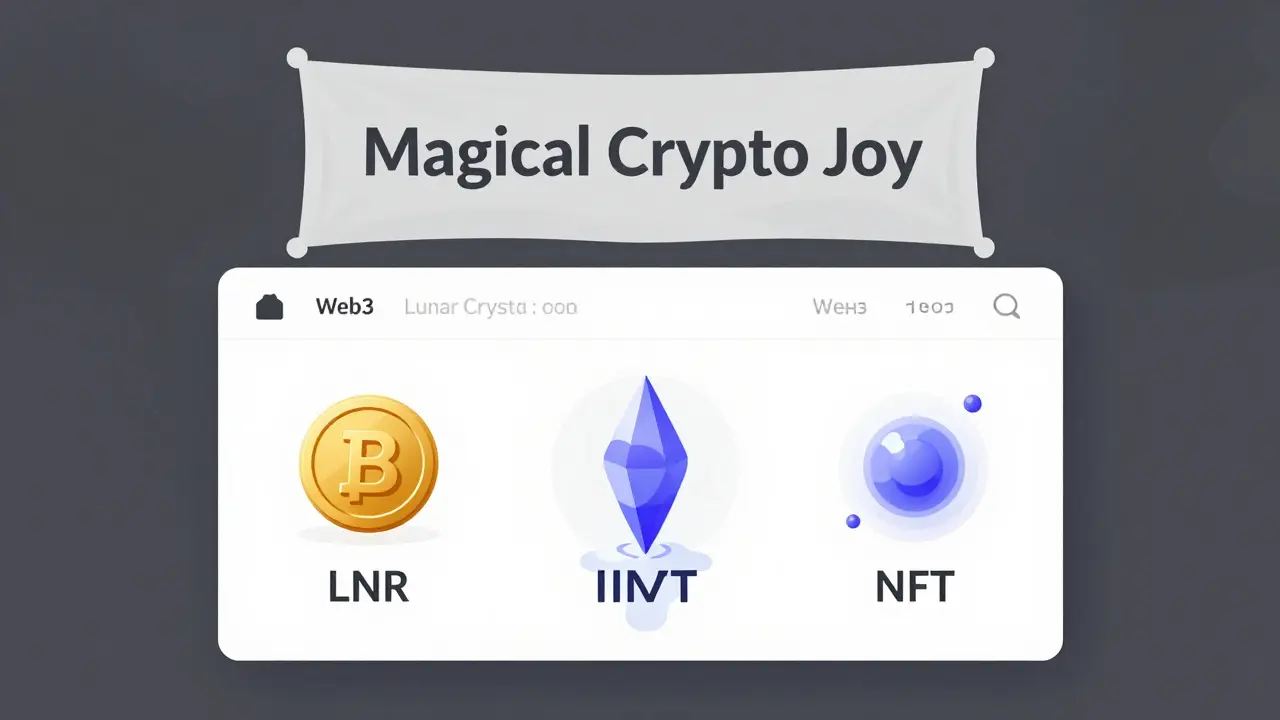
The new site talked about “products designed to spark joy in your everyday Web3 experiences.” No DeFi. No tokens. No NFTs. Just vague marketing language about “magical crypto experiences.”
This wasn’t a rebrand. This was a retreat.
If the Lunar Crystal NFT airdrop had succeeded, you’d see it referenced in their new branding. If they’d pivoted to something better, you’d see a roadmap. If they’d been acquired or merged, there’d be a press release. But there’s nothing. Just a website that erased its own history.
Why No One Talks About It Anymore
There’s a reason you won’t find Lunar Crystal NFTs on OpenSea, Blur, or Magic Eden. There’s a reason no crypto YouTube channel has covered it. There’s a reason CoinGecko and AirdropAlert stopped listing it after March 2022.
It failed silently.
Most airdrops that die still leave traces. A dead Discord. A ghosted Twitter. A GitHub repo with one commit. Lunar left nothing. No community. No code. No transparency.
That’s not incompetence. That’s abandonment.
And in crypto, abandonment is the worst outcome. It means the team didn’t just fail - they disappeared.
How It Compared to Other Airdrops in 2022
In early 2022, over 127 NFT airdrops hit the market. Most were trash. Some were scams. A few turned into real projects.
Lunar Crystal was in the middle - not a scam, but not a project either. It didn’t have the hype of Baby Ape Beast. It didn’t have the technical depth of Scroll or Linea. It didn’t even have the community traction of Luna’s LSTR token.
What it had was a clean design, a simple promise, and a trusted partner (CoinMarketCap). That should’ve been enough. But without a working product, none of that mattered.
Other projects at the time:
- Baby Ape Beast: Offered 150 unique traits, public mint, active Discord, and real NFTs on OpenSea. Still has a small community today.
- Luna LSTR: Used a Telegram bot for verification, had clear claim limits (1000 LSTR per user), and documented user feedback.
- Scroll: Later became a major Ethereum Layer 2 with a $150M valuation. Their airdrop was just the beginning.
Lunar? Zero public output. Zero follow-up. Zero legacy.
What You Can Learn From This
If you’re looking for future airdrops, here’s what to watch for:
- Is there a public smart contract address? If not, walk away. No contract = no NFT.
- Can you verify the NFT on a blockchain explorer? Check BscScan or Etherscan for the token address. If it’s not there, it doesn’t exist.
- Is there a community? Look for active Discord, Reddit, or Twitter threads. If no one’s talking about it after the drop, it’s dead.
- Does the project still exist? Check their website six months later. If the NFT is gone from their roadmap, it was never real.
The Lunar Crystal NFT airdrop wasn’t a scam in the traditional sense. No one stole your money. But it was a ghost. A promise with no delivery. And in crypto, that’s worse than a scam - because you never even knew you were scammed.
Is There Any Way to Claim It Now?
No.
The airdrop window closed in March 2022. The website doesn’t mention it. The token is no longer listed on any exchange. The NFT collection was never deployed.
Even if you completed every step back then, you didn’t get your NFT. Not because you did something wrong - because the project never finished.
There’s no customer support. No email address. No recovery process. You were never meant to get anything.
Final Thoughts
The Lunar Crystal NFT airdrop was a lesson in how not to build a crypto project. It looked legit. It sounded simple. It used trusted platforms. But without real technology, real transparency, and real follow-through, it was just noise.
It’s easy to get excited about free NFTs. But the real value isn’t in the free stuff. It’s in the projects that stick around. The ones that ship code. The ones that answer questions. The ones that don’t vanish when the market cools.
Lunar Crystal didn’t just fail. It disappeared. And that’s the most important thing to remember.
Did anyone actually receive the Lunar Crystal NFT?
There is no verifiable evidence that any participant received a Lunar Crystal NFT. No blockchain records, no wallet confirmations, and no public screenshots exist. The NFT collection was never deployed, meaning the airdrop was a promise without delivery.
Was the Lunar Crystal NFT airdrop a scam?
It wasn’t a classic scam where users lost money. But it was a deceptive failure. The team collected user data and social engagement without delivering the promised NFTs. In crypto, this is known as a “ghost airdrop” - it looks real but has no technical foundation.
Can I still claim my Lunar Crystal NFT today?
No. The airdrop window closed in March 2022. The Lunar website no longer references the NFT or LNR token. The smart contract, if it ever existed, is inactive and inaccessible. There is no way to claim it now.
Why did Lunar remove all references to the NFT and LNR token?
Lunar likely realized the project had no traction or technical success. By late 2023, they rebranded their website to focus on vague Web3 “joy” experiences, dropping all mention of DeFi, tokens, and NFTs. This suggests the NFT airdrop was a short-term marketing tactic that failed, and they chose to erase it rather than explain it.
How can I avoid similar airdrops in the future?
Always check three things: 1) Is there a public smart contract address? 2) Can you find the NFT on a blockchain explorer like BscScan? 3) Is the project still active six months later? If any answer is no, skip it. Real projects don’t vanish after the airdrop.

Rajappa Manohar
This airdrop was a ghost story.
prashant choudhari
No smart contract. No metadata. No blockchain trace. That’s not a failed project-it’s a ghost. And in crypto, ghosts don’t just disappear. They take your trust with them.
Jake West
Of course it vanished. Anyone who trusted CoinMarketCap to deliver NFTs deserves to get scammed. You didn’t lose money-you lost brain cells. Congrats.
Shawn Roberts
Bro, don’t be mad 😅 The crypto world is wild. We all got fooled by something. At least this one didn’t steal your ETH. Keep grinding!
Abhisekh Chakraborty
I DID THE TASKS. I WAS SO EXCITED. I TOLD MY FRIENDS. NOW I JUST FEEL USED. WHY DO THEY DO THIS???
dina amanda
CoinMarketCap is owned by Binance. Binance is owned by the Fed. The Fed is running this to track crypto users. This was a surveillance op. They got your wallet, your Twitter, your email. You’re already on a list.
Gavin Hill
The real scam wasn’t the missing NFTs. It was the illusion that anyone in crypto cares about promises. We’re all just chasing the next shiny thing. This was just the first time you noticed.
SUMIT RAI
Wait wait wait-what if the NFTs were minted but hidden? What if they’re in a secret wallet and only appear when the moon is full? 🌕👽
Josh Seeto
Let me guess-you thought an airdrop with zero technical documentation was a real opportunity? Welcome to crypto, where ‘simple’ usually means ‘untested’ and ‘trusted partner’ means ‘they didn’t get sued yet.’
Kevin Gilchrist
They didn’t just ghost you-they erased their own existence. That’s next-level cowardice. I’m not mad, I’m just… disappointed. Like when your crush unfollows you after you send a 3AM poem.
Khaitlynn Ashworth
Oh honey, you thought crypto was about innovation? Nah. It’s about who can make the shiniest PowerPoint and vanish before the audit. You didn’t lose an NFT-you lost your innocence. Welcome to the club.
Mike Pontillo
People still fall for this? I feel bad for you. But also, why did you think a project with no GitHub, no docs, and no team bio was worth your time? You’re not the victim. You’re the lesson.
Joydeep Malati Das
The absence of evidence is not evidence of absence. However, in the context of blockchain, absence of on-chain activity is definitive. This project failed technically, not morally.
rachael deal
It’s okay to feel disappointed, but don’t let this kill your curiosity. The next airdrop might be real-and you’ll know what to check for now. You’re learning. That’s progress 🌱
Elisabeth Rigo Andrews
This is a textbook example of a liquidity-driven vanity project. They optimized for social engagement metrics, not on-chain utility. Zero technical debt, zero accountability. Classic.
Adam Hull
They didn’t disappear. They evolved. Into a new form: the silent predator. They harvested your data, your followers, your trust. Now they’re selling your attention to NFT influencers. You were never the customer. You were the product.
Steve Williams
In my country, we say: a promise without delivery is a wound without blood. You didn’t lose money. You lost faith. That’s harder to heal.
Raja Oleholeh
USA thinks it owns crypto. But the real winners are the ones who never signed up. 🇮🇳
Vernon Hughes
Interesting how the same people who scream about decentralization still trust CoinMarketCap like it’s a government agency. The irony is thick enough to spread on toast.
Alison Hall
Good breakdown. I checked BscScan myself after reading this-zero contract. Zero tokens. Zero hope. You’re right. This was never real.
Amy Garrett
omg i did the tasks too!! i thought i was so smart!! now i feel so dumb 😭
Haritha Kusal
it’s okay, we all got fooled once. the important thing is you learned. next time, i’ll help you check the contract 😊
Ian Koerich Maciel
It’s not the lack of NFTs that stings-it’s the silence. The absence of even a ‘we’re sorry’ or ‘we pivoted.’ In a space that thrives on transparency, their complete erasure speaks louder than any fraud. This wasn’t a failure-it was a moral collapse disguised as a startup. The team didn’t just abandon the project; they abandoned the ethical contract with their users. That’s the true cost: not the NFT you didn’t receive, but the trust you can’t get back.