Malta Crypto Tax Framework 2026: How to Legally Pay 0% on Gains
You’ve heard the rumors. People talk about Malta like it’s a magical place where you can make millions in Bitcoin and pay nothing in taxes. It sounds too good to be true, right? Well, it’s not magic, but it is real-if you know exactly how to structure your life and your money. The reality is that Malta offers one of the most sophisticated tax frameworks for digital assets in Europe, but it comes with strict rules that trip up almost everyone who tries to do it alone.
If you are thinking about moving there or just optimizing your current setup, you need to understand that this isn’t about hiding money. It’s about using a legal system called "non-domiciled" status to keep your global income out of the Maltese tax net. Let’s break down how it actually works in 2026, what it costs, and why most people fail at it before they even start.
The Core Concept: Non-Domiciled (Non-Dom) Status
To get that famous 0% tax rate on your cryptocurrency profits, you cannot just buy a ticket to Valletta and hope for the best. You need to qualify as a non-domiciled individual. This is a specific legal status under Maltese law that treats your foreign income differently than your local income.
Here is the deal: If you are a non-dom resident, Malta only taxes income that you physically bring into the country. This is known as the remittance basis of taxation. If you earn $1 million from selling Ethereum while living in Malta, but you never transfer that money into a Maltese bank account or spend it locally, the Maltese tax authority sees zero taxable income. That means 0% tax on those gains.
However, if you do send money home or pay for rent in Malta using your crypto proceeds, different rates kick in:
- Income earned outside Malta and remitted to Malta: Taxed at 15%.
- Income earned within Malta: Taxed at the standard progressive rate, up to 35%.
- Foreign income not remitted to Malta: 0% tax.
This system is powerful, but it requires discipline. You have to live a lifestyle where your spending doesn't exceed what you bring in from non-taxable sources, or you accept the 15% hit on what you do bring in.
How to Qualify: The Three Hard Requirements
You might think you can just sign a lease and call it a day. You can’t. The Commissioner for Revenue has three strict criteria you must meet every single year to maintain this status.
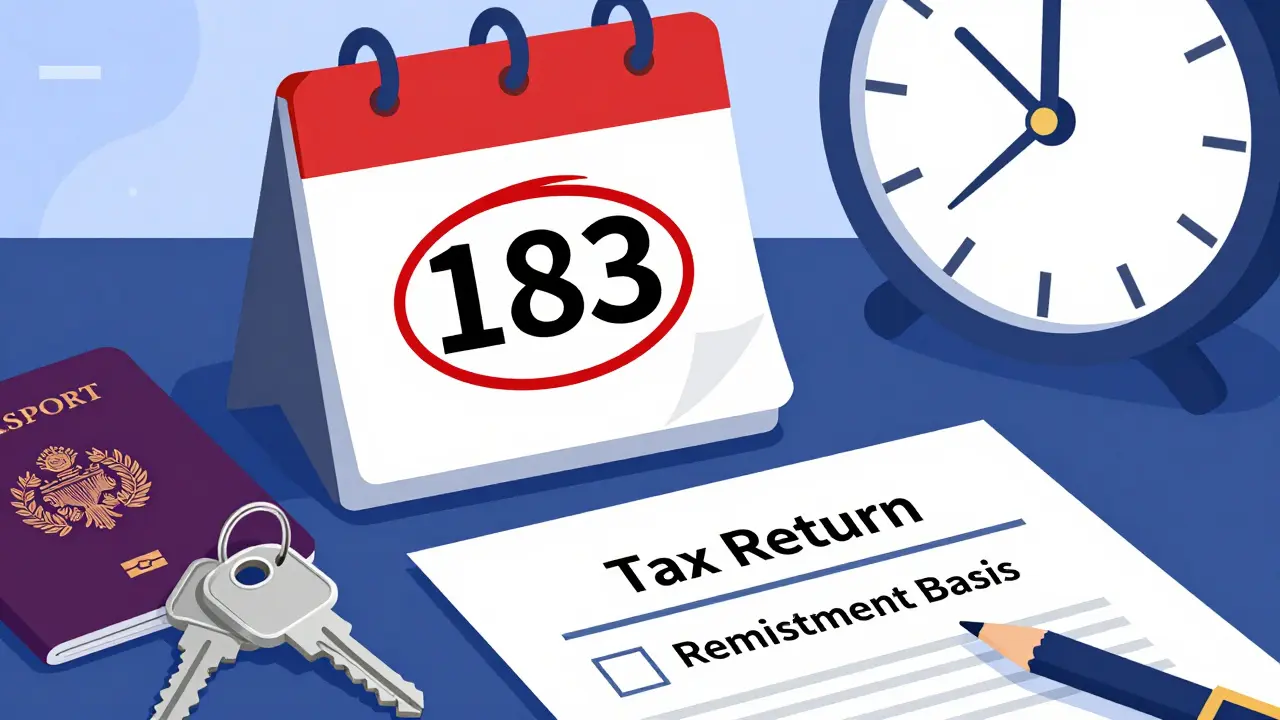
- Tax Residency: You must spend at least 183 days per calendar year in Malta. Not close to 183. At least 183. If you travel back to your home country for two months, you lose your status for that year.
- Domicile Outside Malta: Your permanent home-your legal domicile-must remain in another country. This usually means keeping strong ties to your home nation, like owning property there, having family there, or maintaining citizenship. You are essentially telling Malta, "I live here now, but my roots are elsewhere."
- Remittance Basis Election: You must formally elect to be taxed on the remittance basis when you file your annual return. If you forget to check this box, you could be taxed on your worldwide income at the standard 35% rate. Yes, people make this mistake every year.
Failing any one of these disqualifies you. An experienced tax advisor in Malta notes that 90% of newcomers overlook the domicile requirement, assuming physical presence is enough. It’s not.
What About Regular Residents?
Not everyone wants to jump through the hoops of non-dom status. Maybe you’re already a citizen, or maybe you don’t want to maintain ties abroad. In that case, you fall under the standard tax regime. Here is what that looks like for crypto investors in 2026.
Malta does not have a specific "Capital Gains Tax" line item for individuals in the same way some other countries do. Instead, crypto gains are treated based on your activity level:
- Long-term Investors: If you buy and hold, you generally do not pay capital gains tax on the appreciation. When you sell, if it’s considered an investment rather than trading, it may not be taxable income depending on interpretation, though this area is nuanced.
- Active Traders: If you trade frequently, the authorities may view this as a business activity. Business income is taxed at the corporate rate of 35%, or personal income tax rates ranging from 15% to 35% depending on your total income bracket.
The threshold for personal income tax starts at €9,000 (taxed at 15%) and caps at €60,000+ (taxed at 35%). For high-volume traders, the non-dom route is often significantly cheaper because of that 0% option on unremitted funds.
Mining, Staking, and Airdrops: The Gray Areas
Holding Bitcoin is simple. Doing things with it gets complicated. The Malta Financial Services Authority (MFSA) regulates the industry, but the tax office handles the receipts. Here is how common activities are treated:
| Activity | Tax Classification | Estimated Rate |
|---|---|---|
| Crypto-to-Crypto Swap | Gray Area / Potential Disposal | Varies (See text) |
| Mining | Business Income | 15-35% (Personal) or 35% (Corporate) |
| Staking Rewards | Business/Investment Income | 15-35% |
| Airdrops | Income upon receipt | 15-35% |
| ICOs | Income/Capital Gain | 15-35% |
Mining and Staking: These are viewed as active businesses. You must report the fair market value of the coins when you receive them. You can deduct expenses like electricity and hardware, which helps lower the taxable base.
Crypto-to-Crypto Trades: This is the biggest headache. Currently, swapping Bitcoin for Solana is technically a disposal event. Some argue it’s not taxable until you convert to fiat, but the safest approach-and what many advisors recommend-is treating each swap as a taxable event. Legislation expected in late 2025 aims to clarify this, but until then, assume it triggers a gain calculation.
The Real Cost of Entry
Let’s talk money. Getting into this system isn’t free. To become a tax resident, you first need a residence permit. The government requires a financial commitment to prove you are serious.
- Rental Option: Rent a property for at least €8,750 per year. You must also show proof of sufficient funds (around €15,000+ in savings).
- Purchase Option: Buy a property for at least €220,000 in approved zones.
On top of that, you have administrative fees for the residence permit application. But the hidden cost is professional advice. You cannot DIY this. You need a lawyer to set up your residency and a tax accountant to handle your annual returns. Expect to pay €2,000-€5,000 annually for proper compliance services. Is it worth it? If you’re making six figures in crypto, absolutely. If you’re making a few thousand, probably not.
Compliance and Reporting: CARF and MiCA
Malta is part of the EU, which means it plays by European rules. The Markets in Crypto-Assets (MiCA) regulation sets the stage for how exchanges operate, ensuring consumer protection and stability. But for you, the investor, the bigger concern is transparency.
Malta participates in the Crypto-Asset Reporting Framework (CARF). This is an international agreement for automatic exchange of information. Essentially, if you hold crypto in a Maltese account, the details of those holdings can be shared with your home country’s tax authority if you are still considered a tax resident there. This kills the idea of using Malta to hide assets from your home government. It works best if you fully sever tax ties with your old home and establish Malta as your sole tax residence.
Furthermore, the Financial Intelligence Analysis Unit (FIAU) enforces strict anti-money laundering (AML) rules. Every crypto business and significant holder must register. If you’re running a large portfolio, you might need to register as a Virtual Token Service Provider (VTSP) depending on how you manage it. Ignoring this leads to heavy fines.

Malta vs. Other Jurisdictions
Why choose Malta over Dubai or Portugal? It depends on your needs.
- Dubai: Offers 0% personal income tax with no residency day count. However, banking can be harder for non-residents, and it’s not in the EU. If you need access to European banks and markets, Malta wins.
- Portugal: Previously had a friendly NHR regime, but recent changes have made it less attractive for new arrivals. Malta’s non-dom system is more stable and explicitly designed for long-term residents.
- Estonia: Great for companies (0% tax on retained earnings), but less flexible for individual high-net-worth investors compared to Malta’s remittance basis.
Malta strikes a balance. You get EU access, English-speaking bureaucracy, and a clear path to 0% tax if you follow the rules.
Common Pitfalls to Avoid
I’ve seen too many people burn cash trying to move to Malta without a plan. Here are the top mistakes:
- Ignoring Domicile: Moving everything to Malta and losing your non-dom status. Keep your passport, your family, and your primary home abroad.
- Over-Remitting: Transferring all your profits to Malta immediately. Remember, once it’s in Malta, it’s taxed. Spend wisely or leave it offshore.
- Poor Record Keeping: If you can’t prove the cost basis of your Bitcoin from 2017, the tax office will assume you bought it yesterday. Use software that tracks every transaction.
- Missing the 183-Day Mark: One extra week vacationing in your home country can reset your entire tax year. Track your days meticulously.
Next Steps for Aspiring Residents
If this interests you, start small. Don’t quit your job tomorrow. First, consult with a Maltese tax specialist who understands crypto. They will review your current residency status and tell you if non-dom status is viable for you. Second, calculate your real costs. Add up rent, flights, insurance, and legal fees. Third, ensure your home country allows you to change residency without triggering exit taxes. Finally, apply for the residence permit well in advance. The process takes time, and you can’t claim tax residency until you have the permit and the days under your belt.
Is crypto legal in Malta?
Yes, cryptocurrency is fully legal and regulated in Malta. It operates under the supervision of the Malta Financial Services Authority (MFSA) and complies with EU MiCA regulations. Both holding and trading crypto are permitted activities.
Can I really pay 0% tax on crypto in Malta?
Yes, but only if you qualify as a non-domiciled resident and do not remit the income to Malta. Under the remittance basis, foreign-sourced income (like crypto gains) is tax-free if it stays outside of Malta. If you bring the money into Malta, it is taxed at 15%.
How many days do I need to stay in Malta?
You must spend at least 183 days per calendar year in Malta to establish tax residency. This is a strict requirement; falling short by even one day can disqualify you for that tax year.
Are staking rewards taxable in Malta?
Yes, staking rewards are generally considered taxable income. They are treated similarly to mining rewards, classified as business or investment income, and subject to personal income tax rates ranging from 15% to 35%.
What is the minimum investment to live in Malta?
To obtain a residence permit, you must either rent a property for at least €8,750 per year or purchase a property for at least €220,000 in designated areas. Additional administrative fees and proof of funds are also required.
Does Malta share tax information with other countries?
Yes, Malta participates in the Crypto-Asset Reporting Framework (CARF) and other international agreements. This means tax authorities can exchange information about your crypto holdings with your country of domicile, so secrecy is not guaranteed.