Market Cap Manipulation in Cryptocurrency: How Whales Move Prices
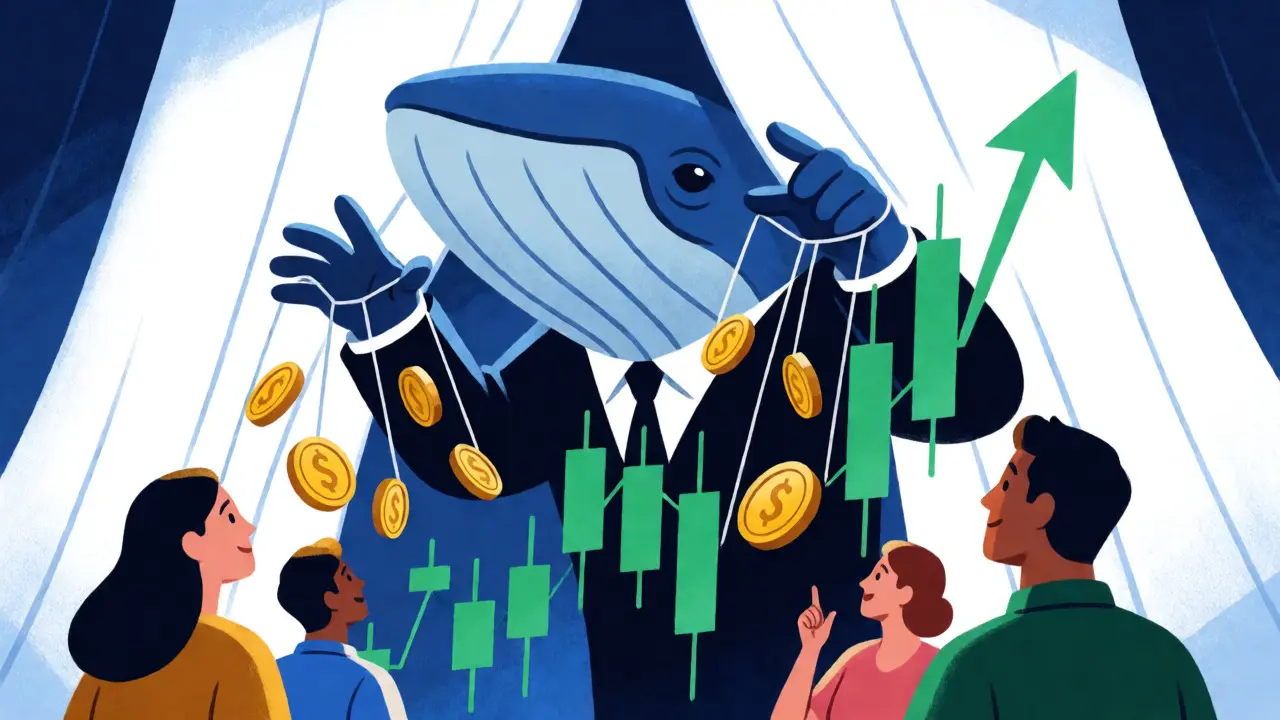
You check the chart. The price is climbing. Volume is exploding. You think, "This is it. I need to get in now." You buy. Then, five minutes later, the price crashes. You're left holding a bag that's worth half what you paid. Did you just lose money because of bad luck? Or did someone pull a string behind the curtain?
This is market cap manipulation in cryptocurrency. It’s not just random volatility. It’s a coordinated effort by traders, market makers, or organized groups to artificially inflate or deflate the value of digital assets. They create a false impression of demand or supply to trick you into buying high or selling low. Unlike the stock market, where regulators watch every trade like hawks, the crypto world is still largely the Wild West. This lack of oversight allows individuals with deep pockets-often called whales-to act with relative impunity.
Why Crypto Is Easier to Manipulate Than Stocks
Think about the New York Stock Exchange. If a company wants to list its shares, it has to undergo rigorous audits. There are strict reporting requirements. Regulators can spot suspicious activity quickly. Now, look at a small-cap altcoin on a decentralized exchange (DEX). There’s no central authority checking if the volume is real. There’s no audit committee ensuring the team isn’t secretly dumping tokens.
Cryptocurrency markets have three specific vulnerabilities that manipulators love:
- Anonymity: You don’t know who is behind a wallet address. A single entity can control thousands of accounts.
- Liquidity Gaps: Many tokens trade on thin order books. It takes far less capital to move the price of a small-cap coin than it does for Bitcoin or Apple stock.
- Fragmented Exchanges: Price data comes from dozens of different platforms. Some are regulated; many aren’t. This fragmentation makes it hard to spot when one exchange is being used to paint a misleading picture.
Because of this structure, manipulators can create artificial trends that look legitimate to the average investor. They exploit the fact that most people rely on surface-level metrics like price and volume without digging into the underlying blockchain data.
Pump and Dump Schemes: The Classic Playbook
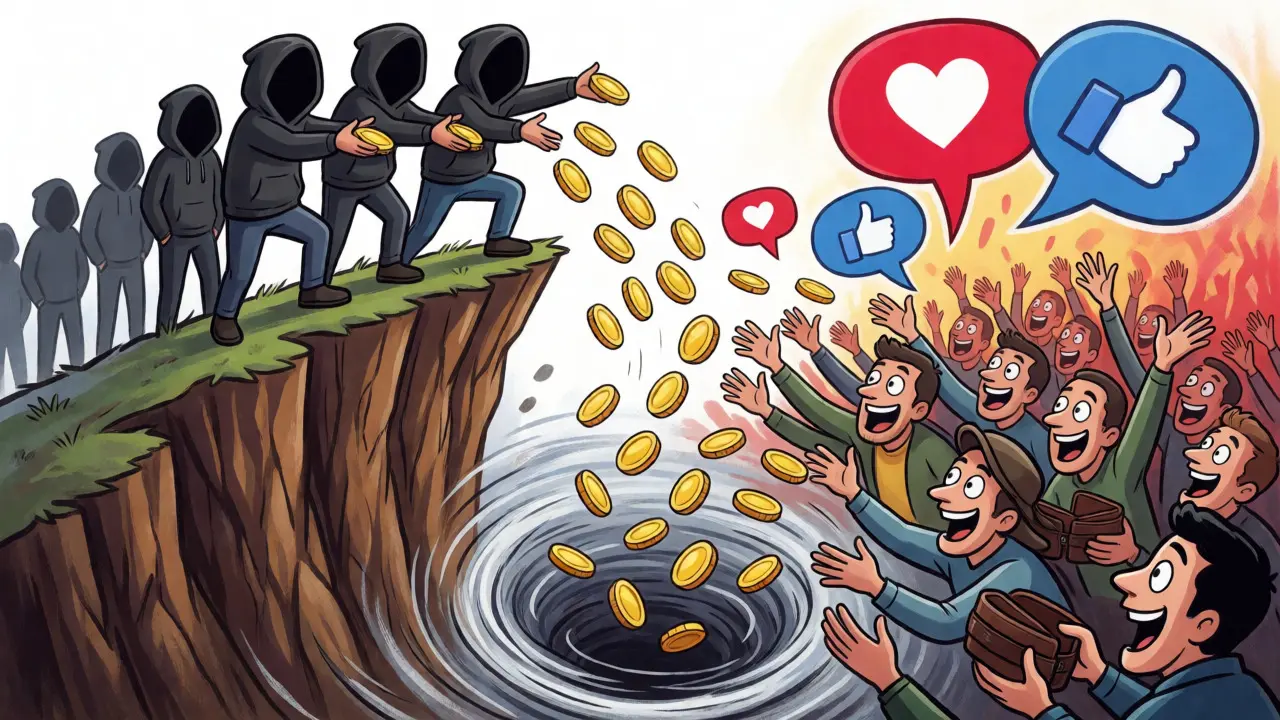
The most common form of manipulation is the pump and dump scheme. It’s old school, but it works perfectly in crypto. Here’s how it typically plays out: A group of insiders accumulates a large amount of a low-liquidity token. Then, they start hyping it up on social media, Telegram groups, or Discord channels. They might use influencers to spread the word. As retail investors rush in, driving the price up, the insiders quietly sell their holdings at the peak.
In 2023 alone, over 90,000 tokens were flagged as part of these schemes, generating an estimated $241.6 million in profits for the manipulators. That’s real money taken from everyday investors who thought they were finding the next big thing.
A recent example shows how serious this has gotten. In October 2024, the FBI launched "Operation Token Mirrors." They created a fake cryptocurrency called NexFundAI specifically to catch fraudsters. Eighteen individuals were charged after they tried to manipulate the price of this non-existent asset, revealing a $25 million scheme. It proves that even when the asset itself is fake, the mechanics of manipulation remain the same: hype, buy-in, and exit.
Wash Trading: Faking the Volume
If pump and dumps target your fear of missing out (FOMO), wash trading targets your trust in data. You see a coin with massive trading volume. You assume there’s high interest and liquidity. But what if that volume is fake?
Wash trading happens when a trader buys and sells the same asset to themselves repeatedly. They use multiple accounts, often linked to the same owner, to create circular trades. No actual change of ownership occurs, but the exchange records it as volume. Research suggests that wash trading accounts for over 70% of the volume on unregulated crypto exchanges.
Why do they do it? Two main reasons. First, it makes the token look more popular and liquid than it really is, attracting new buyers. Second, some exchanges use it to rank higher on aggregators like CoinGecko or CoinMarketCap. Higher rankings lead to more visibility, which leads to more real users. It’s a self-fulfilling prophecy built on lies.
You can often spot wash trading by looking at the timing. Real trading happens throughout the day. Wash trading often spikes at odd hours or in very regular intervals. Also, if you see huge volume but the price barely moves, that’s a red flag. Real demand usually pushes prices up; fake volume just churns the air.
Spoofing and Sell Walls: Psychological Warfare
Have you ever seen a chart where the price hits a certain level and bounces back down repeatedly? That’s often a sell wall. A whale places a massive sell order at a specific price point. To you, it looks like there’s overwhelming resistance. You think, "The price won't go above $1.50," so you sell or avoid buying.
But here’s the trick: the whale doesn’t intend to let that order fill. They’re using spoofing, placing orders with no intention of executing them. The goal is psychological. By creating the illusion of heavy selling pressure, they scare off other buyers while they accumulate more tokens at lower prices. Once they’ve bought enough, they cancel the giant sell order. Suddenly, the "wall" disappears, and the price shoots up because the artificial barrier is gone.
This tactic is particularly effective in low-liquidity markets where a single large order can dominate the order book. Market makers and high-volume traders use this to accumulate assets cheaply before a real breakout.
DeFi-Specific Tactics: Oracle Manipulation
As decentralized finance (DeFi) grew, manipulators found new playgrounds. One of the most sophisticated tactics is oracle manipulation. In traditional finance, banks determine interest rates. In DeFi, smart contracts rely on "oracles" to feed them external price data. If you can manipulate the price reported by the oracle, you can trick the smart contract.
The most famous case involved Mango Markets on Solana in October 2022. A trader named Avraham Eisenberg made $115 million by leveraging purchases of Mango tokens. He bought enough tokens to spike their price, then used those inflated tokens as collateral to borrow stablecoins. When the price corrected, he repaid the loans and kept the profit. He argued it was just a "highly profitable trading strategy," but the SEC charged him with market manipulation. The platform sued him to recover millions. This incident highlighted a critical flaw: if a protocol relies on a single source of price data, it’s vulnerable to attack.
| Tactic | Primary Target | Detection Sign | Typical Asset Type |
|---|---|---|---|
| Pump and Dump | Retail Investor Sentiment | Sudden social media hype, sharp price spike followed by crash | Low-cap Altcoins |
| Wash Trading | Volume Metrics | High volume, low price movement, circular fund flows | New Listings, Unregulated Exchanges |
| Spoofing | Order Book Perception | Large orders appearing/disappearing rapidly | Mid-cap Tokens |
| Oracle Manipulation | Smart Contract Logic | Price divergence between DEX and CEX, unusual borrowing activity | DeFi Protocols |

Cross-Product Manipulation and Multi-Exchange Strategies
Manipulators don’t stay on one platform. They use cross-product manipulation to coordinate actions across multiple exchanges. Because crypto markets are fragmented, surveillance teams struggle to monitor all venues simultaneously. A manipulator might buy heavily on a smaller exchange to push the price up, then arbitrage that difference on larger exchanges. This creates a ripple effect that looks like organic market growth.
This complexity makes it hard for regulators to pinpoint exactly where the manipulation started. Was it the small exchange, or was the large exchange just reacting? By spreading their activities across dozens of platforms, manipulators dilute the evidence, making it harder to prove intent.
How to Spot the Red Flags
You can’t stop every scam, but you can reduce your risk. Here are practical ways to identify potential manipulation before you invest:
- Check Liquidity Depth: Use tools like Dune Analytics or Nansen to see if the volume is coming from a few wallets. If 80% of the volume comes from 10 addresses, it’s likely wash trading.
- Analyze Social Media Patterns: Are the tweets and posts generic? Do they come from accounts with similar creation dates? Coordinated bot activity is a strong indicator of a pump scheme.
- Watch for Divergence: If the price on a small, unregulated exchange is significantly higher than on major exchanges like Coinbase or Binance, be cautious. It could be a trap to lure you in.
- Review Tokenomics: Look at the unlock schedule. If insiders hold a large percentage of the supply and their tokens are unlocking soon, they have a strong incentive to pump the price before dumping.
Remember, in crypto, information asymmetry is the norm. The people moving the market often know things you don’t. Your best defense is skepticism and data verification.
What is the difference between market cap and fully diluted valuation?
Market cap is calculated by multiplying the current price by the circulating supply. Fully diluted valuation (FDV) multiplies the price by the total maximum supply. Manipulators often focus on market cap because it reacts faster to short-term pumps. However, FDV gives a better long-term picture. If a project has a low market cap but a massive FDV, it means most tokens are yet to enter circulation, creating future selling pressure.
Can regulators fix market cap manipulation?
Regulators are trying, but it’s difficult. Traditional securities laws apply to some tokens, but enforcement is slow and jurisdictional issues arise because crypto is global. The rise of on-chain analytics helps, as authorities can trace funds directly. However, as long as anonymity persists and new tokens launch daily, complete elimination of manipulation is unlikely. Regulation will likely focus on centralized exchanges first, leaving DeFi harder to police.
Is wash trading illegal in cryptocurrency?
In traditional finance, wash trading is strictly prohibited. In crypto, the legal status varies by country. In the US, the SEC has prosecuted cases involving wash trading under anti-fraud provisions. However, many offshore exchanges operate in gray areas where enforcement is weak. While it may not always result in criminal charges for individual traders, it is generally considered unethical and distorts market data.
How do whales accumulate coins without raising the price?
Whales use techniques like iceberg orders, where only a small portion of their total order is visible on the public order book. They also split large buys into many small transactions over time to avoid spiking the price. Additionally, they often trade on private OTC (Over-The-Counter) desks, which don’t appear on public exchange charts, allowing them to move significant amounts of capital discreetly.
Does high volume always mean high interest?
No. High volume can be manufactured through wash trading. To verify genuine interest, look for consistent buying pressure alongside rising prices. Check if the volume is distributed across many unique wallet addresses rather than concentrated in a few. Tools that track "smart money" inflows can help distinguish between organic accumulation and artificial noise.