Mining Crypto in Nigeria: Legal Rules and Current Restrictions in 2026
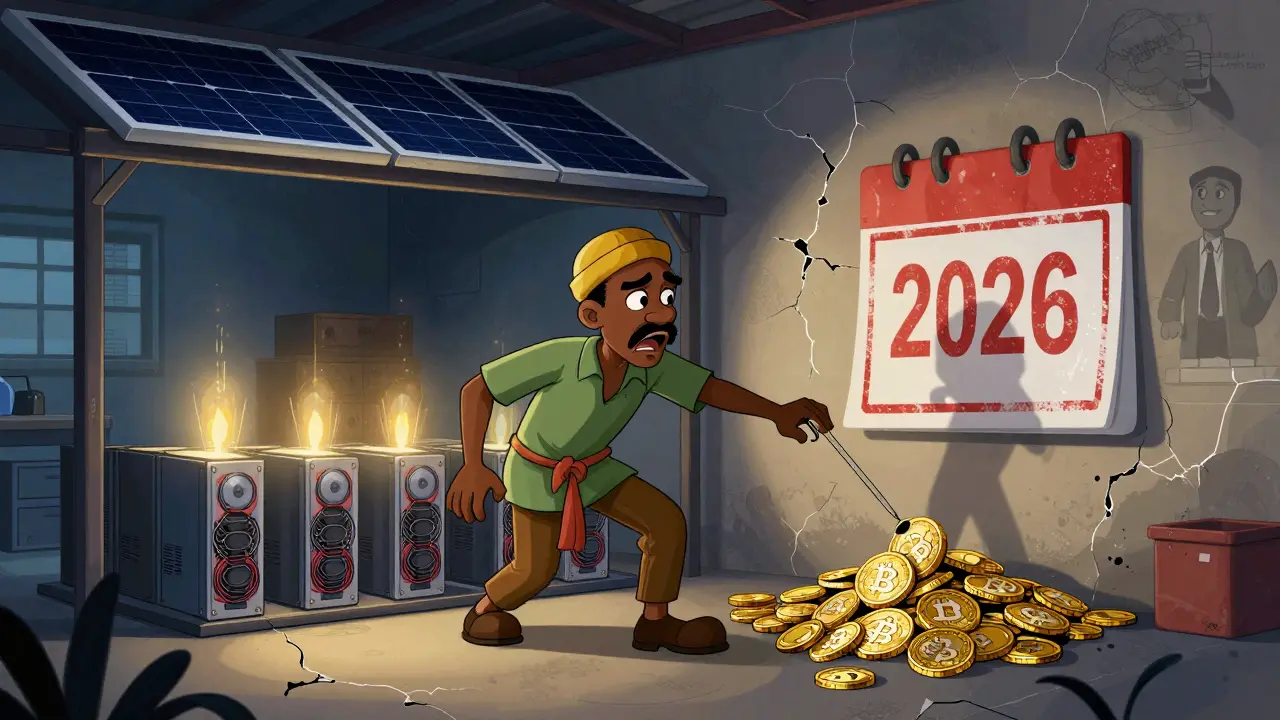
For years, Nigeria has been one of the biggest crypto markets in Africa, with millions of people trading, holding, and mining digital assets. But if you're thinking about setting up a crypto mining rig in Nigeria today, you need to know one thing: it's not illegal-but it's far from simple. The rules have changed dramatically since 2025, and what used to be a wild west of mining operations is now a tightly regulated space with serious consequences for non-compliance.
Is Crypto Mining Legal in Nigeria?
No law in Nigeria says you can't mine Bitcoin or Ethereum. There’s no ban on running ASICs or GPUs in your garage, basement, or warehouse. But legality isn’t just about what’s written-it’s about what’s enforced. And right now, the Nigerian government has made it extremely difficult to mine crypto without jumping through a series of legal hoops.
The real turning point came in October 2025 with the Investments and Securities Act (ISA 2025) a comprehensive law that classifies all virtual assets-including mined cryptocurrencies-as securities under the jurisdiction of the Securities and Exchange Commission (SEC). This means if your mining operation connects to a trading platform, offers mining-as-a-service, or even sells the coins you mine directly to users, you’re now a Virtual Asset Service Provider (VASP) a business that interacts with digital assets on behalf of users and must be licensed by the SEC.
What the SEC Requires to Operate Legally
If you want to mine crypto legally in Nigeria, you’re not just buying hardware. You’re starting a regulated financial business. The SEC now demands that all VASPs meet strict criteria:
- Proof of Nigerian corporate registration (CAC certificate)
- A minimum paid-up capital of ₦500 million ($334,000)
- A fidelity bond covering potential losses
- A physical office and local management team in Nigeria
- Full KYC and AML compliance systems
These aren’t suggestions-they’re non-negotiable. Only two exchanges, Quidax and Busha, received provisional licenses in late 2024. Dozens more are still waiting. If you’re mining at scale and plan to sell your coins, you’ll need to apply for this license. Otherwise, you’re operating outside the law.
The Banking Ban That Still Haunts Miners
Even though the Central Bank of Nigeria (CBN) lifted its 2021 directive banning banks from serving crypto businesses in late 2023, the damage lingers. Most banks still refuse to open accounts for crypto-related businesses. Why? Because they’re scared of fines, regulatory backlash, or being flagged by the Economic and Financial Crimes Commission (EFCC).
This means miners can’t use traditional banking channels to pay for electricity, import hardware, or receive payments. Instead, they rely on peer-to-peer (P2P) platforms like Paxful, LocalBitcoins, and local Telegram groups. Between July 2024 and June 2025, Nigerians moved over $92 billion in crypto via P2P trades-more than any other African country. But this workaround isn’t safe. It’s risky. And it leaves miners vulnerable to scams, chargebacks, and sudden account freezes.
Taxation: The New Nightmare
The Nigeria Tax Administration Act (NTAA) 2025, which takes effect in 2026, is the most aggressive move yet. It doesn’t just tax income-it targets non-compliance with brutal penalties.
Here’s what happens if you don’t register:
- ₦10 million ($6,693) fine in the first month
- An extra ₦1 million ($669) for every month you stay unregistered
- SEC can shut down your operation entirely
- EFCC can seize equipment and freeze assets
That’s not a warning. That’s a trap. Many small-scale miners who thought they were just "hobbyists" are now being audited. If you’re mining more than a few coins per month and converting them to Naira, you’re already generating taxable income. The government now has access to telecom data, blockchain analytics, and exchange records. You can’t hide.
Infrastructure: The Hidden Cost
Even if you clear every legal hurdle, you still have to deal with Nigeria’s power grid. Electricity costs in Nigeria average ₦80-₦150 per kWh, depending on location. In comparison, miners in Canada pay around $0.05 per kWh. That’s a 15x difference.
Most mining rigs require constant power. A single Antminer S21 running 24/7 uses about 3.2 kW. That’s over 230 kWh per month. At ₦120/kWh, that’s ₦27,600 ($184) just in electricity. Multiply that by 10 rigs? You’re spending over ₦276,000 ($1,840) a month on power alone.
And that’s if the power stays on. Rolling blackouts are still common. Many miners use diesel generators-but diesel prices have surged since 2024. A generator running 12 hours a day can cost over ₦40,000 ($267) per month in fuel. Suddenly, your mining profit margin disappears.
Who’s Still Mining in Nigeria?
Two types of miners are still active:
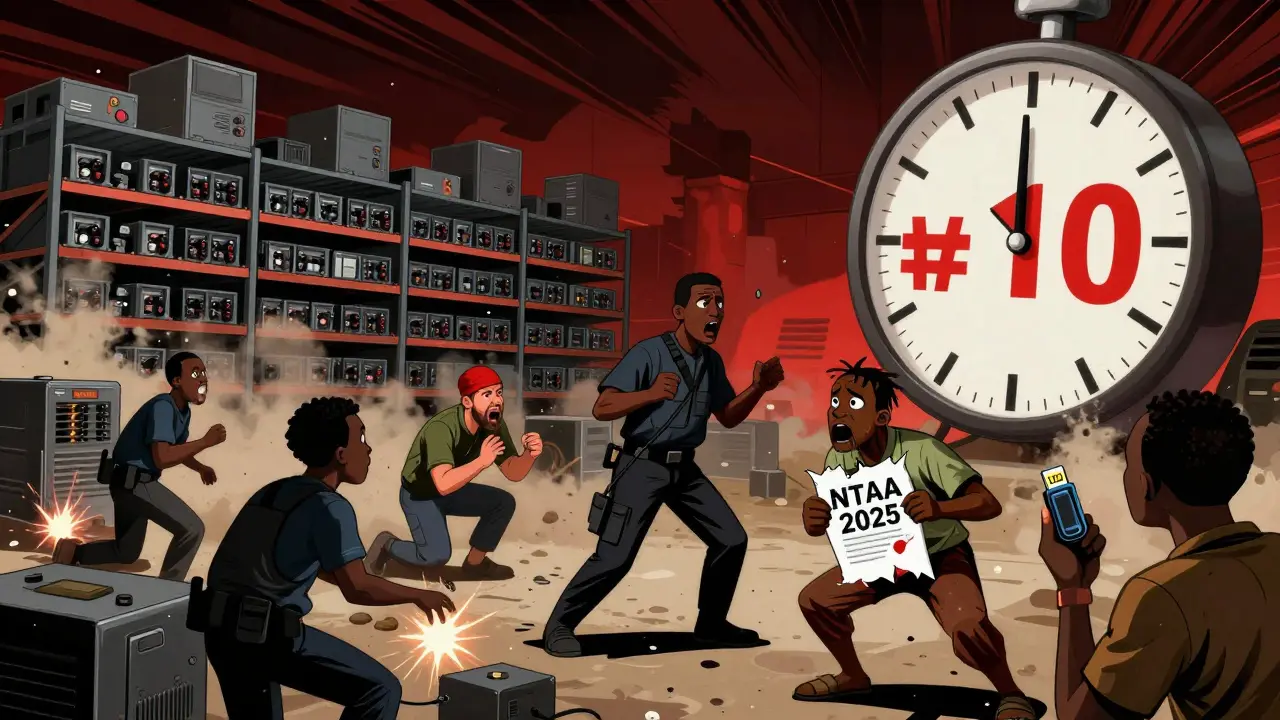
- Small-scale hobbyists-mining one or two rigs, using solar or low-cost power, and holding coins long-term. They rarely cash out, so they fly under the radar.
- Licensed commercial operators-those who’ve applied for SEC licenses, invested in solar farms, and partnered with regulated exchanges. These are rare, expensive, and mostly funded by venture capital.
Large mining farms with hundreds of rigs? Almost gone. Many have relocated to Kazakhstan, Canada, or the U.S., where energy is cheaper and regulations clearer. Nigeria’s crypto mining scene is shrinking-not because people stopped caring, but because the cost of compliance is higher than the reward.
What Happens If You Get Caught?
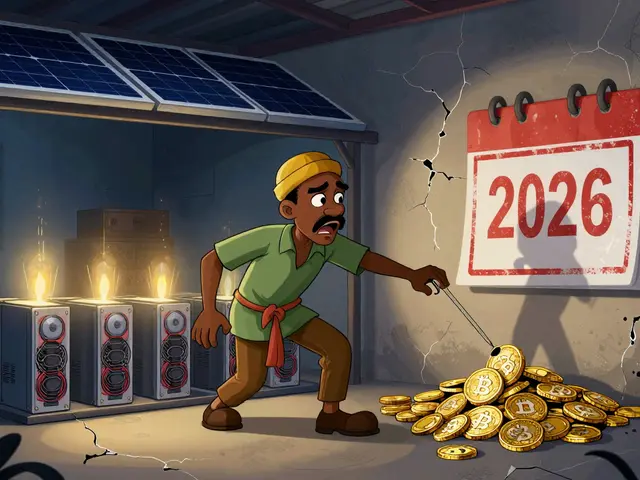
The EFCC has already raided several unlicensed mining operations in Lagos and Abuja. Equipment was seized. Bank accounts frozen. Owners questioned. In one case, a man with 18 ASICs was charged with operating an unlicensed financial business and fined ₦15 million. He had no license, no tax registration, and no bank account. He lost everything.
The government isn’t trying to kill crypto. They’re trying to control it. If you’re compliant, you can operate. If you’re not? You’re a target.
The Future: Compliance or Exit
Nigeria’s approach is clear: we’re not banning crypto-we’re regulating it like a bank. The National Blockchain Policy 2023 encourages blockchain adoption in government, agriculture, and logistics. But mining? That’s a financial activity. And financial activities need licenses.
The path forward is narrow but possible:
- Register your business with the CAC
- Apply for SEC licensing as a VASP
- Install solar panels or secure long-term power contracts
- Use only licensed exchanges for trading
- File taxes monthly and keep full records
If you can do all that, you’re not just a miner-you’re a regulated financial entity. And that’s worth the effort.
If you can’t? You’re gambling. And in Nigeria’s new crypto environment, the house always wins.
Is crypto mining completely banned in Nigeria?
No, mining crypto is not outright banned in Nigeria. However, any mining activity that involves selling, trading, or offering services to users now falls under the definition of a Virtual Asset Service Provider (VASP), which requires a license from the Securities and Exchange Commission (SEC). Without this license, operations are considered unregulated and carry legal risks.
Can I use a Nigerian bank to pay for my mining equipment?
Most Nigerian banks still refuse to work with crypto-related businesses, even after the Central Bank of Nigeria lifted its 2021 ban. While licensed VASPs can now open accounts, most small miners must rely on peer-to-peer platforms, cryptocurrency wallets, or foreign bank accounts to pay for hardware and electricity.
Do I have to pay taxes on the crypto I mine in Nigeria?
Yes. Under the Nigeria Tax Administration Act (NTAA) 2025, which takes effect in 2026, mined cryptocurrency is treated as taxable income. You must register as a VASP, report earnings, and pay taxes. Failure to do so results in fines of ₦10 million in the first month, plus ₦1 million per month after that.
What happens if I mine without a license?
If you mine at scale without a license and sell your coins, you risk being investigated by the Economic and Financial Crimes Commission (EFCC). Equipment can be seized, bank accounts frozen, and fines imposed. Even small-scale miners who cash out regularly are being audited using blockchain analytics and telecom data.
Is it cheaper to mine crypto outside Nigeria?
Yes. Countries like Canada, Kazakhstan, and Georgia offer cheaper electricity (under $0.06/kWh), clear legal frameworks, and government incentives for miners. Many Nigerian miners have relocated because the cost of power, licensing, and compliance in Nigeria makes large-scale operations unprofitable.
Can I mine using solar power in Nigeria?
Yes, and it’s one of the few viable options. Solar-powered mining setups are becoming popular among small-scale operators who want to reduce electricity costs and avoid grid instability. Some licensed miners are even building hybrid solar-diesel farms specifically for crypto operations.
Do I need to register my mining business with the CAC?
Yes, if you want to apply for an SEC license. The Corporate Affairs Commission (CAC) registration is mandatory for all VASPs. You need a company name, registered address, directors, and a business plan before you can even begin the SEC application process.
Are NFTs and mining treated the same under Nigerian law?
No. Investment-focused NFTs (like those sold as securities) fall under SEC regulation, but artistic or collectible NFTs do not. Mining is treated separately as a financial activity under the ISA 2025, regardless of the coin mined. Both require licensing if they involve user-facing services.

Dana Sikand
Look, I get it - Nigeria’s crypto scene is a mess right now. But let’s not pretend this is just about regulation. It’s about control. The government doesn’t want you mining because they can’t tax it, track it, or choke it off when they need to. The real story? Power companies are still charging you $0.10/kWh while they sell electricity to Chinese mining farms at half that rate. And no one’s asking why.
Small miners? They’re getting crushed. Solar’s the only way out - but even then, you need a bank account to buy panels. And good luck getting one if you’re not a corporation with a legal team.
I’ve seen guys with 3 rigs in Port Harcourt just hold BTC and never cash out. They’re not trying to get rich. They’re trying to stay solvent. That’s the real crypto dream now.
Fiona Monroe
While the article accurately outlines the regulatory landscape, it fails to address the systemic corruption underlying enforcement. The SEC’s licensing requirements are not designed to ensure compliance - they are designed to exclude. The ₦500 million capital requirement? That’s a bribe threshold disguised as capital. The two licensed exchanges? Both have ties to politically connected individuals.
Furthermore, the NTAA 2025’s punitive structure violates Article 16 of the Nigerian Constitution, which guarantees the right to property. The seizure of mining equipment without due process is not merely illegal - it is a constitutional breach that has yet to be challenged in court.
Until civil society organizations file class-action litigation against the EFCC’s asset seizures, this regime will continue to operate as a de facto tax farm - not a regulatory framework.
Molley Spencer
Let’s be real - this isn’t mining, it’s a Ponzi scheme with extra steps. You’re burning electricity to mint digital tokens that have zero intrinsic value while the Nigerian state monetizes your desperation through punitive taxation. The fact that people still think this is viable shows how detached from economic reality the average crypto enthusiast has become.
Meanwhile, in Canada, miners are using stranded hydro to power AI data centers - now that’s innovation. Here? People are running Antminers off diesel generators because they think Bitcoin will ‘save them.’ It won’t. It’s just a very expensive way to lose money.
Nicki Casey
Let me be clear: this entire narrative is a Western propaganda campaign disguised as journalism. Nigeria isn’t banning crypto - it’s protecting its sovereignty. The U.S. and EU have been quietly subsidizing their own mining operations for years under the guise of ‘green energy initiatives.’ Meanwhile, they demonize African nations for trying to build infrastructure.
The real issue? Western banks don’t want Africans to have financial autonomy. That’s why they refuse to open accounts. That’s why they pressure regulators. That’s why they fund NGOs to paint mining as ‘environmentally destructive’ - when the real environmental crime is the carbon footprint of Silicon Valley’s data centers.
This isn’t regulation. It’s economic colonialism wrapped in compliance jargon.
Daisy Boliaan
Y’all are missing the point. I know a guy in Enugu who runs 5 rigs off a solar panel setup he built with his cousin. He doesn’t even cash out - he just HODLs and trades on Telegram. Last month, he bought a fridge and a washing machine with BTC. No bank. No paperwork. Just a phone and a Wi-Fi hotspot.
And guess what? He’s happier than his cousin who works at a bank. Because he’s not waiting for permission to build a better life.
They can shut down the rigs. They can freeze accounts. But they can’t take away the fact that he outsmarted a broken system. That’s the real crypto story.
Cameron Pearce Macfarlane
So you’re telling me the government is fine with you mining… as long as you pay $334k to start a company? That’s not regulation. That’s extortion. And the fact that only two companies got licensed? That’s not a market - that’s a cartel.
Meanwhile, the average Nigerian makes $2,000 a year. So you’re saying the only people who can mine are the ones with access to venture capital? Brilliant. Just brilliant.
And now they’re using blockchain analytics to audit hobbyists? That’s not law enforcement. That’s surveillance capitalism with Nigerian flags on it.
maya keta
Let me drop some truth bombs: the SEC doesn’t care if you mine. They care if you’re NOT paying them. The whole ‘VASP license’ thing? It’s a revenue stream. The ‘minimum capital’? A bribe filter. The ‘fidelity bond’? A way to lock your money in their system.
And don’t get me started on the ‘blockchain analytics’ part - that’s just the government buying Chainalysis licenses to spy on your wallet. They don’t want to stop mining. They want to monetize it. And you? You’re just the data point.
Also - solar? Cute. But who’s gonna pay for the batteries? The same people who can’t afford electricity? This whole thing is a trap dressed up as a solution.
Lilly Markou
The emotional toll here is being completely ignored. People are risking their safety, their savings, their families - just to mine a few coins. And for what? So a government can slap a fine on them? So a bank can refuse to open an account?
I’ve spoken to three miners in Lagos. All of them have anxiety disorders. One is on antidepressants. Another hasn’t slept properly in eight months because of power outages and fear of raids.
This isn’t about economics. It’s about psychological warfare disguised as policy.
Elizabeth Smith
They say mining is legal - but then they make it impossible to do without becoming a corporate entity. That’s not freedom. That’s coercion. And the fact that the government is using telecom data and blockchain analytics to track hobbyists? That’s not regulation - it’s fascism with a Nigerian accent.
And yet people still think this is a free market? No. It’s a police state with a Bitcoin logo on the door.
Jessica Carvajal montiel
Did you know the EFCC has a secret list of wallet addresses linked to Nigerian IP ranges? They cross-reference them with mobile data to find people who transfer crypto to foreign exchanges. There’s a guy in Ibadan who got raided because he sent 0.3 BTC to a friend in Germany. He didn’t even cash out.
And now they’re using AI to predict who’s mining based on electricity usage patterns. Your meter is being monitored. Your router is being logged. Your phone is being tracked.
This isn’t a mining ban. It’s a surveillance state. And the whole ‘compliance’ narrative? It’s just the cover story.
Samantha Stultz
Look - I’ve worked with blockchain projects in 12 countries. Nigeria’s approach is actually one of the most sophisticated in Africa. Yes, the barriers are high. But that’s because they’re trying to prevent money laundering at scale. The alternative? A black market that funds terrorism, ransomware, and human trafficking.
The fact that people are still mining despite this? That’s resilience. The fact that they’re using solar? That’s innovation. The fact that they’re building P2P networks? That’s community.
Stop calling it a ‘trap.’ Call it evolution. The U.S. and EU are still stuck in 2017. Nigeria’s building the future - even if it’s painful.
Robert Conmy
Anyone who thinks this is about regulation is naive. This is about power. The government doesn’t want you to control your money. They want you to depend on them. That’s why they make it expensive. That’s why they make it risky. That’s why they use fear.
And guess who benefits? The same banks that got bailed out in 2020. The same politicians who own the licensed exchanges. The same elites who are quietly moving their crypto offshore.
You’re not mining crypto. You’re fighting a system designed to keep you poor.
Lucy Simmonds
Wait so you mean to tell me… that if I mine one rig in my room and don’t sell it… I’m still a criminal? Because I used electricity? And I didn’t register? And they can come and take my GPU? That’s insane. I’m not a business. I’m a guy who likes tech. Why do I need a lawyer to plug in a computer? This is America. Or wait - no - it’s Nigeria. Oh right. That explains everything.