Namibia Banking Restrictions on Crypto Transactions: What You Need to Know in 2026
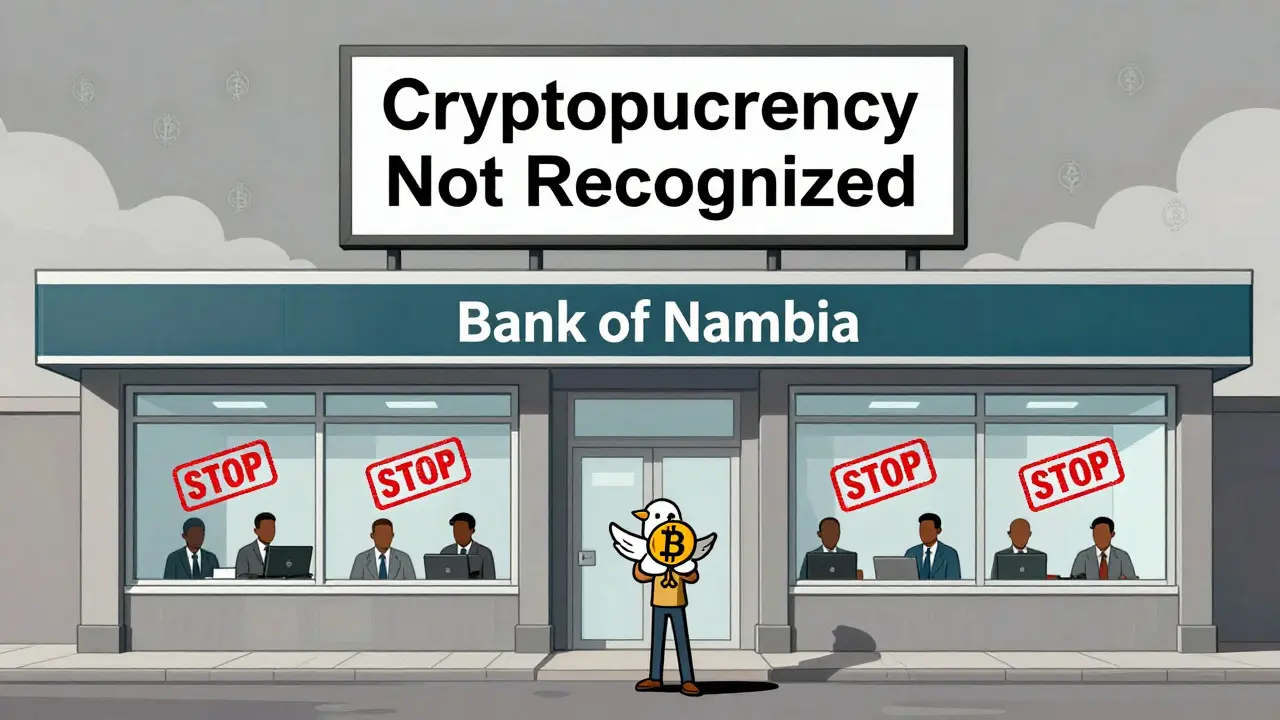
As of 2026, if you're trying to use Bitcoin or any other cryptocurrency in Namibia, you're walking through a legal gray zone - one where the government has built a cage for businesses but still tells individuals they're breaking the rules. It's confusing, frustrating, and frankly, inconsistent. The Bank of Namibia (BON) doesn't recognize crypto as legal tender. Yet, it's licensing companies to handle it. You can't trade crypto legally, but some firms are already operating under provisional permits. This isn't regulation. It's a holding pattern - and it's affecting real people every day.
How It Started: The 2018 Ban
In May 2018, the Bank of Namibia dropped a bombshell. It issued a public statement saying cryptocurrency isn't money, isn't supported, and if you lose money trading it, you're on your own. No recourse. No protection. No help from the central bank. That wasn't just a warning - it was a full shutdown of any official recognition. At the time, BON also said it opposed using crypto to buy goods or services. That stance was clear: crypto had no place in Namibia's financial system. That didn't stop people. Young entrepreneurs, tech-savvy investors, and even small businesses started using Bitcoin anyway. Peer-to-peer trades popped up. Some shops accepted crypto. But the banks noticed. And they reacted.The Banking Crackdown: Accounts Frozen, Customers Shunned
Here's where things got personal. Individuals who joined crypto investment clubs, bought Bitcoin, or even just held it in wallets found their bank accounts restricted. Major banks like NedBank and Standard Bank started flagging accounts linked to crypto activity. Some customers were locked out without explanation. Others received letters saying their accounts were under review for "suspicious activity." Legal experts called it overreach. The Bank of Namibia doesn't have the power to make laws - only to enforce them. But it started acting like it did. Without new legislation, freezing accounts based on crypto use was legally shaky. Still, the message was clear: if you're into crypto, you're a risk. And banks, scared of fines or regulatory penalties, followed suit.The Turning Point: The Virtual Assets Act of 2023
In June 2023, Namibia's National Assembly passed the Virtual Assets Act (Act No. 10 of 2023). This was the first real shift. For the first time, the government acknowledged that digital assets existed - and they needed rules. The law created a licensing system under the Namibia Financial Institutions Supervisory Authority (NAMFISA). Now, any company wanting to handle crypto - whether it's an exchange, wallet provider, or payment processor - had to register, prove its compliance, and get approved. The act also brought in international standards. The Travel Rule now applies: any crypto transaction over NAD 20,000 (about $1,000 USD) must include full sender and receiver details - names, ID numbers, account info. This isn't just paperwork. It's real-time monitoring. VASPs have to track every transaction, flag risks, and report to regulators automatically. But here's the twist: the law regulates the businesses - not the people. Trading crypto as an individual? Still not legal. The act didn't change the Bank of Namibia's position. It still says Bitcoin isn't money. It still says it doesn't support blockchain. So while companies can now apply for licenses, ordinary citizens are still stuck in the dark.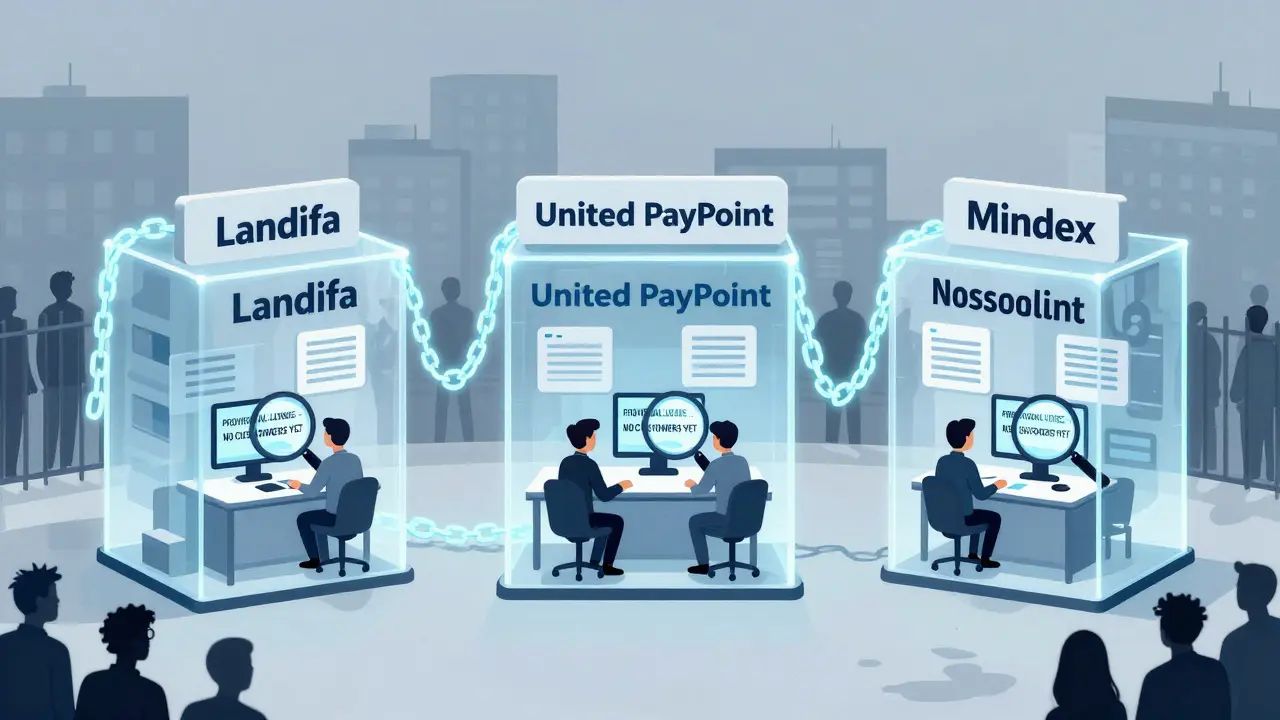
The Provisional License Experiment: Three Companies, No Public Access
In January 2025, BON granted provisional authorization to three companies: Landifa Bitcoin Trade CC, United PayPoint (Pty) Ltd, and Mindex Virtual Asset Exchange. At first glance, this looked like progress. But here's the catch: these companies aren't allowed to serve any customers - not yet. They're in a six-month regulatory sandbox. No trading. No deposits. No withdrawals. No interactions with Namibians. Their job? Build systems, hire staff, prove they can meet AML (anti-money laundering) and CTF (counter-terrorist financing) requirements. They have to show they can track every dollar, verify every user, and log every transaction - before they're allowed to open their doors. Even this limited progress isn't smooth. Two of the three companies asked for extensions. Landifa got until July 31, 2025. United PayPoint until May 13. Mindex got pushed to November 21. The Bank says it's doing "due diligence" - meaning they're digging deep into every detail of these firms' operations. If they fail any check, their license is gone. And here's the kicker: even if they pass, they still don't get full approval until after the six months. The bank can inspect early, but the final green light only comes after the full period. No shortcuts. No exceptions.Who Else Is Getting Licensed? The Broader Fintech Shift
It's not just crypto. The Payment System Management Act of 2023 (Act No. 14 of 2023) is reshaping the whole financial tech landscape. Companies like Finatic Technologies (Pty) Ltd - which offers digital payment services - also got provisional licenses. This shows the government isn't just trying to control crypto. It's trying to control digital money in general. The goal? Bring informal, unregulated fintech into the system. But that means crypto gets caught in the same net. If you're handling digital payments, you're subject to the same scrutiny - even if you're not dealing in Bitcoin.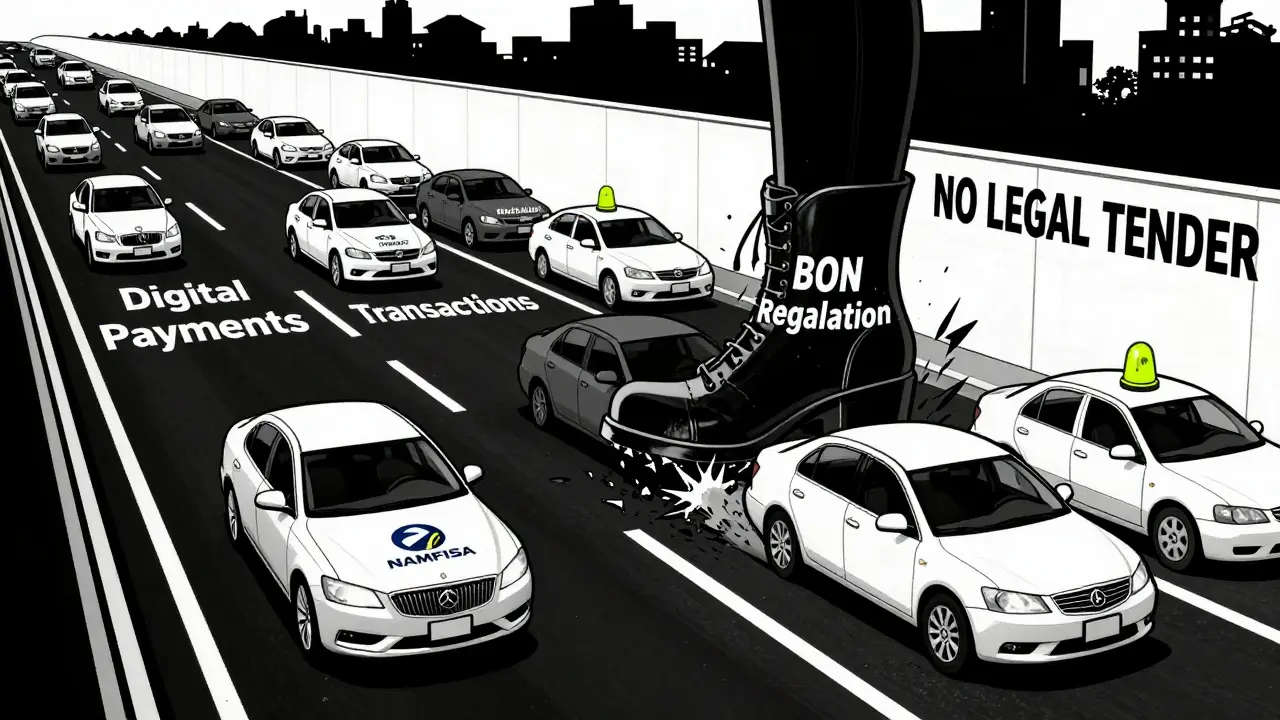
The Paradox: Regulating Businesses, Banning Individuals
Namibia's approach is like building a highway and then forbidding cars from driving on it. Companies are being trained to handle crypto. They're being monitored. They're being held to global standards. But the average person? If you buy Bitcoin on Binance, send it to a friend, or use it to pay for services - you're technically breaking the law. This creates chaos. What happens if you're a small business owner who accepts crypto? Are you a criminal? What if you're a student who mined a few coins? Are your bank accounts at risk? The rules don't say. And that's the problem. Legal analysts warn this isn't sustainable. The Bank of Namibia is using old financial regulations - meant for banks - to police something entirely new. Without clear laws protecting users, the system is unfair. And it's unstable.What's Next? The Uncertain Road Ahead
By late 2025, we'll know if the provisional licenses lead to full approval. If Landifa, United PayPoint, and Mindex pass their checks, Namibia could become one of the first African countries with a formal, supervised crypto industry. But if the bank denies them - or drags out the process - the entire system could collapse under its own weight. Meanwhile, the question remains: will the government ever legalize crypto trading for regular people? Right now, the answer is no. The Bank of Namibia still says it "does not recognize cryptocurrencies as legal tender." Until that changes, you're on your own. The only safe path? Use licensed VASPs - but only if they're fully authorized. And even then, don't expect your bank to be happy about it. The tension between innovation and control isn't going away. It's just getting more complicated.Is cryptocurrency trading legal in Namibia as of 2026?
No, cryptocurrency trading is not legal for individuals in Namibia as of 2026. While the Virtual Assets Act of 2023 allows licensed businesses to operate, the Bank of Namibia still does not recognize Bitcoin or other cryptocurrencies as legal tender. Individuals who trade, buy, or hold crypto are not protected by law and may face bank account restrictions.
Can I open a bank account if I trade crypto in Namibia?
It's risky. Major banks like NedBank and Standard Bank have frozen accounts linked to crypto activity. Even if you're not breaking any law, banks treat crypto transactions as high-risk. If you're actively trading, your account could be flagged, restricted, or closed without warning. There's no legal protection against this.
What is the Virtual Assets Act of 2023?
The Virtual Assets Act of 2023 (Act No. 10 of 2023) is Namibia's first law to regulate digital assets. It requires all Virtual Asset Service Providers (VASPs) to register with NAMFISA, implement strict anti-money laundering rules, and comply with the Travel Rule for transactions over NAD 20,000. It does not legalize crypto for individuals - only for licensed businesses.
Are crypto exchanges banned in Namibia?
Yes - but only foreign ones. The Virtual Assets Act bans all crypto exchanges not based in Namibia. Only local entities that apply for and receive a license from NAMFISA can operate. As of 2026, only three provisional license holders exist, and none are yet allowed to serve the public.
What happens if a licensed crypto company fails its provisional review?
If a company fails to meet the Bank of Namibia's compliance requirements during its six-month provisional period, its license will be denied. The bank has full authority to reject applications without explanation. There is no appeal process outlined in the law. Companies that fail are barred from reapplying for at least one year.
Do I need to report my crypto holdings to the government?
No - unless you're running a licensed business. Individual users are not required to report crypto holdings, purchases, or sales. However, if you use a licensed VASP, that company will report your transactions to NAMFISA automatically. Your personal data may be shared under the Travel Rule if you transact over NAD 20,000.
Can I use crypto to pay for goods and services in Namibia?
Technically, yes - but with risk. The Bank of Namibia doesn't recognize crypto as legal tender, but it also doesn't explicitly ban private agreements. Some businesses accept Bitcoin informally. However, if you're paid in crypto, your bank may flag your account. There's no legal protection if a transaction goes wrong.

Kaz Selbie
So let me get this straight - the government licenses companies to handle crypto but says you can't use it? That's not regulation, that's performance art. I've seen more coherent policy from a toddler with a crayon. This isn't a gray zone - it's a black hole with paperwork.
Brittany Meadows
The Bank of Namibia is just scared. They know crypto is the future, and they don't want to be left behind... but also don't want to admit it. 😏 Meanwhile, I'm over here buying Bitcoin with cash in a parking lot like it's 2013. #CryptoIsFreedom 🚀
krista muzer
i mean... its kinda wild that theyre letting companies operate in a sandbox but not letting normal people use it? like if you build a car and then ban everyone from driving it... whats the point? i think theyre just trying to control the narrative instead of actually solving the problem. also my bank flagged me for buying coffee with usdt last month. wtf.
Christopher Wardle
This isn't about regulation. It's about control. The central bank doesn't understand crypto, so it's trying to contain it through bureaucracy. The result? A system that punishes innovation while pretending to manage it.
Desiree Foo
I find it deeply concerning that Namibia is creating a two-tier system where businesses are forced into compliance while individuals are left in legal limbo. This isn't just inconsistent - it's ethically indefensible. If the government is serious about financial integrity, it must extend protections to citizens, not just corporations.
SAKTHIVEL A
The structural asymmetry inherent in the regulatory architecture is manifestly untenable. One cannot simultaneously institutionalize VASP compliance under the aegis of NAMFISA while maintaining a de facto prohibition on end-user participation. The epistemological dissonance between policy implementation and legal ontology is a textbook case of regulatory capture.
Tammy Chew
I mean like... if you're gonna make companies jump through hoops why not just let people use it already? it's not like they're gonna blow up the economy over someone buying a pizza with bitcoin. i'm just saying. also i hate how every article about crypto is written like it's a warzone
Claire Sannen
The provisional licenses are a smart move - it gives regulators time to build infrastructure without forcing users into risky territory. But the real issue is communication. If the government explained *why* individuals are excluded - not just "it's not legal" - people might actually understand. Transparency builds trust.
blake blackner
my bank froze my account for 3 weeks because i sent 0.005 btc to my cousin. 3 WEEKS. no explanation. just "suspicious activity." now they want me to submit my birth certificate and a notarized letter explaining why i "invested" in crypto. i'm not even rich. i just like tech. this is ridiculous.
kelvin joseph-kanyin
WE GOT THIS. 🙌 Namibia’s doing the hard work so others don’t have to. These companies are building the foundation - the real heroes are the ones who show up, stay compliant, and wait. Crypto ain’t about fast money. It’s about building systems that last. Stay patient. Stay smart.
Grace Mugambi
I love how this situation mirrors global crypto struggles. Every country tries to control something they don’t fully understand. But the truth? People will always find a way. The real question isn’t whether crypto will spread - it’s whether institutions will adapt or become obsolete.
Crystal McCoun
I just want to say - thank you for writing this. It's so clear, so detailed. I've been trying to explain this to my cousin for weeks, and now I can just send her this. The way you broke down the Virtual Assets Act and the sandbox process? Perfect. You made sense of chaos. 💙
John Doyle
I used to think crypto was just for tech bros. Then I met a guy in Windhoek who paid his rent in Bitcoin. He said, "Banks here don't trust me, but Bitcoin does." That hit me hard. This isn't about money. It's about dignity.
Holly Perkins
so like... if i buy btc and my bank freezes my account... is that illegal? or can they just do that? idk i feel like im missing something here. also why do all the companies have names like "United PayPoint (Pty) Ltd"? sounds like a scam website.
Will Lum
The sandbox approach is actually pretty smart. Let companies prove they can handle compliance before opening to the public. It’s not about banning people - it’s about avoiding chaos. The real problem? The government hasn’t told anyone this is the plan.
Robbi Hess
They're not regulating crypto. They're performing a slow-motion public execution. License three companies. Make them wait six months. Meanwhile, every citizen who dares touch Bitcoin is treated like a criminal. This isn't policy. It's theater. And the audience? Us.
Keturah Hudson
I'm American, but I've spent time in Namibia. The people here are incredibly resilient. They've been using informal networks for decades - from barter systems to mobile money. Crypto is just the next step. This regulation? It's trying to put a fence around a river. It won't work. But it might break the banks first.
Santosh kumar
I believe in progress. Even if it's slow. Even if it's confusing. The fact that Namibia even tried to create a framework is more than most African countries have done. I'm hopeful. The next step? Public education. Not fear.
Lindsey Elliott
LMAO they banned foreign exchanges but let local ones "apply"? So now crypto is a Namibian monopoly? Next they'll start printing their own Bitcoin. 🤡
Elijah Young
I don't think anyone realizes how dangerous this legal ambiguity is. Imagine being a small business owner who accepts crypto. One day your bank closes your account. No warning. No appeal. No recourse. That's not financial policy - it's financial terror.
Ekaterina Sergeevna
Oh, so now we’re pretending the government is "protecting" citizens by preventing them from using crypto? Please. They’re protecting the legacy banking cartel. The Travel Rule? That’s not anti-money laundering - that’s surveillance capitalism with a Namibian flag.