National Competent Authorities for Crypto in EU: How MiCA Licensing Works in 2025

When you run a crypto business in the European Union, you don’t just pick a country and start operating. You have to go through your country’s National Competent Authority - and that’s where things get real. Since December 30, 2024, the Markets in Crypto-Assets Regulation (MiCA) has been fully in force, turning every EU member state into a regulatory gatekeeper. There’s no single EU-wide license. Instead, each crypto firm must apply to its own country’s financial watchdog. And those watchdogs? They’re not new kids on the block. They’re the same agencies that have been overseeing banks, stock markets, and insurance firms for decades.
Who Are the National Competent Authorities?
Every one of the 27 EU countries picked a single regulator to handle crypto licensing and supervision. These aren’t random departments - they’re the same powerful financial bodies that already had the legal muscle and technical know-how to enforce rules. In Germany, it’s BaFin (Bundesanstalt für Finanzdienstleistungsaufsicht). In France, it’s the AMF (Autorité des Marchés Financiers). Spain uses CNMV, Italy uses CONSOB, and the Netherlands uses De Nederlandsche Bank (DNB). These agencies didn’t just wake up one day and start regulating crypto. They spent years preparing, hiring specialists, and building systems to handle MiCA’s complex requirements.By mid-2025, more than 40 Cryptoasset Service Provider (CASP) licenses had been issued across the EU. Germany and the Netherlands led the pack. BaFin started handing out licenses in January 2025 - not because they were in a rush, but because they moved carefully. They wanted to get it right. Meanwhile, the Netherlands, already known for its open stance toward crypto, issued some of the very first licenses the moment MiCA went live. Malta, which had built a crypto-friendly reputation years earlier, also moved quickly. These early adopters became de facto testing grounds for how MiCA would work in practice.
What Do NCAs Actually Do?
Getting a license is just the first step. Once approved, your crypto company is under constant watch. Your National Competent Authority doesn’t just stamp a permit and walk away. They monitor your daily operations. That means checking if you’re keeping client funds safe, if your internal controls are strong enough, and if you’re reporting suspicious transactions properly. You’ll need to submit regular audits, update your risk management plans, and prove you’ve got enough capital to cover losses. If you’re issuing stablecoins, your NCA will dig into your reserve holdings - making sure you actually have the euros or other assets backing your tokens.They also enforce rules around market abuse. Since April 2025, crypto platforms must have systems in place to detect and report suspicious trading - like pump-and-dump schemes or insider trading using non-public token data. If your platform fails to flag this, your NCA can fine you, suspend your license, or even shut you down. It’s not theoretical. Several firms have already received warnings from BaFin and the AMF for weak reporting systems.
And it’s not just about rules. NCAs are your main point of contact. If you need clarification on a MiCA requirement, you don’t email Brussels - you call your national regulator. If you want to launch a new token type, you submit your whitepaper to them first. If you’re expanding into another EU country, you still need to deal with their NCA too. That’s the reality of a decentralized system: you’re not just regulated by one authority - you’re regulated by many.
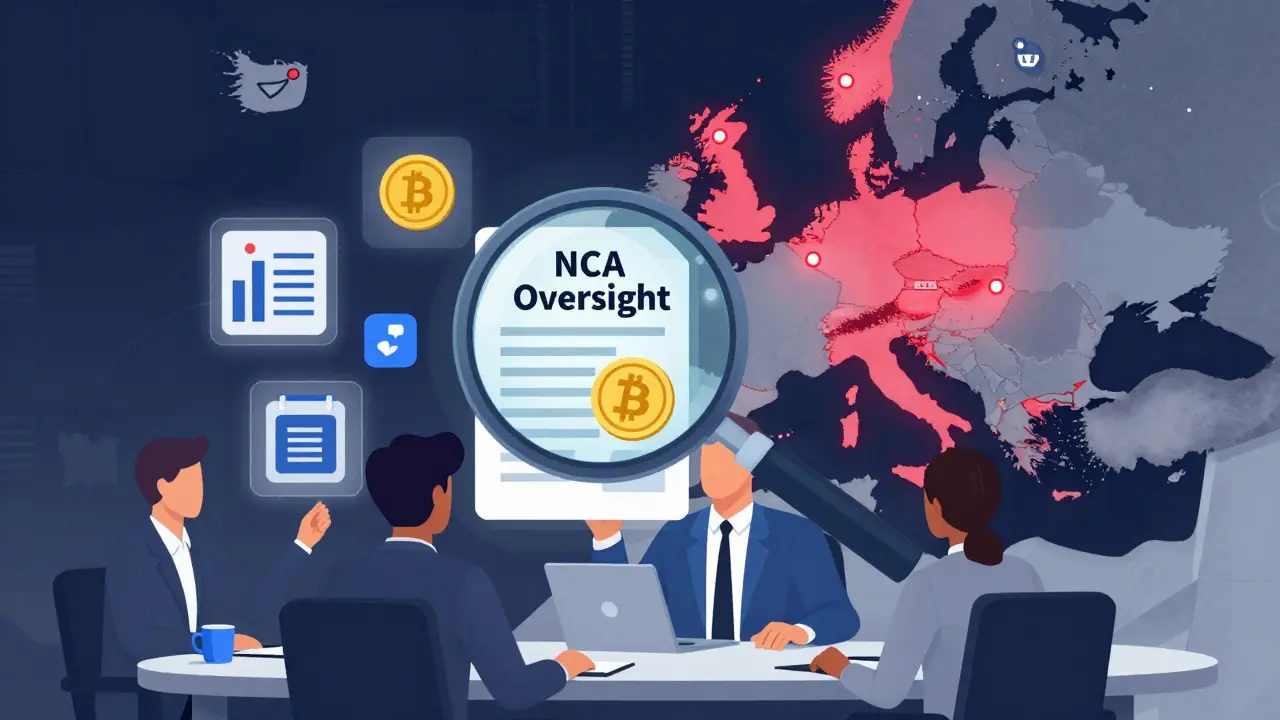
Why Are Some Countries Faster Than Others?
Not all NCAs move at the same speed. Why? Because they’re not clones. Each has its own culture, workload, and internal processes. Germany’s BaFin is known for being thorough - sometimes slow. They review every document line by line. The Netherlands, by contrast, has a more pragmatic, business-friendly approach. Their team was already familiar with crypto from years of working with exchanges like Bitvavo and Bitstamp. So when MiCA launched, they had templates ready, staff trained, and a clear workflow.Smaller countries like Estonia or Portugal took longer to set up their systems. Their NCAs had fewer resources and less experience with digital assets. Some still had staff learning how to interpret MiCA’s technical definitions around utility tokens versus asset-referenced tokens. Meanwhile, countries like Austria and Finland moved quickly not because they were more advanced, but because they had fewer applicants. Less pressure meant faster processing.
For crypto firms, this creates a strategic choice. Do you pick a country known for speed, even if it’s less prestigious? Or do you go with a heavyweight like Germany, knowing the wait could be six months - but your license carries more weight with investors and partners? Many startups chose the Netherlands for speed. Larger firms, especially those targeting institutional clients, went for Germany or France to signal credibility.
The Big Shift: Is the EU Moving Away from NCAs?
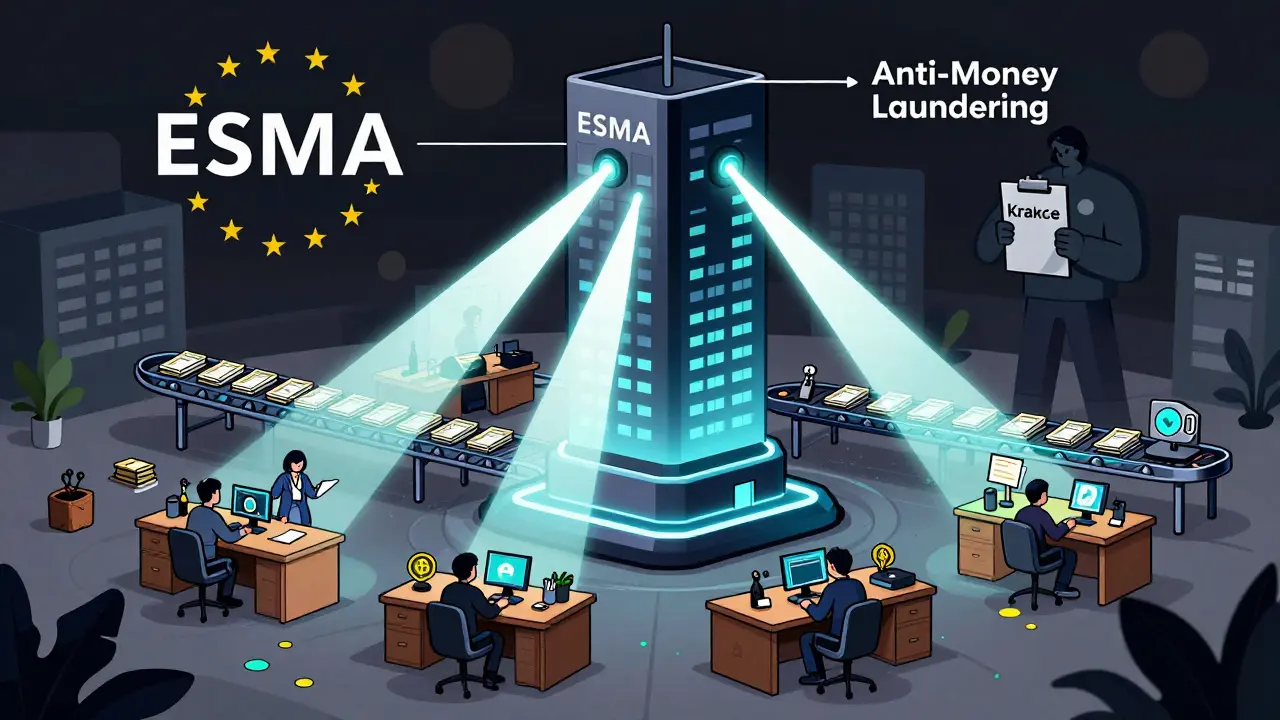
Here’s the twist: the EU is already planning to take power away from these very same authorities. In late 2024, ESMA’s chair Verena Ross confirmed the European Commission is drafting new rules to transfer supervision of major crypto firms directly to ESMA - the EU’s central financial watchdog. The goal? Stop duplicating work. Right now, 27 countries are each building their own crypto oversight teams, training staff, and developing internal systems. ESMA argues it’s inefficient. Why build 27 versions of the same thing when you can build one strong European system?The plan isn’t to eliminate NCAs entirely. It’s to create a two-tier system. Smaller firms - those operating mostly within one country - will still report to their national authority. But companies with a significant cross-border presence - think Binance, Kraken, or Coinbase if they operate in five or more EU countries - will fall under ESMA’s direct supervision. This mirrors how big banks are already handled in the EU. The European Central Bank supervises the largest ones; smaller banks stay under national control.
And it’s not just ESMA. The Anti-Money Laundering Authority (AMLA), launching in 2026, will take direct control of AML/CFT compliance for the biggest crypto firms. That means even if your company is licensed in Spain, if you’re a top-tier exchange, AMLA could come knocking for your transaction records - bypassing Spain’s CNMV entirely.
This shift is controversial. Some member states fear losing control over their financial markets. Others worry ESMA will become too powerful. But for crypto firms, it could mean less confusion. Instead of juggling five different regulatory interpretations of the same rule, you’d deal with one clear standard across the bloc.
What This Means for Crypto Businesses in 2025
If you’re launching a crypto service in the EU today, you’re in the middle of a transition. The rules are clear - MiCA is law. But the system is still evolving. Here’s what you need to do:- Choose your NCA wisely. Don’t just pick the first country on the map. Research processing times, past enforcement actions, and how strict they are on capital requirements.
- Prepare for ongoing costs. Licensing isn’t a one-time fee. You’ll pay annual supervision fees, hire compliance officers, and fund external audits. Budget for this.
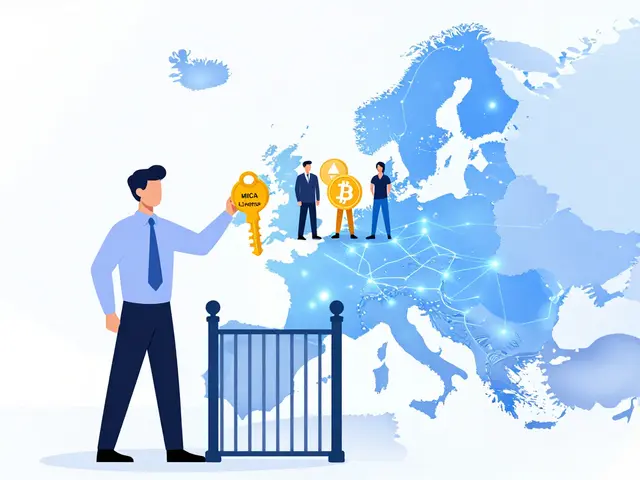
- Don’t assume one license covers all. If you want to serve customers in five countries, you may need to register with five NCAs - unless you qualify as a cross-border operator under the new ESMA rules.
- Watch for changes. The next 18 months will bring major shifts. If you’re a mid-sized firm, you might be pulled under ESMA’s watch in 2026 or 2027. Plan for it.
Many firms are already adjusting. Some are moving their legal headquarters to countries with faster licensing. Others are building dual-track compliance teams - one for national rules, one for future EU-wide requirements. The firms that survive won’t be the ones with the fanciest tech. They’ll be the ones who understand that regulation isn’t a hurdle - it’s part of the infrastructure now.
What’s Next?
The EU’s crypto regulatory model is the most advanced in the world. It’s not perfect - it’s complex, fragmented, and expensive. But it’s working. More than 40 firms are now legally operating under MiCA. Investors are starting to trust it. And regulators are learning fast.By 2027, the landscape will look very different. Some NCAs will still be the face of crypto regulation for small businesses. Others will fade into the background, handing over control to ESMA and AMLA. The real winners will be the companies that adapt - not just to the rules, but to the changing structure behind them.
If you’re thinking about entering the EU market, don’t wait. The window to get licensed under the current system is closing. And when the centralization kicks in, the rules will change again - faster this time.
What is a National Competent Authority (NCA) in the EU for crypto?
A National Competent Authority is the official financial regulator in each EU member state responsible for licensing and supervising crypto businesses under MiCA. Each country designates one agency - like BaFin in Germany or AMF in France - to handle applications, enforce compliance, and monitor ongoing operations. These are not new agencies; they’re existing financial watchdogs given new powers over crypto-assets.
Do I need to apply to multiple NCAs if I operate in several EU countries?
Yes - unless you qualify as a cross-border operator. Under current MiCA rules, you must apply for a license in the country where you have your main office. But if you want to offer services in other EU countries, you either need to register with each country’s NCA or apply for a passporting arrangement. Starting in 2026, larger firms may be directly supervised by ESMA instead, which would simplify this process.
Which EU country is easiest to get a crypto license in?
As of mid-2025, the Netherlands and Germany have issued the most licenses. The Netherlands is known for faster processing and a business-friendly approach, making it popular with startups. Germany’s BaFin is slower but offers stronger credibility with institutional investors. Smaller countries like Portugal or Estonia are catching up but may have longer delays due to less experience with crypto regulation.
What happens if I don’t get licensed under MiCA?
Operating without a MiCA license after December 30, 2024, is illegal in the EU. Your services can be blocked by national authorities, your bank accounts frozen, and your executives fined or barred from the industry. NCAs have the power to issue public warnings, shut down websites, and refer cases to law enforcement. Many firms have already been forced to halt operations in the EU because they didn’t apply in time.
Will ESMA replace all NCAs in the future?
No. ESMA will only take direct supervision of the largest crypto firms that operate across multiple EU countries - those with significant cross-border activity. Smaller firms that operate mostly within one country will still report to their National Competent Authority. The goal is not to eliminate NCAs, but to reduce duplication and improve consistency for the biggest players.


Madhavi Shyam
MiCA’s NCA fragmentation is a regulatory nightmare. CASPs are drowning in 27 different compliance frameworks. BaFin’s 6-month review cycle? Unscalable. The Netherlands’ speed is the only viable path for startups. This isn’t harmonization-it’s regulatory colonialism disguised as integration.
Mark Cook
lol who even cares about NCAs anymore? 🤡 ESMA’s gonna swallow them all anyway. Crypto’s already dead in the EU. Just move to Dubai or Singapore and stop wasting your time with bureaucrats. 🚀
Jack Daniels
i read this whole thing and i just feel... empty. like the system is designed to make you give up. not because it's hard-but because it's meaningless. why bother trying to be legal when the rules keep changing under your feet?
Bradley Cassidy
yo the way germany and netherlands are handlein this is wild 😍 bafin’s like a grumpy grandpa with a magnifying glass goin over every comma, but dnb? they got the vibe of that one chill uncle who just says ‘yeah sure, here’s your license, go make magic’ 🤝 i love it. the contrast is art.
Samantha West
The structural asymmetry inherent in the current MiCA framework reveals a fundamental epistemological flaw in the EU’s regulatory ontology. By decentralizing oversight to 27 distinct sovereign entities, the Union inadvertently replicates the very fragmentation it purports to eliminate. The NCA paradigm is not merely inefficient-it is ontologically incoherent.
Craig Nikonov
They’re lying. ESMA isn’t ‘streamlining’-they’re creating a single point of control. Who owns ESMA? Hint: it’s not you. The ECB, the IMF, the same people who crashed 2008. They want to track every transaction, every wallet, every Satoshi. This isn’t regulation-it’s surveillance under a fancy acronym.
Donna Goines
Have you ever wondered why Malta was first? They had the licenses ready before MiCA even passed. Coincidence? I don’t think so. The whole thing is rigged. The big players got the early access. The rest of us are just guinea pigs in some EU lab experiment. They’re testing how much control they can take before the public wakes up.
Greg Knapp
why do we even have ncas anymore if esma is gonna take over anyway just merge them all now save the money stop wasting months on paper shuffling i swear this whole system is just a giant tax on innovation
Shruti Sinha
Interesting breakdown. The Netherlands’ pragmatic approach makes sense given their prior exposure to crypto exchanges. BaFin’s caution, while slow, reduces systemic risk. Both models have merit depending on firm size and investor profile. The key is aligning strategy with regulatory culture, not just speed.
Cheyenne Cotter
Okay so I’ve been thinking about this for like three days and I just can’t shake this feeling that MiCA is kind of like… the EU’s version of trying to put a leash on a wild cat? Like they’re trying to tame something that’s inherently decentralized and unpredictable and honestly I think they’re just gonna end up looking silly in a few years when everyone’s just using private chains or off-chain solutions and the NCAs are sitting there with their little spreadsheets and audit reports wondering why no one’s paying attention anymore
Sean Kerr
you guys are overthinkin it 😊 just pick the netherlands, get licensed, keep your books clean, and go build! 🚀 esma’s coming, sure-but you don’t need to panic, just stay nimble. you got this! 💪 (ps: i’ve been through this with 3 startups, trust me)
Heather Turnbow
The evolution of regulatory oversight in the European Union, particularly under MiCA, reflects a necessary transition from fragmented sovereignty to coordinated governance. While the current NCA structure imposes operational burdens, it also ensures contextual compliance with national legal traditions. The impending centralization under ESMA and AMLA, while potentially disruptive, represents a maturation of regulatory architecture rather than its erosion.
Jesse Messiah
really appreciate this breakdown-i was totally lost before reading this. the netherlands vs germany thing makes so much sense now. i think i’ll start with the netherlands for speed and then pivot if we scale. thanks for the clarity! 🙌
Rebecca Kotnik
The notion that regulatory fragmentation is inherently inefficient assumes that uniformity equates to effectiveness. However, the diversity of NCAs allows for experimentation, localized adaptation, and innovation in compliance culture. While ESMA’s consolidation may reduce administrative overhead, it risks homogenizing regulatory responses, potentially stifling the very adaptability that has enabled early success in jurisdictions like the Netherlands. The future may not be centralization-but rather, a federated model where NCAs retain autonomy under shared ESMA standards.