NATIX Network (NATIX) Crypto Coin: DePIN & Physical AI Guide
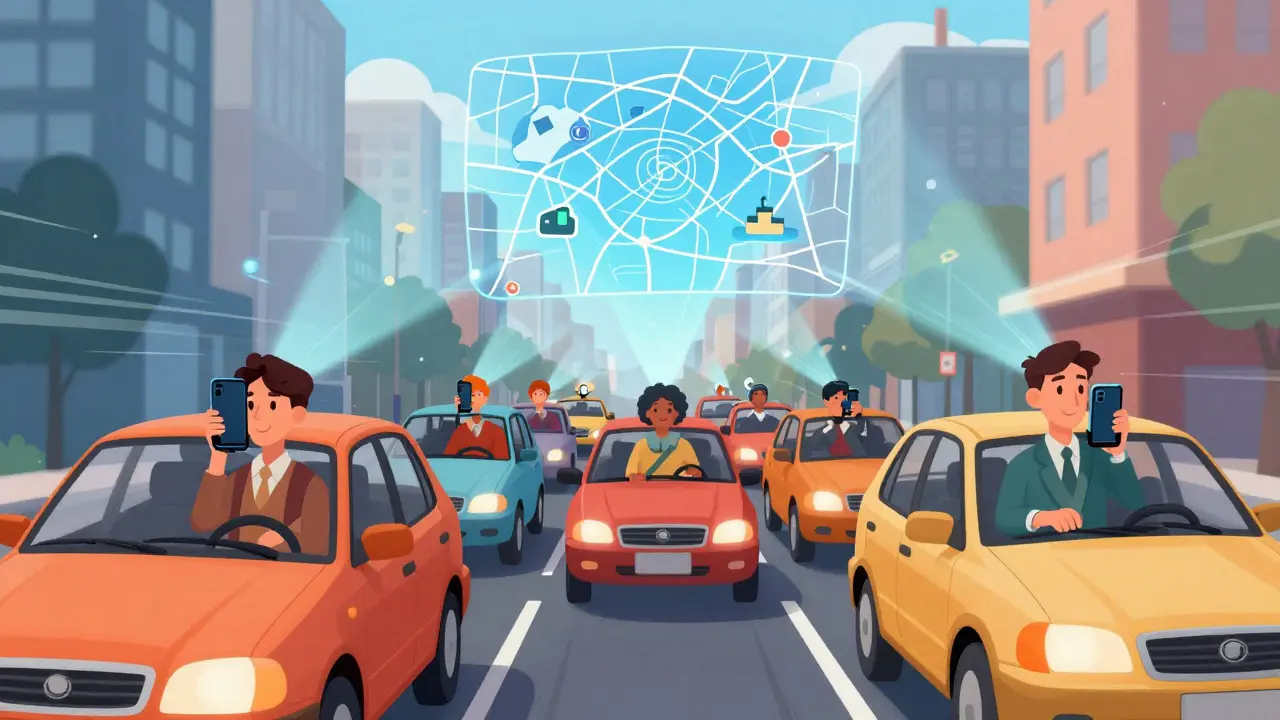
Imagine your smartphone camera doing more than just capturing photos. What if every time you drove to work, that simple act of looking at the road helped build a real-time map for self-driving cars? That is the core promise behind NATIX Network, a project turning everyday devices into powerful data engines. It operates in the DePIN sector, which stands for Decentralized Physical Infrastructure Networks. Instead of relying on expensive, specialized survey vehicles owned by big tech companies, NATIX crowdsources visual data from millions of regular people using their phones and car cameras. This approach aims to create an "Internet of Cameras" that feeds high-quality geospatial intelligence into the world of autonomous driving and smart mobility.
How NATIX Turns Cameras into Data Assets
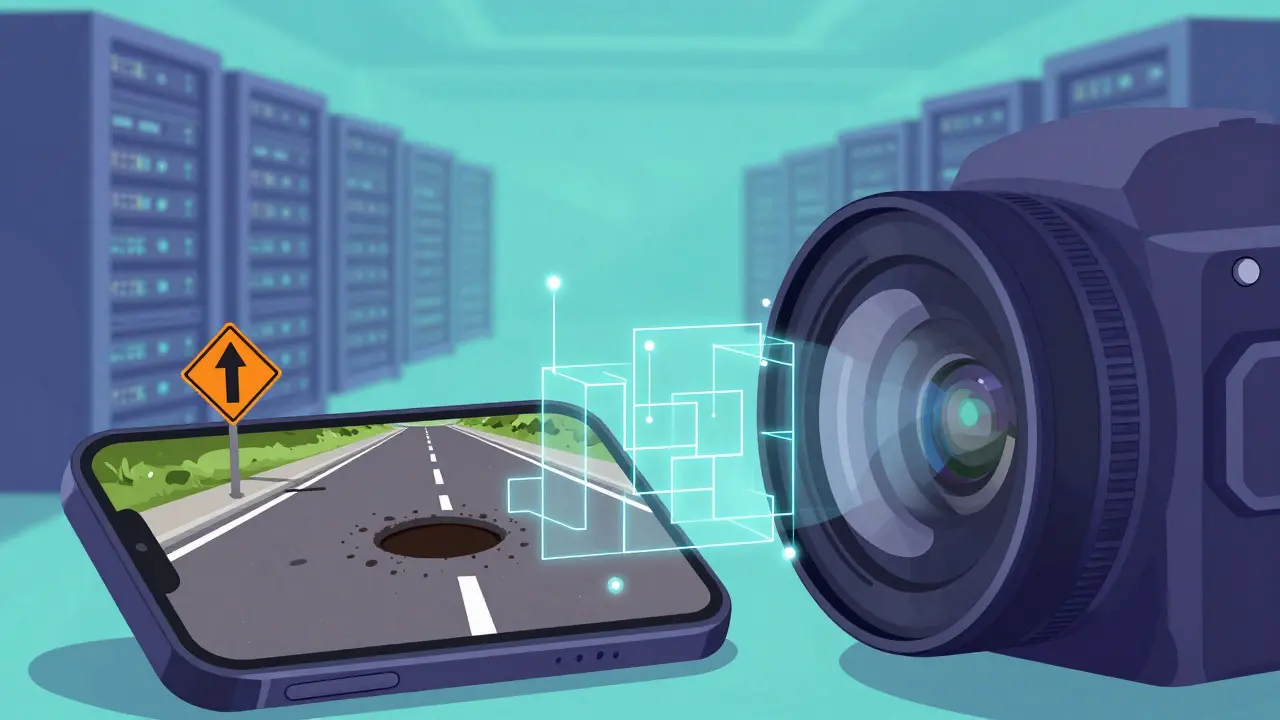
The technology behind NATIX is built on the concept of decentralized physical AI (DePAI). Traditional mapping services often use static data or periodic surveys, which can become outdated quickly. NATIX solves this by processing raw video feeds in real time. Using proprietary computer vision models, the network analyzes what the camera sees-traffic signs, potholes, lane markings, and construction zones-and converts that unstructured visual information into structured, usable data points. This data is then made available to developers and enterprises who need up-to-the-minute road conditions for navigation systems or autonomous vehicle safety protocols. By leveraging existing hardware like smartphones and Tesla vehicle cameras, NATIX significantly lowers the barrier to entry for high-resolution mapping, making it far more cost-effective than deploying fleets of LiDAR-equipped cars.
The Role of the NATIX Token
To keep this massive network running, NATIX uses its native cryptocurrency, the NATIX token. This asset lives on the Solana blockchain, known for its high speed and low transaction fees. The token serves three main purposes within the ecosystem. First, it acts as the reward mechanism for data contributors. When you drive with the NATIX app active, you earn NATIX tokens based on the quality and volume of data captured. Second, it functions as the unit of account for the network. If an enterprise wants to access premium geospatial datasets, they pay in NATIX. Third, it powers governance and staking, allowing holders to vote on protocol changes and secure the network. This economic loop ensures that as the network grows and more data is produced, the demand for the token increases naturally, tying its value directly to real-world utility rather than pure speculation.
Product Evolution: From Drive& to VX360
NATIX did not start with a single product; it evolved. Initially, the flagship consumer application was called Drive&. This app gamified the process of data collection, encouraging users to keep their phones mounted while driving to earn rewards. It was designed to be user-friendly, requiring only basic permissions for camera and location access. However, by April 2026, the project made a strategic pivot. They shifted their primary focus to a new product called VX360. While the underlying crowdsourcing model remains the same, VX360 represents a move toward more robust, infrastructure-level applications. This shift aligns with NATIX’s broader goal of serving B2B clients in the automotive and smart city sectors, moving beyond casual consumer engagement to becoming a critical data provider for professional autonomous driving stacks. This transition also coincided with NATIX joining the Autoware Foundation, a major open-source consortium for autonomous driving software, signaling deeper integration into the industry's core technical standards.
| Feature | NATIX Network | Traditional Proprietary Maps |
|---|---|---|
| Data Source | Crowdsourced smartphones & vehicles | Dedicated survey vehicles & satellites |
| Update Frequency | Real-time / Near-live | Periodic (weeks to months) |
| Cost Structure | Low marginal cost per data point | High fixed costs for fleet maintenance |
| Access Model | Open via API (paid in NATIX) | Licensed subscriptions (USD/EUR) |
| Incentive Mechanism | Crypto rewards for contributors | Employee salaries / Contractors |
Tokenomics and Market Position
Understanding the supply dynamics is crucial for anyone considering the NATIX token. As of mid-2026, the circulating supply hovers around 40.6 billion tokens. To manage inflation and align economics with network growth, the team executed a significant token burn in April 2026, removing 110 million NATIX from circulation permanently. This action reduces the total supply, theoretically increasing scarcity. In terms of market position, NATIX is classified as a micro-cap asset. With prices consistently trading below $0.0001 USD in recent months, the daily trading volume remains modest, typically ranging between $160,000 and $170,000. This indicates that while the project has steady interest, it has not yet experienced the massive speculative spikes seen in larger DePIN projects like Helium or Render. For investors, this suggests a higher risk profile but also potential upside if the network achieves critical mass adoption in the autonomous driving sector.
Getting Started with NATIX
If you want to participate in the NATIX ecosystem, the process is relatively straightforward, though it does require some familiarity with Web3 basics. Here is how you can get involved:
- Set Up a Wallet: Since NATIX is on Solana, you will need a compatible wallet such as Phantom or Solflare. Ensure you have some SOL for gas fees if you plan to trade or stake.
- Download the App: Install the current NATIX application (currently focused on VX360 features) from the relevant app store. You will need to grant camera and location permissions.
- Connect Your Wallet: Link your Solana wallet to the app to receive your data contribution rewards directly in NATIX tokens.
- Start Contributing: Simply drive or walk with the app active. The system automatically processes the visual data and credits your account based on valid contributions.
- Monitor Rewards: Keep an eye on your earnings and consider staking your NATIX tokens to earn additional yields while supporting network security.
Risks and Future Outlook
Like any early-stage infrastructure project, NATIX faces specific challenges. The primary risk is network scale. To compete with giants like Google Maps, NATIX needs a massive number of active contributors to ensure comprehensive global coverage. If user adoption slows, data gaps may persist in less populated areas. Additionally, regulatory clarity around data privacy and autonomous vehicle operations could impact how widely the data is adopted by automotive OEMs. However, the future looks promising due to the growing demand for real-time geospatial data in smart cities and robotics. By positioning itself as the "eye for Physical AI," NATIX is targeting a fundamental layer of the next technological wave. The integration with the Autoware Foundation further solidifies its credibility, suggesting that NATIX is not just a crypto experiment but a serious contender in the physical AI data economy.
What blockchain is the NATIX token built on?
The NATIX token is deployed on the Solana blockchain, which allows for fast transactions and low fees, ideal for frequent micro-rewards paid to data contributors.
Do I need special hardware to contribute data to NATIX?
No, you do not need special hardware. A standard smartphone with a camera and internet connectivity is sufficient. Vehicles with built-in cameras, such as Teslas, can also integrate into the network.
What happened to the Drive& app?
By April 2026, NATIX shifted its primary focus from the consumer-oriented Drive& app to a product called VX360. This pivot marked a move toward more enterprise-focused applications while maintaining the crowdsourced data model.
How does NATIX make money?
NATIX generates revenue by selling access to its real-time geospatial data feeds to enterprises, autonomous driving developers, and smart city planners. These customers pay using NATIX tokens, creating demand for the asset.
Is the NATIX token highly volatile?
Yes, as a micro-cap DePIN token with a price under $0.0001, NATIX is considered high-volatility. Its value depends heavily on network adoption rates and strategic partnerships rather than established cash flows.


Abigail Sparks
Okay, listen up! This is actually a brilliant concept. We are literally sitting on gold mines of data in our cars right now and we just throw it away. The fact that NATIX is trying to monetize that via DePIN is genius. It’s not just about the crypto, it’s about building the backbone for autonomous vehicles without relying on Big Tech monopolies. If you have a phone, you have an asset. Stop hoarding your pixels and start contributing to the future of mobility!
Leah Humphrey
The latency overhead from processing raw video feeds on edge devices versus centralized servers is going to be a nightmare for real-time geospatial integrity. They claim 'real-time' but the inference models required to parse lane markings and traffic signs at 60fps on a mid-range smartphone camera are computationally expensive. Unless they have a proprietary quantization algorithm that drastically reduces FLOPs without sacrificing accuracy, this whole 'Internet of Cameras' pitch is just marketing fluff for a token that has no fundamental yield.
Rod Sidoroff
Let us be honest here. The only reason anyone is looking at this is because the chart looked interesting for a second. The 'Physical AI' angle is just a fancy way of saying 'we want people to drive around with their phones out.' The Autoware Foundation partnership is nice, sure, but until there is actual revenue from OEMs paying for this data, it is just a vanity project for early adopters who like the idea of being pioneers. Most of you do not even know what a LiDAR point cloud is, yet you are buying into this narrative.
Jay Johhnston
I think the shift from Drive& to VX360 makes a lot of sense. Consumer apps are hard to sustain when the value proposition is just 'earn some tokens.' Moving to B2B infrastructure means you are solving a real problem for companies that need constant map updates. It feels more grounded than the initial consumer hype. I am curious to see how they handle data privacy though, especially with GDPR in Europe.
Niall O'Rourke
you guys are all missing the point. its not about the data. its about the control. google maps owns the roads. if natix gets big enough they own the roads too. just different owners. same old story. why would i trust a crypto company with my location data more than google? probably wont. but hey maybe its better than nothing. or maybe its worse. hard to say without seeing the code.
Claudio Perrone
So basically we are all becoming surveillance drones for a blockchain?? That is wild. I mean cool in a dystopian sci-fi way but also terrifying. My mom drives like a grandma so her data must be super noisy. Does the AI filter out her bad driving habits or does it learn that stopping at every stop sign is the new normal? This is where the human element messes up the machine learning model. Pure chaos theory in action.
Aaron Morrissey
One must appreciate the sheer audacity of attempting to decentralize physical infrastructure. It is a noble endeavor, akin to the early days of the internet itself. However, the friction involved in onboarding non-technical users onto a Solana wallet remains a significant barrier. If the user experience is not seamless, the network effect will stall before it truly begins. We stand at the precipice of a new era, but caution is warranted.
Patrick Quairoli
they burned 110 million tokens? lol. classic pump and dump tactic disguised as deflation. look at the volume. 160k daily. thats a rounding error. who is buying this? insiders? surely its not retail. the whole autoware thing is just a PR stunt to get attention. wait till you see the regulatory crackdown on 'data mining' via private cameras. its coming. mark my words. the government will step in and nationalize the map data eventually because nobody trusts a decentralized entity with critical infrastructure.
Sarah Campbell
Finally a US-friendly project! 🇺🇸🚗 No more waiting on European regulators to approve something simple. If you have a Tesla you are already part of the future. Just turn it on and let it work. Why are people overthinking this? It is just data. Data is power. And we are getting paid for it. That is American ingenuity right there. Let the rest of the world catch up to our innovation speed! 🔥💰
Lance Konig
The comparison table in the article is misleading. Traditional mapping services use satellites which provide global coverage instantly. Crowdsourcing requires density. In rural areas, NATIX will have zero data while Google has satellite imagery. The 'real-time' claim is only valid in high-density urban centers. For autonomous driving, you need redundancy. Relying solely on crowdsourced phone cameras introduces single points of failure that traditional methods avoid through multi-sensor fusion.
Dina Lazarova
It is rather tedious to read yet another guide on a micro-cap coin that promises revolution but delivers volatility. The formal structure of the post suggests a serious undertaking, yet the underlying asset class remains speculative. One wonders if the 'enterprise' clients mentioned are genuine or merely placeholders in a whitepaper. The transition from Drive& to VX360 indicates a lack of focus, a common trait in projects that pivot too frequently to find product-market fit.
Alexander Scheel
How delightful to see such a naive optimism regarding data privacy. You simply assume that 'structured data points' imply anonymity. In reality, visual data can identify individuals by their vehicle plates, gait, and facial features unless heavy obfuscation is applied. If NATIX fails to implement robust on-chain identity management, they are not building a network; they are building a database of citizens for sale. A moral hazard, indeed.
Evelyn Kula
You think this is safe? 🤔 Big Tech hates competition. Watch them sue for patent infringement on computer vision models. Or better yet, watch the FCC regulate 'unlicensed spectrum usage' for these devices. It is all a setup. The elites want to control the roads, and they will use regulation to crush any decentralized threat. Stay awake people. The truth is in the code, but the code is written by the powerful. 📉👀
manish jha
In India, we have a massive fleet of two-wheelers. This technology could be revolutionary for bike navigation in chaotic cities like Mumbai or Delhi. But the hardware requirement is a hurdle. Not everyone has a smartphone mounted securely. Still, the potential for low-cost data collection is huge. If they optimize for lower-end Android devices, the adoption rate could explode. We need more such initiatives to bridge the digital divide in physical infrastructure.
alex fordy
This really got me thinking about the environmental impact. 🌍 Instead of running gas-guzzling survey trucks around the country, we are using energy we are already consuming (driving). It’s a win-win. Plus, knowing that your daily commute contributes to safer self-driving cars feels pretty good. It turns a mundane task into something productive. Who knew commuting could be so meaningful? 😊🚗✨
Sonia Gomez Gomez
Does anyone else feel like this is just a way for tech companies to spy on us? I mean, sure, it helps with maps, but do we really want our every move tracked? I gave my location data to Uber and now I get ads for restaurants near my office. With NATIX, it is permanent. Is that worth the few cents in crypto rewards? I am not sure. We need to be careful about what we give away. Privacy is dying, folks. :-(
SHIV SHANKAR KANTA
the soul of the city is captured in these pixels. when you drive you are not just moving you are witnessing history. the pothole is a scar. the new sign is a promise. natix captures the breath of the street. it is poetic in a way. we are the eyes of god on the asphalt. don't ignore the beauty in the data stream. it is alive. it is breathing. wake up and see the world as it truly is. not as google wants you to see it. :-/
Daniel Brown
Just checked the API docs. The latency is actually impressive for a crowdsourced feed. They are using edge computing to process frames locally before sending metadata. That solves the bandwidth issue I was worried about. If this works at scale, it changes the game for last-mile logistics too. Not just cars, but delivery bots. The application scope is wider than the article suggests. Keep an eye on their developer portal.
Marco Maldonado
Stop worrying about EU regulations and start worrying about US efficiency! We are the ones who drive the most miles per capita. That is our advantage. We have the data. We have the hardware. We just need the will to build it here. Don't let the bureaucrats slow us down. This is an American opportunity to lead the world in Physical AI. Get your phones ready and let's show the rest of the globe how it's done! 🇺🇸🚀