North Korea Crypto Ban and State-Sponsored Hacking: The $2.17 Billion Theft Crisis
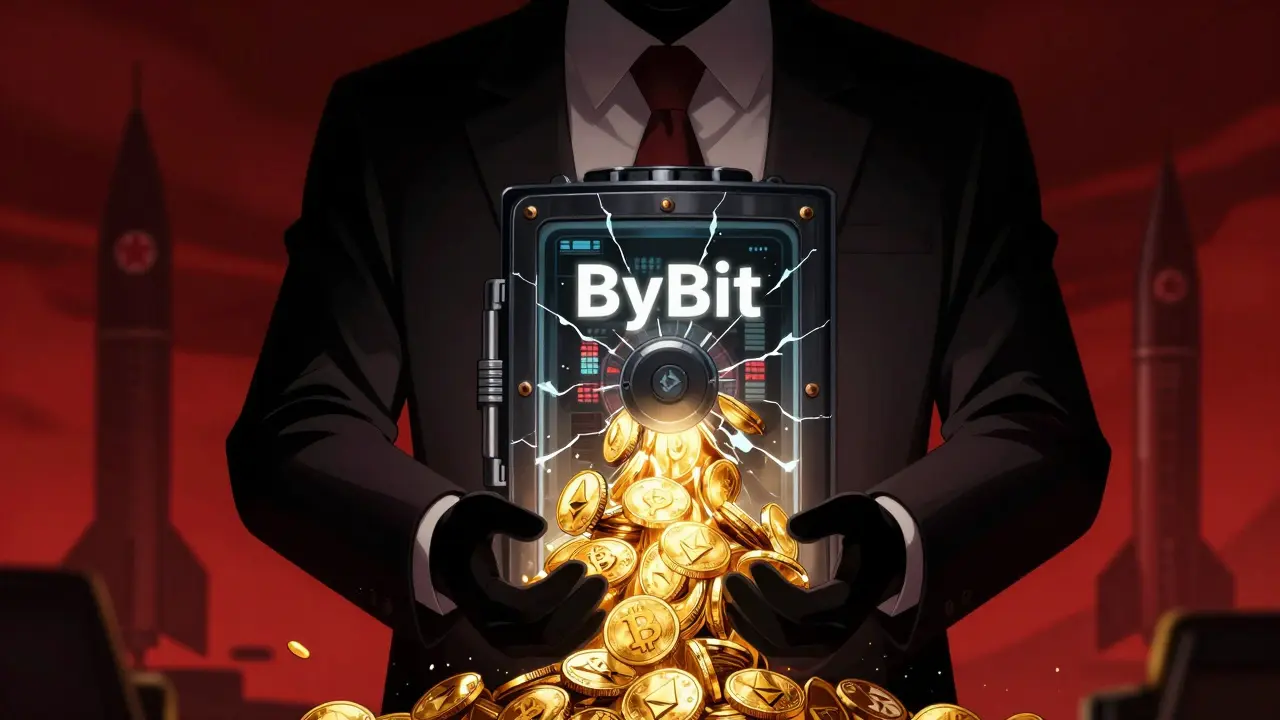
Imagine a nation so heavily sanctioned that it cannot legally buy oil or sell goods on the global market, yet it somehow funds its nuclear program with billions of dollars in cash. That is the reality of North Korea's state-sponsored cryptocurrency hacking operations. While headlines often focus on diplomatic tensions or missile tests, the real story unfolding in 2025 and 2026 is digital. The Democratic People's Republic of Korea (DPRK) has transformed from a pariah state into the world’s most prolific cybercriminal enterprise, stealing over $2.17 billion in virtual assets in just one year.
This isn't just about theft; it is a sophisticated economic survival strategy. By leveraging advanced social engineering, infiltrating Western tech firms with disguised IT workers, and exploiting loopholes in decentralized finance, North Korea has turned cryptocurrency into its primary revenue stream. If you are involved in crypto, whether as an investor, developer, or exchange user, understanding this threat landscape is no longer optional-it is essential for your security.
The Record-Breaking ByBit Hack: A Turning Point
To understand the scale of the threat, we have to look at the single biggest event in recent crypto history: the ByBit exchange breach. On February 21, 2025, the Federal Bureau of Investigation (FBI) confirmed that North Korean actors, designated as "TraderTraitor," stole approximately $1.5 billion USD in virtual assets. This wasn't a minor glitch or a phishing email sent to a junior employee. It was a highly coordinated attack that compromised what was supposed to be impenetrable infrastructure.
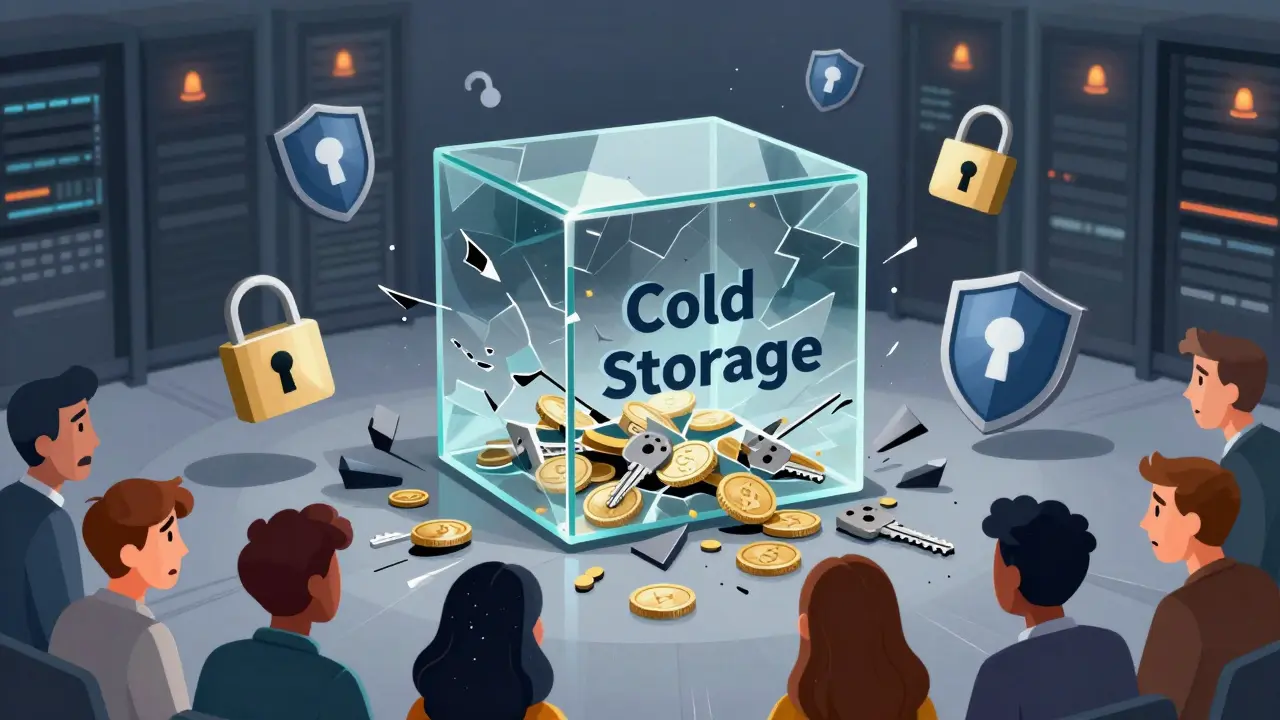
Here is why this matters: the attackers breached a "cold" storage wallet. Cold wallets are hardware devices kept offline, isolated from the internet, specifically designed to prevent exactly this kind of remote hacking. For years, the industry believed cold storage was safe. The ByBit hack shattered that illusion. It suggests that North Korea didn't just guess a password; they likely gained access through insider threats or sophisticated supply chain compromises, proving their capabilities have evolved far beyond simple brute-force attacks.
This single incident accounted for nearly 70% of all crypto stolen globally in 2025. It signaled a shift from opportunistic scams to strategic, high-value heists. The money was rapidly converted into Bitcoin and dispersed across thousands of addresses on multiple blockchains, making tracking difficult but not impossible. The FBI identified specific Ethereum addresses linked to these actors, showing that while the laundering is complex, the digital footprint remains.
The Three-Pronged Strategy: How DPRK Evades Sanctions
North Korea doesn't rely on luck. Their approach to generating revenue through crypto is systematic and threefold. Understanding these pillars helps explain why international sanctions have failed to stop them.
- Direct Exchange Hacks: As seen with ByBit, they target centralized exchanges where large pools of liquidity sit. These attacks are rare but massive, aiming for quick, life-changing sums for the regime.
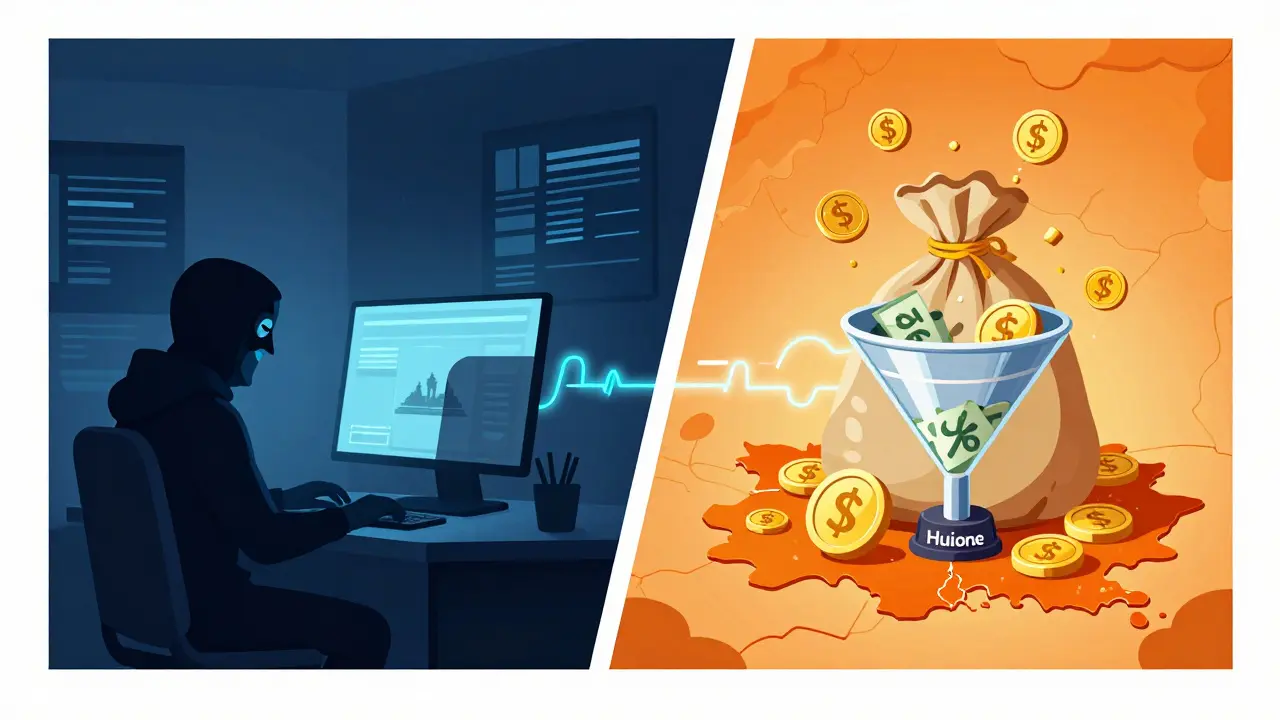
- Money Laundering Networks: They don't keep the stolen crypto forever. They need fiat currency to buy weapons and food. This is where third countries come in. Cambodia has emerged as a primary hub due to its loosely regulated financial sector. In May 2025, the U.S. Financial Crimes Enforcement Network (FinCEN) targeted the Huione Group, a Cambodian entity that laundered roughly $37.6 million in North Korean-linked crypto between 2021 and 2025. Huione issued stablecoins that couldn't be easily frozen, allowing illicit funds to move freely.
- Disguised IT Workers: Perhaps the most insidious tactic is human infiltration. The United Nations estimates that North Korea generates up to $600 million annually by sending IT workers abroad. These individuals use fake identities, posing as nationals from China, Russia, or Southeast Asia. They work remotely for Western companies, using VPNs to hide their location. Many are unknowingly hired by legitimate tech firms, only to later turn those skills against the very industries they served.
Who Are the TraderTraitor Actors?
The name "TraderTraitor" might sound like a video game villain, but it is the official designation used by the FBI for this specific North Korean group. They are not rogue hackers acting alone; they are state-sponsored operatives working directly for the Kim regime. Their goal is clear: bypass international sanctions to fund nuclear and ballistic missile programs.
These actors excel at social engineering. Instead of trying to break down digital walls with code, they trick people inside the walls. They compromise IT personnel, steal credentials, and gain administrative access. Once inside, they move silently. The sophistication required to breach cold storage implies deep operational security and significant resources. It also suggests that underground financial networks, particularly in China, have enhanced their capacity to absorb and process these illicit funds quickly.
The U.S. government has responded aggressively. The Department of the Treasury's Office of Foreign Assets Control (OFAC) sanctioned the Korea Sobaeksu Trading Company and key individuals like Kim Se Un and Jo Kyong Hun. These entities act as front companies, procuring materials and managing the financial logistics of the hacks. Indictments have been unsealed against seven DPRK nationals, and rewards of up to $7 million have been offered for information leading to their arrest.
| Threat Vector | Methodology | Estimated Impact (2024-2025) | Primary Target |
|---|---|---|---|
| Exchange Hacks | Cold storage compromise, insider threats | $2.17+ Billion (2025 alone) | Centralized Exchanges (CEX) |
| IT Worker Fraud | False identities, remote work exploitation | $600 Million Annually | Western Tech Firms |
| Money Laundering | Third-party hubs (Cambodia), un-freezable stablecoins | $37.6 Million (via Huione) | Financial Systems |
The Role of Cambodia and Global Complicity
You might wonder how a country like North Korea can move billions without getting caught. The answer lies in the complicity-or negligence-of other nations. Cambodia has become a critical node in this network. Its financial regulations are loose enough to allow entities like Huione to operate with minimal oversight. Huione Guarantee provided technical tools for scams, while Huione Crypto issued stablecoins that effectively bypassed traditional banking controls.
This isn't just a bilateral issue between the U.S. and North Korea. It involves global supply chains, remote work platforms, and blockchain protocols. When North Korean workers pose as developers in Europe or the U.S., they exploit our trust in remote collaboration. When they use Cambodian banks to clean dirty crypto, they exploit regulatory gaps. Until these third-party jurisdictions tighten their laws, the flow of illicit funds will continue.
What This Means for You: Security Implications
If you are holding crypto, you might feel distant from Pyongyang. But the ripple effects are reaching everyone. Here is how this situation impacts the average user and business owner:
- Higher Security Costs: Exchanges are now spending significantly more on cybersecurity. These costs may eventually be passed on to users through higher fees or stricter withdrawal limits.
- Stricter KYC/AML Rules: To combat money laundering, regulators are pushing for tighter Know Your Customer (KYC) and Anti-Money Laundering (AML) requirements. Expect more friction when signing up for new services.
- Vulnerability of Cold Storage: The myth of invincible cold storage is broken. Users must assume that if their device connects to a compromised network or if an insider has access, their funds are at risk. Multi-signature setups and air-gapped devices are no longer just best practices; they are necessities.
- DeFi Risks: Decentralized Finance (DeFi) bridges and RPC nodes are being pressured to block transactions linked to TraderTraitor addresses. However, the decentralized nature of DeFi makes enforcement patchy. Be cautious when interacting with lesser-known protocols.
International Response and Future Outlook
The U.S. response has been swift, involving the Treasury, Justice, Homeland Security, and State Departments. Senators Elizabeth Warren and Jack Reed have publicly pressed agencies to redouble efforts after the ByBit hack, setting strict deadlines for action plans. The FBI is actively engaging the private sector, urging blockchain analytics firms and exchanges to blacklist known malicious addresses.
However, analysts warn that traditional sanctions are insufficient. North Korea has adapted. They are no longer just hiding; they are innovating. As the global political landscape shifts, containing Pyongyang requires more than just indictments. It demands international cooperation on cybersecurity standards, better regulation of third-country financial hubs, and technological defenses that can detect social engineering attacks before they succeed.
For 2026 and beyond, expect North Korea to continue targeting high-value crypto assets. They will likely refine their social engineering tactics, perhaps focusing more on smaller, less secure exchanges or decentralized protocols. The cat-and-mouse game is far from over, and the stakes have never been higher.
How much money did North Korea steal in 2025?
North Korea stole over $2.17 billion in cryptocurrency in 2025, making it the most devastating year for crypto theft on record. This includes the massive $1.5 billion ByBit hack.
What is the TraderTraitor group?
TraderTraitor is the FBI's designation for the North Korean state-sponsored hacking group responsible for major crypto heists, including the ByBit breach. They specialize in social engineering and compromising cold storage wallets.
Why is Cambodia involved in North Korean cybercrime?
Cambodia serves as a primary money laundering hub due to its loosely regulated financial sector. Entities like the Huione Group have facilitated the conversion of stolen crypto into fiat currency, laundering tens of millions of dollars for North Korea.
Are cold wallets still safe?
Cold wallets are safer than hot wallets, but the ByBit hack proved they are not impervious. If the device is connected to a compromised network or if insiders have physical access, funds can be stolen. Multi-signature and air-gapped solutions are recommended.
How does North Korea hire IT workers abroad?
North Korea sends IT workers abroad who use fake identities and VPNs to pose as remote developers from other countries. They deceive employers by creating false profiles, generating hundreds of millions of dollars annually for the regime.

Eric Grosso
wait so they stole from cold storage?? thats supposed to be unhackable right. my head is spinning trying to wrap around how they even got in without plugging the device into a infected pc or something
Edith Mair
The article glosses over the fact that 'cold' doesn't mean 'untouchable' if you have an insider with physical access or admin rights on the machine used to sign transactions before air-gapping. It's not magic, it's basic opsec failure by the exchange. We need to stop treating hardware wallets like vaults and start treating them like keys that can be copied if you're sloppy.
Sam Dashti
Oh boy, here we go again with the North Korean villain trope but make it digital. Look, I get it, stealing billions is bad, but let's not act like this is some sci-fi plot twist. These are guys sitting in basements in Pyongyang eating ramen and clicking buttons while our tech bros argue about NFTs. The real joke is that we built a whole financial system on trustless code and then trusted humans to manage the keys. Classic human error, amplified by state actors. It’s almost poetic in its stupidity.
Miss Masquer
I find it deeply troubling how much of this narrative focuses solely on the technological aspect while ignoring the profound human element involved in these operations, particularly regarding the IT workers who are often coerced or deceived into participating in these activities under false pretenses, which raises significant ethical questions about labor practices and exploitation that extend far beyond the immediate financial losses incurred by exchanges and investors alike, suggesting a need for a more holistic approach to understanding and addressing the root causes of such cybercriminal enterprises rather than just reacting to the symptoms through sanctions and indictments.
Joshua Alcover
The geopolitical ramifications of DPRK's cyber-espionage apparatus necessitate a rigorous examination of sovereign immunity doctrines vis-à-vis non-state actor attribution. One must consider whether the current paradigm of extraterritorial jurisdictional reach by OFAC constitutes a violation of customary international law or merely an extension of national security prerogatives. The utilization of Cambodian financial infrastructure as a laundering conduit underscores the inadequacy of bilateral enforcement mechanisms in a multipolar economic landscape, thereby demanding a re-evaluation of hegemonic monetary policies.
Diana Morris
wake up people this is serious. north korea is funding nukes with your crypto. stop buying shittcoins and help secure the grid. they are winning because we are lazy
Dianne Wright
you guys really think sanctions work lol. i told everyone years ago that kim jong un would just hack his way out of poverty. its obvious. the us government is useless at stopping this. they just issue press releases while the money flows freely through cambodia. typical incompetence
trisya hazriyana
so the myth of decentralization is dead long live centralization sarcasm aside the reality is that cexs are banks with worse security. tradertraitor isn't a group its a symptom of a broken industry that prioritizes growth over safety. we are all complicit
Debbie Lewis
I've been watching this unfold for a while. It's quiet scary how easy it is for them to blend in. I guess I'll double check my own security settings tonight. Thanks for the heads up.
Dana Rapoport
It is fascinating to observe the evolution of state-sponsored cybercrime as a tool of economic warfare. The shift from opportunistic theft to strategic infrastructure compromise marks a significant paradigm shift in digital geopolitics. We must consider the philosophical implications of trust in decentralized systems when the adversaries possess state-level resources and motivation. How do we redefine security in an era where the perimeter is permeable?
Hadleigh Edwards
While the situation is certainly alarming, it is important to remember that the resilience of the blockchain ecosystem has been tested time and time again, and each challenge presents an opportunity for innovation and improvement in security protocols, leading to a stronger and more robust financial infrastructure for all participants in the long run, provided that we remain vigilant and proactive in adopting best practices.
mark valmart
man this stuff is heavy. i feel bad for the regular folks who lost their life savings. hope they get some compensation somehow. its tough out there for small holders
Crystal Davis
The data presented is superficial. A true analysis would require examining the transaction graph topology of the Huione Group's stablecoin issuance patterns relative to known DPRK wallet clusters. Without granular on-chain forensic evidence, this is merely journalistic speculation. The assumption that cold storage was breached via remote means is statistically improbable without insider involvement, yet the article fails to substantiate the vector of compromise with cryptographic proof.
Christina Pearce
I agree with the points raised about the need for better regulation. It seems like Cambodia needs to step up its game. I wonder if other countries are looking into similar loopholes? It's good to stay informed about these things.
Barclay Chantel
How utterly tedious. Another breathless account of inevitable state criminality dressed up as breaking news. The elite classes in Washington and London could care less about the 'little guy' losing crypto; they are far too busy ensuring their own offshore assets remain liquid. This moral panic is simply a distraction from domestic failures. Read a book instead of scrolling through fear-mongering clickbait.
Joe Clements
Hey everyone, just wanted to say thanks for sharing this info. It's really helpful to understand what's going on. Let's look out for each other and keep our accounts safe. Stay positive!
Rosie Morris
omg i cant believe they hacked bybit. that was huge. i hope nobody i know lost money. this is so stressful. why does this always happen to crypto users
lorna erni
We need to talk about the IT workers! This is slavery disguised as remote work. Companies are hiring cheap labor without vetting and enabling a dictatorship. Stop being cheap and hire properly vetted devs. You are funding war crimes. Wake up!
stalin brian
its crazy how they use fake identities. i heard some of these workers are forced to send most of their salary back to pyongyang. its basically modern day indentured servitude. we should all boycott companies that dont verify their remote staff properly
kamal ifrani
What a disaster! The entire Western tech industry is blind to this. They hire anyone who can code and don't care about ethics. Now look at the mess. $2 billion gone. Karma is coming for all these greedy corporations. I told you this would happen. Pathetic.
saradee dee
This is so sad. People lose everything. I feel terrible for them. We need to be more careful. Please share this so others know.
Craig Swanson
Listens up! If you are still keeping your coins on an exchange, you are part of the problem. Move to self-custody. Use multi-sig. Verify your team. Don't let Kim Jong Un fund his missiles with your negligence. Get off your butt and secure your stack now!