PandoLand ($PANDO) Token Airdrop: Complete Details, Results & Post-Event Analysis

Did you miss the PandoLand ($PANDO) cryptocurrency token airdrop event actually pay out? If you were scrolling through Twitter in March 2025 and saw those panda-themed posts promising free crypto, you might be wondering where your tokens are. The short answer is: the event is over. It happened from March 4 to March 10, 2025. If you weren't one of the 500 lucky winners, you missed it. But understanding exactly how this distribution worked-and why it ended-can save you time on future opportunities.
This isn't just another "how to claim" guide because there is nothing left to claim. Instead, we are breaking down the mechanics of the PandoLand airdrop, analyzing who won, what they got, and what this means for the broader play-to-earn (P2E) landscape. We will also look at why projects like PandoLand use these limited-time social media tasks as their primary growth engine.
What Was the PandoLand Airdrop?
To understand the payout, you first need to understand the project itself. PandoLand is a Play-to-Earn game built on the Ethereum blockchain that combines virtual world exploration with cryptocurrency rewards. Think of it as a digital zoo where you don't just watch pandas; you own them, trade them, and earn money by playing. The core mechanic relies on Non-Fungible Tokens (NFTs) unique digital assets representing ownership of characters, items, or land within the game.
The airdrop was a marketing blitz designed to build a community before the full launch of its economic model. By distributing $PANDO tokens the native utility currency of the PandoLand ecosystem used for in-game transactions and staking, the developers aimed to get real people holding their asset. This creates immediate demand and liquidity once trading begins. It’s a classic move in the crypto space: give value away to create users who have a financial stake in the project's success.
The total supply of $PANDO is fixed at 1 billion tokens. The airdrop represented a tiny slice of this pie-exactly 0.05%. While that percentage sounds small, in absolute numbers, it meant 500,000 tokens were up for grabs. This scarcity was intentional. By limiting the pool, PandoLand created exclusivity, which often drives higher engagement rates than open-ended distributions where everyone gets a few crumbs.
Airdrop Mechanics: How It Worked
You didn't need to be a coding wizard or hold expensive NFTs to enter. That was the appeal. The barrier to entry was purely social. Here is how the qualification process unfolded during that week in March:
- Platform: Everything happened on Twitter (X) the primary social media platform used for crypto community building and announcements. No testnet participation required.
- Tasks: Participants had to follow official accounts, retweet promotional threads, and engage with community posts. It was about visibility.
- Wallet Setup: Winners needed an Ethereum wallet a digital tool like MetaMask that stores private keys and interacts with the Ethereum blockchain ready to receive ERC-20 tokens.
- Selection: Unlike some airdrops that use random snapshots of all participants, PandoLand selected precisely 500 winners. This suggests a manual or semi-manual verification process to ensure genuine engagement rather than bot activity.
This simplicity was both its strength and its weakness. On one hand, it allowed beginners to participate without technical friction. On the other hand, it attracted "airdrop hunters"-people who only care about free money and vanish immediately after claiming. For a P2E game, you want players, not speculators. Balancing these two groups is the hardest part of any crypto launch.

The Numbers: Value and Distribution
Let’s talk money. The total value of the airdrop was set at $500,000 USD. With 500 winners, the math is straightforward: each winner received approximately $1,000 worth of $PANDO tokens. In the world of crypto airdrops, this is considered a mid-tier to high-value reward. Most casual airdrops distribute fractions of a cent per user. Getting a thousand-dollar bag for a few retweets is significant.
| Metric | Value | Context |
|---|---|---|
| Total Token Supply | 1,000,000,000 $PANDO | Fixed cap, deflationary potential |
| Airdrop Allocation | 500,000 $PANDO | 0.05% of total supply |
| Number of Winners | 500 | Limited exclusivity |
| Value Per Winner | $1,000 USD | High average payout |
| Blockchain | Ethereum | Higher gas fees, established security |
| Duration | March 4-10, 2025 | Short, intense campaign |
Compare this to other major airdrops in 2025. For instance, the Arena Two ($ATWO) airdrop on BNB Chain offered a larger total supply but spread it across tournament mechanics extending into April 2026. Or consider the 0G token airdrop announced later in September 2025, which used progressive snapshots for NFT holders. PandoLand’s approach was faster and more direct. You either won, or you didn’t. There was no long-term grind for points. This immediacy appealed to users tired of waiting months for token generation events (TGE).
Why Did It End So Quickly?
If you are reading this in late 2025 or early 2026, you might ask why the hype died down. The answer lies in the nature of P2E sustainability. Industry analysts, including crypto journalist Avni Patel, noted that while PandoLand was among the "best airdrops" for its clarity and speed, it faced the same trap as many gaming projects: retaining users after the free money stops.
Social media discussions shifted rapidly from "How do I claim?" to silence. Why? Because the target audience was split. The genuine gamers started playing the beta versions and exploring the virtual world. The speculators sold their $1,000 worth of tokens immediately upon receipt to lock in profits. This initial sell pressure is normal. However, for the project to survive, the remaining token holders must believe in the long-term utility of $PANDO-using it for staking, buying land, or upgrading characters.
The limitation of 500 winners also created a ceiling. While exclusive, it wasn't broad enough to create a viral loop where every user brings five friends. Broader community airdrops often sacrifice per-user value for scale, hoping network effects will drive price appreciation. PandoLand chose quality over quantity, betting that 500 engaged advocates were better than 50,000 passive holders. Time will tell if that bet paid off.
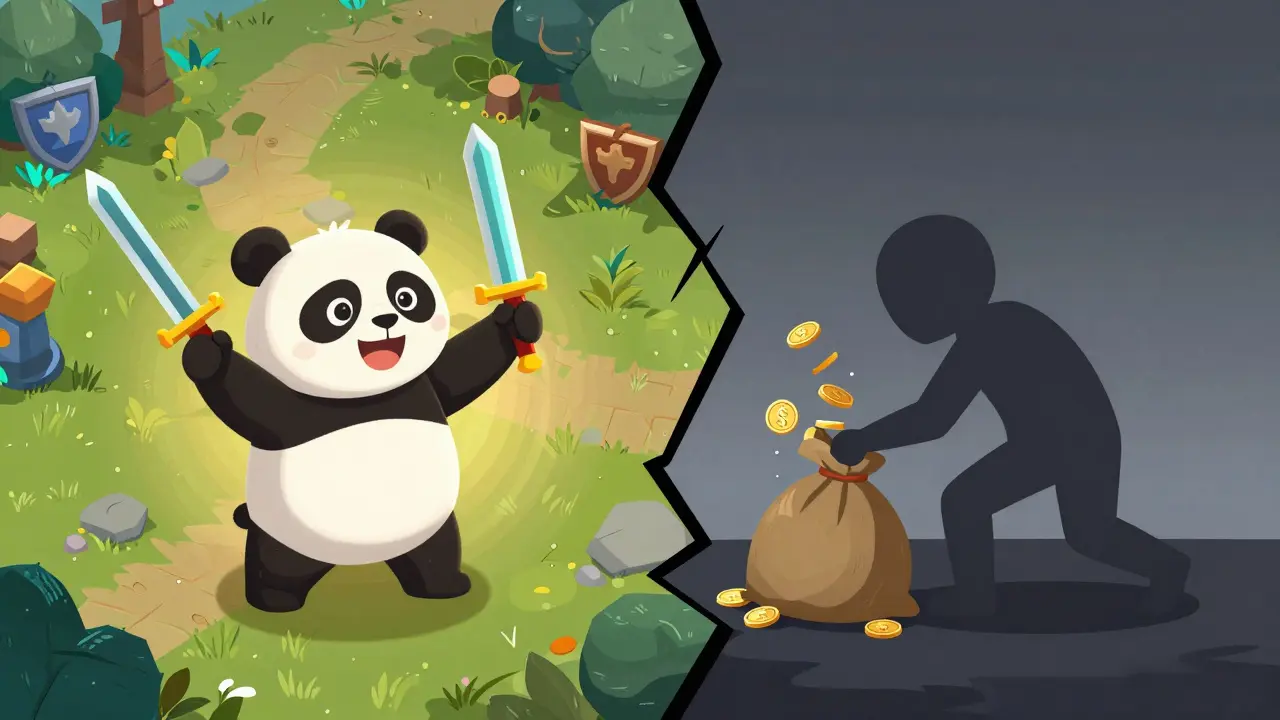
Current Status and Future Outlook
As of today, the PandoLand airdrop is fully concluded. The tokens have been distributed. The wallets have been credited. If you did not receive a notification from the official PandoLand team in March 2025, you are not owed anything. Beware of scams claiming you can still "claim late" or offering to "unlock" your hidden tokens. These are phishing attempts targeting FOMO (Fear Of Missing Out).
For those interested in similar opportunities, the landscape has evolved. Projects are moving away from simple Twitter follows toward more complex engagement metrics. Look for airdrops that require:
- Testnet Participation: Actually using the software before it launches.
- NFT Holding: Owning related digital art as proof of loyalty.
- Staking: Locking up existing assets to show commitment.
PandoLand remains active on Ethereum, continuing to develop its gaming features. The $PANDO token continues to trade based on market sentiment and in-game utility. If you are considering entering the ecosystem now, buy tokens on the open market rather than waiting for a second airdrop. The easy money phase is over.
Lessons for Crypto Investors
The PandoLand case study offers three key takeaways for anyone navigating the crypto space in 2026:
- Speed Matters: Airdrop windows are shrinking. What took weeks in 2023 now takes days. Set up alerts for projects you follow.
- Exclusivity vs. Scale: High-value, low-participant airdrops like PandoLand offer better individual returns but are harder to win. Low-value, high-participant airdrops are easier to qualify for but may dilute your holdings.
- Utility is King: Tokens backed by actual products (like a playable game) tend to hold value better than pure meme coins or speculative tokens. Always check if the project has a working product.
In the end, the PandoLand airdrop was a successful experiment in targeted community building. It delivered on its promise to 500 users. For the rest of us, it serves as a reminder that in crypto, timing and attention are your most valuable currencies. Keep your eyes open, verify every link, and never invest more than you can afford to lose.
Is the PandoLand airdrop still active?
No, the PandoLand airdrop concluded on March 10, 2025. All 500 winners have already received their tokens. Any claims suggesting you can still claim are likely scams.
How much was the PandoLand airdrop worth?
Each of the 500 winners received approximately $1,000 USD worth of $PANDO tokens. The total distribution value was $500,000.
What blockchain is PandoLand built on?
PandoLand is built on the Ethereum blockchain. This means interactions require ETH for gas fees and tokens are ERC-20 compatible.
How were winners selected?
Winners were selected from participants who completed specific social media tasks on Twitter, such as following accounts and retweeting posts. Exactly 500 users were chosen.
Can I buy $PANDO tokens now?
Yes, $PANDO tokens are available for purchase on supported cryptocurrency exchanges. Since the airdrop is over, buying on the open market is the only way to acquire them.
What is the total supply of $PANDO?
The total supply of $PANDO is 1,000,000,000 tokens. The airdrop accounted for 500,000 of these, or 0.05% of the total supply.
Was the PandoLand airdrop safe?
The official airdrop conducted by PandoLand was safe and did not require connecting your main wallet with funds. However, always verify links through official channels to avoid phishing sites.