Peanut.Trade (NUX) Airdrop: How It Worked, Token History & 2026 Reality Check

Remember the summer of 2021? The crypto market was buzzing, and everyone was chasing the next big thing. Peanut.Trade made waves with a high-profile airdrop that promised free tokens to thousands of users. If you’re digging up old records or wondering what happened to your potential winnings, you’ve come to the right place. The reality today is quite different from the hype back then.
This article breaks down exactly how the Peanut.Trade airdrop worked, who qualified, and where the NUX token stands in May 2026. We’ll look at the hard numbers, the platform’s actual utility, and why the price action tells a cautionary tale for anyone holding onto past promises.
The 2021 CoinMarketCap Airdrop Mechanics
To understand the current value of NUX, we first need to look at how it entered circulation for retail users. In August 2021, Peanut.Trade partnered with CoinMarketCap for a massive marketing push. This wasn’t a random scatter; it was a structured campaign designed to build community engagement.
The total pool for this event was valued at approximately $22,000 USD at the time. They distributed 71,000 NUX tokens across 2,000 winners. That means if you were lucky enough to be selected, you could receive up to 35.50 NUX tokens. Winners were announced on August 27, 2021, and distributions wrapped up by August 31, 2021.
Getting your hands on these tokens required more than just clicking a button. You had to jump through several hoops:
- Add NUX to your main CoinMarketCap watchlist.
- Join the official Peanut Telegram group (
t.me/peanuttrade) and their announcement channel (t.me/peanutann). - Follow their Twitter account (@PeanutTrade).
- Complete a registration form directly on the CoinMarketCap platform.
This multi-step process was typical for 2021. Projects wanted verified, active humans, not bots. By forcing users to join social channels, they aimed to create a sticky community that would actually use the platform.
What Is Peanut.Trade Really Doing?
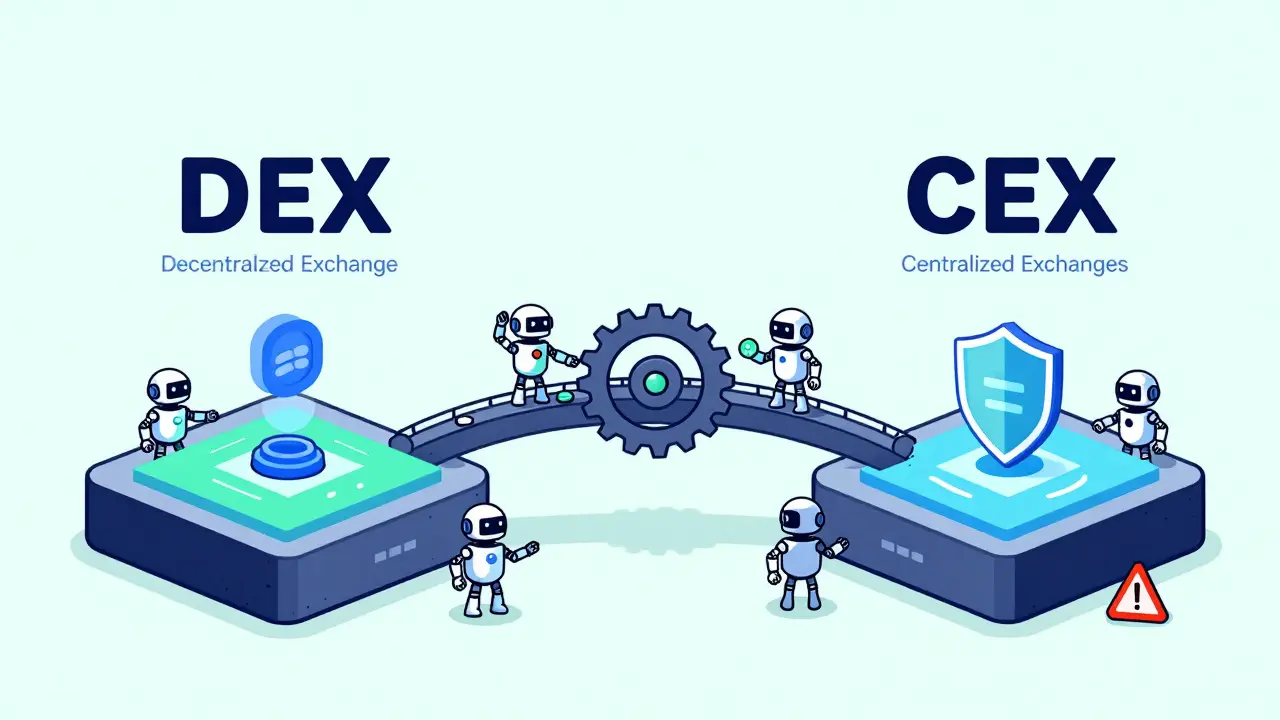
You might wonder, "Why did they exist in the first place?" Peanut.Trade isn't just another meme coin wrapper. It positions itself as a price balancer protocol within the Decentralized Finance (DeFi) ecosystem. The core problem they address is slippage and inefficiency in Automated Market Makers (AMMs).
Here is how the architecture works:
- DEX Allocation: 90% of assets are placed on decentralized exchanges like Uniswap.
- Intermediary Mechanism: The remaining 10% goes into a smart contract system that actively balances prices between DEXs and Centralized Exchanges (CEXs).
- Bot Protection: The protocol includes measures to prevent DeFi bots from front-running trades and exploiting price discrepancies.
In theory, this reduces the cost for traders and maximizes gains. However, execution in the real world often differs from whitepaper promises. The complexity of maintaining arbitrage between CEX and DEX markets requires constant liquidity and robust infrastructure, which many projects struggle to sustain during bear markets.
Tokenomics and Vesting Schedule
The way tokens are released affects supply and demand. Peanut’s Token Generation Event (TGE) occurred on February 15, 2021. The team didn’t dump all tokens at once. Instead, they used a vesting schedule:
- Initial Unlock: Only 3.5% of tokens were available immediately at TGE.
- Linear Release: The remaining 96.5% were unlocked daily over 700 days (about 23 months).
This slow release was meant to stabilize the price by preventing early investors from selling everything instantly. By late 2022 and 2023, most of the circulating supply would have been unlocked, meaning the current market cap reflects the true, fully diluted potential of the project rather than artificial scarcity.
Price Performance: From Peak to Present
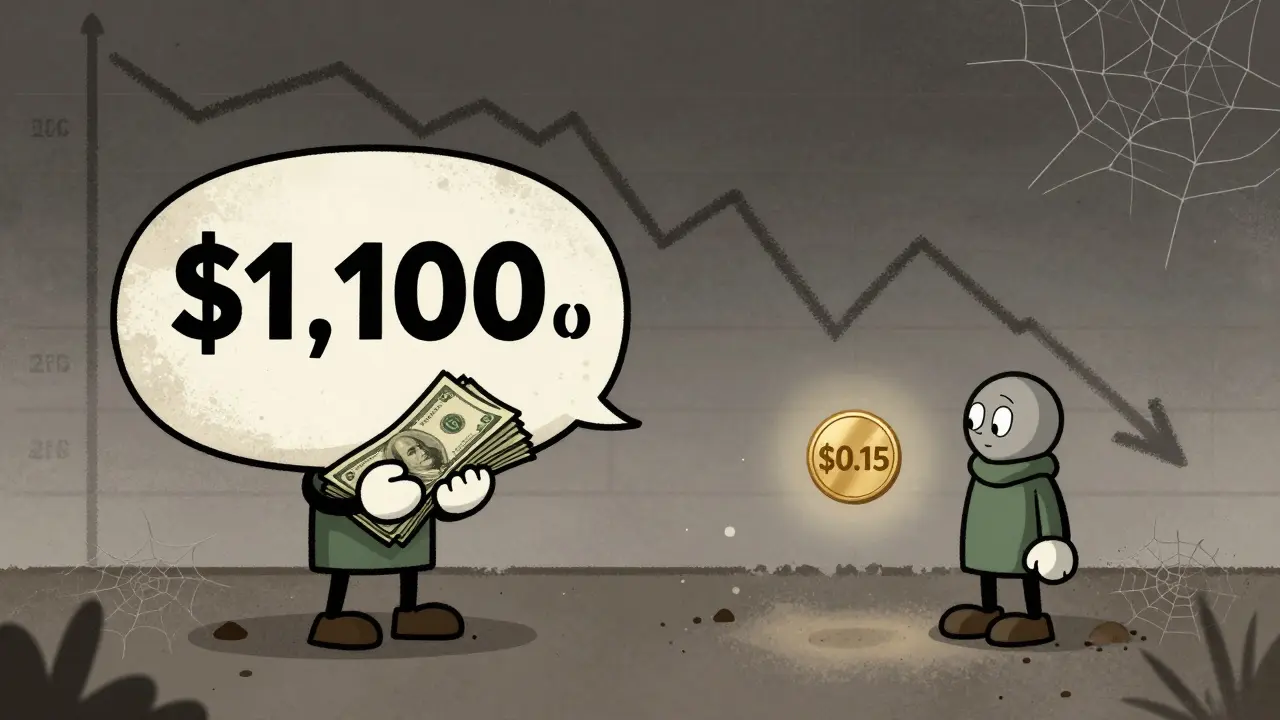
Let’s talk about the money. If you held those 35.50 NUX tokens from the 2021 airdrop, your experience has likely been painful. At its peak, NUX hit an all-time high of $31.69. Back then, your maximum allocation was worth over $1,100.
Fast forward to mid-2025 and into 2026, the picture looks starkly different. As of recent data, NUX trades around $0.0042. That represents a decline of 99.99% from its peak. Your 35.50 tokens are now worth roughly $0.15. This isn’t just a dip; it’s a structural collapse in valuation.
| Metric | Value |
|---|---|
| All-Time High | $31.69 |
| Current Price (May 2026) | ~$0.0042 |
| Circulating Supply | 50,000,000 NUX |
| Market Cap | ~$210,121 USD |
| Primary Exchange | Gate.io |
The trading volume is also thin. Gate.io sees about $83,000 in daily volume for the NUX/USDT pair. While some activity exists on Uniswap V2 and LATOKEN, the lack of deep liquidity makes large trades difficult without significant slippage.
Future Predictions: Hype vs. Reality
If you search for NUX predictions, you’ll find wild swings. Some AI models, like those from CoinLore, suggest a bullish long-term outlook, predicting prices could reach $1.80 by 2026 or even $28.52 by 2041. These models rely on historical bull market patterns and technical indicators like RSI and MACD.
However, conservative analysts offer a colder shower. Platforms like CoinDataFlow and CoinCodex predict NUX will remain below $0.01 through 2025 and into 2026. CoinCodex estimates a price of $0.003063 by late 2025, noting a "Greed" sentiment but low actual momentum. The divergence between optimistic long-term forecasts and grim short-term reality highlights the uncertainty surrounding micro-cap tokens.
Keep in mind: prediction algorithms cannot account for fundamental shifts in project development, team abandonment, or regulatory changes. Given the 99.99% drop from ATH, betting on a recovery requires assuming a complete turnaround in adoption and utility.
Where Can You Trade NUX Today?
If you still hold NUX or want to buy in at these lows, options are limited. The primary venue is Gate.io, which lists the NUX/USDT pair. For decentralized traders, Uniswap V2 on Ethereum remains an option, though gas fees can eat into profits given the token's low value. LATOKEN also supports trading, but liquidity is significantly lower there.
Before swapping, check the order book depth. With a market cap under $250k, large sell orders can crash the price further. Always use limit orders rather than market orders to avoid getting wrecked by slippage.
Risks and Red Flags
Investing in legacy altcoins like Peanut carries specific risks:
- Liquidity Risk: Low volume means you might not be able to exit your position quickly.
- Development Stagnation: Check their GitHub and recent announcements. If updates stopped years ago, the codebase may be vulnerable or obsolete.
- Opportunity Cost: Capital tied up in stagnant assets misses out on newer, more active DeFi protocols.
The original promise of balancing DEX/CEX prices sounds good, but major players like Chainlink and various bridge protocols have since evolved to handle cross-chain liquidity more efficiently. Peanut struggles to compete with established infrastructure.
Did I miss the Peanut.Trade airdrop?
Yes, the main public airdrop concluded in August 2021 via CoinMarketCap. Winners were announced on August 27, 2021, and tokens were distributed by August 31, 2021. There have been no subsequent major airdrops announced as of 2026.
Is Peanut.Trade still active?
While the token still trades on exchanges like Gate.io, activity levels are very low. The project faces significant challenges due to reduced liquidity and competition from newer DeFi solutions. Always verify current status on their official Telegram and Twitter before engaging.
How much is my NUX airdrop worth today?
If you received the maximum 35.50 NUX tokens, they are worth approximately $0.15 USD at the current price of ~$0.0042. This represents a loss of over 99% from the all-time high value.
Can NUX recover to its previous highs?
A return to the $31.69 all-time high is statistically improbable without a massive influx of new capital and utility adoption. Most analysts predict NUX will remain in the sub-cent range ($0.003 - $0.01) in the near term. Long-term predictions vary wildly but should be treated with extreme skepticism.
Where can I trade Peanut (NUX) tokens?
The most liquid market for NUX is on Gate.io (NUX/USDT pair). You can also trade on Uniswap V2 (Ethereum network) and LATOKEN, though liquidity is significantly lower on these platforms.
The story of Peanut.Trade serves as a reminder of the volatility inherent in early-stage DeFi projects. While the technology aimed to solve real problems, market dynamics and execution challenges led to a steep decline. For anyone looking at NUX today, proceed with caution, do your own research, and never invest more than you can afford to lose entirely.