PHA Airdrop by Phala Network: How to Claim 30 PHA Tokens and What You Need to Know
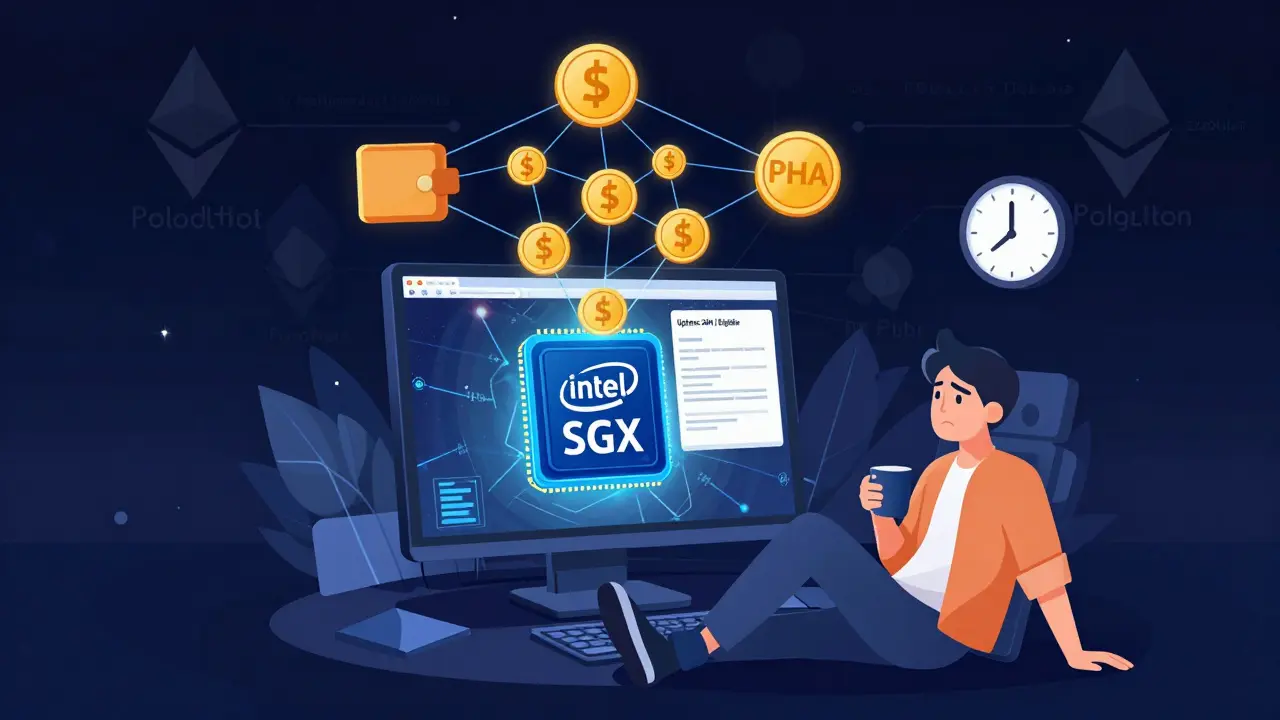
If you’ve heard about the PHA airdrop from Phala Network, you’re not alone. Thousands of crypto enthusiasts are trying to claim their 30 PHA tokens - but most don’t realize how technical it really is. This isn’t a simple Twitter retweet or wallet connection airdrop. This one demands hardware, patience, and a working understanding of blockchain miners. And if you’re not careful, you could spend hours setting up a node… only to get nothing.
What Is the PHA Airdrop?
The PHA airdrop is Phala Network’s way of distributing its native token to early contributors who help secure the network. For each successful miner node you run, you earn exactly 30 PHA tokens. At current prices ($0.1029 per PHA), that’s worth around $3.09. Not huge, but not nothing either - especially if you’re already running mining hardware. What makes this different from other airdrops? Most airdrops ask you to sign up, connect a wallet, or follow a social media account. Phala asks you to run a real blockchain node - one that uses Trusted Execution Environment (TEE) hardware. That means your computer needs to support Intel SGX or AMD SEV. If your CPU doesn’t have it, you’re out of luck.How to Participate in the PHA Airdrop
Here’s the step-by-step process to claim your 30 PHA tokens:- Check if your hardware supports Trusted Execution Environment (TEE). Most modern Intel CPUs (7th gen or newer) and some AMD Ryzen chips support SGX or SEV. Use tools like
sgx_checkor your motherboard’s BIOS settings to confirm. - Download the official Phala miner software from the Phala Network website. Avoid third-party links - scams are common.
- Install the software and run the setup command in your terminal. This connects your machine to the Phala testnet.
- Let the miner run for at least 24 hours. You’ll need to keep your computer on and connected to the internet.
- Take a screenshot of your miner’s dashboard showing active mining and uptime.
- Submit the screenshot through the official Phala airdrop portal. No email, no Discord DMs - only the official site accepts submissions.
Why Haven’t I Received My PHA Tokens?
This is the biggest question everyone asks. The answer? The airdrop is tied to the launch of Phala’s pre-mainnet version, codenamed “Darth Vader.” And as of January 2026, that launch hasn’t happened. Phala Network has been delaying the mainnet release for months. There’s no official date. Community members report frustration - some have been running nodes since late 2024 and still haven’t seen a single PHA token in their wallets. The team says it’s waiting for network stability and security audits. But without a timeline, it’s hard to know if this is a delay or a dead end.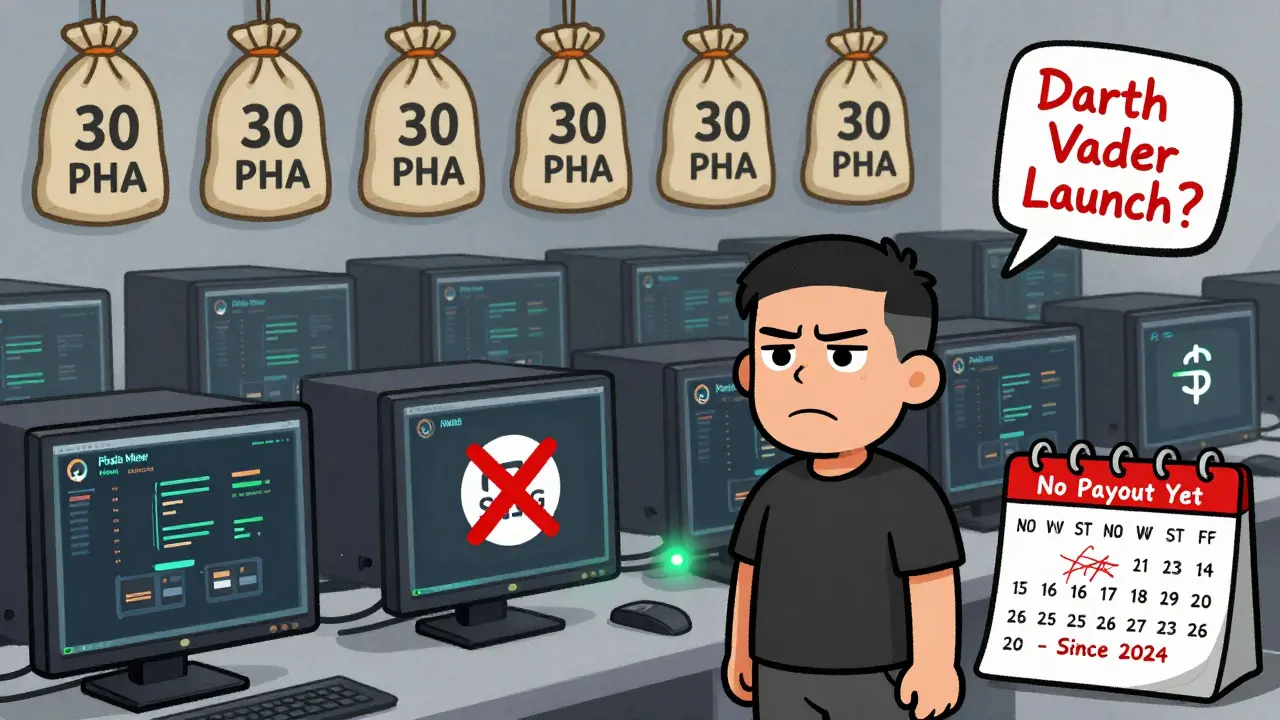
Phala’s Big Shift: From Polkadot to Ethereum Layer 2
Here’s where things get complicated. Phala Network was originally built as a Polkadot parachain. But in 2025, they made a major pivot: they’re leaving Polkadot and moving fully to Ethereum as a Layer 2 rollup. This isn’t just a technical change. It’s a strategic gamble. Polkadot’s parachain slot was set to expire on November 20, 2025. Rather than renew it, Phala chose to build on Ethereum - a much larger, more liquid ecosystem. Their new Ethereum L2 rollup is already live as of January 2025. What does this mean for you? If you’re mining PHA now, you’re mining on a network that’s about to be replaced. The old Polkadot-based chain will shut down. The new Ethereum-based chain will take over. Your node will need to be upgraded - or rebuilt - to keep earning. There’s no guarantee your current mining setup will carry over. Some users report their nodes stopped working after the L2 migration. Others say they had to start from scratch. If you’re investing time into this, you’re betting on Phala’s ability to execute a smooth transition.Is the PHA Airdrop Worth Your Time?
Let’s be honest: this airdrop isn’t for everyone. Pros:- You get real tokens - not just hype.
- 30 PHA is more than many airdrops give out.
- Phala has real tech: TEE-based privacy contracts are rare and useful.
- Network has $1.43M in funding and institutional backing.
- You need compatible hardware - most consumer laptops don’t have it.
- No payout timeline - you could wait months or never get paid.
- Network is in flux - migrating from Polkadot to Ethereum creates uncertainty.
- Low liquidity: PHA trades at #424 on CoinMarketCap with $16M daily volume - that’s tiny compared to top coins.

How PHA Compares to Other Privacy Airdrops
Phala isn’t alone in the privacy blockchain space. Here’s how it stacks up against similar projects:| Project | Token | Airdrop Reward | Hardware Requirement | Network |
|---|---|---|---|---|
| Phala Network | PHA | 30 PHA (~$3.09) | Intel SGX / AMD SEV | Transitioning from Polkadot to Ethereum L2 |
| Oasis Network | ROSE | Varies (up to 100 ROSE) | None (software-only) | Polkadot-based |
| The Graph | GRT | Up to 500 GRT | None | Ethereum |
| Akash Network | AKT | Up to 150 AKT | None | Cosmos SDK |
| Secret Network | SCRT | Up to 200 SCRT | None | Tendermint-based |
What’s Next for PHA and Phala Network?
The next 6 months will decide Phala’s fate. If the Ethereum L2 migration goes smoothly, PHA could gain traction among Ethereum developers looking for private smart contracts. That’s a real use case - imagine confidential voting systems, private DeFi trades, or secure enterprise data sharing on Ethereum. But if the migration fails - or if the team delays the “Darth Vader” launch any longer - the airdrop could become a ghost town. People will stop running nodes. Trading volume will drop. PHA could fade into obscurity like dozens of other privacy coins that promised too much and delivered too little. Right now, PHA is trading at $0.1029. Price predictions for 2030 suggest it might hit $0.117 - a 14% gain. That’s not exciting. But if Phala becomes the go-to privacy layer for Ethereum, that number could jump 10x.Should You Join the PHA Airdrop?
Here’s the bottom line:- If you have a TEE-compatible PC and know how to use the command line - go for it. Treat it like a side project. Run the node, submit your proof, and forget about it.
- If you’re hoping to make money - don’t. The payout is uncertain, the reward is small, and the market is crowded.
- If you believe in privacy-preserving blockchains and want to support real tech - this is one of the few airdrops that actually builds infrastructure.
Either way, you’ll know more about blockchain privacy than 95% of crypto users.
Do I need special hardware to claim the PHA airdrop?
Yes. You need a CPU that supports Trusted Execution Environment (TEE) technology - specifically Intel SGX or AMD SEV. Most modern Intel Core i5/i7/i9 processors from the 7th generation onward support this. Check your BIOS settings or use a tool like sgx_check to verify. If your hardware doesn’t support it, you cannot participate.
When will I receive my 30 PHA tokens?
There is no confirmed date. Rewards are tied to the launch of Phala’s pre-mainnet version, called “Darth Vader,” which has been delayed since 2024. The team has not announced a timeline. Many participants have been waiting over a year. Proceed with caution - this is not a guaranteed payout.
Is the PHA airdrop still active in 2026?
Yes. The airdrop portal is still accepting new node submissions as of January 2026. However, the network is in transition from Polkadot to Ethereum Layer 2. New participants should be aware that their nodes may need to be reconfigured or rebuilt after the migration is complete.
Can I run multiple nodes to get more PHA tokens?
Technically yes, but Phala Network limits rewards to one 30 PHA allocation per unique hardware identity. Running multiple nodes on the same machine or using virtual machines to bypass this is against the rules and may result in disqualification.
What happens to my PHA tokens after the Polkadot to Ethereum migration?
Phala Network has stated that all PHA tokens will be migrated to the new Ethereum Layer 2 chain. Your wallet address will remain valid, and your tokens will be automatically converted. However, the mining software and node configuration will change. You’ll need to update your setup after the migration goes live.
Is PHA a good long-term investment?
It depends. PHA has real technical value through its privacy-preserving smart contracts - a rare feature in the blockchain space. But the project is small, with a $77M market cap, and faces strong competition from larger privacy chains. Long-term success depends entirely on whether developers adopt its Ethereum L2 privacy layer. If they do, PHA could grow. If not, it may fade.


Charlotte Parker
So let me get this straight-you’re asking people to burn electricity and patience for $3 worth of tokens that might never arrive, while the project abandons its original chain like a bad relationship? Brilliant strategy. Truly. The future of Web3 is clearly ‘hope and hardware’.
Calen Adams
If you’re not running SGX-capable nodes, you’re not part of the infrastructure revolution. This isn’t a meme coin lottery-it’s a decentralized privacy stack. The fact that you’re even asking if it’s worth it means you’re still stuck in the 2021 airdrop mindset. Phala’s TEE architecture is the only thing standing between Ethereum and corporate surveillance. Stop treating blockchain like a casino.
Valencia Adell
Let’s be real. The entire PHA airdrop is a graveyard of idle CPUs and broken promises. People spent 18 months running nodes only to get silence. The team’s ‘Darth Vader’ launch is just a euphemism for ‘we ran out of funding and forgot to code’. This isn’t innovation-it’s emotional manipulation wrapped in whitepapers.
Sarbjit Nahl
The concept of decentralized privacy requires sacrifice. Those who complain about hardware requirements lack the intellectual rigor to comprehend trustless systems. The market will not reward the lazy. If your CPU cannot support TEE, then your mind cannot support blockchain philosophy. This is not discrimination. This is natural selection.
Paul Johnson
I ran this miner for 6 months and got zip. The devs are just using us as free test servers. And now they switch to Ethereum? Classic. They had one job-build on Polkadot-and they bailed. You think they care about you? Nah. They care about VC checks. You’re just a cog in their PR machine. Wake up.
Meenakshi Singh
I’m so done with projects that promise ‘real tech’ but deliver ‘real delays’. 😒 PHA is the crypto equivalent of that friend who says ‘I’ll pay you back next week’ for 3 years straight. And now they’re switching chains? Cool. So my 24/7 mining rig just became a very expensive paperweight. 🤡
Kelley Ramsey
I just want to say-thank you for this incredibly detailed breakdown! I’ve been hesitant to dive in because I thought it was just another scam, but your comparison chart and honest pros/cons actually helped me understand the real trade-offs. It’s rare to see a post that doesn’t just hype things up. I’m going to try it on my old i7-just to support the tech, not for profit. You’ve inspired me to be more intentional about where I put my time in crypto!
Michael Richardson
USA made the best CPUs. If you’re in India or Europe and can’t run SGX, that’s your problem. This isn’t a global charity. Phala filters out the weak. That’s why it’ll win. The rest of you can go back to meme coins.
Sabbra Ziro
I really appreciate how transparent this post is. It’s easy to get swept up in the hype of ‘free tokens’, but understanding the real trade-offs-hardware, timing, migration risk-is what separates informed participants from the crowd. I’ve been running a node since last year, and even though I haven’t gotten tokens yet, I’m proud to be part of something that’s trying to solve real privacy problems. Let’s keep supporting each other through the uncertainty.
Krista Hoefle
Phala? More like Phala-lame. SGX? Yeah right. My laptop’s from 2020 and it can’t even open Chrome without lagging. And now they’re switching chains? Classic crypto scam move. I’m out. Let the nerds play with their motherboards.
Emily Hipps
To everyone who’s been running nodes for over a year-thank you. You’re the unsung heroes of this ecosystem. I know it’s frustrating to see no payout, but you’re building the foundation for something that could actually change how private data moves on the web. Keep going. Even if the tokens never arrive, you’ve already won by learning, contributing, and refusing to give up on real tech.
Denise Paiva
The notion that airdrop participation equates to ideological commitment is a dangerous fallacy. One does not become virtuous by running a miner. One becomes a server. The moral architecture of blockchain is not measured in uptime but in incentive alignment. And here the incentives are misaligned. The project pivots. The participants are left. The only thing that remains constant is the electricity bill. This is not a movement. It is a logistical trap dressed in cryptographic poetry.
Jessie X
I ran the miner for 3 days, got my screenshot, submitted it, and haven’t heard anything since. I’m not mad. I’m just... curious. If the network is transitioning, why not give us a heads-up on what to do next? A simple FAQ update would go a long way. We’re not asking for tokens. We’re asking for respect.