Qatar’s Institutional Crypto Ban: What Financial Institutions Must Know in 2026

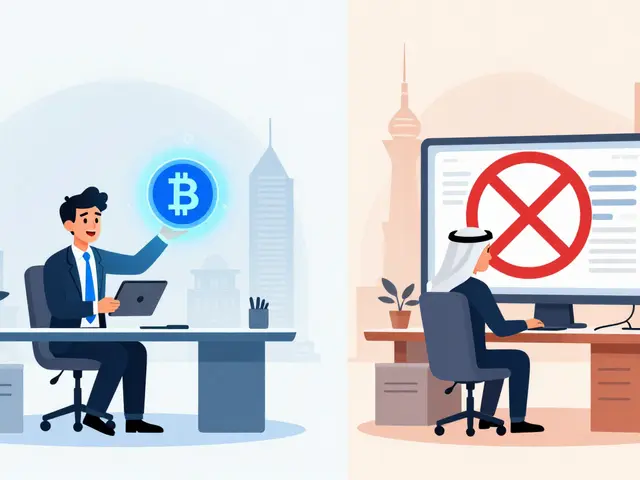
Imagine you are a financial executive with offices in Dubai and Doha. In Dubai, your team is busy launching a new crypto custody service. In Doha, that same service is illegal for your bank to offer. This isn’t a hypothetical scenario; it is the reality of operating in the Gulf Cooperation Council (GCC) today. While some neighbors embrace digital currencies, Qatar maintains one of the strictest institutional bans on cryptocurrency in the region.
If you are looking to invest in Bitcoin through a Qatari bank, you will hit a wall. But if you are interested in tokenized real estate or digital bonds, the door might just be opening. The distinction is critical. Qatar has not banned all blockchain technology; it has specifically banned cryptocurrencies as currency substitutes within its regulated financial sector. Understanding this nuance is the difference between compliance and a regulatory sanction.
The Foundation of the Ban: QCB and QFCRA Rules
To understand where we stand in 2026, we have to look back at how the walls were built. The cornerstone of Qatar’s restrictive stance is Circular No. (6), issued by the Qatar Central Bank (QCB) in February 2018. This circular explicitly prohibited all licensed financial institutions in Qatar from facilitating Bitcoin transactions or engaging in any cryptocurrency-related activities. It was a clear signal: traditional banks cannot touch crypto.
Two years later, the net widened. On December 26, 2019, the Qatar Financial Centre Regulatory Authority (QFCRA) issued a strict alert banning virtual asset services within the Qatar Financial Centre (QFC). This authority regulates the free zone where many international firms operate. The 2019 alert defined "virtual assets" broadly as digital substitutes for currency used for trading, transfer, or payment. Crucially, it excluded fiat currencies but included everything else that looked like money.
The specific prohibitions under this alert include:
- Exchanging virtual assets for fiat currencies (like the Qatari Riyal).
- Transferring or safekeeping virtual assets.
- Offering financial services related to virtual asset issuances.
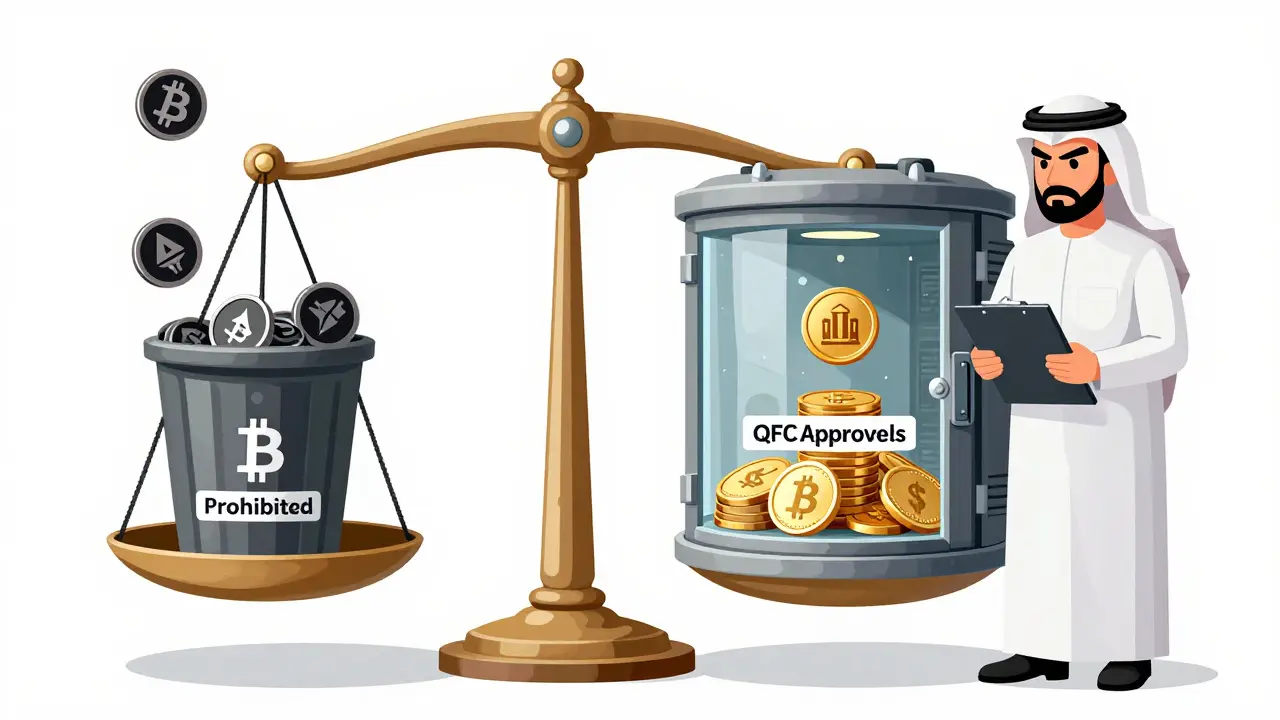
This means that no bank, investment firm, or fintech startup operating under the QFCRA can legally act as an exchange, a wallet provider, or a broker for cryptocurrencies. The ban covers traditional coins like Bitcoin and Ethereum, as well as stablecoins. Even Central Bank Digital Currencies (CBDCs) are classified as "Excluded Tokens" unless they are part of a specific, authorized pilot program by the central bank itself.
The 2024 Shift: Tokenization vs. Cryptocurrency
For years, the message was simple: no crypto. However, the landscape shifted significantly on September 1, 2024, with the introduction of the QFC Digital Assets Regulations. This did not lift the ban on Bitcoin or Ethereum. Instead, it created a separate lane for "digital assets" that represent traditional value.
This framework allows for the tokenization of real-world assets. Think about shares in a company, government bonds, Islamic finance instruments like sukuk, commodities, or even real estate properties. These can now be represented as tokens on a blockchain, provided they go through a rigorous validation, registration, and custody process approved by the QFCRA.
Why does this matter? Because it separates "currency" from "asset." Qatar’s regulators view cryptocurrencies primarily as speculative currency substitutes that pose risks to monetary sovereignty and financial stability. They do not view tokenized stocks or bonds as inherently risky if they are backed by tangible, regulated assets. The 2024 regulations make it clear that virtual assets subject to the 2019 alert remain "Excluded Tokens." So, while you can trade a digital token representing a share in a Qatari construction firm, you still cannot trade a Bitcoin.
| Activity Type | Status for Financial Institutions | Regulatory Basis |
|---|---|---|
| Cryptocurrency Trading (BTC, ETH) | Prohibited | QCB Circular No. 6 (2018); QFCRA Alert (2019) |
| Crypto Custody Services | Prohibited | QFCRA Alert (2019) |
| Stablecoin Issuance/Exchange | Prohibited | Classified as Excluded Tokens |
| Tokenized Real Estate/Bonds | Permitted (with license) | QFC Digital Assets Regulations (2024) |
| Wholesale CBDC Pilots | Limited/Authorized Only | QCB Directives |
How Qatar Compares to Its GCC Neighbors
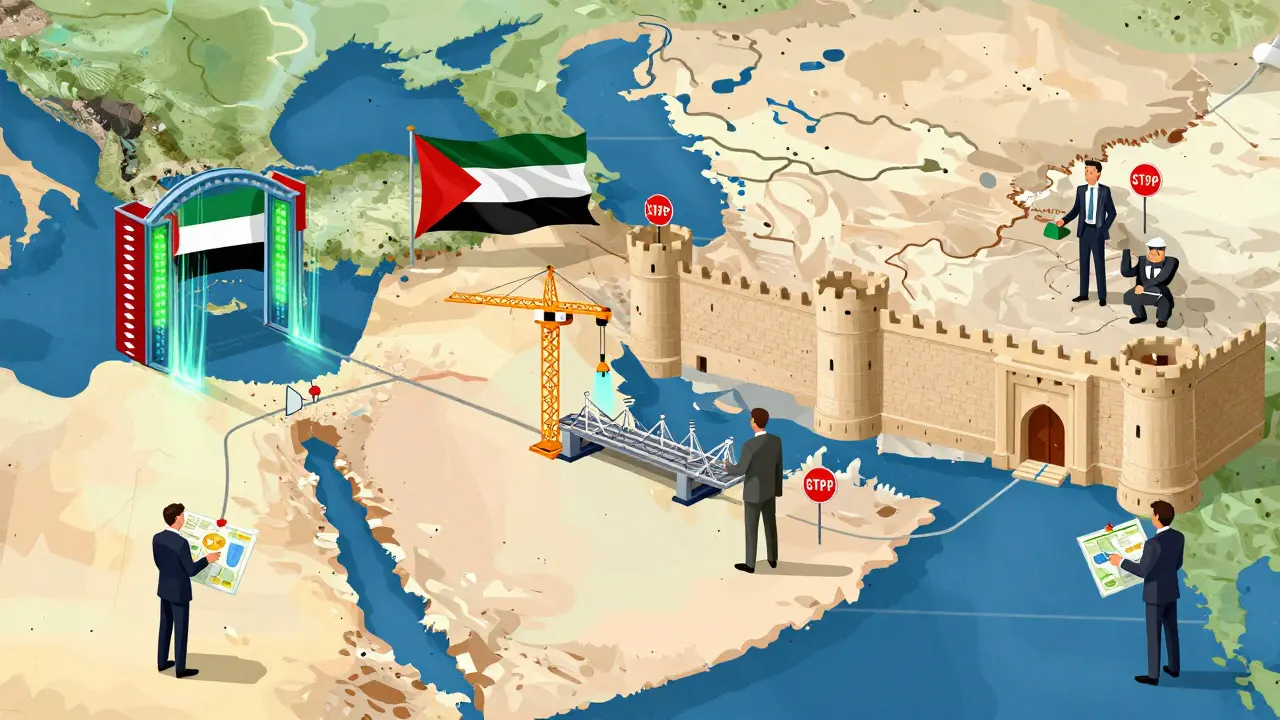
If you look at a map of the Middle East, the regulatory landscape looks like a patchwork quilt. Qatar sits firmly on the conservative end of the spectrum, alongside Kuwait. Let’s break down how this compares to other major financial hubs in the region.
The United Arab Emirates (UAE) has taken a completely different path. Through entities like the Dubai Financial Services Authority (DFSA) and the Abu Dhabi Global Market (ADGM), the UAE has established comprehensive frameworks that welcome cryptocurrency exchanges, custodians, and asset managers. You can walk into a licensed office in Dubai and buy Bitcoin legally. In Qatar, that same activity would get a financial institution shut down.
Bahrain also leans progressive. The Central Bank of Bahrain has developed virtual asset regulations that allow for a wide range of crypto services, making it a friendly jurisdiction for fintech startups.
Saudi Arabia occupies a middle ground. It focuses heavily on wholesale CBDC development for interbank settlements (like Project Aber) but restricts retail cryptocurrency activities. Like Qatar, it prioritizes state control over monetary policy.
Kuwait is Qatar’s closest peer in terms of restriction. In July 2023, multiple Kuwaiti authorities issued coordinated circulars imposing absolute prohibitions on cryptocurrency payments, investments, and mining. If you are building a regional strategy, you must treat Qatar and Kuwait as "no-go" zones for traditional crypto services, while designing separate, compliant structures for the UAE and Bahrain.
Strategic Alignment: Vision 2030 and Financial Stability
Why is Qatar so cautious? It isn’t just about fear of technology. The ban aligns directly with the Qatar National Vision 2030 and the Third Financial Sector Strategic Plan. The goal is economic diversification and enhancing the financial services sector, but with a heavy emphasis on risk management.
Qatar’s leadership values sovereign control over monetary policy. Allowing decentralized currencies to flourish could undermine the peg of the Qatari Riyal to the US Dollar and complicate capital flow monitoring. By banning crypto, the QCB ensures that all significant financial transactions pass through the regulated banking system, where anti-money laundering (AML) and know-your-customer (KYC) standards are strictly enforced.
The 2024 digital assets framework is an attempt to have the best of both worlds. It supports innovation in blockchain technology-specifically in efficiency, transparency, and settlement speed for traditional assets-without exposing the financial system to the volatility of speculative cryptocurrencies. It is a controlled experiment, not a free-for-all.
Practical Implications for Businesses and Investors
For international financial firms, this creates a complex operational challenge. You cannot simply roll out a global crypto product across the GCC. You need a "ring-fenced" approach.
First, ensure your Qatar-based entity has zero exposure to prohibited virtual assets. This means no crypto wallets, no trading interfaces, and no marketing materials suggesting crypto support. Compliance teams must audit internal systems to ensure that transaction monitoring software flags and blocks any attempts to facilitate crypto transfers.
Second, explore the opportunities in tokenized assets. If you are an asset manager, consider whether your bond or equity products could benefit from tokenization under the new QFC rules. This requires working closely with local legal counsel and obtaining the necessary registrations from the QFCRA. The custody requirements are strict; you cannot use generic crypto custodians. You need approved custodial solutions that integrate with the QFC’s regulatory infrastructure.
Third, manage client expectations. High-net-worth individuals in Qatar may have access to offshore accounts in jurisdictions where crypto is legal. However, domestic banks cannot facilitate these transfers if they involve virtual assets. Clients must navigate this themselves, outside the regulated banking channel, which carries its own risks.
Future Outlook: Will the Ban Lift?
As we move through 2026, the consensus among industry experts is that the core institutional ban on cryptocurrencies will remain intact. The QFC Digital Assets Framework, finalized in early 2025, set the tone for the next decade: expansion of approved tokenized assets, but continued exclusion of currency-substitute tokens.
There is talk of potential additions to the list of approved tokenized assets, such as more types of commodities or intellectual property rights. However, there is no indication that Bitcoin or Ethereum will ever be granted "approved" status for institutional trading in Qatar. The regulatory culture is deeply conservative, and the priority remains financial stability over disruptive innovation.
That said, keep an eye on cross-border developments. If neighboring countries demonstrate that regulated crypto markets can coexist with strong financial stability without compromising monetary sovereignty, Qatar may reconsider aspects of its approach. But for now, the firewall holds. Innovation is welcome, but only if it stays within the guardrails of traditional finance.
Can I buy Bitcoin using a Qatari bank account?
No. Under QCB Circular No. 6 (2018) and subsequent QFCRA alerts, financial institutions in Qatar are prohibited from facilitating Bitcoin transactions. Banks will block transfers to known cryptocurrency exchanges, and they cannot provide custody or trading services for Bitcoin.
What is the difference between a "Virtual Asset" and a "Digital Asset" in Qatar?
In Qatar’s regulatory language, "Virtual Assets" typically refer to cryptocurrencies and stablecoins that act as currency substitutes, which are banned for institutions. "Digital Assets" under the 2024 QFC Regulations refer to tokenized representations of traditional assets like stocks, bonds, or real estate, which are permitted if properly registered and custodied.
Is cryptocurrency mining allowed in Qatar?
Is cryptocurrency mining allowed in Qatar?
While the primary focus of the ban is on financial services, mining is generally discouraged due to high energy costs and lack of regulatory approval. Unlike some neighboring countries that have issued licenses for mining farms, Qatar has not established a legal framework for commercial cryptocurrency mining, effectively leaving it in a gray area that most businesses avoid.
How does Qatar’s crypto ban compare to the UAE?
The contrast is stark. The UAE, particularly through Dubai and Abu Dhabi, has embraced cryptocurrency with clear licensing regimes for exchanges and custodians. Qatar maintains a strict prohibition on institutional crypto activities, focusing instead on tokenizing traditional financial assets. A firm can operate a crypto business in Dubai but must exclude those services from its Qatar operations.
Will Qatar ever legalize Bitcoin for banks?
Current expert consensus suggests this is unlikely in the near future. Qatar’s regulatory philosophy prioritizes monetary sovereignty and financial stability. The 2024 reforms expanded opportunities for tokenized securities but explicitly kept cryptocurrencies as "Excluded Tokens." Any change would require a fundamental shift in the country’s risk appetite.
What penalties exist for violating the crypto ban?
Violations can result in severe regulatory sanctions, including fines and the revocation of operating licenses. The Qatar Central Bank and QFCRA actively monitor compliance, and financial institutions are required to have robust programs to prevent any facilitation of prohibited virtual asset transactions.