SEC Nigeria Crypto Guidelines: What Financial Institutions Must Know in 2026
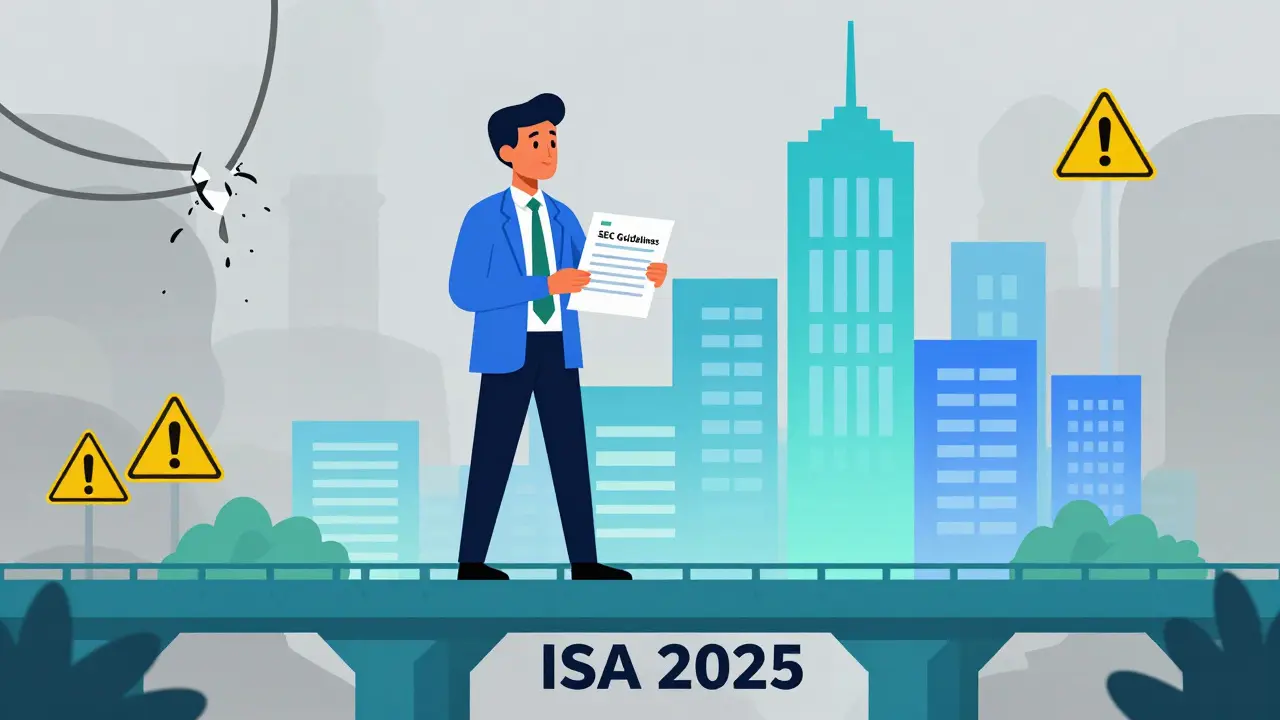
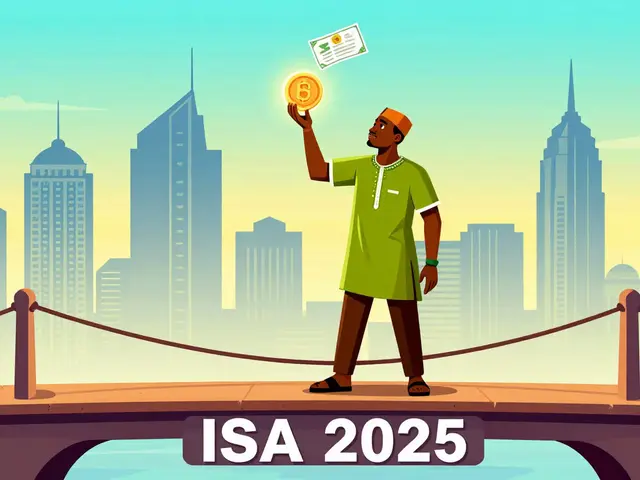
For years, financial institutions in Nigeria walked a tightrope. On one side was the Central Bank of Nigeria (CBN) banning banks from touching crypto. On the other was a booming market where Nigerians were trading billions in digital assets every month. If you are a bank, fintech, or exchange operator in 2026, that rope has been cut. The ground beneath your feet is now solid, but it comes with strict rules.
The landscape changed permanently with the Investment and Securities Act (ISA) 2025, signed into law by President Bola Ahmed Tinubu on March 31, 2025. This legislation did not just tweak the old rules; it rebuilt them. It officially recognizes cryptocurrencies as securities. It places the Securities and Exchange Commission (SEC) Nigeria at the center of regulatory authority. For any financial institution looking to operate in this space, understanding these guidelines is no longer optional-it is the difference between staying open and shutting down.
The Core Shift: From Grey Area to Strict Regulation
Before the ISA 2025, crypto existed in a legal grey area. You could trade, but you couldn't rely on traditional banking infrastructure safely. The new act closes that gap by expanding the definition of "securities" to include investment contracts and digital assets. This means the SEC now has comprehensive power to license, supervise, and regulate all Virtual Asset Service Providers (VASPs).
If you run an exchange, a wallet provider, or a custodial service, you are now a regulated entity. The days of operating without oversight are over. The SEC Director-General, Emomotimi Agama, stated that the act reflects a commitment to building a dynamic and resilient capital market. In plain English, this means the government wants crypto to grow, but only if it grows safely. They are targeting the fraudsters-specifically Ponzi schemes that have historically used crypto to hide illicit funds-while creating a clear path for legitimate businesses.
This shift forces financial institutions to rethink their compliance departments. You can no longer treat crypto as a niche product. It must be integrated into your core risk management framework, subject to the same scrutiny as stocks or bonds.
Licensing Requirements for VASPs
The most immediate action item for any crypto business in Nigeria is licensing. Under the ISA 2025, you cannot operate a Virtual Asset Service Provider (VASP) without explicit authorization from the SEC. This applies to exchanges, broker-dealers, and custodians.
The licensing process is rigorous. It requires:
- Proof of Capital: Demonstrating sufficient financial resources to operate securely.
- AML/CFT Compliance: Robust systems for Anti-Money Laundering and Counter-Financing of Terrorism.
- Investor Protection Mechanisms: Clear policies on how user funds are safeguarded.
- Reporting Obligations: Regular audits and real-time reporting to the SEC.
We already see examples of this working. Homegrown platforms like Quidax and Busha received authorization in 2024, paving the way for others. If you are launching a new platform in 2026, expect the SEC to scrutinize your technical architecture and governance models closely. There is no fast track. The goal is to ensure that only serious, compliant players remain in the market.
Banking Access: The CBN Reversal
Here is where things get interesting for traditional banks. For years, the Central Bank of Nigeria (CBN) prohibited banks from facilitating crypto transactions. This created a massive bottleneck. Users had to use peer-to-peer (P2P) methods, which were risky and inefficient. Banks lost revenue. Exchanges struggled to manage liquidity.
In late 2023, the CBN lifted this ban. But lifting the ban is not the same as opening the floodgates. The current rule is simple: banks can provide account services only to licensed VASPs. This creates a symbiotic relationship. Banks need crypto businesses to drive deposit volume and transaction fees. Crypto businesses need banks to offer seamless fiat on-ramps and off-ramps.
However, this partnership comes with conditions. Banks must perform enhanced due diligence on their VASP clients. They must monitor transactions for suspicious activity. If a VASP loses its license, the bank must freeze accounts immediately. This puts a heavy operational burden on banks' compliance teams. You need automated monitoring tools that can flag high-risk transactions in real time. Manual checks will not cut it.

Taxation and Penalties: The Cost of Non-Compliance
You might think getting a license is enough. It is not. The Nigeria Tax Administration Act (NTAA) 2025, effective from 2026, introduces specific tax obligations for VASPs. This is a critical update that many operators might overlook until it is too late.
The penalties for non-compliance are steep. If you fail to meet tax obligations:
- First Month Default: A penalty of ₦10 million (approximately $6,693).
- Subsequent Months: An additional ₦1 million (approximately $669) for each month you remain non-compliant.
But the financial penalty is just the start. The SEC has the authority to suspend or revoke your license. This effectively shuts down your business. Imagine losing millions in fines and then being forced to close your doors because you missed a tax filing deadline. That is the reality under the NTAA 2025.
To avoid this, financial institutions must integrate tax reporting directly into their core systems. Do not rely on manual spreadsheets. Use automated accounting software that can calculate and report taxes in real time. The SEC is working on amendments to expand monitoring capabilities, meaning they will likely be able to see your transaction data more easily than before.
Comparative Landscape: Nigeria vs. Africa
How does Nigeria's approach compare to its neighbors? Between July 2024 and June 2025, Nigeria recorded an estimated $92.1 billion in cryptocurrency transaction volume. This is nearly double South Africa's activity during the same period. Kenya and South Africa introduced crypto-specific taxation earlier, but Nigeria's ISA 2025 represents one of the most detailed legal structures on the continent.
| Country | Regulatory Body | Key Legislation | Banking Access | Taxation Status |
|---|---|---|---|---|
| Nigeria | SEC Nigeria / CBN | ISA 2025 | Licensed VASPs Only | Effective 2026 (NTAA) |
| South Africa | FSCA | FICA Amendments | Permitted | Active Taxation |
| Kenya | CBK / SARB | Guidelines | Restricted | Active Taxation |
Nigeria ranks first globally in peer-to-peer cryptocurrency transaction volume. Despite this, crypto is not legal tender. You cannot pay taxes or buy goods with Bitcoin instead of the Naira. It remains an asset class, not a currency. This distinction is crucial for financial institutions. You must treat crypto holdings as investments, not cash equivalents, in your balance sheets.

Market Outlook and Adoption
Why does this matter? Because the market is huge. Nigeria's cryptocurrency user base is projected to reach 28.69 million users by 2026. This is not a niche market. It is a mass-market phenomenon. Regulators initially blamed crypto for Naira volatility and tax evasion. Now, they recognize it as a tool for financial inclusion and innovation.
The ISA 2025 positions Nigeria as a potential fintech hub. It encourages foreign investment. It fosters job creation. But it demands professionalism. If you are a financial institution, this is your chance to capture a significant share of this growing market. However, you must do it correctly. Cut corners, and you will face severe consequences. Play by the rules, and you can thrive.
The regulatory framework emphasizes investor protection, AML/CFT compliance, and financial stability. This suggests continued government commitment to balanced regulation. Expect further clarifications on taxation implementation and licensing procedures as we move through 2026. Stay informed. Engage with regulators. And build your compliance infrastructure today.
Practical Steps for Financial Institutions
If you are reading this and wondering what to do next, here is your checklist:
- Audit Your Current Operations: Identify all crypto-related activities. Are you acting as a VASP? If so, do you have a license?
- Engage Legal Counsel: Hire lawyers specializing in Nigerian financial law. The ISA 2025 is complex. You need expert interpretation.
- Upgrade Compliance Systems: Invest in automated AML/CFT monitoring tools. Ensure they can handle high-volume crypto transactions.
- Prepare for Tax Reporting: Integrate tax calculation engines into your platform. Familiarize yourself with the NTAA 2025 requirements.
- Review Banking Partnerships: If you are a bank, update your risk assessment models for VASP clients. If you are a VASP, ensure your banking partners understand the new regulations.
The era of ambiguity is over. The era of structured growth has begun. Adapt quickly, or be left behind.
What is the Investment and Securities Act (ISA) 2025?
The ISA 2025 is a landmark law signed by President Bola Ahmed Tinubu on March 31, 2025. It officially recognizes cryptocurrencies as securities and grants the Securities and Exchange Commission (SEC) Nigeria comprehensive authority to regulate digital asset markets, replacing the older ISA 2007 Act.
Can banks in Nigeria still facilitate crypto transactions?
Yes, but with restrictions. Following a policy reversal in late 2023, banks are permitted to provide account services to Virtual Asset Service Providers (VASPs) that hold valid licenses from the SEC. Banks cannot serve unlicensed crypto entities.
What are the penalties for non-compliance with crypto tax laws in Nigeria?
Under the Nigeria Tax Administration Act (NTAA) 2025, non-compliant VASPs face an initial penalty of ₦10 million ($6,693) in the first month of default. Additional penalties of ₦1 million ($669) apply for each subsequent month. The SEC can also suspend or revoke licenses.
Who needs a VASP license in Nigeria?
Any entity operating as a Virtual Asset Service Provider, including cryptocurrency exchanges, wallet providers, and custodial services, must obtain a license from the SEC Nigeria to operate legally under the ISA 2025.
Is cryptocurrency legal tender in Nigeria?
No. Cryptocurrency is recognized as a security and an asset class, but it is not legal tender. It cannot replace the Nigerian Naira for official payments or tax settlements. It is treated similarly to stocks or other investment instruments.
Which companies are already licensed under the new framework?
Homegrown exchanges such as Quidax and Busha received authorization in 2024, serving as early examples of compliant operators under the evolving regulatory landscape prior to the full implementation of the ISA 2025.
How does Nigeria's crypto regulation compare to South Africa?
Nigeria's ISA 2025 provides a more comprehensive legal structure for digital assets compared to South Africa's FICA amendments. While both countries allow banking access, Nigeria has seen significantly higher transaction volumes, ranking among the largest global markets.
When does the Nigeria Tax Administration Act (NTAA) 2025 take effect?
The NTAA 2025 was signed into law in June 2025 and became effective in 2026. Financial institutions must prepare their tax reporting systems to comply with these new obligations starting from the beginning of 2026.