Singapore as Asia's Leading Crypto Hub: Regulation, Adoption, and Real-World Impact
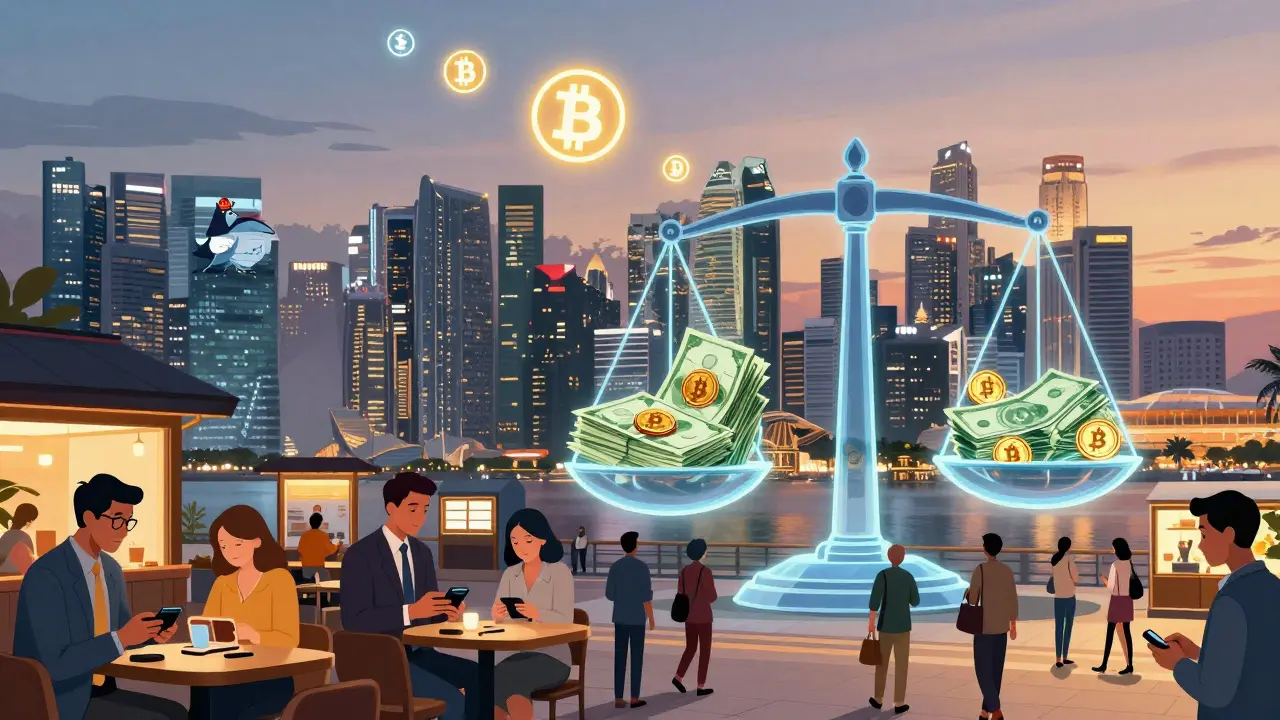
When you think of Asia’s crypto scene, you might picture Tokyo’s tech startups or Hong Kong’s trading floors. But the real action? It’s in Singapore. Not because it’s the biggest, but because it’s the Singapore crypto hub that actually works. While other countries banned crypto or got stuck in regulatory limbo, Singapore built a system where institutions feel safe, startups can scale, and everyday users can transact without fear of sudden crackdowns.
Why Singapore? It’s Not Just Luck
Singapore didn’t become the top crypto hub in Asia by accident. It started with a simple question: How do we let innovation happen without letting financial chaos in? The answer came from the Monetary Authority of Singapore (MAS), which took a different path than most regulators. Instead of saying "no" to crypto, they said "show us how it works." They created clear categories: payment tokens, security tokens, utility tokens. Each has its own rules. If you’re running a crypto exchange, you need a license. If you’re holding customer funds, you must use cold storage and undergo regular audits. No guesswork. No loopholes. That’s why 83% of Fortune 500 blockchain pilots in Asia run under MAS-approved frameworks. Big companies don’t gamble. They need predictability-and Singapore gives it to them.The Stablecoin Powerhouse
If you’re moving money across Asia digitally, you’re probably using a stablecoin. And Singapore is where most of that action happens. Between June 2024 and June 2025, $2.4 trillion in stablecoin transactions flowed through the Asia-Pacific region-and Singapore was the central hub. Not just for retail users, but for businesses. Think about it: a hotel chain in Singapore accepts USDC to pay for room bookings. A luxury reseller in Ginza Xiaoma uses it to pay suppliers in China. A travel agency, Wetrip, lets customers book trips using stablecoins and avoids currency conversion fees. These aren’t experiments. They’re daily operations. Corporate stablecoin use jumped from under $100 million in early 2023 to over $3 billion by early 2025. Why? Because stablecoins are faster, cheaper, and more transparent than traditional banking rails. And Singapore made it legal, safe, and easy to do.Who’s Really Running Things Here?
You don’t need to look far to see who trusts Singapore. Circle, the company behind USDC, opened its Asia office in May 2025-not in Hong Kong, not in Dubai, but in Singapore. Why? Because MAS gave them a clear path to operate. Sopnendu Mohanty, MAS’s Chief FinTech Officer, openly said the future of money includes privately issued stablecoins. That’s not a quiet nod. It’s a public endorsement. Crypto.com’s founders moved their base here. Changpeng Zhao, the former CEO of Binance, relocated key operations to Singapore. BlackRock picked it as its tokenization hub for Asia. SWIFT is testing CBDC bridges with Singaporean banks. Even Goldman Sachs and other traditional finance giants are quietly building tokenized asset platforms here. This isn’t about crypto bros. It’s about institutional capital moving in because the rules are clear, the infrastructure is solid, and the government isn’t playing politics with innovation.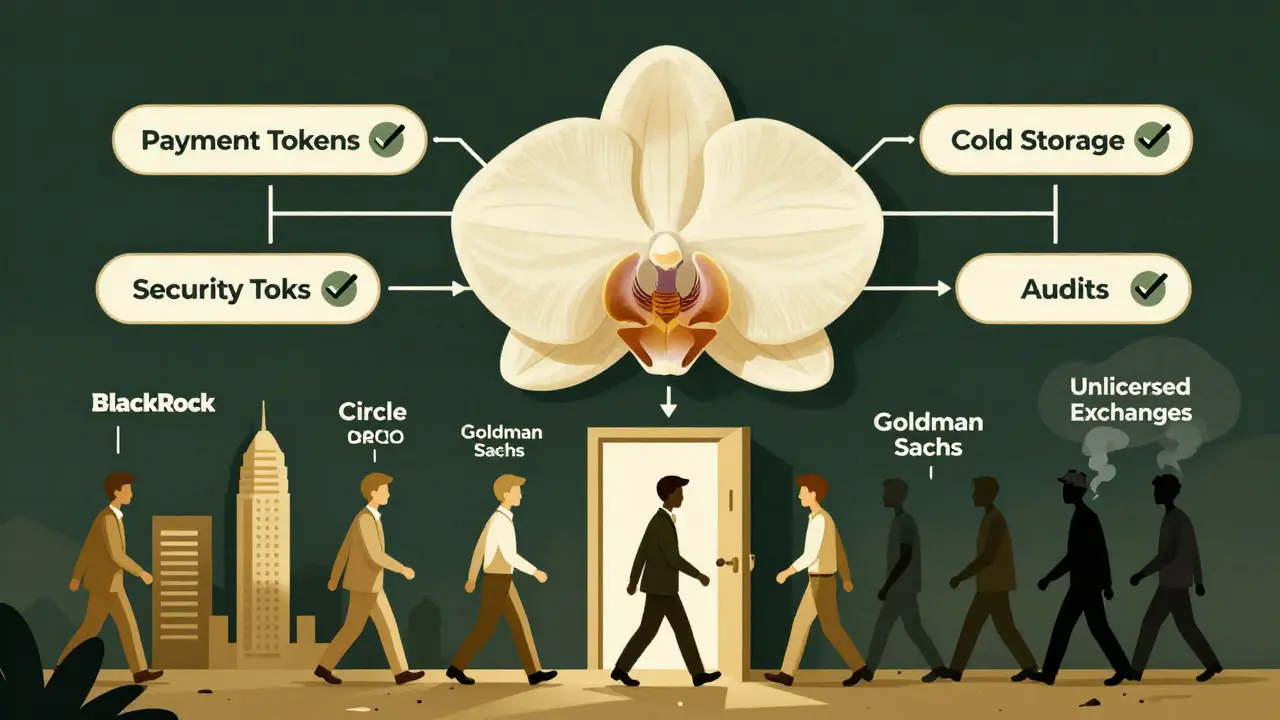
The Trillion Opportunity Nobody Talks About
Most people think crypto is about Bitcoin and memes. But the real story in Singapore is tokenization-the process of turning real-world assets like real estate, art, or even bonds into digital tokens on a blockchain. By 2030, tokenized assets could unlock $2 trillion in liquidity globally. Singapore is already testing this. The government is piloting tokenized government bonds. Private firms are tokenizing commercial real estate. Investors can now buy fractional shares of a building in Orchard Road using a digital wallet. No lawyers. No paperwork. Just a click. This isn’t science fiction. It’s happening now. And Singapore is the only place in Asia where you can do this legally, securely, and at scale.Who’s Buying In? The People
Behind the big institutions, there’s a quiet revolution among everyday people. Singapore ranks #1 globally on the Henley Crypto Adoption Index with a score of 45.7 out of 60. That’s higher than the U.S., South Korea, or even Switzerland. Why? Because it’s easy. No taxes on crypto gains, staking rewards, or mining. No capital gains tax. No VAT on crypto transactions. If you make money from crypto, you keep it all. That’s a huge incentive. Millennials and Gen Z here are adopting crypto at three times the rate of older generations. They’re using it for remittances, DeFi yields, and even paying for coffee at select cafes in Chinatown. It’s not a niche hobby anymore. It’s part of the financial fabric.The Dark Side: When Rules Get Tough
But it’s not all smooth sailing. On June 30, 2025, MAS enforced a hard deadline: all unlicensed crypto firms had to shut down. Over 30 platforms disappeared overnight. Some were shady. Others were just undercapitalized. But the cleanup sent a message: if you want to operate here, you play by our rules. That caused a short-term dip in trading volume. Some liquidity moved to places with looser rules. But the long-term effect? Stronger trust. The platforms that survived are now the most credible in Asia. Investors know they’re not gambling on a fly-by-night operation.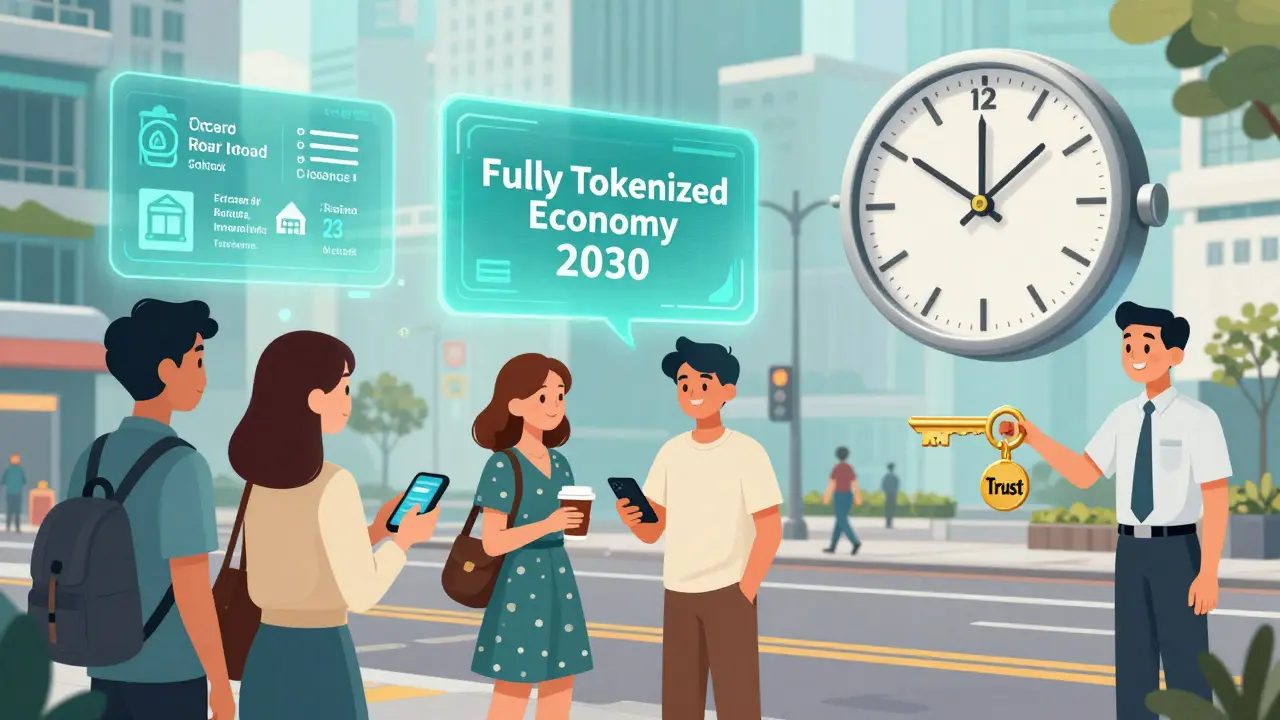
The Event That Proved It All
In October 2025, TOKEN2049 Singapore drew 25,000 people from 160 countries. That’s more than any other crypto event in history. The venue? Marina Bay Sands. The sponsors? Coinbase, OKX, Binance, TRON, DWF Labs-everyone who matters. This wasn’t a conference. It was a declaration. The world’s crypto industry chose Singapore as its Asian home. Not because it’s the cheapest, or the loudest, but because it’s the most reliable.What’s Next?
Singapore isn’t stopping. The next phase is crypto-first public services. Imagine paying your taxes in crypto. Receiving government grants as tokenized assets. Getting a digital ID linked to your wallet. These aren’t distant ideas-they’re in pilot testing right now. The goal? To become the first fully tokenized economy in the world. Not by replacing cash, but by adding a new layer of financial tools that work alongside the old system.Why This Matters for the Rest of Asia
Other countries in Asia are watching. Indonesia, Thailand, and Malaysia are trying to copy Singapore’s model. But they’re missing the key ingredient: consistency. Singapore didn’t flip-flop between bans and welcomes. It built a system and stuck to it. That’s why institutions come here. That’s why startups grow here. That’s why $2.4 trillion in stablecoin activity flows through its networks. Singapore didn’t become the top crypto hub by being the most aggressive. It did it by being the most trustworthy.Is crypto legal in Singapore?
Yes, crypto is fully legal in Singapore. The Monetary Authority of Singapore (MAS) regulates it through a licensing system. Exchanges, custodians, and payment providers must be licensed. Trading, holding, and using crypto for payments are all permitted. There are no taxes on capital gains, staking rewards, or mining income.
Why is Singapore better than Hong Kong for crypto?
Singapore offers clearer, more consistent regulation. While Hong Kong has made progress, its rules still shift with political winds. Singapore’s MAS provides long-term predictability. Institutions like BlackRock and Circle chose Singapore over Hong Kong because they trust MAS’s framework to stay stable. Singapore also has stronger infrastructure for tokenized assets and corporate stablecoin adoption.
Can I use crypto to pay for everyday things in Singapore?
Yes. Major hotels like Capella Singapore, travel agencies like Wetrip, and luxury retailers like Ginza Xiaoma accept stablecoins for payments. You can also use crypto debit cards linked to your wallet to pay at cafes, retail stores, and even public transport kiosks. Adoption is growing fast, especially among younger consumers.
What happened to unlicensed crypto firms in Singapore?
As of June 30, 2025, all unlicensed crypto firms were required to stop operations. Over 30 platforms shut down. Some were fraudulent. Others lacked proper compliance systems. The move cleaned up the market and increased trust. Licensed firms now dominate the space, with higher capital requirements and stricter audits.
Is Singapore’s crypto tax policy really that good?
Yes. Singapore does not tax crypto gains, staking rewards, mining income, or trading profits. This makes it one of the most tax-friendly jurisdictions in the world for crypto. Compare that to the U.S., where capital gains tax can reach 37%, or the EU, where many countries tax every trade. That’s why crypto founders and investors are relocating here.
What’s the biggest risk to Singapore’s crypto hub status?
The biggest risk is global regulatory pressure. If major economies like the U.S. or EU impose strict rules on cross-border stablecoin flows, Singapore could face pushback. Also, if MAS becomes too restrictive over time-like requiring KYC for every small transaction-it could stifle innovation. But so far, the balance has held.

chris yusunas
Singapore’s crypto scene is wild but it makes sense-no taxes, clear rules, and real businesses using it daily. Not just crypto bros hopping on a hype train. People are actually paying for coffee with USDC now. That’s next level.
Vyas Koduvayur
Let’s be real-the whole Singapore crypto narrative is built on selective data cherry-picking. Yes, stablecoin volume is high, but that’s because they’re laundering money for Chinese firms under the guise of ‘trade settlement.’ And don’t get me started on the ‘no capital gains tax’ myth-MAS still taxes crypto as income if you’re deemed a trader, which they define with terrifying vagueness. You think this is freedom? It’s regulatory arbitrage dressed up as innovation.
Fortune 500 pilots? Most of them are just testing tokenization on sandboxed environments with zero real-world integration. And the 25,000 attendees at TOKEN2049? Half were free-ticket influencers paid to post selfies with Changpeng Zhao. The real institutional adoption is happening in Zurich, not Marina Bay.
Tokenized bonds? Sure, they’re ‘piloted.’ But who’s buying them? Local banks with MAS-approved liquidity pools. Not foreign investors. Not even Singaporean retail. The whole thing is a carefully staged illusion designed to attract VC capital and make local bureaucrats look smart. The ‘trust’ you’re talking about? It’s manufactured through regulatory capture and media spin.
And let’s not forget the 30 platforms that got shut down. Most were legit small players who couldn’t afford $5M in compliance overhead. MAS didn’t clean up the market-they created a cartel where only firms with Goldman Sachs backing survive. That’s not innovation. That’s rent-seeking disguised as regulation.
Meanwhile, real crypto adoption in India and Nigeria is happening at the grassroots level-peer-to-peer, cash-in-hand, no licenses needed. Singapore’s model is elegant for Wall Street, but it’s a dead end for financial inclusion. You call it leadership? I call it exclusion dressed in a tailored suit.
And the tax-free claim? Tell that to the guy who got audited last year because he staked ETH and earned $800 in rewards. MAS didn’t tax him on capital gains-they taxed it as ‘other income’ under Section 10(1) of the Income Tax Act. The fine print always bites.
So no, Singapore isn’t the future. It’s the last gasp of centralized financial control pretending to be decentralized.
Melissa Black
Singapore’s regulatory clarity isn’t luck-it’s structural intelligence. MAS didn’t just create rules they engineered a financial ecosystem where innovation doesn’t have to fight bureaucracy to survive. The stablecoin volume isn’t just numbers-it’s proof that trust can be quantified. When $2.4 trillion flows through a jurisdiction without collapse it’s not because of speculation it’s because the rails are engineered for durability.
Tokenization isn’t the future it’s the present and Singapore is the only place in Asia where the legal framework matches the technological capability. No other country has built a bridge between institutional capital and blockchain infrastructure with this level of precision.
The tax policy? It’s not generosity it’s economic strategy. Capital follows certainty. Why would a fund manager allocate billions to a market with shifting rules when Singapore offers permanence? This isn’t about being crypto-friendly it’s about being future-proof.
And yes the shutdown of unlicensed firms was brutal but necessary. Financial systems don’t evolve through chaos they evolve through disciplined curation. What looks like repression is actually protection for the legitimate players. The market didn’t shrink it matured.
This isn’t a hub it’s a blueprint. Other nations can copy the policy documents but they can’t replicate the institutional discipline that underpins it.
Naman Modi
lol Singapore crypto hub my ass. They just let you trade tax-free so rich people can hide money. Meanwhile real crypto is happening in Nigeria where people use it to eat.
Brian Martitsch
Of course Singapore leads. Everyone else is still stuck in the 2017 crypto bro phase. This isn’t about coins it’s about institutional architecture. If you think tokenized real estate is ‘cool’ you haven’t lived in a world where capital moves in milliseconds.
Also-tax-free? Cute. But only if you’re not a U.S. person. FATCA still applies. You’re just fooling yourself.
Ashley Lewis
This article reads like a press release from MAS. No critical analysis. No mention of systemic risks. No discussion of how tokenization could destabilize traditional financial markets. Just glowing praise for a regime that centralizes control under the guise of decentralization.
vaibhav pushilkar
Biggest win? No capital gains tax. That’s the real magnet. Founders and funds are relocating because they can keep what they earn. Simple. No fluff.
SHEFFIN ANTONY
Oh wow Singapore is the only place in Asia that works? What about Japan’s licensed exchanges? Or Thailand’s progressive CBDC trials? You act like everyone else is asleep while Singapore’s having a rave. Newsflash: the world is moving faster than your article lets on.
And don’t forget-Binance moved its HQ out of Singapore last year. They’re in Abu Dhabi now. So much for ‘Changpeng Zhao relocated key operations here.’
Lloyd Yang
I’ve spent time in Singapore’s FinTech labs and I can tell you-it’s not hype. The real magic isn’t in the big announcements or the conferences. It’s in the quiet backend work: banks integrating tokenized bonds into their treasury systems. Startups building compliant cross-border payment rails that actually work without KYC overload. The engineers aren’t posting on Twitter-they’re in rooms with MAS regulators hashing out compliance specs at 2am.
And yes the tax policy matters. But even more important is the cultural shift: Singaporeans don’t see crypto as gambling. They see it as a tool. Like ATMs. Like digital banking. That mindset shift? That’s what other countries can’t replicate. You can copy laws. You can’t copy a society that trusts institutions enough to innovate within them.
Tokenized real estate? I watched a 72-year-old grandmother buy 0.3% of a building in Orchard Road last month using a mobile app. No lawyer. No notary. Just a QR code and a fingerprint. That’s not the future. That’s Tuesday.
And the stablecoin volume? It’s not just corporate. It’s SMEs in Indonesia paying suppliers in Vietnam through Singapore-based gateways. No wire fees. No 3-day delays. That’s the invisible infrastructure that’s changing Asia’s economy-one transaction at a time.
Singapore didn’t win because it’s the loudest. It won because it’s the most reliable. And in finance? Reliability is the ultimate innovation.
Jake Mepham
People keep comparing Singapore to Hong Kong but they’re missing the point. Hong Kong is a financial city. Singapore is a financial ecosystem. One’s a marketplace. The other’s a living system.
Look at the people. Not just the CEOs. The developers. The accountants. The small shop owners accepting USDC. They don’t talk about blockchain. They don’t care about consensus algorithms. They just want faster payments and lower fees. Singapore gave them that. And that’s why adoption is organic-not forced.
And the tokenization pilots? They’re not just for bonds. I know a guy who tokenized his family’s durian farm. Investors from Japan buy fractional shares via a wallet. Harvest profits get distributed automatically. That’s real. That’s revolutionary. Not because it’s tech-it’s because it’s accessible.
Singapore didn’t build a crypto hub. It built a new kind of economy.
Craig Fraser
It’s all very impressive until you realize Singapore’s model depends entirely on geopolitical neutrality. What happens when the U.S. decides to sanction Chinese stablecoin flows? Singapore’s entire ecosystem is built on being a conduit. If the U.S. pulls the plug, it all collapses. This isn’t resilience. It’s fragility with a nice logo.
Jacob Lawrenson
Bro. Singapore is the only place where crypto actually works. Not because of the tech. Because of the people. Everyone here just… gets it. No drama. No shouting. Just clean systems. I’ve seen it. I’ve used it. It’s real.
And yeah the tax thing? That’s the secret sauce. No one talks about it enough.
Zavier McGuire
They shut down 30 platforms but let Circle in? Sounds like a rigged game to me. Why do I trust a government that picks winners and calls it regulation
Sybille Wernheim
I love how this post doesn’t mention how Singapore’s model excludes the unbanked. The people who need crypto most-the gig workers, the migrant laborers-are still stuck with cash. Tokenized bonds don’t help someone sending $50 to their family in Bangladesh. This isn’t financial inclusion. It’s financial exclusivity with a nice UI.
Sarah Glaser
Tokenization of real estate is the most compelling development here. Not because it’s flashy but because it redefines ownership. Fractional access to high-value assets without intermediaries? That’s the core promise of blockchain realized-not as speculation but as structural change.
And the fact that this is happening under a sovereign regulatory framework makes it scalable. Other jurisdictions fear decentralization. Singapore embraces it-within guardrails. That’s the difference between innovation and chaos.
roxanne nott
ok but why is everyone acting like singapore invented crypto? like the tax thing is sooo special? i mean usa has 0 tax on crypto held >1 year… wait no they dont. oops. anyway. mas is just being opportunistic. same as always.
Alison Fenske
My cousin works at a hotel in Singapore that takes USDC. She said customers love it-no more currency conversion fees when they’re from Malaysia or Thailand. She doesn’t even understand blockchain. She just knows the money shows up faster. That’s the real win. Tech that works without needing to be explained.
Grace Simmons
Singapore is becoming a financial colony for Western capital. They’re outsourcing their regulatory sovereignty to private firms like Circle and BlackRock. This isn’t innovation-it’s neocolonialism with blockchain branding.
Collin Crawford
The notion that Singapore’s model is ‘trustworthy’ is laughable. It’s merely a façade of compliance. The same government that enforces strict KYC on retail users also grants regulatory exemptions to multinational entities. This is not a level playing field. It is a gated community for capital.
Dusty Rogers
Most people don’t realize the real story isn’t the big names. It’s the local developers building tools on top of MAS-approved APIs. I’ve seen apps that let you split rent in crypto with your flatmates. No bank involved. No middleman. Just smart contracts. That’s the quiet revolution.
Kevin Karpiak
Let’s be honest. Singapore is just a tax haven with better PR. They’re not leading innovation-they’re just letting rich people avoid taxes while pretending it’s for the future. The rest of Asia is doing real stuff. You just ignore it because it doesn’t fit your narrative.
Melissa Black
You’re missing the point. Singapore doesn’t need to be the biggest. It needs to be the most reliable. That’s why institutions don’t just park money there-they build their Asia strategy around it. Reliability isn’t sexy. But it’s the only thing that lasts.
vaibhav pushilkar
And that’s why startups from Indonesia and Vietnam are moving teams to Singapore. Not for the tax break-for the access. To the regulators. To the banks. To the talent. That’s the real ecosystem.