South Korea Crypto Exchange Regulations by FSC: 2026 Guide

For years, South Korea was the wild west of crypto trading. High volumes, high risks, and a regulatory environment that felt like it was being rewritten every Tuesday. But if you are looking at the landscape today in 2026, the story has changed completely. The Financial Services Commission (FSC), the country’s primary financial regulator, has moved from cracking down on chaos to building a structured, institutional-grade framework.
This isn't just about keeping bad actors out; it is about bringing big money in. The FSC’s recent push for the Virtual Asset Basic Law has transformed how exchanges operate, how corporations can hold assets, and how retail investors access the market. If you are running a business in South Korea or planning to invest there, understanding these specific restrictions and opportunities is no longer optional-it is survival.
The Core Framework: What VASPs Must Do
To understand where we stand in 2026, you have to look at the foundation laid in 2020 and tightened over the last few years. The FSC regulates entities known as Virtual Asset Service Providers (VASPs). This term covers anyone buying, selling, exchanging, transferring, or storing virtual assets for others. In South Korea, you cannot simply launch a website and start trading. You must be registered and compliant with strict operational standards.
The most immediate hurdle for any VASP is the real-name verification system. Exchanges are required to provide clients with access to real-name bank accounts maintained at the same institution as the exchange’s own authorized accounts. This creates a closed loop for transactions, making it nearly impossible to move funds anonymously between banks and exchanges. It sounds bureaucratic, but it effectively kills off the casual money laundering attempts that plagued earlier markets.
Beyond banking, security is non-negotiable. Every provider must obtain certification from the Korea Internet Security Agency (KISA) for their Information Security Management Systems (ISMS). This isn’t a one-time check; it requires ongoing audits and rigorous protocols. Additionally, all providers must register with the Korean Financial Intelligence Unit (KoFIU) and report any suspicious activity immediately. The FSC does not tolerate gaps in this chain.
The Travel Rule and Cross-Border Restrictions
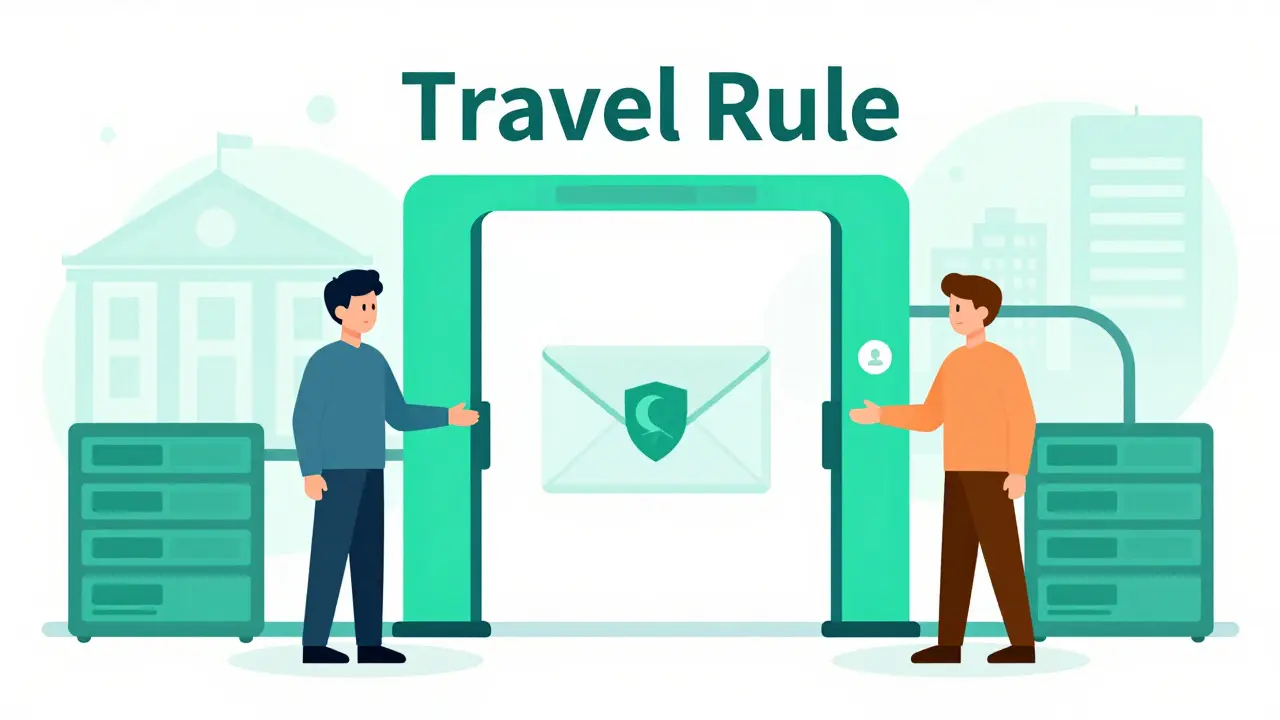
One of the most significant changes introduced by the FSC is the enforcement of the Financial Action Task Force (FATF) Travel Rule. For those unfamiliar, this rule requires exchanges to share information about who is sending and receiving crypto. In South Korea, this applies to transactions above KRW 1 million (roughly EUR 800 or USD 750).
If you are using a Korean exchange to send funds to another VASP, your identity and beneficiary details must travel with the transaction. This has made cross-border transfers more cumbersome for retail users but has significantly increased transparency for regulators. For international exchanges wanting to partner with Korean platforms, this means integrating complex data-sharing APIs. It is a barrier to entry that filters out unprofessional operators.
Currently, only a handful of major domestic players-like Bithumb, Upbit, Coinone, and Korbit-have fully mastered this ecosystem. While other VASPs are mandated to adhere to these rules, the technical and legal overhead means the market remains consolidated around these established giants. New entrants face a steep climb to gain trust and compliance status.
Institutional Shifts: ETFs and Corporate Holdings
The biggest news for 2025 and 2026 is not just regulation-it’s permission. The FSC has signaled a massive shift toward institutional adoption. For years, corporations were effectively banned from holding cryptocurrency due to vague accounting rules and risk aversion. That is changing.
The FSC’s Virtual Asset Task Force proposed a phased relaxation of corporate restrictions. Companies can now open KYC-verified accounts at licensed exchanges to hold crypto as part of their treasury strategy, provided they stay within defined reporting and exposure limits. This opens the door for tech firms, manufacturers, and service companies to allocate capital into digital assets legally.
Even more impactful is the legalization of spot cryptocurrency exchange-traded funds (ETFs). These instruments allow pensions, mutual funds, and retail investors to gain regulated exposure to crypto through the Korea Exchange. Unlike direct trading, these ETFs require sponsors to maintain transparent index methodologies and real-time net asset value reporting. This brings crypto into the mainstream financial portfolio of conservative investors who previously stayed away due to security concerns.
| Feature | Retail Investors | Institutional Investors |
|---|---|---|
| Access Method | Licensed VASP Accounts | Spot Crypto ETFs / Corporate Treasury Accounts |
| Verification Level | Real-name Bank Account Linkage | Enhanced Due Diligence + Corporate KYC |
| Security Requirement | KISA ISMS Certified Platform | Audited Custody Solutions |
| Reporting Threshold | KRW 1 Million (Travel Rule) | Custom Exposure Limits per Entity |
Taxation and the ICO Ban
Money always follows clarity, and tax policy is a huge part of that. As of 2026, profits from cryptocurrency trading in South Korea are still not subject to capital gains tax. The government postponed the planned tax introduction originally set for 2025. This tax holiday makes South Korea attractive for traders, but do not count on it lasting forever. Future legislation is expected, and once it arrives, losses incurred within the same tax year will likely be offset against gains.
Another persistent restriction is the ban on domestic Initial Coin Offerings (ICOs). Since 2017, raising funds directly from the public via new token sales has been illegal to protect investors from fraud. However, the FSC is exploring frameworks for regulated token issuance. This doesn’t mean ICOs are back, but it does mean Security Token Offerings (STOs) might find a home in specific regulatory testbeds.
This leads us to regional innovation. The Busan Digital Asset Nexus is a prime example. The Busan Metropolitan Government is creating a sandbox for STOs and foreign institutional participation. Other regions like Jeju and Incheon are watching closely. This decentralized approach to regulation allows the FSC to test waters without risking the national financial system.

NFTs and DeFi: The Gray Areas
Not all digital assets are treated equally. The FSC distinguishes NFTs based on their function. If an NFT serves as an investment vehicle or a payment method, it falls under the same strict VASP regulations as Bitcoin or Ethereum. However, if an NFT is primarily collectible-like a piece of digital art with no utility beyond ownership-it is generally excluded from these strict rules.
Decentralized Finance (DeFi) presents a bigger challenge. The current framework struggles to define who is responsible when there is no central entity. The upcoming Virtual Asset Basic Law aims to close these loopholes. Expect tighter scrutiny on DeFi protocols that offer services to Korean residents, even if the protocol itself is hosted overseas. The FSC is clear: if you serve Korean users, you follow Korean rules.
Why This Matters for Your Strategy
The evolution of South Korea’s crypto regulations under the FSC represents a maturation of the market. The days of anonymous trading and unchecked volatility are gone. In their place is a system designed for stability, transparency, and institutional growth.
For businesses, this means higher compliance costs but greater legitimacy. For investors, it means safer custody solutions and new products like ETFs. For developers, it means navigating a clearer, albeit stricter, legal path for launching projects. The FSC has built a wall around the market, but inside that wall, the infrastructure is robust enough to support serious financial activity. Understanding these boundaries is the first step to succeeding in one of Asia’s most dynamic crypto jurisdictions.
Is cryptocurrency trading legal in South Korea?
Yes, cryptocurrency trading is legal in South Korea, but it must occur through licensed Virtual Asset Service Providers (VASPs) that comply with strict FSC regulations, including real-name verification and security certifications.
What is the FATF Travel Rule in South Korea?
The FATF Travel Rule requires VASPs to exchange originator and beneficiary information for transactions exceeding KRW 1 million. This ensures transparency and helps prevent money laundering across borders.
Can corporations hold cryptocurrency in South Korea?
Yes, recent regulatory changes allow corporations to hold cryptocurrency through KYC-verified accounts at licensed exchanges, subject to defined reporting and exposure limits. This marks a shift from previous restrictive policies.
Are crypto gains taxed in South Korea?
As of 2026, capital gains tax on cryptocurrency profits has been postponed. However, future legislation is expected, which may include provisions for offsetting losses against gains within the same tax year.
What is the Virtual Asset Basic Law?
The Virtual Asset Basic Law is comprehensive legislation aimed at enhancing investor protection, defining market parameters for exchanges, and facilitating institutional adoption through mechanisms like spot crypto ETFs.