Strike Finance Review: Is This Bitcoin-First App Right for You?

Most people treat crypto exchanges like digital stock markets-places where you buy a coin, hold it, and hope the price goes up. But Strike Finance is a global Bitcoin-focused payments application developed by Zap Solutions that merges traditional banking with the Lightning Network. Unlike massive exchanges that list thousands of speculative tokens, Strike focuses on a very specific goal: making Bitcoin a usable currency for everyday life. If you want to trade 50 different altcoins, this isn't your tool. But if you want to send money across borders instantly or stack sats without a headache, it might be the best choice available today.
The Core Philosophy: Bitcoin First
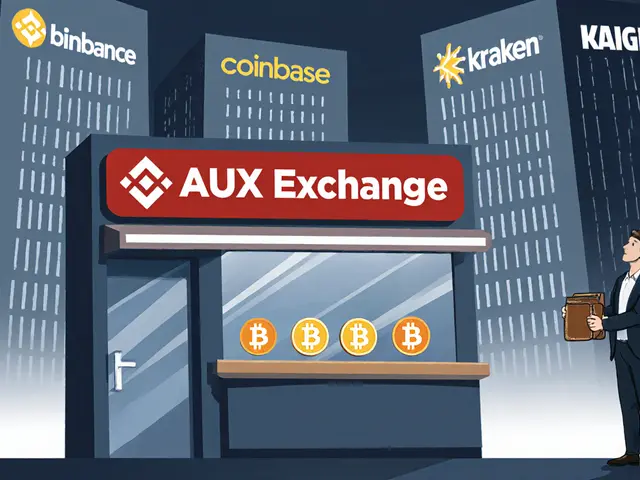
Strike doesn't try to be everything to everyone. While a giant like Coinbase feels like a supermarket of digital assets, Strike is more like a specialized boutique. It focuses almost exclusively on Bitcoin (BTC) and USDT (Tether). By narrowing its scope, it removes the clutter and complexity that usually scares newcomers away from crypto.
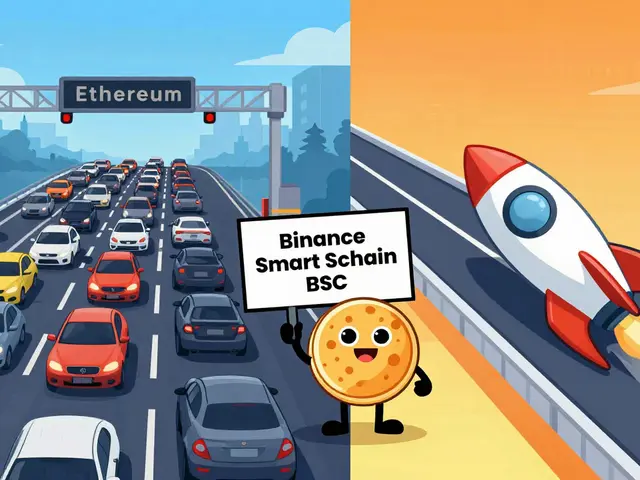
The real magic here is the integration of the Lightning Network . For those who aren't tech-savvy, the Lightning Network is a "Layer 2" system that sits on top of the main Bitcoin blockchain. It allows for nearly instant transactions and microscopic fees. In a real-world scenario, this means you could theoretically buy a coffee with Bitcoin without waiting 10 minutes for a block confirmation or paying a $5 network fee. Strike handles all this technical heavy lifting in the background, so you just see a simple "Send" button.
Breaking Down the Costs
Fees are usually where crypto platforms hide their profits. Strike is fairly transparent, but you need to know where the costs actually hit. They use a tiered system for trading, meaning the more you trade in a month, the less you pay. For most casual users moving under $250 a month, the fee starts at 0.99%.
However, be careful with how you fund your account. If you link a bank account via Plaid , it's cheap. If you use a debit or credit card, you'll see a jump in costs-typically between 2% and 4%. There's also the "spread," which is the difference between the market price and the price Strike gives you. While this is standard across the industry, it's a hidden cost you should keep in mind.
| Feature | Strike Finance | Major Exchanges (e.g., Coinbase) |
|---|---|---|
| Asset Selection | Bitcoin & USDT only | Hundreds of Altcoins |
| Payment Speed | Instant (via Lightning) | Standard Blockchain Speed |
| Primary Use Case | Payments & Remittances | Investing & Speculation |
| DCA Fees | Zero fees for auto-buys | Usually charged per trade |

Practical Use Cases: Who is this for?
If you're a day trader chasing the next 100x meme coin, you'll find Strike boring. But for a few specific groups of people, it's a game-changer. Imagine you're a freelance graphic designer in the Philippines working for a client in the US. Normally, you'd deal with PayPal's high fees or wait days for a SWIFT transfer. With Strike, the client sends USD, and you receive Bitcoin or USDT almost instantly. The costs are a fraction of traditional wire transfers.
Then there are the "Bitcoin stackers." Many users utilize the no-fee Dollar Cost Averaging (DCA) tool. This lets you set up a recurring purchase-say, $20 every Friday-to build your position over time without worrying about market volatility or paying a fee every time you buy. It's a set-it-and-forget-it approach to investing.
Another interesting feature is the payroll integration. Some companies now allow employees to receive a portion of their salary directly in Bitcoin. Instead of your employer sending a check and you manually buying BTC, the process is automated, turning your paycheck into a savings vehicle.
Security and Custody: The Trade-off
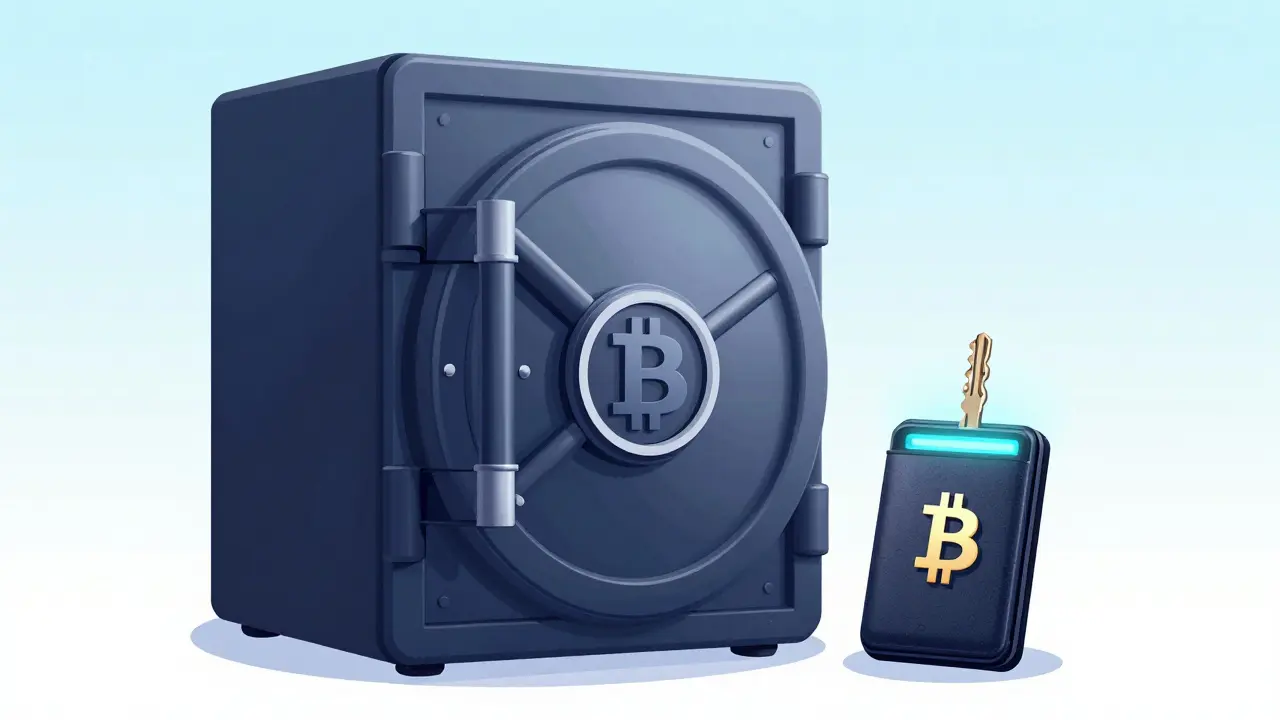
Here is the most important part you need to understand: Strike is a custodial service. This means they use a 1:1 custody model where Strike holds the keys to the Bitcoin on your behalf. In the crypto world, there is a famous saying: "Not your keys, not your coins." By using Strike, you are trusting Zap Solutions Holdings, Inc. to secure your funds.
For a beginner, this is actually a relief. You don't have to worry about losing a 24-word seed phrase and losing your entire life savings. Strike provides a polished, secure interface with verification levels that limit how much you can move based on your ID check. However, for "whales" or long-term holders with significant amounts of BTC, the recommendation is always to eventually move funds to a hardware wallet.
The Limitations You Should Know
Strike is not a full-featured trading platform. You won't find complex futures contracts, advanced margin trading, or a dizzying array of technical indicators. While they've added limit orders to allow you to buy at a specific price, it's still a streamlined experience. If you need a professional trading terminal, you'll outgrow this app quickly.
Additionally, the "Send Globally" feature, while powerful, isn't available in every country. While the app is available in over 65 countries, the full suite of international remittance tools is limited to a smaller subset. Always check the current availability for your specific region before relying on it for business payments.
Is Strike Finance a centralized or decentralized exchange?
Strike is a centralized platform. This means they manage the transactions and hold the assets for you. While they use the decentralized Lightning Network to move Bitcoin quickly, the app itself is managed by a company (Zap Solutions), which makes it much easier for beginners to use but requires trust in the provider.
Can I use Strike for other coins like Ethereum or Solana?
No. Strike is strictly Bitcoin-first. They only support Bitcoin (BTC) and USDT. If you want to diversify into other cryptocurrencies, you will need to use a different exchange and then potentially move your Bitcoin back to Strike for payments.
How do the Lightning Network payments work in Strike?
Strike simplifies the process by routing payments through the Lightning Network. When you send money to another Strike user, it doesn't wait for the main Bitcoin blockchain to confirm. Instead, it moves through a network of peers instantly. You don't need to know how to set up a node; Strike does it all for you.
Are there any hidden fees on Strike?
The most common "hidden" cost is the exchange rate spread. This is the small difference between the actual market price of Bitcoin and the price you see in the app. Additionally, while some transfers are free, funding your account via credit cards carries a significant fee (2-4%).
Is it safe to store my Bitcoin on Strike long-term?
Strike is secure for daily use and short-term holding, utilizing industry-standard security and Plaid integration. However, for very large amounts or multi-year holdings, using a personal hardware wallet is generally considered safer because you have total control over your private keys.
Final Verdict and Next Steps
Strike Finance is a brilliant tool for anyone who views Bitcoin as a tool for payment rather than just a speculative asset. It solves the "too slow, too expensive" problem of early crypto. If you're just starting, try setting up a small DCA purchase to get a feel for the interface. If you're a freelancer, test it with a small payment from a client to see the speed of the Lightning Network in action. Just remember to keep your long-term savings in a wallet you control.

Jason Davis
Been usin Strike for a minute now and the Lightning Network stuff is legit fast. Just a heads up tho, make sure u use the bank transfer not a card or u'll get wrecked by the fees lol
Aaliyah BROTHERS
Another custodial trap!!! They want you to hand over your keys so they can freeze your funds whenever the government decides to play hero!!!! Wake up people!!! The "convenience" is just a leash to keep you under their thumb!!!! Absolute madness!!!!
jennelle williams
just a tool for a simpler life
Samson Selleck
The operational inefficiency of relying on a custodial intermediary for an asset designed for sovereign autonomy is laughable. While the Lightning Network integration provides a marginal improvement in throughput, the systemic risk introduced by Zap Solutions' custodial model creates a single point of failure that negates the very ethos of decentralization. One must wonder if the average user even comprehends the precariousness of their position in the capital stack when the entity holding the private keys is subject to regulatory whims and solvency risks. It is a superficial solution to a complex problem, catering to the masses who prefer a sanitized interface over actual financial liberation. The spread is merely a tax on ignorance, and the tiered fee structure is a transparent attempt to gamify liquidity. Truly an amateur's playground.
James Bone
Typical. People love the idea of 'financial freedom' until they actually have to manage a seed phrase. This whole app is just a training wheel for people who are too scared to actually own their money. But hey, if you like playing house with your finances, go right ahead. It's a moral failure to call this 'banking' when you're just renting your coins from a corporation.
Adam Auksel
I think it's a great stepping stone for newcomers! 🌟 Not everyone can jump straight into hardware wallets on day one. It's all about the journey! 🚀
daniella davis
omg i tried to use it and the interface is so basic its like... hello?? where are the actual tools?? it's literally just for people who dont know how to trade properly lol. so basic
7stargee Emmanuel Obani
Too many fees for me :( bad app
william manes
Get a real wallet or get out 🇺🇸 🤡
Tyler Webb
I can see why some people feel uneasy about the custodial part. It's a bit of a trade-off between ease of use and total control. :)
Heather Warren
The DCA feature is actually really helpful for people who want to build their savings without stress. It just takes the emotion out of the process.
Kieran Smith
wait so u can actually get paid in btc?? that sounds awsome for side hustles. i wonder if it works with most payroll softwares
Surender Kumar
pretty cool app for beginners. just keep it simple and dont put all your money in one place heh
Rima Dinar
If you are looking to start your journey with Bitcoin and you feel overwhelmed by the technical side of things, I really believe that starting with a streamlined app like this can provide a sense of security and confidence that will eventually lead you to learn more about self-custody, because the most important thing is to just get started and not let the fear of the unknown stop you from exploring the future of finance in a way that feels manageable and safe for your current skill level.
aletheia wittman
i litlely cant believe people are paying 4% for cards... like r u kidding me?? just use a bank lol
Emily H
The integration of the Lightning Network is indeed a sophisticated approach to the scalability problem. It is encouraging to see a platform prioritize utility over speculative variety.
Swati Sharma
Absolutely agree on the L2 utility. The friction reduction in cross-border remittances via the Lightning rails is a total game-changer for the G2G payments and reducing the slippage usually found in traditional corridors. It's basically optimizing the throughput for the end-user while maintaining the BTC base layer.