Supply Chain Blockchain Use Cases: Real-World Examples and Benefits
Supply Chain Blockchain Impact Calculator
Blockchain Implementation Results
Your supply chain could see significant improvements:
Recall Speed
Cost Savings
Operational Efficiency
Supplier Impact
Implementation Timeline
Estimated ROI
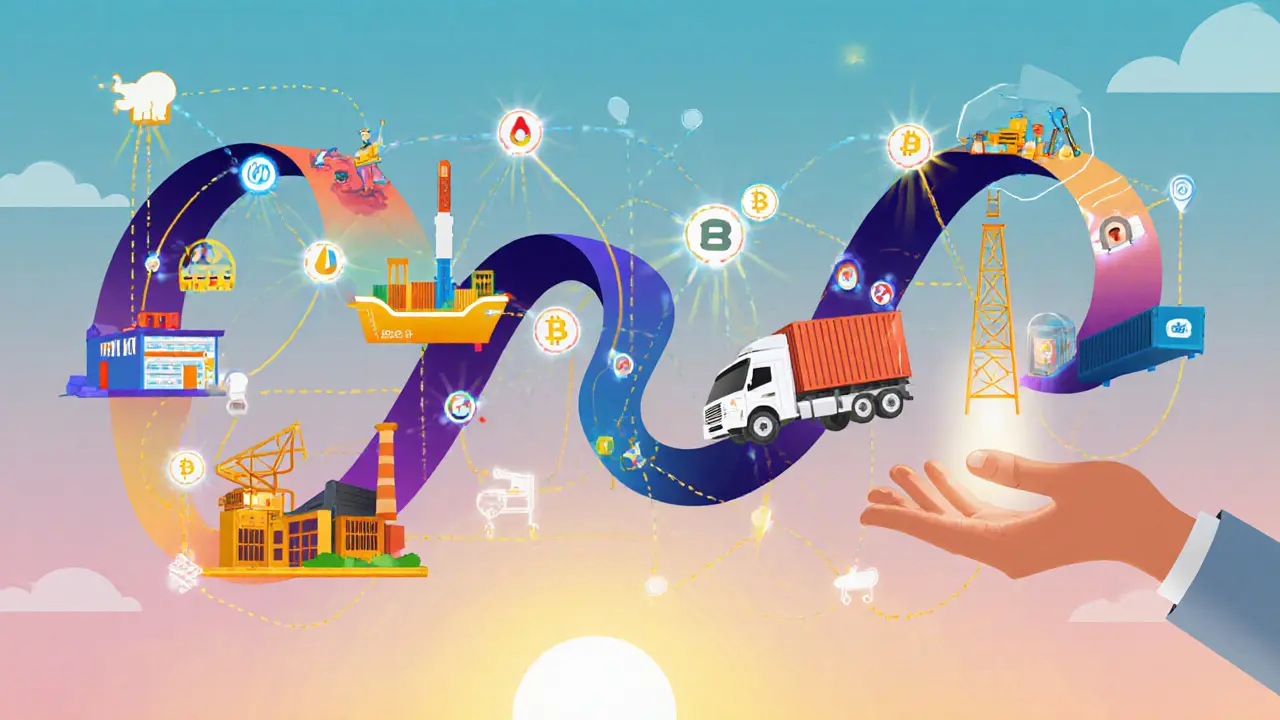
When we talk about Supply Chain Blockchain is a distributed‑ledger system that records every transaction and event across a product’s journey from raw material to consumer. It removes information silos, makes data tamper‑proof, and gives every participant a single source of truth.
Why a Blockchain Matters for Supply Chains
Traditional supply‑chain systems rely on spreadsheets, emails, and isolated databases. That means a single error can ripple through dozens of partners, causing costly delays or even dangerous product recalls. By contrast, a blockchain provides:
- Transparency - every stakeholder sees the same data in real time.
- Immutability - once recorded, a transaction cannot be altered without consensus.
- Automation - smart contracts trigger actions (payments, alerts, penalties) automatically when predefined conditions are met.
- Traceability - the full history of a product is available at the scan of a QR code.
These capabilities translate into faster issue resolution, lower administrative overhead, and new financing options for smaller partners.
Core Technical Building Blocks
Three technical components make a blockchain‑enabled supply chain possible:
- IoT Sensors capture environmental data (temperature, humidity, vibration) and write it directly to the ledger.
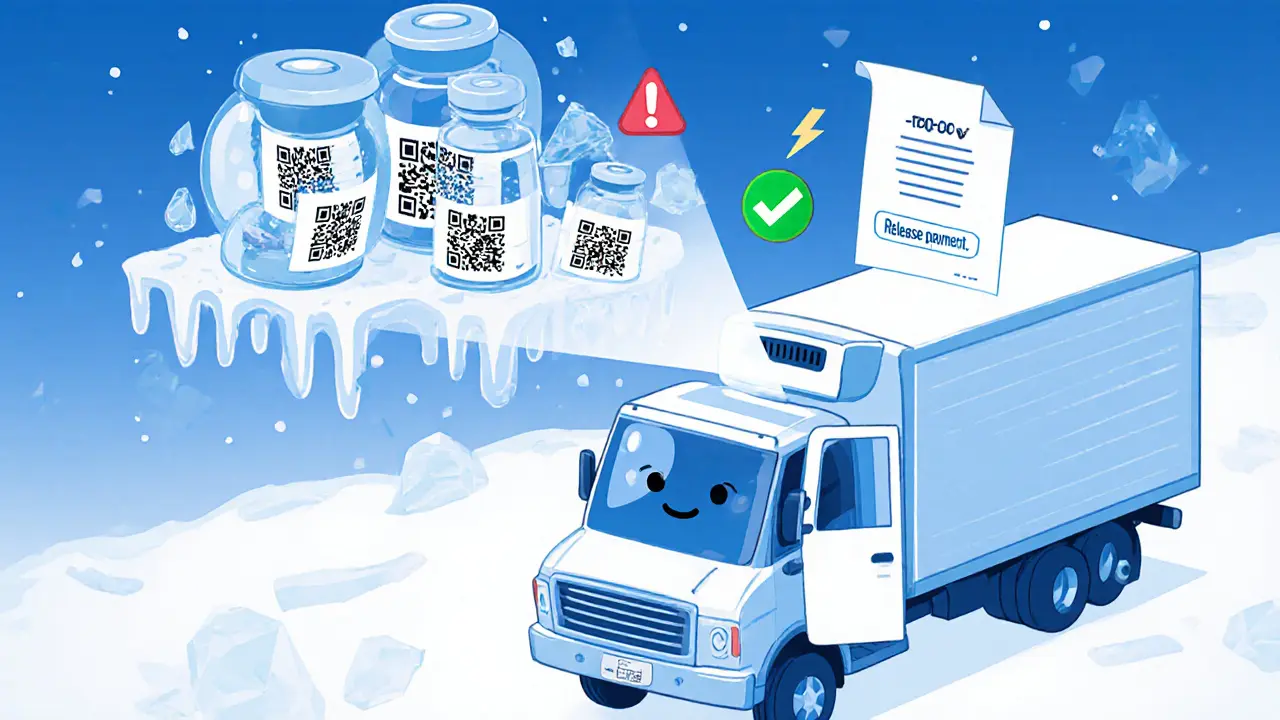
- Smart Contracts encode business rules such as "release payment when temperature stays below -70°C for 48 hours" and execute without human intervention.
- Immutable Ledger stores each event in a cryptographically linked chain, guaranteeing that no one can rewrite history.
When these pieces work together, the supply chain becomes a living, self‑correcting ecosystem.
Industry‑Specific Use Cases
Below are the most cited real‑world deployments, grouped by sector.
Shipping & Logistics
Maersk partnered with IBM to launch TradeLens in 2017. The platform records every container movement on a blockchain, cutting paperwork and giving shippers instant visibility into vessel ETA, customs status, and cargo handling events.
Cold‑Chain & Pharmaceuticals
During the COVID‑19 vaccine rollout, Moderna used a blockchain‑based cold‑chain solution that logged temperature readings every five minutes. If a deviation occurred, smart contracts automatically notified logistics partners and triggered contingency actions, protecting the ultra‑cold -70°C requirement.
Food Safety & Recall Management
Walmart integrated blockchain traceability across thousands of suppliers. When a contaminated batch of leafy greens was identified, the system narrowed the source down to a single farm within seconds, compared with the industry average of two months. Tracifier, a German startup, reported up to a 40% drop in processing costs after linking its platform with an Oracle Blockchain backend.
Luxury Goods & Conflict‑Free Diamonds
De Beers created a blockchain ledger that follows each of its 100 high‑value diamonds from mine to retail store. The immutable record proves provenance, eliminates the risk of conflict diamonds, and gives buyers confidence in the ethical origin of their purchase.
Automotive & Battery Materials
Ford announced in early 2020 that it would trace cobalt used in electric‑vehicle batteries through a blockchain network. The goal is to verify that the metal comes from responsible miners, meet regulatory standards, and support sustainability reporting.
Oil & Energy
ADNOC (Abu Dhabi National Oil Company) piloted a blockchain solution with IBM to track crude oil from wellhead to refinery. The system automates transaction settlement and provides real‑time visibility into inventory levels across the value chain.
Measurable Benefits - A Quick Comparison
| Industry | Speed of Recall | Cost Reduction | Operational Impact |
|---|---|---|---|
| Food | Seconds vs. 2months | Up to 40% | Reduced paperwork, faster supplier onboarding |
| Pharma | Instant temperature alerts | 15‑20% lower cold‑chain loss | Automated compliance reporting |
| Logistics | Real‑time ETA updates | 10‑12% lower freight admin costs | Improved container utilization |
| Luxury Goods | Immediate provenance verification | Reduced fraud losses (~30%) | Higher brand trust, premium pricing |
These numbers show why companies are betting on blockchain to tighten control and cut waste.

Implementation Roadmap - From Pilot to Full Rollout
- Define Business Objectives: Identify the problem you want blockchain to solve (e.g., recall speed, payment automation).
- Map the End‑to‑End Process: List every party, data point, and hand‑off that will be recorded.
- Select a Platform: Options include Oracle Blockchain, IBM Hyperledger Fabric, or open‑source solutions.
- Integrate Sensors & IoT: Deploy temperature, humidity, and GPS devices that push data directly to the ledger.
- Develop Smart Contracts: Encode rules such as "release payment after 24hours of stable temperature".
- Run a Controlled Pilot: Involve 2-3 key partners, measure metrics (cost, time, error rate).
- Scale Gradually: Add more suppliers, expand data fields, and automate settlement.
- Monitor & Optimize: Use analytics to fine‑tune contracts and sensor thresholds.
Typical timelines range from three months for a simple traceability pilot to 12‑18 months for a multi‑partner network that includes finance and AI integration.
Future Trends Shaping the Next Wave
Three developments will push blockchain supply chains past mere traceability:
- Tokenization of Goods: Physical assets become digital tokens, enabling instant settlement and fractional ownership.
- AI‑Driven Predictive Analytics: Real‑time ledger data feeds machine‑learning models that forecast demand, detect anomalies, and suggest inventory adjustments.
- Decentralized Financing (DeFi): Suppliers can lock tokenized inventory as collateral for instant loans, opening capital to smaller players.
Enterprises that start integrating these capabilities now will lock in a competitive edge as regulations tighten around provenance and sustainability.
Frequently Asked Questions
What is a supply‑chain blockchain?
It is a distributed ledger that records every transaction, movement, and data point for a product as it travels from raw material to end consumer, providing an immutable, shared view for all participants.
How do smart contracts improve logistics?
Smart contracts automatically enforce agreed‑upon rules-such as releasing payment when temperature stays within a set range-removing manual checks, reducing errors, and speeding up settlement.
Can blockchain reduce food‑recall times?
Yes. Because each batch is uniquely recorded, a retailer can pinpoint the exact farm and shipment in seconds, whereas traditional methods can take weeks or months.
What are the main challenges when adopting blockchain?
Key hurdles include the learning curve around distributed‑ledger concepts, the cost of sensor hardware, integration with existing ERP systems, and getting all partners to agree on standards.
Is blockchain suitable for small businesses?
Yes. Cloud‑based platforms like Oracle Blockchain offer pay‑as‑you‑go models, and tokenized assets can give small suppliers access to financing that was previously out of reach.
How does tokenization work in supply chains?
Physical items are represented by digital tokens on the blockchain. When ownership changes, the token moves, instantly recording the transfer without paperwork.

Matthew Laird
Look, the whole hype about blockchain in supply chains is just another tech‑buzzword circus. Instead of fixing actual food safety protocols, companies chase glittery ledgers that only the tech‑elite understand. We should be demanding real oversight, not digital vanity.
Richard Bocchinfuso
Yo, i think this blockchain thing can actually help cut down on paper trash n save some cash. but ya gotta make sure the sensors r solid otherwise it’s just a fancy spreadsheet.
Debra Sears
I totally get the excitement around tracing each product step‑by‑step. When a recall happens quickly, lives are saved and confidence is restored, which is a win for everyone involved.
Ken Pritchard
From a mentorship angle, introducing blockchain means upskilling partners across the chain. It’s a chance to bring smaller suppliers into the digital fold and level the playing field.
Mark Fewster
Blockchain provides immutability; it guarantees data integrity, and it can streamline settlement processes, thereby reducing administrative overhead.
Patrick Gullion
Actually, the tech isn’t a distraction – it’s a practical tool that already cut recall times from weeks to seconds in pilot programs. If you look past the buzz, the results speak for themselves.
Moses Yeo
Consider the ledger as a collective memory, a digital agora where each transaction is a truth‑sealed artifact; in that sense, transparency becomes the new moral compass guiding commerce.
Andrew Lin
Our nation’s logistics can finally stop relying on foreign data hubs. By owning a home‑grown blockchain network we protect our supply chain sovereignty and boost domestic tech jobs.
Caitlin Eliason
It’s insane how a single QR code can unveil the entire journey of a luxury watch – from mine to wrist – and that’s why we need this tech now! 😱✨
Don Price
While the patriotic zeal for a national blockchain sounds appealing, one must also acknowledge that supply chains are inherently global, intertwining countless jurisdictions, standards, and stakeholders. The notion that a single nation can unilaterally secure the entirety of a complex, cross‑border network overlooks the collaborative nature of modern commerce. Moreover, the technical expertise required to design, maintain, and scale such a system is distributed worldwide, often concentrated in specialized firms that operate beyond any single government’s direct control. Ignoring these realities not only risks creating siloed solutions that fail to interoperate, but also exposes the domestic market to vulnerabilities when international partners adopt incompatible protocols. In short, a balanced approach that leverages both national interests and global cooperation is essential for any blockchain initiative to truly succeed.
Dawn van der Helm
Seeing these real‑world case studies gives me hope that small producers will finally get a fair shot at competing with the giants, thanks to transparent data.
Monafo Janssen
Blockchain can help us see where food comes from, so we know it’s safe to eat.
Michael Phillips
When the ledger records every handoff, it creates a narrative of trust that can be audited without bias, turning supply chains into living textbooks of commerce.
Jason Duke
Bottom line: if you want faster payments, fewer errors, and a competitive edge, blockchain is the tool you can’t afford to ignore.
Bryan Alexander
The moment a counterfeit sneaker is exposed on the chain, the entire market trembles – that’s the power of immutable proof.
Nicholas Kulick
Implementing a blockchain in a supply chain starts with pinpointing the exact pain points you want to solve, such as recall latency or invoice reconciliation. Once the objectives are clear, you map every data‑generating event – from sensor readings to customs clearance – and assign a unique identifier to each. Next, you choose a platform that aligns with your scalability needs; Hyperledger Fabric offers permissioned control, while public‑grade solutions give broader transparency. Sensors then feed real‑time data directly onto the ledger, ensuring that temperature excursions or location updates are tamper‑proof. Smart contracts codify business rules, for example automatically releasing payment when a shipment stays within the required temperature range for a predefined period. With each transaction sealed cryptographically, all participants gain a single source of truth, eliminating the back‑and‑forth of email confirmations. The immutable record also streamlines audits, cutting compliance costs by up to 40 % in regulated industries. As data accumulates, analytics can surface inefficiencies, allowing you to re‑engineer routes and reduce freight spend. Integration with existing ERP systems is achieved via APIs, so you don’t have to replace legacy tools overnight. Pilot programs involving a handful of trusted partners validate the model before a full rollout. During scaling, governance frameworks ensure that new participants adhere to data standards and privacy rules. Continuous monitoring detects anomalies early, turning potential crises into manageable alerts. In practice, companies like Maersk have reported a 20 % reduction in paperwork processing time after adopting blockchain. Ultimately, the ROI materializes through cost savings, faster dispute resolution, and enhanced brand trust among consumers. This structured approach turns a buzzword into a measurable competitive advantage.
Jason Wuchenich
Great breakdown, Nicholas – that step‑by‑step roadmap really demystifies the whole process for teams just getting started.
Kate O'Brien
Some people think the big tech firms are using these ledgers to secretly track every product we buy, turning us into data pawns.
Ricky Xibey
Sounds cool.
Anna Engel
Oh sure, because adding another layer of code always magically solves the real human errors that cause recalls.
Mark Bosky
To summarize, the adoption of a permissioned blockchain should begin with a governance charter, followed by a comprehensive data‑mapping exercise, and conclude with iterative pilot validation before enterprise‑wide deployment.
Marcus Henderson
In the broader context, blockchain represents a shift from hierarchical trust structures toward decentralized consensus, reshaping how value is transferred across global supply networks.
Brian Lisk
When businesses finally embrace the full potential of distributed ledger technology, they will discover that the transparency it provides not only curbs fraud but also fosters collaborative innovation among otherwise competing firms; this newfound openness can lead to shared standards that streamline customs procedures, reduce redundant documentation, and accelerate time‑to‑market for new products, all while reinforcing consumer confidence in the provenance of goods; moreover, the data immutability inherent in blockchain ensures that any deviation from agreed‑upon conditions is instantly visible, prompting swift corrective action and reducing the financial impact of errors; as more participants join the network, network effects compound these benefits, creating a virtuous cycle of efficiency, sustainability, and profitability that transcends traditional supply‑chain silos.