Swiss Bank Crypto Custody: How Regulated Banks Secure Digital Assets in 2026
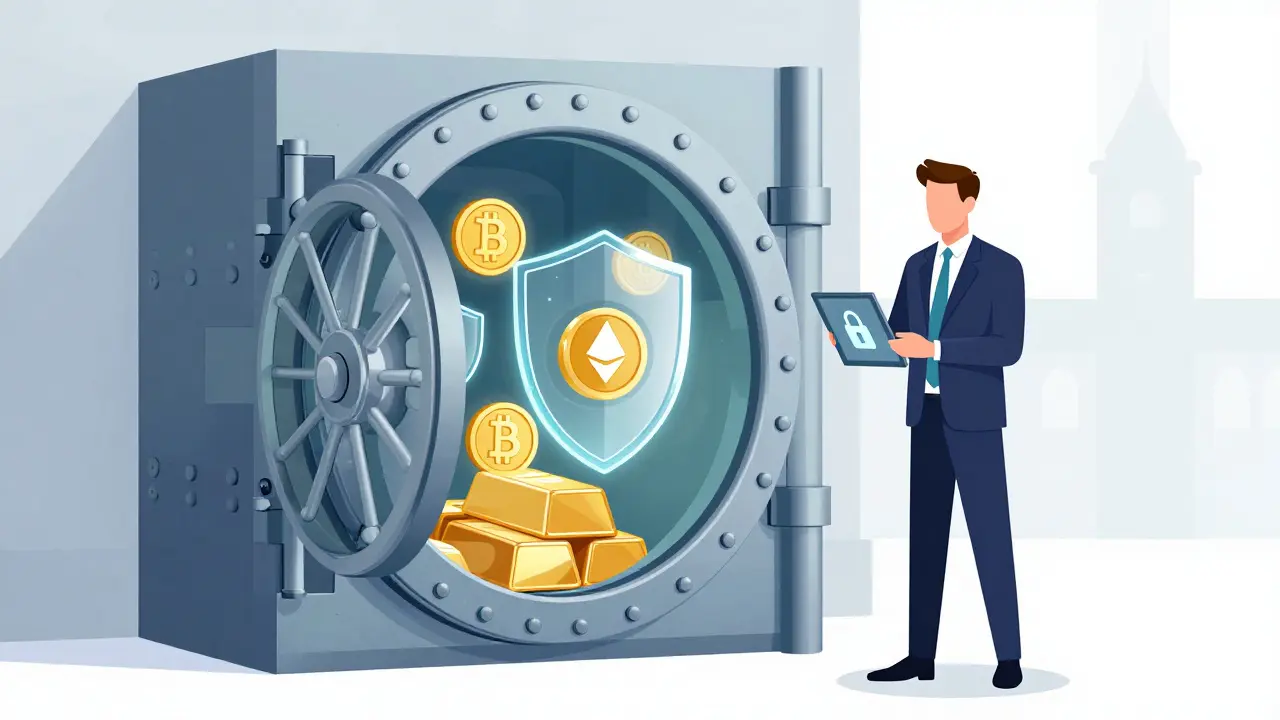
For years, holding Bitcoin or Ethereum felt like playing a high-stakes game of hide-and-seek with your own money. You either kept it on an exchange, hoping they wouldn’t get hacked, or you buried private keys in a safety deposit box, praying you didn’t lose the password. But by 2026, that anxiety is fading for institutional investors and serious retail traders alike. Why? Because Swiss banks have finally bridged the gap between old-school financial security and new-school blockchain volatility.
If you are looking for a place to park digital assets that feels as secure as a traditional savings account but offers the flexibility of crypto, Switzerland is currently the global gold standard. This isn’t just marketing hype. It’s the result of over five years of deliberate, technology-neutral regulation that allows banks to treat crypto not as a wild west experiment, but as a legitimate asset class. Here is how Swiss banks handle cryptocurrency services and custody, why their approach works, and what it means for your portfolio.
The Regulatory Edge: Why Switzerland Leads
To understand why Swiss banks dominate crypto custody, you first have to look at the rules of the road. In many countries, regulators spent years trying to figure out if Bitcoin was a currency, a commodity, or a security. They created new, often confusing laws specifically for crypto. Switzerland took a different path. They applied existing financial market legislation to digital assets.
This "technology-neutral" approach means that if a bank wants to hold your crypto, it must follow the same strict anti-money laundering (AML) and Know Your Customer (KYC) protocols as it would for holding gold or stocks. The Financial Market Supervisory Authority (FINMA) has published clear guidelines that remove the guesswork. For a bank, clarity is king. When the rules are clear, compliance is easier, and security standards rise.
Compare this to the United States, where regulators issued joint statements in 2025 reiterating that banks must ensure crypto safekeeping is "safe and sound." While well-intentioned, these were often seen as reactive measures. Switzerland had already built the infrastructure. By the time other jurisdictions were still debating definitions, Swiss banks like Sygnum Bank is a licensed banking institution offering comprehensive crypto custody and trading services under Swiss regulatory oversight were already processing billions in digital assets. This head start has created a mature ecosystem where institutional-grade security is the baseline, not a premium add-on.
How Institutional-Grade Custody Actually Works
When we talk about "custody" in the context of crypto, we aren’t just talking about a database entry. We are talking about physical and cryptographic fortresses. Let’s look at how a leader like Bitcoin Suisse is a Swiss financial institution providing proprietary vault solutions and multi-asset crypto services handles this.
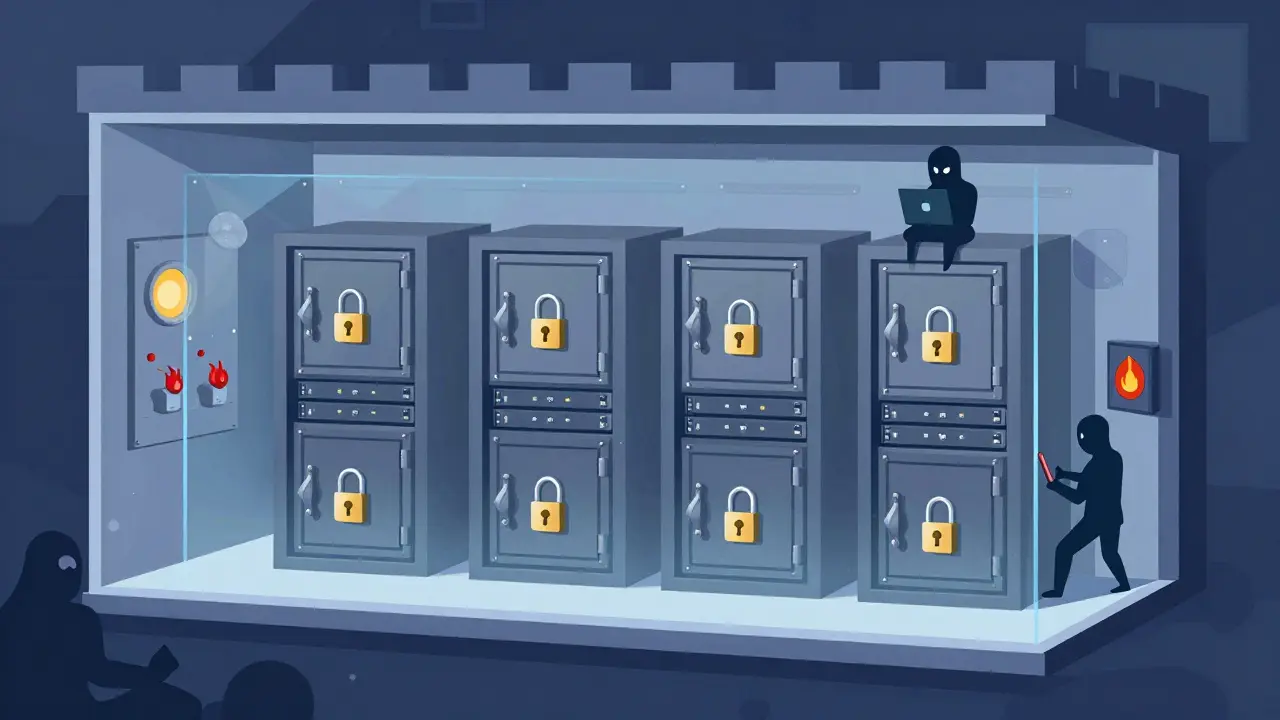
Bitcoin Suisse operates its proprietary "Bitcoin Suisse Vault." This isn’t a single server in a closet. It’s a layered defense system. First, there is the cryptographic layer. Private keys-the digital passwords that unlock your funds-are generated and stored in hardware security modules (HSMs). These keys never leave Switzerland. They are air-gapped from the internet, meaning no hacker can remotely swipe them.
Second, there is the physical layer. The servers housing these keys are protected against cyberattacks, unauthorized access, and even electromagnetic pulse (EMP) interference. Yes, EMP. If a solar flare or a directed energy weapon knocked out power grids, your crypto would still be safe. The vault uses redundant backup systems to ensure that hardware damage doesn’t mean data loss.
For the user, this complexity is invisible. You log into your online account or mobile app. You see your balance. You click "send." Behind the scenes, a complex series of multi-signature approvals and cryptographic verifications ensures that only you-and no rogue employee or hacker-can move those funds. This is what experts call "straight-through processing," enabling low-latency transactions via FIX and REST APIs for institutions, while keeping retail users safe.
| Feature | Sygnum Bank | Amina Bank | Bitcoin Suisse |
|---|---|---|---|
| Primary Focus | Institutional & Professional Investors | Retail, Startups & Corporates | Institutional Custody & Trading |
| Custody Model | Regulated Bank License | Regulated Bank License | Proprietary Bitcoin Suisse Vault |
| Supported Assets | BTC, ETH, SUI, and major alts | 40+ blockchains, hundreds of tokens | 40+ blockchains, hundreds of tokens |
| Staking Services | Yes (ETH, SOL, etc.) | Yes (10+ major chains) | Yes (ETH, SOL, ADA, DOT, etc.) |
| Unique Feature | Lending & Margin Trading | Stablecoin Rewards (EURC, USDC) | Network Governance Voting Support |
The Rise of New Blockchains: The SUI Case Study
A common misconception is that Swiss banks only care about Bitcoin and Ethereum. That was true five years ago. Today, they are aggressively expanding into emerging ecosystems. A perfect example is the support for the SUI token is the native cryptocurrency of the Sui blockchain, known for high-performance parallel execution.
In August 2025, both Sygnum Bank and Amina Bank is a regulated Swiss bank offering integrated banking, trading, and staking services for individuals and corporations announced support for SUI. Amina became the first regulated bank globally to offer custodial services for SUI. This wasn’t just a technical update; it sent a shockwave through the market.
Why did it matter? Because it signaled institutional validation. When Sygnum and Amina added SUI, trading volume doubled immediately. Daily volume jumped from an average of 14.31 million tokens to 36.45 million tokens. The price rose 4% to $3.82 as buyers defended key support zones. This reaction shows that institutional demand is driven by access. Big money doesn’t want to buy SUI on a sketchy decentralized exchange. They want to buy it through a regulated channel where they know their legal rights are protected if something goes wrong.
This trend is accelerating. Swiss banks are now supporting staking for major blockchains including Solana (SOL), Cardano (ADA), Polkadot (DOT), and Near Protocol (NEAR). They are even enabling clients to participate in network governance votes for assets like Cosmos (ATOM) and Kusama (KSM). You’re not just holding the asset; you’re exercising your ownership rights through a trusted intermediary.
Security Beyond Hacking: Compliance and Privacy
Hackers are only one threat. The other is regulatory scrutiny. If your bank gets fined for poor compliance, your assets could be frozen. Swiss banks mitigate this risk through rigorous adherence to international standards.
First, there is data privacy. Swiss banks comply with the General Data Protection Regulation (GDPR) for European clients and maintain strict internal data handling policies. Your personal information is siloed from your transaction data wherever possible.
Second, there is Anti-Money Laundering (AML). Every account undergoes enhanced KYC checks. This might feel bureaucratic, but it’s essential. It ensures that the liquidity in the system is clean. For institutional investors, this is a non-negotiable requirement. Pension funds and family offices cannot invest in platforms that lack robust AML frameworks.
Third, there is cybersecurity infrastructure. Swiss banks invest heavily in predictive threat assessment. They don’t just react to attacks; they simulate them. Teams of custody experts constantly stress-test the systems. This proactive stance is what separates a Swiss bank from a generic crypto wallet provider.

Who Is This For? Tailored Services for Different Users
Not all crypto banking services are designed for everyone. Understanding which bank fits your profile is crucial.
For Institutions and Family Offices: Look at Sygnum Bank or Bitcoin Suisse. They offer lending, margin trading, and deep liquidity pools. If you need to borrow against your Bitcoin holdings to raise fiat capital without selling, these banks provide structured products for that. Their APIs allow for seamless integration with existing treasury management systems.
For Retail Investors and Startups: Amina Bank is a strong contender. They offer specialized banking packages for startups and scale-ups. Imagine a tech startup receiving venture capital in USDC and paying developers in stablecoins, all within a regulated bank account that also earns rewards. Amina promotes stablecoin rewards programs for holding EURC and USDC, turning idle cash into yield-bearing assets without the risk of volatile altcoins.
For Active Traders: Swissquote remains a heavyweight here. With a long history in forex and commodities, they’ve adapted well to crypto. They offer leveraged products and direct market access, appealing to those who view crypto as a tradable instrument rather than a long-term store of value.
The Future of Swiss Crypto Banking
By 2026, the line between "crypto bank" and "traditional bank" in Switzerland is blurring. Why? Because the best banks are doing both. They are adopting customer-centric approaches that use data analytics to tailor financial products. If you are a conservative investor, your dashboard might emphasize stablecoins and Bitcoin. If you are aggressive, it might highlight staking opportunities on newer chains like SUI or NEAR.
We are also seeing a push for omnichannel experiences. You can walk into a branch in Zurich, speak to a human advisor about your crypto allocation, and then execute the trade on your phone. This hybrid model reduces the friction that has historically kept mainstream wealth away from digital assets.
Furthermore, Swiss banks are strengthening international partnerships. As global regulations converge, having a Swiss license becomes a passport to operate elsewhere. This creates a network effect where Swiss custody providers become the backbone of global crypto finance. For the end-user, this means better liquidity, tighter spreads, and greater confidence in the longevity of the service.
The era of DIY crypto custody is ending for serious investors. The risks of lost keys, phishing scams, and exchange collapses are simply too high. Swiss banks offer a middle ground: the control of self-custody combined with the insurance and legal recourse of traditional banking. It’s not perfect, and fees are higher than using a decentralized wallet, but for significant capital, the peace of mind is worth the cost.
Is my crypto insured if I use a Swiss bank?
While crypto assets themselves are not typically covered by standard deposit insurance schemes like the Swiss Deposit Insurance Scheme (which covers fiat deposits up to CHF 100,000), many Swiss banks offer specific insurance policies for custody services. These policies cover losses due to operational failures, hacking, or employee fraud. However, they generally do not cover market volatility or user error (like sending funds to the wrong address). Always check the specific terms of the custody agreement.
Can I use Swiss crypto banks if I am not a resident of Switzerland?
Yes, most major Swiss crypto banks like Sygnum, Amina, and Bitcoin Suisse serve international clients. However, they enforce strict KYC (Know Your Customer) and AML (Anti-Money Laundering) regulations. Depending on your country of residence, you may face additional tax reporting requirements or restrictions on certain features like lending or margin trading. It is advisable to consult with a local tax advisor before opening an account.
What happens if a Swiss crypto bank goes bankrupt?
This is a critical distinction. In a properly structured custody arrangement, your assets are held in a segregated account, separate from the bank’s own balance sheet. This means that if the bank fails, your crypto should not be considered part of the bankruptcy estate. However, the process of retrieving your assets can be slow and legally complex. Choosing a bank with strong capitalization and a clear segregation policy is vital.
Do Swiss banks charge high fees for crypto custody?
Fees vary significantly based on the service level. Retail accounts may have lower annual fees, while institutional custody often involves tiered pricing based on the total value of assets under management (AUM). Additional costs may apply for trading, staking rewards distribution, or wire transfers. Generally, expect to pay more than you would for a simple software wallet, but less than the hidden costs of potential loss on unregulated exchanges.
Which cryptocurrencies do Swiss banks support?
Support is expanding rapidly. Core assets like Bitcoin (BTC) and Ethereum (ETH) are universally supported. Major altcoins such as Solana (SOL), Cardano (ADA), Polkadot (DOT), and Chainlink (LINK) are widely available. Newer additions include SUI, NEAR, and Algorand (ALGO). Stablecoins like USDC and EURC are also commonly supported for trading and custody. Banks regularly update their lists based on regulatory assessments and market demand.