Blockchain Energy Use: Why It Matters and What’s Being Done
When you hear about blockchain energy use, the amount of electricity consumed by networks like Bitcoin and Ethereum to validate transactions. Also known as crypto power consumption, it’s not just a tech detail—it’s a real-world issue affecting climate goals, electricity grids, and public trust in crypto. Bitcoin alone uses more energy annually than the entire country of Argentina. That’s not a guess—it’s based on official estimates from the Cambridge Centre for Alternative Finance. Most of that energy comes from proof of work, a consensus method where miners compete to solve complex math problems using powerful computers. This system keeps the network secure but at a huge cost: every Bitcoin transaction uses as much power as an average U.S. household does in over a day.
Not all blockchains are built the same. Ethereum proof of stake, a shift Ethereum made in 2022 to replace mining with staking cut its energy use by over 99%. Now, instead of burning electricity to solve puzzles, validators lock up their own ETH to help secure the network. That’s why Ethereum’s energy footprint is now smaller than a single data center. Other chains like Solana, Cardano, and Polygon also use proof of stake or similar low-energy methods. The problem isn’t blockchain itself—it’s the outdated systems still running on proof of work. And while Bitcoin hasn’t changed, the rest of the industry has moved on. This shift matters because it shows crypto doesn’t have to be a climate liability.
What you’ll find in the posts below isn’t just about energy numbers. It’s about real projects, scams hiding behind green claims, and how regulation is catching up. You’ll see how some tokens are dead because no one cares about their environmental cost, while others are built from the ground up to be efficient. You’ll learn why some exchanges won’t list privacy coins—not because they’re evil, but because of energy-heavy compliance systems. And you’ll get the truth about airdrops that promise free tokens but rely on networks that waste more power than they’re worth. This isn’t theory. It’s what’s happening right now—and what you need to know before you buy, trade, or invest.
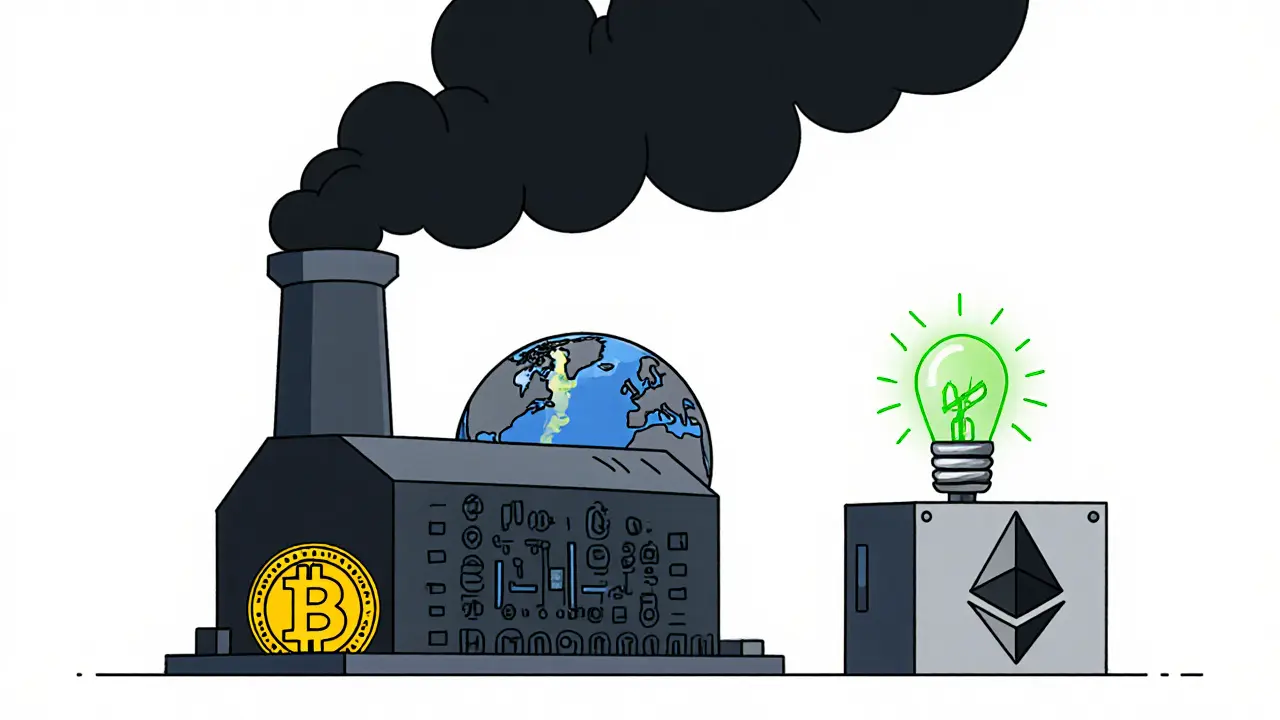
Proof of Stake Energy Efficiency Advantages: Why PoS Uses 99.95% Less Power Than Bitcoin
Proof of Stake slashes blockchain energy use by 99.95% compared to Bitcoin's Proof of Work. Learn how Ethereum's switch cut power consumption, why PoS is the future, and what it means for investors and the planet.
Top News
-
Mexico Crypto Monitoring Regulations by CNBV: What You Need to Know in 2026 1.03.2026

-
Wealth Tax Treatment of Crypto in Switzerland: What You Need to Know in 2026 6.03.2026

-
MOT by Mobius Finance Airdrop: What Really Happened and Where to Buy MOT Today 4.03.2026

-
BunnySwap Crypto Exchange Review: A Niche DEX with Almost No Trading Volume 5.03.2026

-
Cryptal Crypto Exchange Review: Is It Right for You in 2026? 2.03.2026