Trump Crypto Policy Reversal: How 2025 Regulatory Changes Reshaped the Market

You might remember the headlines from early 2025. The U.S. government suddenly stopped fighting crypto and started buying it. It wasn't just a tweak in rules; it was a complete 180-degree turn. One day, regulators were suing exchanges for selling unregistered securities. The next, they were building a national vault for Bitcoin. If you're trying to understand how we got here, or what this means for your portfolio today in late 2026, you need to look back at the specific moves made in 2025.
This article breaks down the Trump crypto policy reversal. We'll look at the executive orders that changed everything, the creation of the Strategic Bitcoin Reserve, and the GENIUS Act. More importantly, we'll look at the real-world impact: market shifts, industry reactions, and the risks that still linger. This isn't just history; it's the foundation of the current digital asset landscape.
The Big Shift: From Enforcement to Embrace
To appreciate the change, you have to recall the previous era. Under the Biden administration, the approach was heavily enforcement-driven. The SEC, led by Chair Gary Gensler, treated most crypto assets as securities. The goal was often to shut down or sue companies rather than integrate them. Then came January 2025. President Donald Trump returned to office with a campaign promise to make America the "crypto capital of the world." He didn't waste time.
On January 23, 2025, he signed an Executive Order titled "Strengthening American Leadership in Digital Financial Technology." This document revoked the previous administration's framework on Central Bank Digital Currencies (CBDCs). In fact, it explicitly prohibited the creation of a future CBDC. Why? Because the new administration viewed CBDCs as tools for government surveillance, whereas private stablecoins and Bitcoin were seen as engines for innovation. This single move signaled to the market that the regulatory hammer was being put away.
The speed was startling. By March, the Treasury Department had completed an inventory of all federal crypto holdings. By July, the GENIUS Act was law. This wasn't gradual drift; it was a directed pivot. For investors, this meant the risk profile of holding crypto in the U.S. dropped overnight. The fear of sudden lawsuits was replaced by the anticipation of government support.
The Strategic Bitcoin Reserve: A New Asset Class?
The most controversial and impactful part of the 2025 reversal was the establishment of the Strategic Bitcoin Reserve. Signed into effect via an Executive Order on March 6, 2025, this initiative fundamentally changed how the U.S. government interacts with digital assets.
Here is how it worked:
- Source of Funds: The reserve was not funded by tax dollars. Instead, it was capitalized exclusively with Bitcoin forfeited through criminal and civil asset forfeiture proceedings. Think Silk Road seizures, fraud penalties, and confiscated assets from illegal enterprises.
- Holding Strategy: The White House stated clearly that these BTC would never be sold. They were designated as "U.S. reserve assets," similar to gold reserves.
- Scale: By March 31, 2025, the reserve held approximately 214,000 BTC. At the prices then, that was worth about $14.2 billion. Analysts projected this could grow significantly as more crypto-related crimes are prosecuted and assets seized.
Alongside the Bitcoin Reserve, the administration created the U.S. Digital Asset Stockpile. This held non-Bitcoin tokens also seized by the government. Unlike the Bitcoin Reserve, the Treasury Secretary retained the authority to sell these assets if needed for fiscal flexibility. This distinction matters. It shows the government viewed Bitcoin as a strategic store of value, while other altcoins were still treated as speculative commodities.
The market reaction was immediate. When the announcement broke, Bitcoin surged 18% in 24 hours. Institutional investors, who had been hesitant due to regulatory uncertainty, began pouring money into U.S.-based crypto funds. Galaxy Research reported that institutional capital deployment hit $84 billion in the first half of 2025 alone-tripling previous records.
The GENIUS Act: Writing the Rules
Executive orders can set direction, but laws provide stability. That’s where the GENIUS Act comes in. Signed into law in July 2025, this legislation provided the legal backbone for the new policy. It wasn't just a pro-crypto cheerleading squad; it introduced specific regulatory frameworks.
The Act focused on three main areas:
- Stablecoin Regulation: It established clear guidelines for issuers of dollar-pegged stablecoins. This gave banks and fintech firms confidence to launch their own products, knowing they wouldn't be sued later.
- Market Structure: It clarified the roles of the SEC and the Commodity Futures Trading Commission (CFTC). Generally, the CFTC gained more authority over spot markets, reducing the SEC's ability to classify every token as a security.
- Tax Treatment: It addressed some of the confusing tax rules around staking rewards and DeFi transactions, making compliance easier for average users and businesses alike.
Industry experts called it the most significant crypto legislation since the early blockchain bills in Wyoming. However, it wasn't perfect. Critics noted that the Act focused heavily on Bitcoin and stablecoins, leaving many newer Layer-2 solutions and niche DeFi protocols in a gray area. Ethereum researchers, for instance, worried that the lack of specific mention for ETH-based ecosystems could create long-term disadvantages compared to Bitcoin.

Who Made It Happen? The Key Players
Policies don't implement themselves. The Trump administration appointed David Sacks, a venture capitalist known for his tech investments, as the "Crypto and AI Czar." He chaired the President's Working Group on Digital Asset Markets. This group included heads of the SEC, CFTC, Treasury, and Commerce Departments.
Sacks' role was crucial. He bridged the gap between Silicon Valley innovation and Washington bureaucracy. His mandate was simple: deliver a comprehensive report within 180 days. They met the deadline exactly on July 30, 2025. The resulting 160+ page report outlined the roadmap for implementation, including timelines for rulemaking that stretched into 2026.
| Feature | Biden Administration (Pre-2025) | Trump Administration (2025-Present) |
|---|---|---|
| Primary Approach | Enforcement-focused | Innovation-friendly |
| CBDC Stance | Explored/Pro-CBDC | Prohibited CBDC |
| Bitcoin Status | Speculative Asset | Strategic Reserve Asset |
| Regulatory Clarity | Low (Lawsuits common) | High (GENIUS Act framework) |
| Key Legislation | None specific | GENIUS Act (2025) |
Market Impact and Industry Reaction
Did it work? The data suggests yes. According to CoinGecko, U.S. crypto trading volume increased by 214% between January and June 2025. Of that growth, 63% came from institutional investors. These are pension funds, hedge funds, and family offices that previously avoided crypto due to regulatory risk. Now, they see the U.S. government itself as a holder of Bitcoin.
A survey by CoinDesk of 500 crypto executives found that 87% rated the new policies as favorable for business operations. Nearly three-quarters said they planned to expand their U.S. operations immediately. Job postings in the sector jumped 189% year-over-year. Companies like Coinbase and Kraken saw their stock prices rally as the threat of existential lawsuits faded.
However, not everyone was cheering. Smaller startups struggled to adapt. BHFS Legal reported that 32% of surveyed crypto startups needed external consultants to navigate the new compliance requirements. While the big players benefited from clarity, smaller firms faced high costs to meet the new standards set by the GENIUS Act.
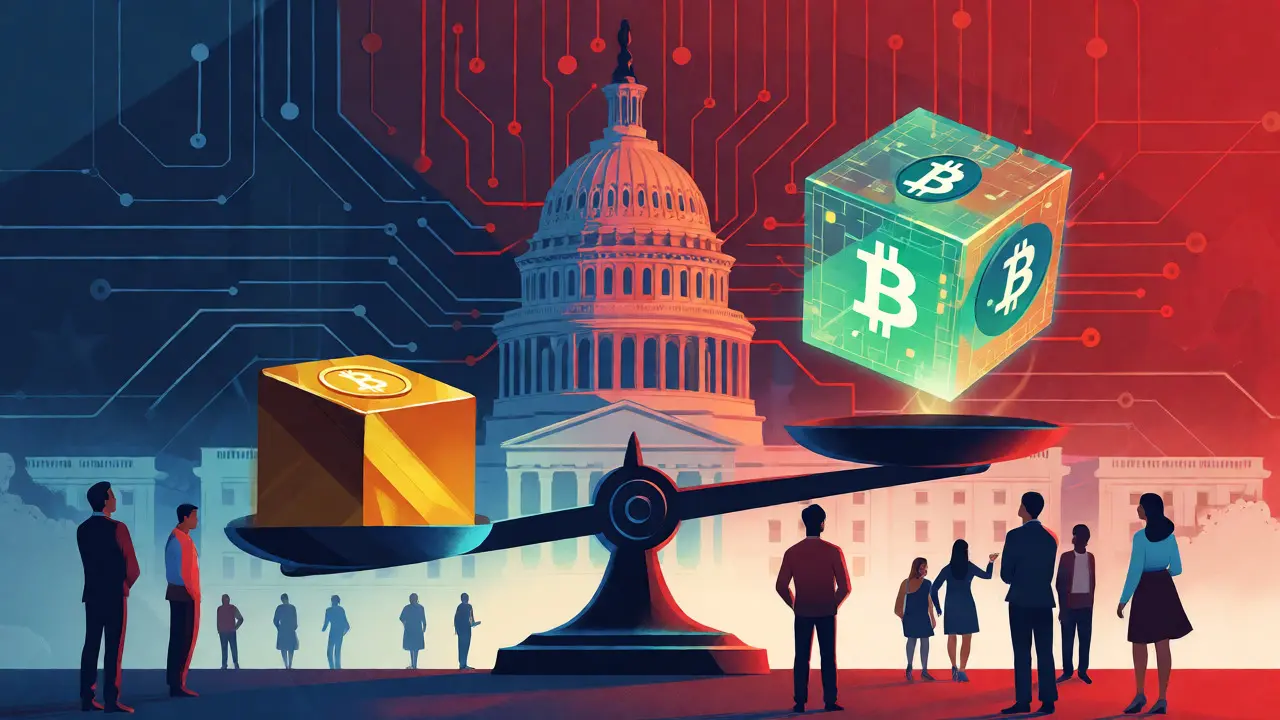
There were also concerns about market distortion. The Congressional Budget Office warned that if the Strategic Bitcoin Reserve grew beyond 500,000 BTC, it could start influencing the price artificially. Since the government promised not to sell, any large purchases by the state could reduce supply further, potentially creating bubbles.
What Happened Next? Looking Back from 2026
As we stand in September 2026, the initial shock has settled into a new normal. The SEC published its first guidance documents on stablecoins in August 2025, following the GENIUS Act mandates. The CFTC released derivatives guidance in March 2026. These steps provided the detailed rules that the executive orders only hinted at.
The Strategic Bitcoin Reserve has continued to grow. Through "seizure optimization protocols," the Treasury added another 12,500 BTC without spending taxpayer money. This steady accumulation reinforces the narrative of Bitcoin as a sovereign asset. Meanwhile, global competitors like Singapore and Switzerland have adjusted their strategies. Before the U.S. shift, they captured 37% of global crypto venture funding. Now, the flow of capital has shifted heavily toward New York and San Francisco.
Yet, challenges remain. The focus on Bitcoin and stablecoins has left some parts of the ecosystem under-regulated. Decentralized Finance (DeFi) platforms still face questions about liability and consumer protection. Additionally, the political nature of the policy means it could be reversed again by a future administration. Investors know that while the current environment is friendly, it is tied to the political will of those in power.
Key Takeaways for Investors
If you are looking to navigate this landscape, keep these points in mind:
- Regulatory Risk is Lower: The threat of blanket bans or aggressive lawsuits has diminished. The U.S. is now a pro-crypto jurisdiction.
- Bitcoin Has Sovereign Status: Government ownership changes the supply-demand dynamics. Expect volatility to decrease slightly over time as institutional holding stabilizes the market.
- Compliance Costs are Real: If you run a business, budget for legal advice. The GENIUS Act brought clarity, but clarity requires paperwork.
- Watch the Reserve: Monitor news regarding the Strategic Bitcoin Reserve. Large additions or rare sales could move the market.
The 2025 reversal wasn't just a policy change; it was a cultural shift. It marked the end of crypto's adolescence and the beginning of its integration into mainstream finance. Whether you view it as a win for freedom or a consolidation of power, one thing is clear: the U.S. government is no longer an outsider in the crypto game. It's a player.
What is the Strategic Bitcoin Reserve?
The Strategic Bitcoin Reserve is a government-held collection of Bitcoin established by Executive Order in March 2025. It consists of Bitcoin seized through criminal and civil asset forfeitures. The government pledged not to sell these assets, treating them similarly to gold reserves.
How did the GENIUS Act change crypto regulation?
Signed in July 2025, the GENIUS Act provided legal clarity for stablecoins, defined the roles of the SEC and CFTC, and simplified tax treatment for digital assets. It moved the U.S. from an enforcement-heavy model to a structured regulatory framework.
Why did the U.S. ban Central Bank Digital Currencies (CBDCs)?
The Trump administration argued that CBDCs could enable excessive government surveillance and control over personal finances. By banning them, the administration aimed to promote private-sector innovation in stablecoins and decentralized currencies instead.
Did the policy changes affect the price of Bitcoin?
Yes, the announcement of the Strategic Bitcoin Reserve caused an immediate 18% surge in Bitcoin's price. Over the first half of 2025, increased institutional adoption driven by regulatory clarity contributed to significant market growth.
Are there risks associated with the new crypto policies?
Critics warn of potential market distortion if the government holds too much Bitcoin. There are also concerns that the focus on Bitcoin and stablecoins leaves other cryptocurrencies in a regulatory gray area, potentially stifling innovation in those sectors.